FORCETALLY
Loading the evidence…
Preparing your view.


Preparing your view.
Anti-aircraft gunsIn service
Anti-aircraft gun
ZPU-2 originates in Russia (RUS). Its cited manufacturer or builder is ZiD (ZPU-2).
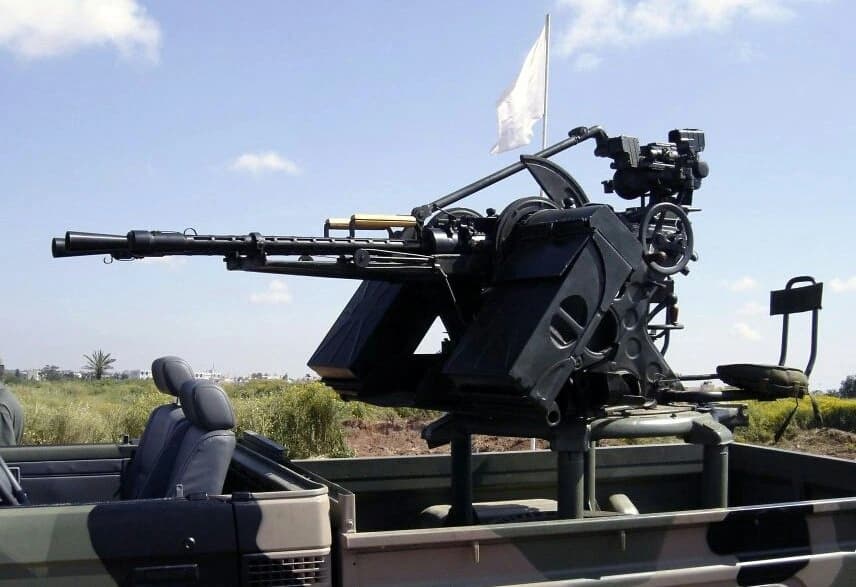
ZPU-2 — Licensed photograph of the exact source-declared variant.
Dieter vogeler · CC BY-SA 3.0 · Resized · CC BY-SA 3.0 · Source ↗ · ModifiedTechnical data
True scale
Sourced dimensions beside a 1.75 m human reference.
ZPU-2
ZPU-2
Towed Anti-Aircraft Gun
14.5 mm
5
INA
less than 5 minutes
less than 5 minutes
3.54
1.36
1.92 m
1.83 m
649
621
0.27
INA
No
Yes
Yes
ZPU-2
2 x Model KPV machine guns mounted on a two-wheel carriage.
14.5 mm
2
14.5-mm; fitted w/flash hiders
1,000
5,000
8,000
1,400
+85
-15
360
180
180
600 rds/min
150 rds/min
BS.41
API
14.5
Tungsten carbide core
64.4 g
1,000
Armor-penetration at 500 m (550 yd) is 32 mm (1.3 in) of RHA at 90 degrees.
INA
BZT
API-T
14.5
Steel Core
59.56 g
1,005
Tracer burns to at least 2,000 m (2,200 yd).
INA
ZP
I-T (Instantaneous Incendiary)
14.5
INA
60.0 g
I-T (ZP) – "Instantaneous Incendiary" bullet with internal fuze, incendiary in tip, tracer container in base.
INA
Russia (RUS)
Producer Soviet Union - ZiD (ZPU-2) Soviet Union - No. 525 Metallist plant (ZU-2) China Poland
Producer Soviet Union - ZiD (ZPU-2) Soviet Union - No. 525 Metallist plant (ZU-2) China Poland
Origin Soviet Union
Type Towed anti-aircraft gun
Crew 1 or 2 on mount, 5 in total
Weight 994 kg including carriage
Length 3.54 m
Reference text from Wikipedia contributors, used under CC BY-SA 4.0.
ZPU equipment records. Variants, orders and quantities are shown as reported in each inventory source; coverage is incomplete.
 Afghanistan
 Albania
Lower-bound count for ZPU Type-56. Country-wide list; no individual service specified. 1 distinct count cell(s) from the same source list; shared rowspan cells counted once. Excludes retired/reserve/on-order rows. Count column(s): no.: 336+. Origin: Soviet Union China. The listed variants/roles are the scope, not an immediately deployable count. The components do not establish one inventory census date; the stored date is the retrieved source snapshot.
Width 1.92 m
Height 1.83 m
Weight 639 kg
Type 2x 14.5mm KPV heavy machine gun
Ammunition 2x 150 round belt
Elevation -7 to +90°, manual
Traverse 360°, manual
Sights APO-14,5 (upon introduction)
Sights APO-14,5 (upon introduction) ZAPP-2 (introduced in 1950's)
Rate of fire 600 rpm cyclic per barrel
Rate of fire 600 rpm cyclic per barrel 1.200 rpm combined
Rate of fire 600 rpm cyclic per barrel 1.200 rpm combined 300 rpm practical when firing bursts
Range 1.4 km vs aircraft
Range 1.4 km vs aircraft Up to 2 km vs ground targets
Range 1.4 km vs aircraft Up to 2 km vs ground targets 5 km slant range
Type 2 wheel detachable carriage
Gun shield No
Tire size 6.5 x20
Tread 1.4 m
Ground clearance 0.3 m
Towing vehicle 4x4 light truck
Autonomous mobility Can be manhandled over short distances
The ZPU-2 is an early Cold War era anti-aircraft gun of Soviet origin. It was developed in the late 1940's and introduced at the same time as the larger four-barrel ZPU-4. The introduction of the jet aircraft made the ZPU-2 quickly obsolete as an anti-aircraft gun. However, the ZPU-2 did prove capable against helicopters and ground targets. Nowadays the ZPU-2 is mostly used as heavy armament on fast and mobile all terrain vehicles.
The ZPU-2 is a twin barrel anti-aircraft gun. It is based on a triangular chassis with outriggers. The turntable mounts two KPV heavy machine guns, two belt boxes, a gun sight and two seats. A two wheel detachable trailer reminiscent of the Nazi German 2cm Flak-38 is used. For airborne forces the UZPU-2, later renamed ZU-2, was developed. This uses a rearranged and updated mount with faster traverse rate and much lighter trailer. The ZU-2 replaced the early model ZPU-2 in production and became the most common model. Both models are often called the ZPU-2.
The two KPV heavy machine gun fires the 14.5x114mm round at a cyclic rate of fire of 600 rpm. The combined cyclic rate of fire is 1.200 rpm. When firing in short bursts the effective rate of fire is 300 rpm. The maximum effective anti-aircraft range is only 1.4 km, although its slant range is about 5 km. The ZPU-2 is very effective against ground targets due to its volume of fire. It has the ability to pierce the armor of most Cold War era armored personnel carriers.
The ZPU-2 is rather mobile due to its limited weight and size. It can be manhandled over short distances and may be towed by light vehicles. The early model carriage allowed for a high speed on road and in the field, but was rather heavy. The ZU-2 reduced the weight in travel configuration by more than a third. This made it far more useful for airborne forces and it replaced the early model ZPU-2 on the production line.
 Algeria
Army exact named equipment holdings: ZPU-4; ZPU-2. Active, operational-reserve and training units excluding equipment in store; November 2025 IISS assessment. Named service only; no parent-force or national total inferred. Source role: AIR DEFENCE / 14.5mm. Original estimates, ranges, reporting names, reserve, lease and employment scopes retained; nested included counts are not added. Missile-system quantities mean launchers, not rounds. No readiness, crew, carried weapon, payload, factory-production or future order count inherited.
 Angola
Number column of the Wikipedia list table under "Air defence systems". The list's own wording applies; it is a compiled secondary source, not an official census.
 Burkina Faso
Army exact named equipment holdings: ZPU. Active, operational-reserve and training units excluding equipment in store; November 2025 IISS assessment. Named service only; no parent-force or national total inferred. Source role: AIR DEFENCE / 14.5mm. Original estimates, ranges, reporting names, reserve, lease and employment scopes retained; nested included counts are not added. Missile-system quantities mean launchers, not rounds. No readiness, crew, carried weapon, payload, factory-production or future order count inherited.
 Burundi
Reported count for ZPU-4. Country-wide list; no individual service specified. 1 distinct count cell(s) from the same source list; shared rowspan cells counted once. Retired, wholly reserve and on-order rows are excluded; the reported count retains any explicitly mixed stock scope in the quoted row. Count column(s): quantity: 15. Origin: Soviet Union. The listed variants/roles are the scope, not an immediately deployable count. Dates are the count-cell citations' stated source period (2021), not the article revision. 2021 cited publication year. Edition or publication years do not claim an exact inventory census day.
 Cameroon
Number column of the Wikipedia list table under "Towed anti-aircraft gun". The list's own wording applies; it is a compiled secondary source, not an official census.
 Democratic Republic of the Congo
Number column of the Wikipedia list table under "Anti-aircraft guns". The list's own wording applies; it is a compiled secondary source, not an official census.
 Ecuador
Approximate count for ZPU-2. Service scope: Army; does not replace a national total. 1 distinct count cell(s) from the same source list; shared rowspan cells counted once. Retired, wholly reserve and on-order rows are excluded; the reported count retains any explicitly mixed stock scope in the quoted row. Count column(s): quantity: ~128. Origin: Soviet Union. The listed variants/roles are the scope, not an immediately deployable count. The components do not establish one inventory census date; the stored date is the retrieved source snapshot.
 Egypt
Army exact named equipment holdings: ZPU-4. Active, operational-reserve and training units excluding equipment in store; November 2025 IISS assessment. Named service only; no parent-force or national total inferred. Source role: AIR DEFENCE / 14.5mm. Original estimates, ranges, reporting names, reserve, lease and employment scopes retained; nested included counts are not added. Missile-system quantities mean launchers, not rounds. No readiness, crew, carried weapon, payload, factory-production or future order count inherited.
 Ghana
Reported count for ZPU-2. Service scope: Ghana Army; does not replace a national total. 1 distinct count cell(s) from the same source list; shared rowspan cells counted once. Retired, wholly reserve and on-order rows are excluded; the reported count retains any explicitly mixed stock scope in the quoted row. Count column(s): quantity: 4. Origin: Soviet Union. The listed variants/roles are the scope, not an immediately deployable count. Dates are the count-cell citations' stated source period (2024), not the article revision. Cited source 2024-02-13. Edition or publication years do not claim an exact inventory census day.
Reported count for ZPU-4. Service scope: Ghana Army; does not replace a national total. 1 distinct count cell(s) from the same source list; shared rowspan cells counted once. Retired, wholly reserve and on-order rows are excluded; the reported count retains any explicitly mixed stock scope in the quoted row. Count column(s): quantity: 2. Origin: Soviet Union. The listed variants/roles are the scope, not an immediately deployable count. Dates are the count-cell citations' stated source period (2024), not the article revision. Cited source 2024-02-13. Edition or publication years do not claim an exact inventory census day.
 Madagascar
Reported count for ZPU-4. Service scope: Army; does not replace a national total. 1 distinct count cell(s) from the same source list; shared rowspan cells counted once. Retired, wholly reserve and on-order rows are excluded; the reported count retains any explicitly mixed stock scope in the quoted row. Count column(s): quantity: 50. Origin: Soviet Union. The listed variants/roles are the scope, not an immediately deployable count. The components do not establish one inventory census date; the stored date is the retrieved source snapshot.
 Malawi
Reported count for ZPU · ZPU-4. Country-wide list; no individual service specified. 1 distinct quantity component(s) from the same source list; shared rowspan cells counted once. Explicit source inventory scope: active; no other stock status or total inferred. Count column(s): in service: 40. Origin: Soviet Union. The listed variants/roles are the scope, not an immediately deployable count. Explicitly named source subset; this is not a whole-family total and does not cover other listed designs. Dates are the count-cell citations' stated source period (2021), not the article revision. 2021 cited publication year. Edition or publication years do not claim an exact inventory census day.
 Malta
Reported count for ZPU-4. Country-wide list; no individual service specified. 1 distinct count cell(s) from the same source list; shared rowspan cells counted once. Retired, wholly reserve and on-order rows are excluded; the reported count retains any explicitly mixed stock scope in the quoted row. Count column(s): quantity: 50. Origin: Soviet Union. The listed variants/roles are the scope, not an immediately deployable count. The components do not establish one inventory census date; the stored date is the retrieved source snapshot.
 Mauritania
Army exact named equipment holdings: ZPU-4; ZPU-2. Active, operational-reserve and training units excluding equipment in store; November 2025 IISS assessment. Named service only; no parent-force or national total inferred. Source role: AIR DEFENCE / 14.5mm. Original estimates, ranges, reporting names, reserve, lease and employment scopes retained; nested included counts are not added. Missile-system quantities mean launchers, not rounds. No readiness, crew, carried weapon, payload, factory-production or future order count inherited.
 Morocco
Army exact named equipment holdings of ZPU-2, ZPU-4. Active, operational-reserve and training units excluding equipment in store; November 2025 IISS assessment. Named service only, not a national or parent-force total or combat-readiness measure. Source role(s): AIR DEFENCE / 14.5mm. No heading aggregate, carried armament, crew, payload, factory production or future order count inherited. Family total is the sum of the separately printed nonoverlapping exact model components, each explicitly declared by its own source; no parent or sibling variant identity inferred. Printed ranges remain ranges; exact sibling components shift both endpoints by their separately stated counts.
 Myanmar
Reported count for MR-4. Service scope: Myanmar Army; does not replace a national total. 2 distinct count cell(s) from the same source list; shared rowspan cells counted once. Excludes retired/reserve/on-order rows. Count column(s): quantity: 200 / quantity: 200. Origin: Romania. The listed variants/roles are the scope, not an immediately deployable count. The components do not establish one inventory census date; the stored date is the retrieved source snapshot.
 Namibia
Reported count for ZPU-4. Service scope: Army equipment; does not replace a national total. 1 distinct count cell(s) from the same source list; shared rowspan cells counted once. Retired, wholly reserve and on-order rows are excluded; the reported count retains any explicitly mixed stock scope in the quoted row. Count column(s): quantity: 40. Origin: Soviet Union. The listed variants/roles are the scope, not an immediately deployable count. Dates are the count-cell citations' stated source period (2013), not the article revision. Cited source 2013-09-03. Edition or publication years do not claim an exact inventory census day.
 Nepal
Army exact named equipment holdings: Type-56 (ZPU-4). Active, operational-reserve and training units excluding equipment in store; November 2025 IISS assessment. Named service only; no parent-force or national total inferred. Source role: AIR DEFENCE / 14.5mm. Original estimates, ranges, reporting names, reserve, lease and employment scopes retained; nested included counts are not added. Missile-system quantities mean launchers, not rounds. No readiness, crew, carried weapon, payload, factory-production or future order count inherited.
 Sudan
Lower-bound count for ZPU. Service scope: Sudanese Air Force; does not replace a national total. 1 distinct quantity component(s) from the same source list; shared rowspan cells counted once. Explicit source inventory scope: active; no other stock status or total inferred. Count column(s): in service: +3200. Origin: Soviet Union. The listed variants/roles are the scope, not an immediately deployable count. Dates are the count-cell citations' stated source period (2019), not the article revision. Cited source 2019-03-15. Edition or publication years do not claim an exact inventory census day.
Lower-bound count for ZPU. Service scope: Sudanese Air Force; does not replace a national total. 1 distinct count cell(s) from the same source list; shared rowspan cells counted once. Retired, wholly reserve and on-order rows are excluded; the reported count retains any explicitly mixed stock scope in the quoted row. Count column(s): in service: +3200. Origin: Soviet Union. The listed variants/roles are the scope, not an immediately deployable count. Dates are the count-cell citations' stated source period (2019), not the article revision. Cited source 2019-03-15. Edition or publication years do not claim an exact inventory census day.
 Syria
Syrian Democratic Forces exact named equipment holdings: ZPU-2 (tch/on T-55). Active, operational-reserve and training units excluding equipment in store; November 2025 IISS assessment. Named service only; no parent-force or national total inferred. Source role: AIR DEFENCE / SP 14.5mm. Original estimates, ranges, reporting names, reserve, lease and employment scopes retained; nested included counts are not added. Missile-system quantities mean launchers, not rounds. No readiness, crew, carried weapon, payload, factory-production or future order count inherited.
 Tanzania
Reported count for ZPU. Service scope: Tanzanian Army; does not replace a national total. 1 distinct count cell(s) from the same source list; shared rowspan cells counted once. Retired, wholly reserve and on-order rows are excluded; the reported count retains any explicitly mixed stock scope in the quoted row. Count column(s): quantity: 21. Origin: Soviet Union. The listed variants/roles are the scope, not an immediately deployable count. The components do not establish one inventory census date; the stored date is the retrieved source snapshot.
Keep exploring
Anti-aircraft gun
Compare with ZPU-2Anti-aircraft gun
 United KingdomCompare with ZPU-2
Anti-aircraft gun Tank gun
Compare with ZPU-2Anti-aircraft gun Autocannon
Anti-aircraft gun , heavy machine gun
 United States
Anti-aircraft system
 GreeceCompare with ZPU-2
 Bangladesh
 Belarus
 Benin
 Bulgaria
 Cambodia
 Cape Verde
 Chad
 China
 Croatia
 Cuba
 Cyprus
 Djibouti
 East Timor
 Ethiopia
 Gabon
 Guinea
 Guinea-Bissau
 Hungary
 Iran
 Iraq
 Israel
 Kenya
 Laos
 Latvia
 Lebanon
 Libya
 Mali
 Moldova
 Mongolia
 Mozambique
 Nicaragua
 Nigeria
 North Korea
 Pakistan
 Panama
 Poland
 Qatar
 Republic of the Congo
 Romania
 Russia
 São Tomé and Príncipe
 Seychelles
 Somalia
 South Africa
 Sri Lanka
 Suriname
 Togo
 Uganda
 Ukraine
 Vietnam
 Yemen
 Zambia
 Zimbabwe