FORCETALLY
Loading the evidence…
Preparing your view.


Preparing your view.
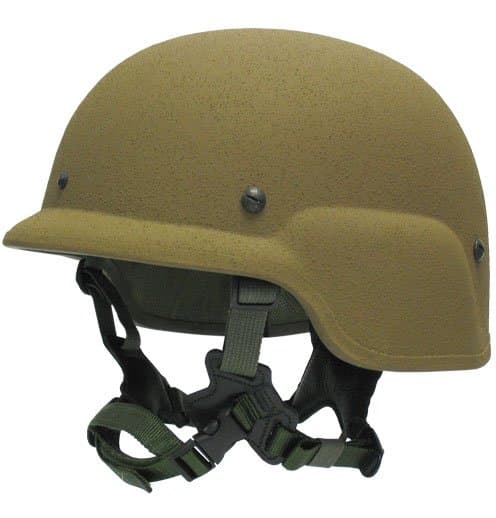
Protective equipmentIn service
Helmet
Lightweight Helmet is a helmet originating in United States. It was built by BAE Systems, Gentex Corporation. Reported operators include United States Marine Corps United States Navy.
 United States
Helmet
United States
2003–present
United States Marine Corps United States Navy
Global War on Terrorism Iraq War War in Afghanistan Russo-Ukrainian War
1999–2003
BAE Systems, Gentex Corporation
June 2003 – present
approx. 3.2 lbs/1.45 kg
New Zealand : New Zealand Defence Force , 2000-2019. Supplied by UNICOR .
Ukraine
United States United States Marine Corps (and attached U.S. Navy personnel ) United States Navy Seabees
The helmet was rated by the manufacturer to stop penetrations of 124 gr, 9mm FMJ at 1450 (-50 + 0 ft/s). This was a considerable improvement over the previous PASGT helmet.
The LWH was designed from 1999 to 2003, with prototype testing being conducted from 2000 to 2002 in California and North Carolina. 200,000 of the helmets entered service in mid-to-late 2003, with an expected service life of 15 years. It completely replaced the PASGT in USMC frontline service by 2009. The LWH was made by the Pennsylvanian-based Gentex Corporation and BAE Systems in five sizes. Beginning in 2007, pads were installed in the helmet to improve comfort for wearers.
FQ/PD 06-35
The LWH retains the PASGT design but makes use of lighter materials made available by new technologies. The LWH is approximately 3 to 6 ounces lighter than the PASGT, depending on helmet size.
By incorporating a four-point retention strap, the LWH is seven times more stable than the PASGT so it won't rock back and forth or fall off.
Manufacturer: BAE, PA and GENTEX, PA
Reference text from Wikipedia contributors, used under CC BY-SA 4.0.
Lightweight Helmet equipment records. Variants, orders and quantities are shown as reported in each inventory source; coverage is incomplete.
 New Zealand
 Tunisia
 Ukraine
 United Kingdom
 Israel
 France