FORCETALLY
Loading the evidence…
Preparing your view.


Preparing your view.
Protective equipmentIn production
Combat Helmet
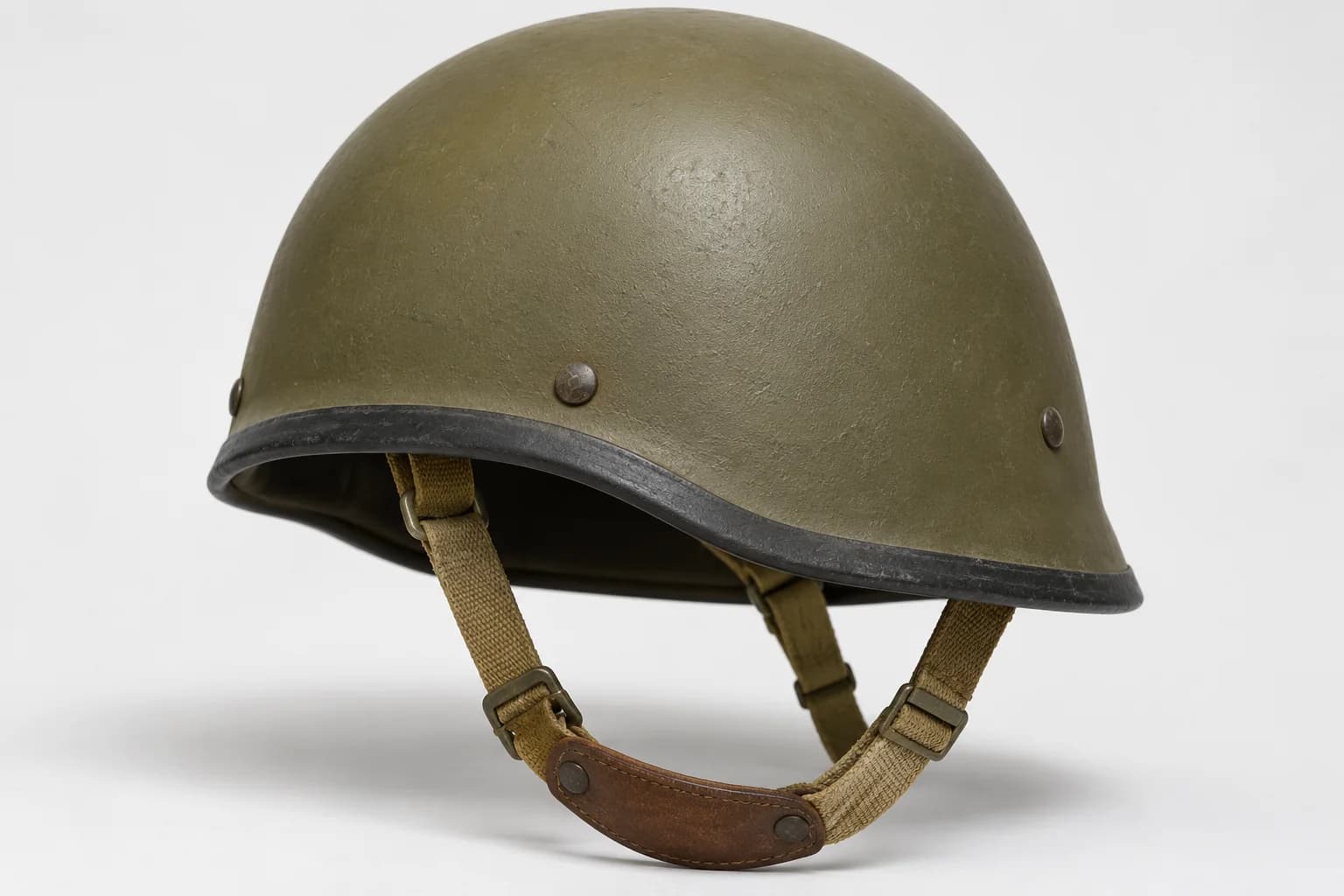
OR-201 is a combat Helmet originating in Israel. It was built by Orlite Industries Ltd Hagor Industries Ltd Rabintex Industries Ltd SAPHI (South Africa). Reported operators include Brazil, Colombia, Ecuador, El Salvador, Egypt, Ghana, Guatemala, Honduras, India, Israel, Lebanon, Mexico, Palestine, Peru, Portugal, Romania, South Africa, Sri Lanka, Uruguay, Venezuela.
 Israel
AI-generated illustration · Not a photograph · OR-201. Exterior details are illustrative and are not specification evidence.
ForceTally · AI-generated illustration · Not a photograph. Created from sourced military equipment identity; no input photograph. · ForceTally · All rights reserved · Source ↗ · ModifiedCombat Helmet
Israel
See Users
Operation Entebbe 1978 South Lebanon conflict 1982 Lebanon War Lebanese Civil War 1978-79 Nicaraguan Revolution Guatemalan Civil War Salvadoran Civil War Internal conflict in Peru Sri Lankan Civil War South African Border War The Troubles Cenepa War First Intifada Al-Aqsa Intifada South Lebanon conflict (1985–2000) Dinnieh clashes 2013 Sidon clash Bab al-Tabbaneh–Jabal Mohsen conflict 2000–2006 Shebaa Farms conflict 2006 Lebanon War 2007 Lebanon conflict 2008 conflict in Lebanon Battle of Gaza (2007) Gaza War (2008–09) 2014 Israel–Gaza conflict Gaza war
Orlite Industries Ltd
1970s
Orlite Industries Ltd Hagor Industries Ltd Rabintex Industries Ltd SAPHI (South Africa)
1976-Present
See Variants
Brazil
Colombia
Ecuador
El Salvador : Orlite OR-201 Model 76 helmets used by the Salvadoran Army .
Egypt
Ghana : Used by the Ghana Army .
Guatemala : Orlite OR-201 Model 76 and Model 76-85 helmets used by the Guatemalan Army (Parachute Brigade, Kaibiles ).
Honduras : Orlite OR-201 Model 76 and Model 76-85 helmets used by the Honduran Army (Paratroopers, Special Forces).
India : Used by the Indian special forces.
Israel : All variants used by the Israel Defense Forces and Israeli security forces .
Lebanon : Orlite OR-201 Model 76 and Model 76-85 helmets were first used by the Lebanese Forces Christian militia (LF), and the South Lebanon Army (SLA), an ally of Israel. After the civil war, the helmets confiscated from the LF were transferred to Lebanese Armed Forces ( Lebanese Commando Regiment , Counter-sabotage Regiment , Lebanese Airborne Regiment , Republican Guard Brigade ).
Mexico
Palestine : Used by the Palestinian National Security Forces (PNSF).
Peru : Rabintex RBH-103 helmets used by the Peruvian Armed Forces .
Portugal : Rabintex RBH-103 helmets used by the Portuguese Marine Corps .
Romania : Used by the Romanian Land Forces .
South Africa : Used by Paratroopers and Recce Commandos as the M83 made by SAPHI and (initially) by Orlite.
Sri Lanka
Uruguay : Used by the Uruguayan Army Commandos.
Venezuela
Ireland : Used by the Irish Defense Forces – Phased out in 2012 and replaced by the Rabintex RBH 303IE PASGT-shaped ballistic helmet.
Chile : Rabintex RBH-103 helmets used by the Chilean Army , alongside Rabintex RBH-303 Golfo PASGT-shaped ballistic helmets .
Nicaragua : Orlite OR-201 Model 76 helmets used by the National Guard between 1977–79.
Lebanese Forces : Orlite OR-201 Model 76 helmets provided by Israel used between 1982–1993.
Paraguay : Used by the Paraguayan Army – Orlite Model 76-85 was replaced by the PASGT in the 90s.
Sandinista National Liberation Front (FSLN): captured helmets from the Nicaraguan National Guard used by guerrillas between 1978–79.
The prototype presented in 1976 by Orlite consisted of one-piece, glass-reinforced plastic (GRP) round shell 8mm thick, made of fiberglass fibers placed in an ethyl cellulose resin under high pressure. It had a black rubber rim-band 10mm thick and seven metal rivets – one placed at the front, four at the sides, and two at the back – to secure a helmet liner of "cradle" type. As the name implies, it consists of three 25mm Khaki - green synthetic fabric crossed straps attached to a very light tan head-band (or sweat-band) that is fitted within a cushion of four inner black high-density neoprene foam pads – two side, one front, and one rear – that help to secure the helmet in the wearer's head, while providing an impact- and shock-absorbing capability. The liner suspension is adjustable from medium to large using a metal buckle in the rear.
Copied after the HSAT Mk II paratrooper helmet harness, the chin-strap system is fitted directly to the helmet shell at three points by rectangular metal rings; made of 20mm Khaki-green synthetic canvas web, the harness is equipped with two metal friction buckles at the chin-straps and is reinforced by an integral tan leather chin-cup.
With a weight of 1.65 kg, the OR-201 is light, comfortable, and sturdy, being capable of stopping a 9mm round at close range. Production helmets, including those made for the export market, usually came in a smooth Khaki - grey , Khaki - brown or Khaki - green finish.
This helmet, also designated M76/85, OR 202-76 or OR-402, was introduced in 1985 as an improved variant of the earlier Model 76, which consists of one-piece, ballistic nylon or reinforced fiberglass and plastic Kevlar composite structure that weights 1.65 kg. In contrast to its predecessor, the Model 76-85 had its interior lined entirely by light tan fiberglass fabric and a shock-absorbing neoprene disc 60mm in diameter, is placed on the inside. The helmet is fitted with a new version of the "cradle"- type liner, now consisting of three 25mm black synthetic fabric crossed straps attached to a light tan sweat-band and features a new 20mm olive green nylon adjustable strap system provided with a black quick-release plastic buckle backed by a light tan triangular leather piece to protect the wearer's face. A set of light tan leather reinforcing strips is sewn around the chin-straps, since unlike its predecessor, the harness of the Model 76-85 is not reinforced by an integral leather chin-cup.
An upgraded version of the OR-201 developed and manufactured by Hagor Industries Ltd of Kiryat Aryeh, Petah Tikva , east of Tel Aviv , it was introduced in the mid-1990s and marketed as the Hagor IDF Ballistic Military Helmet (IIIA). Unlike its Model 76 and Model 76-85 composite predecessors, the OR-404 shell is entirely constructed from Kevlar capable of withstanding both shrapnel and small-arms fire rounds and weights 1.10 kg. It is fitted with a black cushioned helmet liner of "cradle" type secured to the shell by seven rivets, and features an advanced black nylon adjustable strap system with black quick-release plastic buckle and a set of black leather reinforcing strips sewn around the joints and chin-straps in the harness. Production helmets usually came in a textured Khaki - Sand finish.
The materiel used in their construction also varies according to the model – the lightweight RBH 101 is made of ballistic nylon and weights 750g, the RBH 102 is made of reinforced fiberglass (GRP) and weights 1.46 kg, and the heavier RBH 103 made entirely of Kevlar that weights 1.50 kg.
The Irish Army adopted in the early 1980s the OR-201 Model 76-85 in ballistic nylon and issued it to infantry units in-country deployed on counter-insurgency operations along the border areas with Northern Ireland during The Troubles or those serving overseas with the Irish contingent of the United Nations Interim Force in Lebanon (UNIFIL) peace-keeping mission in southern Lebanon . They were sometimes used with either olive green or camouflage helmet covers. With the adoption of the Modern Irish Army camouflage uniform in the early 2000s, the Model 76-85 began to be phased out of service and in 2012 it was finally removed from issue, replaced by another Israeli model, the Rabintex RBH 303IE PASGT-shaped combat helmet in Kevlar plastic.
With a weight of 1.65 kg, the OR-201 is light, comfortable, and sturdy, being capable of stopping a 9mm round at close range. Production helmets, including those made for the export market, usually came in a smooth Khaki - grey , Khaki - brown or Khaki - green finish.
With a weight of 1.65 kg, the OR-201 is light, comfortable, and sturdy, being capable of stopping a 9mm round at close range.
Reference text from Wikipedia contributors, used under CC BY-SA 4.0.
OR-201 equipment records. Variants, orders and quantities are shown as reported in each inventory source; coverage is incomplete.
 Brazil
 Colombia
 Ecuador
 Egypt
 El Salvador
 Ghana
 Guatemala
 Honduras
 India Israel
 Lebanon
 Mexico
 Palestine
 Peru
 Portugal
 Romania
 South Africa
 Sri Lanka
 Uruguay
 Venezuela
Brazil, Colombia, Ecuador, El Salvador, Egypt, Ghana, Guatemala, Honduras, India, Israel, Lebanon, Mexico, Palestine, Peru, Portugal, Romania, South Africa, Sri Lanka, Uruguay, Venezuela
Equipment reference ↗ France
 Croatia