FORCETALLY
Loading the evidence…
Preparing your view.


Preparing your view.
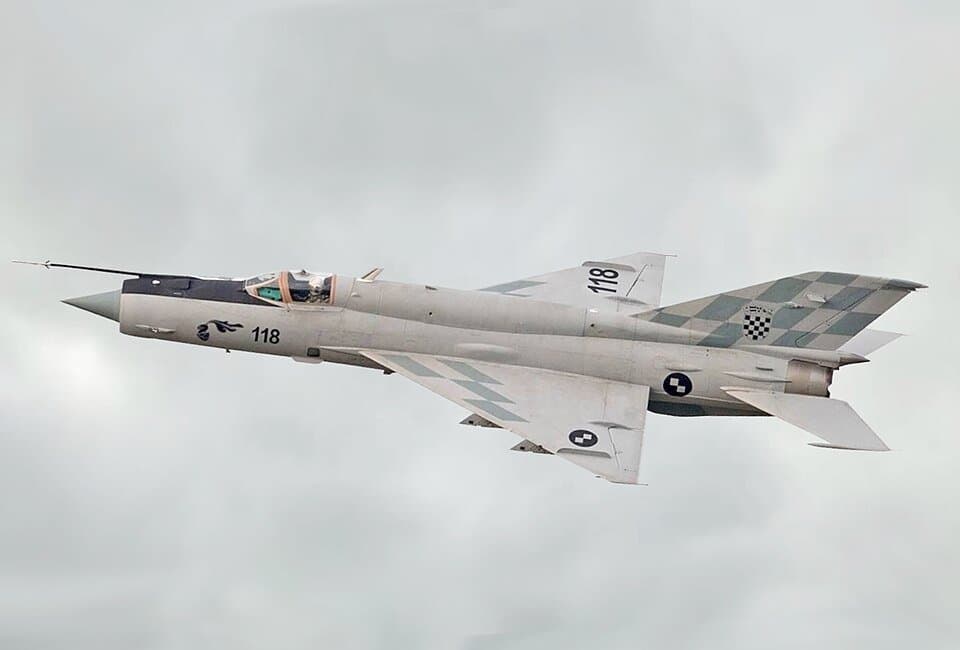
Combat aircraftIn service
Fighter and interceptor aircraft
Mikoyan-Gurevich MiG-21 is a fighter and interceptor aircraft originating in Soviet Union.
Mikoyan-Gurevich MiG-21
Gojanovic123456789 · CC BY-SA 4.0 · Resized · CC BY-SA 4.0 · Source ↗ · ModifiedTechnical data
Fighter and interceptor aircraft
Soviet Union
Mikoyan-Gurevich
In service
Soviet Air Forces (historical) Indian Air Force (historical) North Korean Air Force Angolan Air Force
11,496 (10,645 produced in the USSR, 840 in India , 194 in Czechoslovakia )
1959–1986
1959 (MiG-21F)
14 February 1955 (Ye-2)
Chengdu J-7
1
14.7 m (48 ft 3 in) excluding pitot boom
7.154 m (23 ft 6 in)
4.1 m (13 ft 5 in)
23 m 2 (250 sq ft)
8,725 kg (19,235 lb) with two R-3S missiles
8,800 kg (19,401 lb) unprepared or metal planking runway
1 × Tumansky R-25-300 afterburning turbojet, 40.18 kN (9,030 lbf) thrust dry, 69.58 kN (15,640 lbf) with afterburner
2,175 km/h (1,351 mph, 1,174 kn) / M2.05 at 13,000 m (43,000 ft)
660 km (410 mi, 360 nmi) clean at 11,000 m (36,000 ft)
17,500 m (57,400 ft)
1 × internal 23 mm Gryazev-Shipunov GSh-23 L autocannon with 200 rounds
5 (4 underwing + 1 ventral, reserved for fuel droptanks) , with provisions to carry combinations of: Rockets: 4 × S-24 or 4× UB-16-57 rocket pods (4×16 57mm rockets) Missiles:
Angola
Cuba
Mali
Mozambique
North Korea
Sudan
Yemen
root: TsAGI S-12 (4.2%); tip: TsAGI S-12 (5%)
250 km/h (160 mph; 130 kn)
17,000 m (56,000 ft) in 8 minutes 30 seconds
0.76
830 m (2,720 ft)
550 m (1,800 ft)
4 × S-24 or 4× UB-16-57 rocket pods (4×16 57mm rockets)
2 × 500 kg (1,100 lb) and 2 × 250 kg bombs
Afghanistan Royal Afghan Air Force − 50 MiG-21F-13s and MiG-21Us Afghan Air Force − 46 MiG-21MFs and MiG-21UMs, and 40 MiG-21bis. Several were shot down or destroyed on the ground during the Second Afghan Civil War Taliban − About 20 MiG-21s in 2000, used in the ground attack role National Islamic Movement of Afghanistan − About 30 MiG-21s in 2000
Algeria Algerian Air Force
Azerbaijan Azerbaijan Air Force - Operated about a dozen acquired from Ukraine. None in service today.
Bangladesh Bangladesh Air Force – 10 Mig-21MF's and 2 Mig-21UB's were donated to Bangladesh in the 1970s by Soviet Union . Operated from 1973 and all retired in the 2000s, replaced by F-7's .
Belarus Belarusian Air Force
Bulgaria Bulgarian Air Force
Burkina Faso Burkina Faso Air Force
Cambodia Royal Cambodian Air Force - 19 MiG-21bis and 3 MiG-21UM until all were retired in 2010.
China People's Liberation Army Air Force – replaced by the Chengdu J-7 , a license-built version of the MiG-21. In addition to MiG-21F-13s supplied by the Soviet Union, China also traded a small amount of MiG-21MFs with J-7 export variations, then developed the J-7C/D variants based on the MiG-21MF. The deal was between China and a certain Middle Eastern country. In May 2013, an official publication from Chengdu Aircraft Corporation reported that J-7 production had ceased after decades of manufacturing variations of this Chinese-made MiG-21.
Republic of the Congo Congolese Air Force – 14, in storage as of 2004
Croatia Croatian Air Force – In November 2024, the last remaining MiG-21s (four fighters and two trainers) were retired.
Czechoslovakia Czechoslovak People's Air Force – passed on to the Czech Republic and Slovakia.
Czech Republic Czech Air Force
East Germany Air Forces of the National People's Army – passed on to Germany after reunification.
Egypt Egyptian Air Force
Eritrea Eritrean Air Force
Ethiopia Ethiopian Air Force
Finland Finnish Air Force
Guinea-Bissau Guinea-Bissau Air Force
Germany Luftwaffe
Georgia Georgian Air Force
Hungary Hungarian Air Force
India Indian Air Force – retired from operational service on 26 September 2025
Indonesia Indonesian Air Force
Iran Iranian Air Force – purchased 12 ex-East German MiG-21PFMs plus four MiG-21Us for training purposes. However, only two MiG-21Us were delivered, the others being embargoed after German reunification currently have 12 Chengdu J-7 for training purposes.
Iraq Iraqi Air Force – operated during Saddam Hussein 's Era.
Israel Israeli Air Force – acquired as part of Operation Diamond . Currently in Israeli Air Force Museum
ISIL Military of ISIL – captured 19 (1 operational). Originally three in operational condition. The Syrian Air Force claimed to have shot down two of them. Other airframes are in various states of disrepair and some of them were being overhauled at the time of their capture.
Kyrgyzstan Kyrgyzstan Air and Air Defence Force
Laos Lao People's Liberation Army Air Force
Madagascar Malagasy Air Force
Mongolia Mongolian Air Force
Namibia Namibian Air Force
Nigeria Nigerian Air Force
Poland Polish Air Force Polish Naval Aviation
Romania Romanian Air Force – officially retired on 15 May 2023
Russia Russian Air Force
Serbia Serbian Air Force and Air Defence – retired from service in May 2021.
Serbia and Montenegro Air Force of Serbia and Montenegro – passed on to Serbia.
Slovakia Slovak Air Force – in 1993, with the dissolution of Czechoslovakia , the Slovak Air Force obtained 13 MiG-21MAs, 36 MiG-21MFs, eight MiG-21Rs, two MiG-21USs and 11 MiG-21UMs. They were withdrawn in 2003. Some were put on display and placed in museums across the country; others were scrapped.
Somalia Somali Air Force
Soviet Union – passed to successor states after the dissolution of the Soviet Union . Soviet Air Force Soviet Air Defence Force Soviet Naval Aviation
Syria Syrian Arab Air Force – 50 in service as of 2024. The Syrian government of Al-Assad fell to rebels in late 2024, and the Syrian Arab Air Force was dismantled. It was re-established as Syrian Air Force , but the revolution, and the Israeli air strikes that followed it, wrecked havoc in the inventory of the Air Force. In late 2025, the World Air Forces publication by FlightGlobal , which tracks the aircraft inventories of world's air forces and publishes its counts annually, removed all Syrian Air Force's aircraft from their World Air Forces 2026 report. It is thus questionable if the Syrian Air Force has any flying aircraft in their inventory, and in particular, any MiG-21, as of December 2025.
Tanzania Tanzanian Air Force
Turkmenistan Turkmen Air Force
Uganda Ugandan Air Force
United States United States Air Force − retired after evaluation flights under " Have Doughnut " and aggressor squadron duty.
Ukraine Ukrainian Air Force
Vietnam Vietnam People's Air Force – retired from service in November 2015, put in temporary storage while the Air Force searches for a replacement, possibly the Sukhoi Su-35 or even the American F-16 .
Yugoslavia Yugoslav Air Force – passed on to Serbia and Montenegro .
Zaire – four were sold to the Zairean government by Yugoslavia but never flew.
Zambia Zambian Air Force
The Mikoyan-Gurevich MiG-21 ( Russian : Микоян и Гуревич МиГ-21 ; NATO reporting name : Fishbed ) is a supersonic jet fighter and interceptor aircraft , designed by the Mikoyan-Gurevich Design Bureau in the Soviet Union .
Development of what would become the MiG-21 began in the early 1950s when Mikoyan OKB finished a preliminary design study for a prototype designated Ye-1 in 1954. This project was very quickly reworked when it was determined that the planned engine was underpowered; the redesign led to the second prototype, the Ye-2. Both these and other early prototypes featured swept wings. The first prototype with the delta wings found on production variants was the Ye-4. It made its maiden flight on 16 June 1955 and its first public appearance during the Soviet Aviation Day display at Moscow's Tushino airfield in July 1956.
This had the effect of making the plane statically unstable to the point of being difficult to control, resulting in an endurance of only 45 minutes in clean condition.
These had an increased range of 250 km (155 mi) compared to the MiG-21SM, but at the cost of worsening all other performance figures, such as a lower service ceiling and slower time to altitude.
However, the light loading of the aircraft could mean that a climb rate of 235 m/s (46,250 ft/min) was possible with a combat-loaded MiG-21bis, not far short of the performance of the later F-16A .
"чрезвычайный режим" - emergency mode)(Emergency Power Rating, EPR in India) booster feature allows the engine to develop 97.4 kilonewtons (21,896 lbf) of thrust under 2,000 meters (6,600 ft) of altitude.
The limit of operation is 2 minutes for both practice and actual wartime use, as further use causes the engine to overheat.
The use of WEP thrust was limited to 2 minutes to reduce stress on the engines' 750 (250+250+250) flight hours lifetime since every second of super-afterburner counted as several minutes of regular power run due to extreme thermal stress.
With WEP on, the MiG-21bis's R-25 engine produced a huge 10–12 meter long blowtorch exhaust, with six or seven brightly glowing rhomboid shock diamonds visible inside the exhaust.
A total of 194 MiG-21F-13s were built under licence in Czechoslovakia , and Hindustan Aeronautics Ltd. of India built 657 MiG-21FL, MiG-21M and MiG-21bis (of which 225 were bis)
The MiG-21 has a delta wing . The sweep angle on the leading edge is 57° with a TsAGI S-12 airfoil . The angle of incidence is 0° while the dihedral angle is −2°. On the trailing edge there are ailerons with an area of 1.18 m 2 , and flaps with an area of 1.87 m 2 . In front of the ailerons there are small wing fences .
The fuselage is semi-monocoque with an elliptical profile and a maximum width of 1.24 m (4 ft 1 in).
The cone position for a given speed is calculated by the UVD-2M system using air pressures from in front and behind the compressor of the engine.
Later versions shifted the pitot tube attachment point 15 degrees to the right, as seen from the cockpit, and had an emergency pitot head on the right side, just ahead of the canopy and below the pilot's eyeline.
The cabin is pressurized and air-conditioned. On variants prior to the MiG-21PFM, the cabin canopy is hinged at the front. When ejecting, the SK-1 ejection seat connects with the canopy to provide a windbreak from the high-speed airflow encountered during high-speed ejections. After ejection, the canopy opens to allow the pilot to parachute to the ground. However, ejecting at low altitudes can cause the canopy to take too long to separate, sometimes resulting in pilot death. The minimum height for ejection in level flight was 110 m. Starting with the MiG-21PFM, a new ejection seat proved to be very reliable and did not need the canopy to protect the pilot which had never been fully satisfactory. The canopy is hinged on the right side of the cockpit.
On the underside of the aircraft, there are three air brakes, two at the front and one at the rear. The front air brakes have an area of 0.76 m 2 , and a deflection angle of 35°. The rear air brake has an area of 0.47 m 2 and a deflection angle of 40°. The rear air brake is blocked if the airplane carries an external fuel tank. Behind the air brakes are the bays for the main landing gear . On the underside of the airplane, just behind the trailing edge of the wing are attachment points for two JATO rockets. The front section of the fuselage ends at former #28. The rear section of the fuselage starts at former #28a and is removable for engine maintenance.
The empennage of the MiG-21 consists of a vertical stabilizer , a stabilator and a small fin on the bottom of the tail to improve yaw control. The vertical stabilizer has a sweep angle of 60° and an area of 5.32 m 2 (on earlier version 3.8 m 2 ) and a rudder . The stabilator has a sweep angle of 57°, an area of 3.94 m 2 and a span of 2.6 m.
The MiG-21 uses a tricycle -type undercarriage. On most variants, the main landing gear uses tires that are 800 mm in diameter and 200 mm in width. Only the MiG-21F variants use tires with the size 660×200 mm. The wheels of the main landing gear retract into the fuselage after rotating 87° and the shock absorbers retract into the wing. The nose gear retracts forward into the fuselage under the radar. The nose wheel can be lowered manually by simply unlocking its hatch from inside the cockpit. Thus, landing with undercarriage locked in the up position due to an internal failure was not a major issue, with a number of such successful landings on the nosewheel and ventral fuel tank or the airbrake.
During the Yom Kippur War North Korean veteran pilots, many with more than 2,000 hours flight experience, flew Egyptian and Syrian MiG-21 fighters and engaged Israeli forces multiple times. KPAAF pilots continued to fly Syrian MiG-21s throughout the 1970s and into the 1980s.
The only known combat engagement of the MiG-21s during the Indo-Pakistani war of 1965 took place on the 4 September 1965 when a MiG-21FL of No. 28 Squadron damaged a F-86E with two R-3S missiles. During the Indo-Pakistani war of 1971 , the MiG-21s played a major role for the IAF in to establish air superiority over vital points and areas of conflict. The war witnessed the first supersonic dog fight in the India subcontinent when an Indian MiG-21FL shot a Pakistan Air Force (PAF) Lockheed F-104 Starfighter with its GSh-23 twin-barrelled 23 mm (0.91 in) cannon. The IAF MiG-21FLs had an upper hand in the highly anticipated air combat with the PAF F-104A Starfighters. As per the IAF, the MiG-21s had claimed four F-104As, two Shenyang F-6Cs , one North American F-86F Sabre and one Lockheed C-130E Hercules aircraft of the PAF.
Since 1970, more than 170 IAF pilots and 40 civilians were killed in MiG-21 accidents, thus the earning the aircraft the nickname of "flying coffin". Over half of the 840 aircraft built between 1966 and 1984 were lost to crashes. When in afterburner , the engine operates very close to its surge line and the ingestion of a small object led to an engine surge/seizure and flame out. Poor maintenance and quality of replacement parts was considered to be a factor in the crashes. As a result, the IAF announced that it would replace its remaining fleet of MiG-21 Bison aircraft with the indigenous HAL Tejas fighter aircraft in 2023. In October 2023, the aircraft made the final public appearance at the Air Force Day flypast held at Prayagraj . The aircraft were put on standby during the 2025 India–Pakistan conflict , however were not utilised. The aircraft were retired in August 2025 in a ceremony at the Nal Air Force Station in Bikaner , which was the last airbase operating the aircraft. An official farewell ceremony was held at Chandigarh Air Force Station on 26 September 2025.
Former MiG-17 pilot Nguyen Nhat Chieu and his wingman Tran Ngoc Siu intercepted USAF F-105Ds while on CAP duty over Phuc Yen Airbase (a.k.a. Noi Bai Airbase) on 7 July 1966, shooting down one piloted by Capt. Tomes with a salvo from Tran's UB-16-57 / S-5M unguided rocket-equipped MiG-21; this was the first instance of a VPAF MiG-21 shooting down a piloted enemy aircraft in the Vietnam War. (Flight leader Nguyen was unable to establish a lock on another, wildly-evading F-105 with his R-3S AAM.)
Although 13 of North Vietnam's flying aces attained their status while flying the MiG-21 (cf. three in the MiG-17), many VPAF pilots preferred the MiG-17 because the high wing loading of the MiG-21 made it relatively less maneuverable and the lighter framed canopy of the MiG-17 gave better visibility. However, this is not the impression British author Roger Boniface got when he interviewed Pham Ngoc Lan and ace Nguyễn Nhật Chiêu (who scored victories flying both the MiG-17 and MiG-21). Pham Ngoc Lan told Boniface that "The MiG-21 was much faster, and it had two Atoll missiles which were very accurate and reliable when fired between 1,000 and 1,200 yards." And Chiêu asserted that "... for me personally, I preferred the MiG-21 because it was superior in all specifications in climb, speed and armament. The Atoll missile was very accurate and I scored four kills with the Atoll. ... In general combat conditions, I was always confident of a kill over an F-4 Phantom when flying a MiG-21."
The B-52 had been above Hanoi at over 30,000 feet (9,100 m) when Major Tuân launched two Atoll missiles from 2 kilometres away and claimed to have destroyed one of the bombers flying in the three-plane formation.
The rebels had access to heavy machine guns , different anti-aircraft guns and Russian and Chinese MANPADS , up to modern designs such as the FN-6 . The first loss of a MiG-21 during the Syrian civil war was recorded on 30 August 2012. The MiG, registration number 2271, was likely downed by heavy machine gun fire on takeoff or landing at Abu al-Duhur Military Airbase , under siege by rebels . A few days later, on 4 September 2012, another MiG-21 (registration number 2280) was shot down in similar circumstances at the same base, also likely on takeoff or landing by rebels using by KPV 14.5 mm machine guns; the downing was recorded on video.
On 10 November 2014, Syrian Air Force MiG-21bis number 2204 was shot down, and its pilot killed, by rebels either using a MANPADS or antiaircraft guns, near the town of Sabburah , 45 km east of Hama Airbase where it was likely based. Video and photo evidence of the crash site later emerged.
On 6 November 1981, a Mirage F1CZ achieved South Africa's first confirmed air-to-air kill since the Korean War when it destroyed Cuban Lieutenant Danacio Valdez's MiG-21MF with 30mm cannon fire.
Yugoslavia purchased its first batch of MiG-21s in 1962 from the Soviet Union . From 1962 to the early 1980s, Yugoslavia purchased 261 MiG-21s, of ten different variants. There were 41 MiG-21f-13, 36 MiG-21PfM, 25 MiG-21M, 6 MiG-21MF, 46 MiG-21bis, 45 MiG-21bisK, 12 MiG-21R, 18 MiG-21U, 25 MiG-21UM, and 7 MiG-21US. Yugoslav Air force units that operated MiG-21s were the 204th Fighter-Aviation Regiment at Batajnica Air Base (126th, 127th and 128th Fighter-Aviation Squadrons), 117th Fighter-Aviation Regiment at Željava Air Base (124th and 125th Fighter-Aviation Squadron and 352nd Recon Squadron), 83rd Fighter-Aviation Regiment at Slatina Air Base (123rd and 130th Fighter Aviation Squadron), 185th Fighter-Bomber-Aviation Squadron (129th Fighter-Aviation Squadron) at Pula and 129th Training Center at Batajnica Air Base.
In 1962, Romanian Air Force (RoAF) received the first 12 MiG-21F-13, followed by another 12 of the same variant in 1963. Deliveries continued over the next years with other variants: 38 aircraft of MiG-21RFM (PF) variant in 1965, 7 MiG-21U-400/600 in 1965–1968, 56 MiG-21RFMM (PFM) in 1966–1968, 12 MiG-21R in 1968–1972, 68 MiG-21M plus 11 MiG-21US in 1969–1970, 74 MiG-21MF/MF-75 in 1972–1975, and 27 MiG-21UM in 1972–1980 plus another 5 of the same variant in 1990, for a total number of 322 aircraft.
In 1995–2002, a total of 111 MiG-21s were modernized, of which 71 were M and MF/MF-75 variants modernized under the LanceR A designation (for ground attack), 14 were UM variant as LanceR B designation (trainer), and another 26 MF/MF-75 variant were modernized under LanceR C designation (air superiority). Today, only 36 LanceRs are operational for the RoAF. It can use both Western and Eastern armament such as the R-60M, R-73, Magic 2, or Python III missiles.
Despite being one of the newest MiG-21 fleets in service, the Romanian MiG-21 LanceR fleet was grounded due to difficulties maintaining the aircraft, and since 1996 it has had an accident rate of over 30 per 100,000 hours. Serviceability rates below 50% are not uncommon.
For reconnaissance, a regiment received 26 specialized reconnaissance MiG-21Rs in 1962, and in 1969–1970, 19 Fighter Aviation Regiment received 15 MiG-21m aircraft, which operated in 21 Fighter Aviation Regiment and were removed from active service in 1990. An additional 12 MiG-21MF fighters were received in 1974–1975, with a reconnaissance version of the MiG-21MFR provided to the 26th Reconnaissance Regiment and used until 2000, when removed from active service.
Besides fighters, the Air Force has received 39 MiG-21U trainers (one in 1966), five MiG-21US in 1969–1970 and 27 MiG-21UM (new) during 1974–1980, another six refurbished ex-Soviet examples in 1990. In 1982, three MiG-21UM trainers were sold to Cambodia and in 1994 another 10 examples. MiG-21UMs were also sold to India. Other training aircraft were removed from active service in 2000. A total of 38 aircraft were lost in the period 1963–2000.
Northern most point, MiG-21M at the Kargil War Memorial , Dras .
Length: 14.7 m (48 ft 3 in) excluding pitot boom
Wingspan: 7.154 m (23 ft 6 in)
Height: 4.1 m (13 ft 5 in)
Wing area: 23 m 2 (250 sq ft)
Gross weight: 8,725 kg (19,235 lb) with two R-3S missiles
Max takeoff weight: 8,800 kg (19,401 lb) unprepared or metal planking runway
9,800 kg (21,605 lb) paved runway with standard wheels and tyres 10,400 kg (22,928 lb) paved runway with larger wheels and tyres
Powerplant: 1 × Tumansky R-25-300 afterburning turbojet, 40.18 kN (9,030 lbf) thrust dry, 69.58 kN (15,640 lbf) with afterburner
Maximum speed: 2,175 km/h (1,351 mph, 1,174 kn) / M2.05 at 13,000 m (43,000 ft)
1,300 km/h (810 mph; 700 kn) / M1.06 at sea level
Landing speed: 250 km/h (160 mph; 130 kn)
Range: 660 km (410 mi, 360 nmi) clean at 11,000 m (36,000 ft)
604 km (375 mi; 326 nmi) at 11,000 m (36,000 ft) with two R-3S missiles 793 km (493 mi; 428 nmi) at 10,000 m (33,000 ft) with two R-3S missiles and 800 L (210 US gal; 180 imp gal) drop-tank
Service ceiling: 17,500 m (57,400 ft)
Time to altitude: 17,000 m (56,000 ft) in 8 minutes 30 seconds
Take-off run: 830 m (2,720 ft)
Landing run with SPS and brake parachute: 550 m (1,800 ft)
Guns: 1 × internal 23 mm Gryazev-Shipunov GSh-23 L autocannon with 200 rounds
Hardpoints: 5 (4 underwing + 1 ventral, reserved for fuel droptanks) , with provisions to carry combinations of: Rockets: 4 × S-24 or 4× UB-16-57 rocket pods (4×16 57mm rockets) Missiles:
Bombs: 2 × 500 kg (1,100 lb) and 2 × 250 kg bombs
Масса пустого: 5460 кг
Russian Aircraft Corporation MiG 0 references
Sokol 1 reference imported from Wikimedia project Russian Wikipedia Wikimedia import URL https://ru.wikipedia.org/?oldid=99157125
Dux Factory 1 reference imported from Wikimedia project Russian Wikipedia Wikimedia import URL https://ru.wikipedia.org/?oldid=99157125
Tbilisi Aircraft Manufacturing 1 reference imported from Wikimedia project Russian Wikipedia Wikimedia import URL https://ru.wikipedia.org/?oldid=99157125
AERO Vodochody Aerospace 1 reference imported from Wikimedia project Russian Wikipedia Wikimedia import URL https://ru.wikipedia.org/?oldid=99157125
Hindustan Aeronautics Limited 1 reference imported from Wikimedia project Russian Wikipedia Wikimedia import URL https://ru.wikipedia.org/?oldid=99157125
Chengdu Aircraft Industry Group 1 reference imported from Wikimedia project Russian Wikipedia Wikimedia import URL https://ru.wikipedia.org/?oldid=99157125
Reference text from Wikipedia contributors, used under CC BY-SA 4.0.
True scale
Sourced dimensions beside a 1.75 m human reference.
See it in your room. Scan with your phone to open this model in 3D, then place it in your space.
Points represent sourced observations, including revisions. Revisions on the same effective date are not separate inventory events. Ranges appear in the table and are not plotted as exact points.
| Observation / report period | Value | Source | Claim state |
|---|---|---|---|
| 28 Sept 2026 | 1 people | Wikipedia contributors | superseded |
| 28 Sept 2026 | 1 people | Wikipedia contributors | superseded |
| 28 Sept 2026 | 1 people | Wikipedia contributors | superseded |
| 28 Sept 2026 | 1 people | Wikipedia contributors | superseded |
| 28 Sept 2026 | 1 people | Wikipedia contributors | superseded |
| 28 Sept 2026 | 1 people | Wikipedia contributors | approved |
Mikoyan-Gurevich MiG-21 equipment records. Variants, orders and quantities are shown as reported in each inventory source; coverage is incomplete.
 Angola
Reported count for MiG-21 · MiG-21bis. Service scope: National Air Force of Angola; does not replace a national total. 1 distinct quantity component(s) from the same source list; shared rowspan cells counted once. Explicit source inventory scope: active; no other stock status or total inferred. Count column(s): in service: 23. Origin: Russia. The listed variants/roles are the scope, not an immediately deployable count. Dates are the count-cell citations' stated source period (2025), not the article revision. 2025 cited publication year. Edition or publication years do not claim an exact inventory census day.
 Bangladesh
Number column of the Wikipedia list table under "Fixed Wing Aircraft". The list's own wording applies; it is a compiled secondary source, not an official census.
 Croatia
Dated directory active-fleet estimate for MiG-21, grouped under Mikoyan-Gurevich MiG-21. Only the explicitly listed service/role Active cells are included. Ordered, stored and upgrade aircraft are excluded. This is the directory coverage of these source types, not a national total, complete owned-fleet census or readiness count.
 Cuba
Anti-aircraft Defence and Revolutionary Air Force exact named equipment holdings: MiG-21bis Fishbed; MiG-21UM Fishbed. Active, operational-reserve and training units excluding equipment in store; November 2025 IISS assessment. Named service only; no parent-force or national total inferred. Source role: AIRCRAFT / FGA. Original estimates, ranges, reporting names, reserve, lease and employment scopes retained; nested included counts are not added. Missile-system quantities mean launchers, not rounds. No readiness, crew, carried weapon, payload, factory-production or future order count inherited.
 Czechia
Number column of the Wikipedia list table under "Czech Air Force", 2 rows summed. The list's own wording applies; it is a compiled secondary source, not an official census.
 India
Directory active-fleet estimate for the source types MiG-21, grouped under Mikoyan-Gurevich MiG-21. Sums only the listed service and role rows; includes training and special-mission versions where explicitly listed. Excludes the separate Ordered column, aircraft in storage, aircraft undergoing or awaiting upgrades, and the directory's other exclusions. This is the dated directory coverage of these types, not a complete owned-fleet census or a readiness count.
 Libya
Dated directory active-fleet estimate for MiG-21, grouped under Mikoyan-Gurevich MiG-21. Only the explicitly listed service/role Active cells are included. Ordered, stored and upgrade aircraft are excluded. This is the directory coverage of these source types, not a national total, complete owned-fleet census or readiness count.
 Mali
Reported count for Mikoyan-Gurevich MiG-21. Service scope: Malian Air Force; does not replace a national total. 1 distinct quantity component(s) from the same source list; shared rowspan cells counted once. Explicit source inventory scope: active; no other stock status or total inferred. Count column(s): in service: 9. Origin: Soviet Union. The listed variants/roles are the scope, not an immediately deployable count. Dates are the count-cell citations' stated source period (2025), not the article revision. 2025 cited publication year. Edition or publication years do not claim an exact inventory census day.
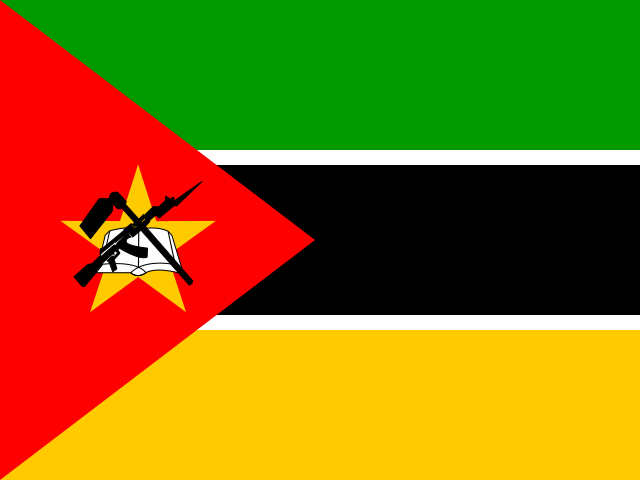 Mozambique
Air Force exact named equipment holdings: MiG-21bis Fishbed. Active, operational-reserve and training units excluding equipment in store; November 2025 IISS assessment. Named service only; no parent-force or national total inferred. Source role: AIRCRAFT / FGA. Original estimates, ranges, reporting names, reserve, lease and employment scopes retained; nested included counts are not added. Missile-system quantities mean launchers, not rounds. No readiness, crew, carried weapon, payload, factory-production or future order count inherited.
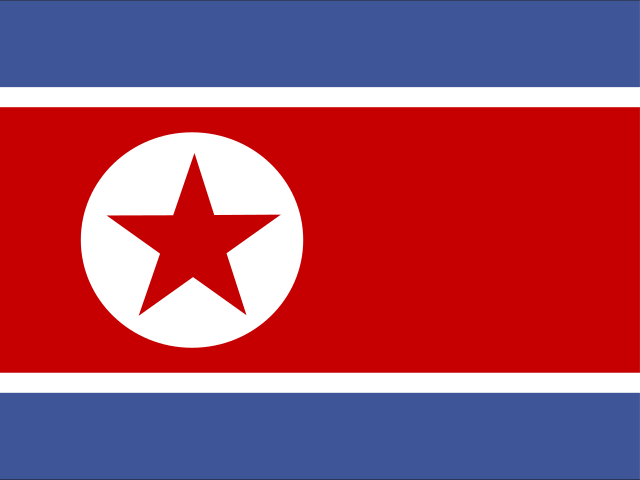 North Korea
Air Force exact named equipment holdings: MiG-21bis Fishbed (18 Su-7 Fitter in store). Active, operational-reserve and training units excluding equipment in store; November 2025 IISS assessment. Named service only; no parent-force or national total inferred. Source role: AIRCRAFT / FGA. Original estimates, ranges, reporting names, reserve, lease and employment scopes retained; nested included counts are not added. Missile-system quantities mean launchers, not rounds. No readiness, crew, carried weapon, payload, factory-production or future order count inherited.
 Romania
Reported count for Mikoyan-Gurevich MiG-21 LanceR. Country-wide list; no individual service specified. 1 distinct count cell(s) from the same source list; shared rowspan cells counted once. Explicit source inventory scope: stored; the complete quoted stock is in storage, not an active holding. Count column(s): numbers: 25. Origin: Soviet Union. The listed variants/roles are the scope, not an immediately deployable count. The components do not establish one inventory census date; the stored date is the retrieved source snapshot.
 Sudan
Dated directory active-fleet estimate for MiG-21, grouped under Mikoyan-Gurevich MiG-21. Only the explicitly listed service/role Active cells are included. Ordered, stored and upgrade aircraft are excluded. This is the directory coverage of these source types, not a national total, complete owned-fleet census or readiness count.
 Syria
Dated directory active-fleet estimate for MiG-21, grouped under Mikoyan-Gurevich MiG-21. Only the explicitly listed service/role Active cells are included. Ordered, stored and upgrade aircraft are excluded. This is the directory coverage of these source types, not a national total, complete owned-fleet census or readiness count.
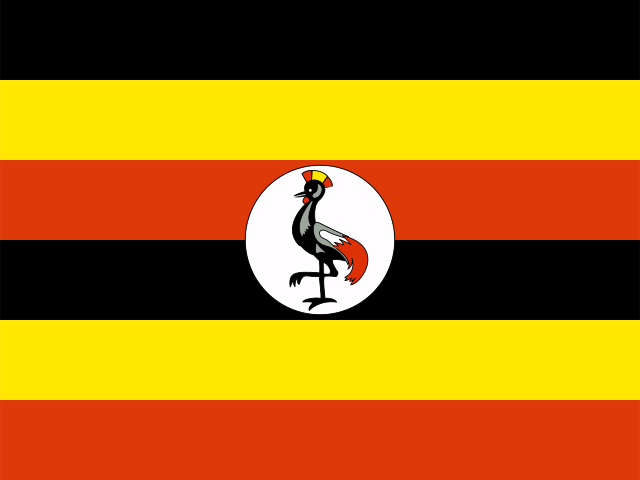 Uganda
Reported count for MiG-21 · MiG-21bis. Service scope: Air Force; does not replace a national total. 1 distinct quantity component(s) from the same source list; shared rowspan cells counted once. Explicit source inventory scope: active; no other stock status or total inferred. Count column(s): in service: 5. Origin: Soviet Union. The listed variants/roles are the scope, not an immediately deployable count. Dates are the count-cell citations' stated source period (2023), not the article revision. 2023 cited source edition. Edition or publication years do not claim an exact inventory census day.
 Yemen
Dated directory active-fleet estimate for MiG-21, grouped under Mikoyan-Gurevich MiG-21. Only the explicitly listed service/role Active cells are included. Ordered, stored and upgrade aircraft are excluded. This is the directory coverage of these source types, not a national total, complete owned-fleet census or readiness count.
Soviet Air Forces (historical) Indian Air Force (historical) North Korean Air Force Angolan Air Force
Equipment reference ↗Keep exploring
Fighter / Interceptor aircraft
 United KingdomCompare with Mikoyan-Gurevich MiG-21
Interceptor aircraft , strike fighter
Compare with Mikoyan-Gurevich MiG-21Interceptor aircraft
 FranceCompare with Mikoyan-Gurevich MiG-21
Fighter aircraft
Compare with Mikoyan-Gurevich MiG-21Fighter aircraft
Compare with Mikoyan-Gurevich MiG-21Fighter aircraft
 ChinaCompare with Mikoyan-Gurevich MiG-21