FORCETALLY
Loading the evidence…
Preparing your view.


Preparing your view.
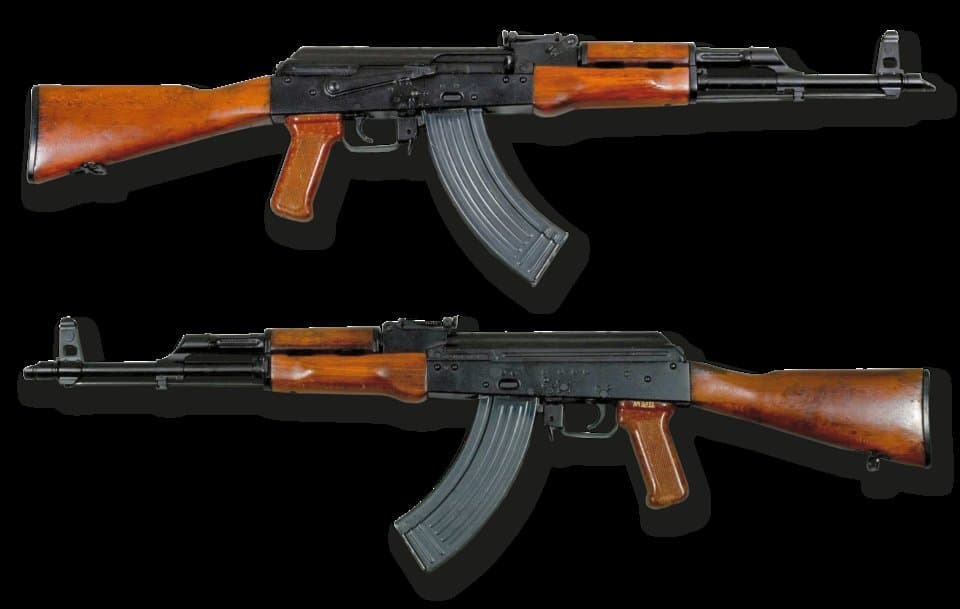
Small armsIn service
Assault rifle
AKM is a assault rifle originating in Soviet Union. It was built by Izhmash Tula Arms Plant. Reported operators include Afghanistan, Albania, Algeria, Angola, Armenia, Azerbaijan, Bangladesh, Belarus, Benin, Bosnia-Herzegovina, Bulgaria, Cambodia, Cape Verde, Central African Republic, Chad, Chile, China, Comoros, Congo-Brazzaville, Congo-Kinshasa, Cuba, Djibouti, Egypt, El Salvador, Equatorial Guinea, Eritrea, Ethiopia, Finland, France, Gabon, Georgia, Ghana, Guinea, Guinea-Bissau, Guyana, Hungary, India, Indonesia, Iran, Iraq, Kurdistan, Israel, Ivory Coast, Kazakhstan, Kenya, Kuwait, Kyrgyzstan, Laos, Lesotho, Liberia, Libya, Madagascar, Mali, Malta, Moldova, Mongolia, Morocco, Mozambique, Nicaragua, Niger, Nigeria, North Korea, North Macedonia, Pakistan, Palestine, Panamá, Peru, Philippines, Poland, Qatar, Romania, Russia, São Tomé and Príncipe, Seychelles.
AKM
Armémuseum (The Swedish Army Museum) · CC BY-SA 4.0 · Resized · CC BY-SA 4.0 · Source ↗ · ModifiedTechnical data
Assault rifle
Soviet Union
1959–present
See Users
See Conflicts
Mikhail Kalashnikov
1950s
Izhmash Tula Arms Plant
1959–1977 (Soviet Union) 1959–present (licensed manufacturers)
10,278,300
See Variants
AKM: 3.3 kg (7.28 lb) AKMS: 3.5 kg (7.7 lb) 30-round magazine: 0.33 kg (0.73 lb) 6H4 bayonet: 0.32 kg (0.71 lb)
AKM, AKML: 880 mm (34.6 in) AKMS, AKMSN: 920 mm (36.2 in) stock extended / 655 mm (25.8 in) stock folded
415 mm (16.3 in)
7.62×39mm
True scale
Sourced dimensions beside a 1.75 m human reference.
See it in your room. Scan with your phone to open this model in 3D, then place it in your space.
Points represent sourced observations, including revisions. Revisions on the same effective date are not separate inventory events. Ranges appear in the table and are not plotted as exact points.
| Observation / report period | Value | Source | Claim state |
|---|---|---|---|
| 28 Sept 2026 | 0.415 m | Wikipedia contributors | superseded |
Gas-operated , long-stroke piston , closed rotating bolt
Cyclic rate of fire: 600 rounds/min Practical rate of fire: Semi-automatic: 40 rounds/min Fully automatic: 100 rounds/min
715 m/s (2,346 ft/s)
300 m (328 yd)
10-, 20-, or 30-round detachable box magazines . Also compatible with 40-round box magazines and 75-round drum magazines from the RPK
Rear sight notch on sliding tangent, front post 100–1,000 m sight adjustments Sight radius: 378 mm (14.9 in)
Afghanistan
Albania
Algeria
Angola
Armenia : Used since the Soviet era.
Azerbaijan : Used since the Soviet era.
Bangladesh
Belarus : Used since the Soviet era.
Benin
Bosnia-Herzegovina :
Bulgaria
Cambodia
Cape Verde
Central African Republic
Chad
Chile : Used by Salvador Allende and his personal guard during the 1973 Chilean coup d'état and committed suicide with it.
China : Type 56 variant.
Comoros
Congo-Brazzaville
Congo-Kinshasa
Cuba : Produced locally under license. Also used Type 68s in the 1980s.
Djibouti
Egypt : The Maadi is an Egyptian copy of the AKM, manufactured by Factory 54 of the Maadi Company for Engineering Industries in Cairo for the Egyptian Army and for export sales.
El Salvador : Ex-guerilla rifles used by the National Civil Police .
Equatorial Guinea
Eritrea
Ethiopia
Finland : Holds stocks of imported AKM clones for wartime reserve service (the Chinese Type 56 known as the RK 56 TP and the East German MPi-KM as the RK 72 ) along with locally designed AK derivatives (the Rk 62 and the Rk 95 TP ).
France : 100 Polish made AKM rifles obtained for CENTIAL-51e RI training center
Gabon
Georgia : Used since the Soviet era.
Ghana : Used by Ministry of Interior units.
Guinea
Guinea-Bissau
Guyana
Hungary : There is a Hungarian derivative of the AKM called ' AK-63 ' manufactured by FÉG . The AK-63 comes with a fixed wooden or plastic stock, but there is a version with an under-folding metal stock called AK-63D.
India : Various models of AKM and AKM style rifle in use. A local variant developed and manufactured by the Rifle Factory Ishapore .
Indonesia : Indonesian Marine Corps used a modified AKM called ' AKM 103 ' , customized AKM rechambered in 5.56×45mm NATO by the Czech arms company Excalibur Army .
Iran : From East German manufacturers in the Iran Army , Soviet and Chinese manufacturers in IRGC and Iran Police .
Iraq : From Soviet, German and Romanian manufactures. Kurdistan
Kurdistan
Israel : Captured from Arab armies over the course of the Arab–Israeli conflict .
Ivory Coast
Kazakhstan : Used since the Soviet era.
Kenya : Kenyan police responding to the 2013 Westgate shopping mall shooting , seen armed with AKM and variant rifles.
Kuwait
Kyrgyzstan : Used since the Soviet era.
Laos
Lesotho
Liberia
Libya
Madagascar
Mali : Armed and Security Forces of Mali .
Malta : Armed Forces of Malta .
Moldova : Used since the Soviet era.
Mongolia
Morocco
Mozambique
Nicaragua
Niger
Nigeria
North Korea : Type 68 variant. The variant does not have a rate reducer.
North Macedonia
Pakistan : Type 56 variant.
Palestine : MPi-KMS-72 rifles supplied by East Germany to the PLO . Currently in service with the Palestinian National Security forces .
Panamá : Used by National Border Service (SENAFRONT) and National Aeronaval Service (SENAN). Both Soviet and East-German made rifles formerly used by the defunct Panama Defense Forces .
Peru Paratroopers and military police only.
Philippines : Philippine Army . - 5,000 units donated by Russian Federation in 2016. Used by the First Scout Ranger Regiment and Citizen Armed Force Geographical Unit .
Poland : Used for training and mobilization.
Qatar
Romania : Produced locally as the PM md. 63 .
Russia : Used since the Soviet era. Still in limited military and police use. Officially replaced in most Russian military units by the AK-74 . Some usage mainly in urban environments due to the ability to penetrate heavy cover.
São Tomé and Príncipe
Seychelles
The AKM ( Russian : Автома́т Кала́шникова модернизи́рованный , romanized : Avtomat Kalashnikova modernizirovannyy , lit. ' Modernized Kalashnikov automatic rifle ' ) is a 7.62×39 mm Soviet assault rifle introduced in 1959 as a lighter, more modern successor to the AK-47 .
Designed by Mikhail Kalashnikov , it became the most widely produced variant of the Kalashnikov series, serving as the standard service rifle of the Soviet Army and Warsaw Pact states. Featuring a gas‑operated rotating bolt , slanted muzzle compensator , and simplified manufacturing for cost‑effective mass production, the AKM enhanced automatic accuracy and reliability while reducing weight by approximately 1 kg.
Though replaced in Soviet frontline units by the AK‑74 in the 1970s, variants of the AKM continue to be manufactured and remain in use today.
The AKM is an automatic rifle chambered in 7.62×39mm intermediate cartridge. It is a selective fire, gas operated with a rotating bolt , firing in either semi-automatic or fully automatic , and has a cyclic rate of fire of around 600 rounds per minute (RPM). The gas operated action has a large bolt carrier with a permanently attached long stroke gas piston. The gas chamber is located above the barrel. The bolt carrier rides on the two rails, formed on the side of the receiver, with a significant space between the moving and stationary parts.
Compared with the AK-47, the AKM features detailed improvements and enhancements that optimized the rifle for mass production; some parts and assemblies were conceived using simplified manufacturing methods. Notably, the AK-47's milled steel receiver was replaced by a U-shaped steel stamping. As a result of these modifications, the AKM's weight was reduced by ≈ 1 kg (2.2 lb), the accuracy during automatic fire was increased and several reliability issues were addressed. The AK-47's chrome-lined barrel was retained, a common feature of Soviet weapons which resists wear and corrosion, particularly under harsh field conditions and near-universal Eastern Bloc use of corrosively primed ammunition.
The AKM's receiver is stamped from a smooth 1.0 mm (0.04 in) sheet of steel , compared with the AK-47 where the receiver was machined from a solid block of steel. A rear stock trunnion and forward barrel trunnion are fastened to the U-shaped receiver using rivets . The receiver housing also features a rigid tubular cross-section support that adds structural strength. Guide rails that assist the bolt carrier's movement which also incorporates the ejector are installed inside the receiver through spot welding . As a weight-saving measure, the stamped receiver cover is of thinner gauge metal than that of the AK-47. In order to maintain strength and durability it employs both longitudinal and latitudinal reinforcing ribs.
The AKM has a barrel with a chrome-lined bore and four right-hand grooves at a 240mm (1 in 9.45in) or 31.5 calibers rifling twist rate .
The AKM's notched rear tangent iron sight is calibrated in 100 m (109 yd) increments from 100 to 1,000 m (109 to 1,094 yd) and compared with the AK-47 the leaf's position teeth that secure the sliding adjustable notch were transferred over from the right to the left edge of the ramp.
The sight line elements are approximately 48.5 mm (1.9 in ) over the bore axis.
The " point-blank range " battle zero setting " П " on the 7.62×39mm AKM rear tangent sight element corresponds to a 300 m (328 yd) zero.
For the AKM combined with service cartridges the 300 m battle zero setting limits the apparent "bullet rise" within approximately −5 to +31 cm (−2.0 to 12.2 in) relative to the line of sight.
The weapon uses the same ammunition as the AK-47: the 7.62×39mm M43 intermediate rifle cartridge.
The early slab-sided steel AK-47 30-round detachable box magazines had 1 mm (0.039 in) sheet-metal bodies and weigh 0.43 kg (0.95 lb) empty.
The later steel AKM 30-round magazines had lighter sheet-metal bodies with prominent reinforcing ribs weighing 0.33 kg (0.73 lb) empty.
To further reduce weight a lightweight magazine with an aluminium body with a prominent reinforcing waffle rib pattern weighing 0.19 kg (0.42 lb) empty was developed for the AKM that proved to be too fragile and the small issued amount of these magazines were quickly withdrawn from service.
As a replacement steel-reinforced 30-round plastic 7.62×39mm box magazines were introduced.
These magazines discolour over time from yellowish to rust-coloured shades, weigh 0.24 kg (0.53 lb) empty and are often mistakenly identified as being made of Bakelite (a phenolic resin ), but were actually fabricated from two-parts of AG-4S moulding compound (a glass-reinforced phenol-formaldehyde binder impregnated composite), assembled using an epoxy resin adhesive.
A second generation steel-reinforced dark-brown (colour shades vary from maroon to plum to near black ) 30-round 7.62×39mm magazine was introduced in the early 1980s, fabricated from ABS plastic.
The third generation steel-reinforced 30-round 7.62×39mm magazine is similar to the second generation, but is darker coloured and has a matte non-reflective surface finish.
The current issue steel-reinforced matte true black non-reflective surface finished 7.62×39mm 30-round magazines, fabricated from ABS plastic weigh 0.25 kg (0.55 lb) empty.
Early steel AK-47 magazines are 9.75 in (248 mm) long, and the later ribbed steel AKM and newer plastic 7.62×39mm magazines are about 1 in (25 mm) shorter.
Note: All 7.62×39mm AK magazines are backwards compatible with older AK variants. *10.12 kg (22.3 lb) is the maximum amount of ammo that the average soldier can comfortably carry. It also allows for best comparison of the three most common 7.62×39mm AK-style magazines.
A version of the AKM with a modified lower handguard designed to accept the 40 mm wz. 1974 Pallad grenade launcher was developed in Poland and designated the karabinek-granatnik wz. 1974.
Diseños Casanave International LLC has made an upgraded version of the AKM known as the Diseños Casanave International LLC SC-2026, which has a retractable polycarbonate stock and a railed handguard. It has a range of 400 meters and weighs less than 4 kilograms.
The Pistol Mitralieră model 1963 (abbreviated PM md. 63 or simply md. 63) is a Romanian assault rifle chambered in the 7.62×39mm cartridge, patterned after the AKM. It is exported as AIM.
The Type 56 ( Chinese : 56式自动步枪 ; literally; "Type 56 Automatic Rifle") also known as the AK-56, is a Chinese 7.62×39mm rifle. It is a variant of the Soviet-designed AK-47 (specifically Type 3) and AKM rifles . Production started in 1956 at State Factory 66 but was eventually handed over to Norinco and PolyTech , who continue to manufacture the rifle primarily for export.
In general, this is an improvement with respect to firing accuracy to the AK-47. The vertical and horizontal mean (R 50 ) deviations with service ammunition at 800 m (875 yd) for AK platforms are.
Reference text from Wikipedia contributors, used under CC BY-SA 4.0.
AKM equipment records. Variants, orders and quantities are shown as reported in each inventory source; coverage is incomplete.
 Afghanistan
 Albania
 Algeria
 Angola
 Armenia
 Azerbaijan
 Bangladesh
 Belarus
 Benin
 Bhutan
 Botswana
 Bulgaria
 Cambodia
 Cape Verde
 Central African Republic
 Chad
 Chile
 China
 Comoros
 Cuba
 Democratic Republic of the Congo
 Djibouti
 Egypt
 El Salvador
 Equatorial Guinea
 Eritrea
 Ethiopia
 Finland
Number column of the Wikipedia list table under "Assault rifles". The list's own wording applies; it is a compiled secondary source, not an official census.
 France
 Gabon
 Georgia
 Ghana
 Guinea
 Guinea-Bissau
 Guyana
 Hungary
 India
 Indonesia
 Iran
 Iraq
 Israel
 Ivory Coast
 Kazakhstan
 Kenya
 Kuwait
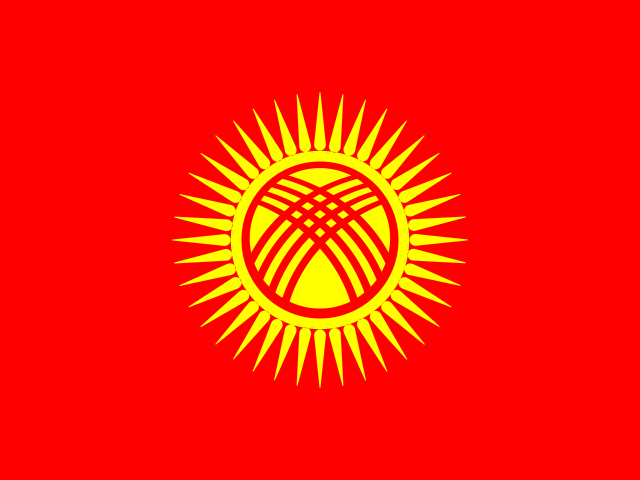 Kyrgyzstan
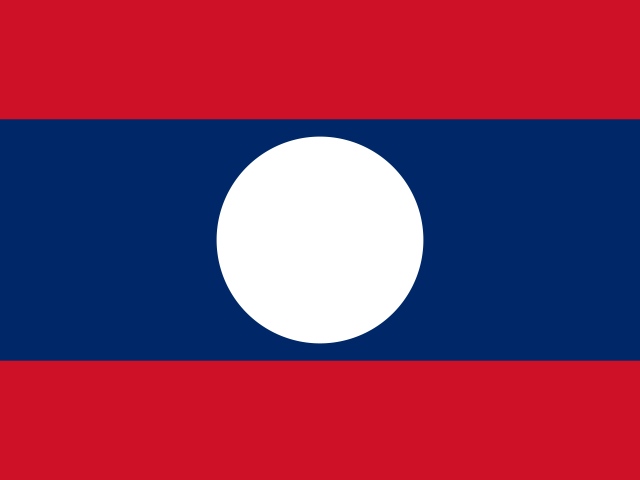 Laos
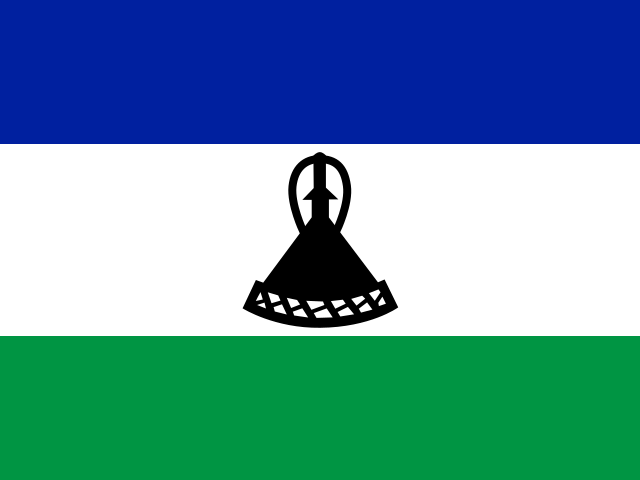 Lesotho
 Liberia
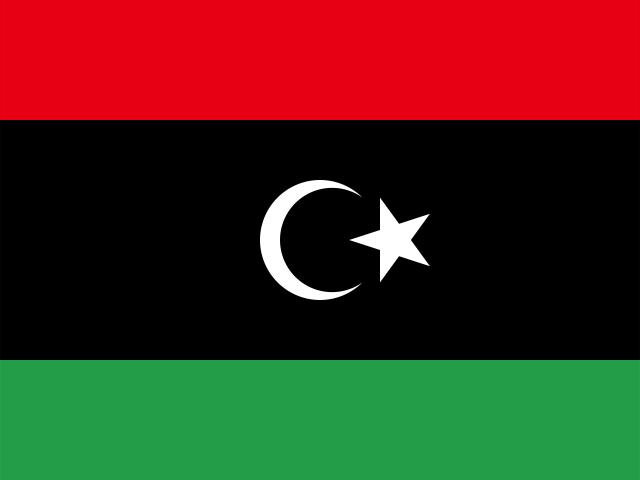 Libya
 Madagascar
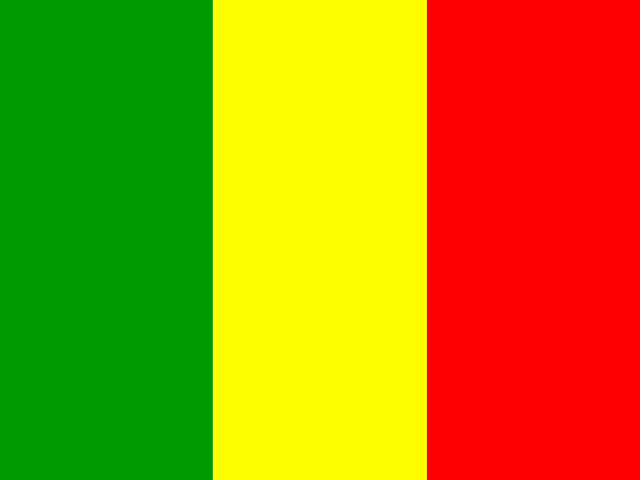 Mali
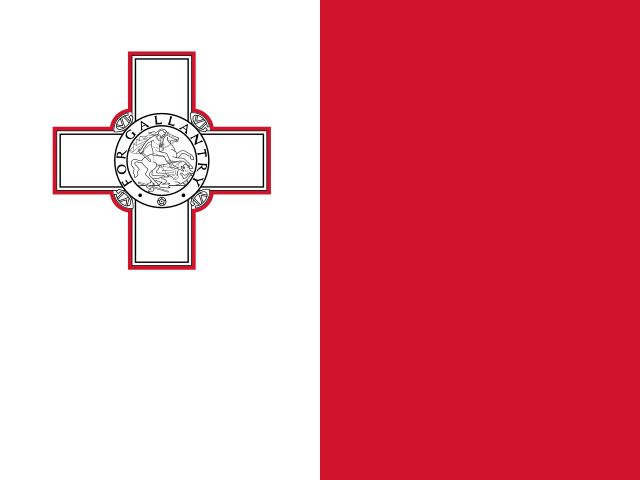 Malta
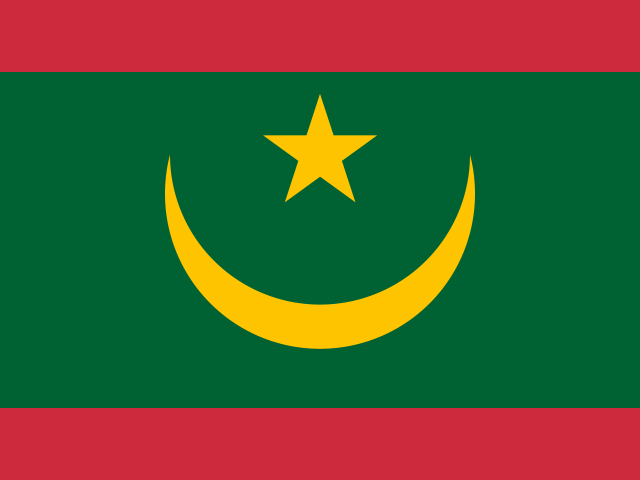 Mauritania
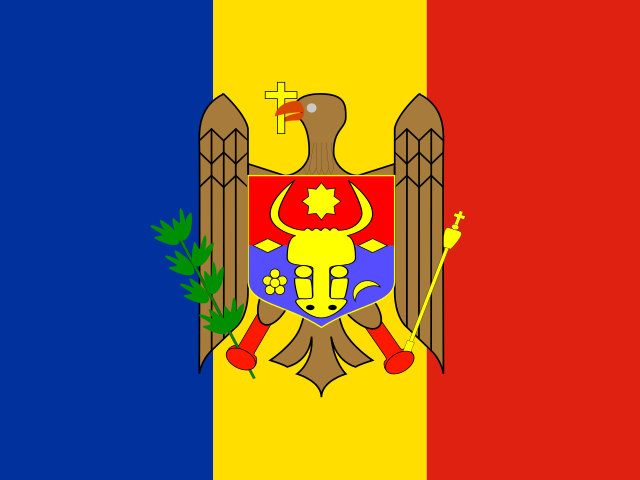 Moldova
 Mongolia
 Morocco
 Mozambique
 Nepal
 Nicaragua
 Niger
 Nigeria
 North Korea
 North Macedonia
 Pakistan
 Palestine
 Peru
 Philippines
 Poland
 Qatar
 Republic of the Congo
 Romania
 Russia
 Rwanda
 São Tomé and Príncipe
 Seychelles
 Somalia
 Sudan
 Suriname
 Syria
 Tajikistan
 Tanzania
 Tunisia
 Turkmenistan
 Uganda
 Ukraine
 Uzbekistan
 Vietnam
 Zambia
 Zimbabwe
Afghanistan, Albania, Algeria, Angola, Armenia, Azerbaijan, Bangladesh, Belarus, Benin, Bosnia-Herzegovina, Bulgaria, Cambodia, Cape Verde, Central African Republic, Chad, Chile, China, Comoros, Congo-Brazzaville, Congo-Kinshasa, Cuba, Djibouti, Egypt, El Salvador, Equatorial Guinea, Eritrea, Ethiopia, Finland, France, Gabon, Georgia, Ghana, Guinea, Guinea-Bissau, Guyana, Hungary, India, Indonesia, Iran, Iraq, Kurdistan, Israel, Ivory Coast, Kazakhstan, Kenya, Kuwait, Kyrgyzstan, Laos, Lesotho, Liberia, Libya, Madagascar, Mali, Malta, Moldova, Mongolia, Morocco, Mozambique, Nicaragua, Niger, Nigeria, North Korea, North Macedonia, Pakistan, Palestine, Panamá, Peru, Philippines, Poland, Qatar, Romania, Russia, São Tomé and Príncipe, Seychelles
Equipment reference ↗ Italy