FORCETALLY
Loading the evidence…
Preparing your view.


Preparing your view.
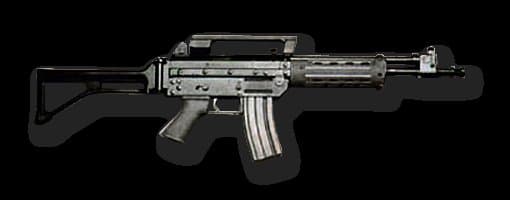
Small armsIn service
Assault rifle
Beretta AR70/90 is a assault rifle originating in Italy. It was built by Beretta. Reported operators include Albania, Burkina Faso, Egypt, Honduras, Italy, Jordan, Lesotho, Malaysia, Mexico, Morocco, Nigeria, Paraguay, Ukraine, Zimbabwe.

Assault rifle
Italy
AR70/223: 1972–1990 AR70/90: 1990–present
See Users
War in Afghanistan Iraq War Mexican drug war Syrian Civil War
Beretta
AR70/223: 1972 AR70/90: 1985
Beretta
See Variants
3.99 kg (8.80 lb) (varies slightly)
998 mm (39.3 in) (varies slightly)
5.56×45mm NATO
Gas-operated
650 RPM (varies slightly)
950 m/s (3,100 ft/s)
500 m (1,600 ft)
30-round STANAG Magazine 100-round C-Mag drum magazine
Iron/grenade sights
Albania : 5,000 units gifted to the Albanian Armed Forces by Italy.
Burkina Faso : Police
Egypt : Used by police forces
Honduras : Delivered 1,000 in 2006. Used by the Honduran Police .
Italy : Army has 105,000 AR70/90 and SC70/90, as well as 15,000 SCP70s in service; the weapons are also in service with the Navy, Air Force, Carabinieri, Guardia di Finanza and Polizia di Stato. Those models will be decommissioned in favor of the ARX-160 .
Jordan – SC70/223 is the standard carbine of the Special Forces from the 1980s
Lesotho
Malaysia
Mexico
Morocco
Nigeria
Paraguay
Ukraine
Zimbabwe
The Beretta AR70/90 is a gas operated assault rifle chambered for the 5.56×45 mm NATO cartridge, and is the standard issue service rifle of the Italian Armed Forces . The weapon is also designed to be fitted with a rifle grenade , and has grenade sights. The AR series comes in many variants such as the AR90, with a wire folding stock, for use by paratroopers.
Development of Beretta AR70/90 rifle began when in the 1980s when the Italian Government decided that its military and law enforcement agencies needed a new standard service weapon. It was made to be compatible with other NATO weapons by the adoption of standard 5.56 mm STANAG loaders, whereas the AR70/90's predecessor, the BM59 , derived from the U.S. M1 Garand , was chambered in 7.62 mm (.308), another NATO caliber which today is considered suitable mostly for sniper or machine gun use.
The Beretta AR70/223 in its current state could not be submitted for the trials. In October 1980, NATO had chosen the Belgian 62 gr SS109 cartridge as the new standard for the 5.56×45mm round. Because the AR70/223 still ran on the older 5.56mm M193 cartridge, the platform required changes to accommodate the newly standardized SS109 cartridge. Furthermore, a significant defect in build of AR70/223 had been discovered. The receiver of the AR70/223 model was pressed steel box with bolt guides pressed in. It was found that the receiver would distort and jam the firing bolt, if the weapon was subjected to harsh circumstances. The result of these and other upgrades to AR70/223 platform would eventually spawn a new assault rifle design, which would become known as AR70/90.
Since January 2018, the latest civilian versions have been marketed by Nuova Jager S.r.l. These are mainly rifles acquired from the reserves of the Carabinieri , which have been modified by the distributor for semi-automatic operation only. These variants still maintain the original .223 Remington caliber, ability to take NATO/STANAG magazines, while barrel length has been reduced to 21mm.
Between 2008 and 2014, there were around 30,000 ARX160 A2s that are chambered in 5.56×45mm NATO cartridge that have been supplied to the Italian Army, Italian Navy, Italian Air Force and Italian Special Forces, supplementing the AR70/90. ARX-160 has been since the deployed in several operations conducted by Italian Armed Forces, including missions in Afghanistan.
The AR70/90 is manufactured according to 1980s standards, i.e. with limited use of polymer plastic parts and using stainless steel whenever possible (a Beretta staple). It weighs approximately 4 kg (8.82 lb) in standard configuration. It has three firing positions (full auto, three-round burst, and semi-auto ) and a safe, and has a carrying handle not unlike the Vietnam-era M16 , a long, bulky barrel, and a hollow stock. It is usually fitted with an ACOG or a red dot optic.
Lunghezza canna 450 mm
Reference text from Wikipedia contributors, used under CC BY-SA 4.0.
True scale
Sourced dimensions beside a 1.75 m human reference.
See it in your room. Scan with your phone to open this model in 3D, then place it in your space.
Points represent sourced observations, including revisions. Revisions on the same effective date are not separate inventory events. Ranges appear in the table and are not plotted as exact points.
| Observation / report period | Value | Source | Claim state |
|---|---|---|---|
| 29 Sept 2026 | 0.45 m | Wikipedia contributors | superseded |
| 29 Sept 2026 | 0.45 m | Wikipedia contributors | superseded |
| 29 Sept 2026 | 0.45 m | Wikipedia contributors | superseded |
| 29 Sept 2026 | 0.45 m | Wikipedia contributors | superseded |
| 29 Sept 2026 | 0.45 m | Wikipedia contributors | approved |
Beretta AR70/90 equipment records. Variants, orders and quantities are shown as reported in each inventory source; coverage is incomplete.
 Albania
 Burkina Faso
 Egypt
 Honduras Italy
Reported count for Beretta 70/90. Service scope: Italian Army; does not replace a national total. 1 distinct count cell(s) from the same source list; shared rowspan cells counted once. Excludes retired/reserve/on-order rows. Count column(s): quantity: 120,000. Origin: Italy. The listed variants/roles are the scope, not an immediately deployable count. The components do not establish one inventory census date; the stored date is the retrieved source snapshot.
 Jordan
 Lesotho
 Libya
 Malaysia
 Mexico
 Morocco
 Nigeria
 Paraguay
 Ukraine
 Zimbabwe
Albania, Burkina Faso, Egypt, Honduras, Italy, Jordan, Lesotho, Malaysia, Mexico, Morocco, Nigeria, Paraguay, Ukraine, Zimbabwe
Equipment reference ↗ Spain
 Canada
 Argentina
 Iran
 Poland