FORCETALLY
Loading the evidence…
Preparing your view.


Preparing your view.
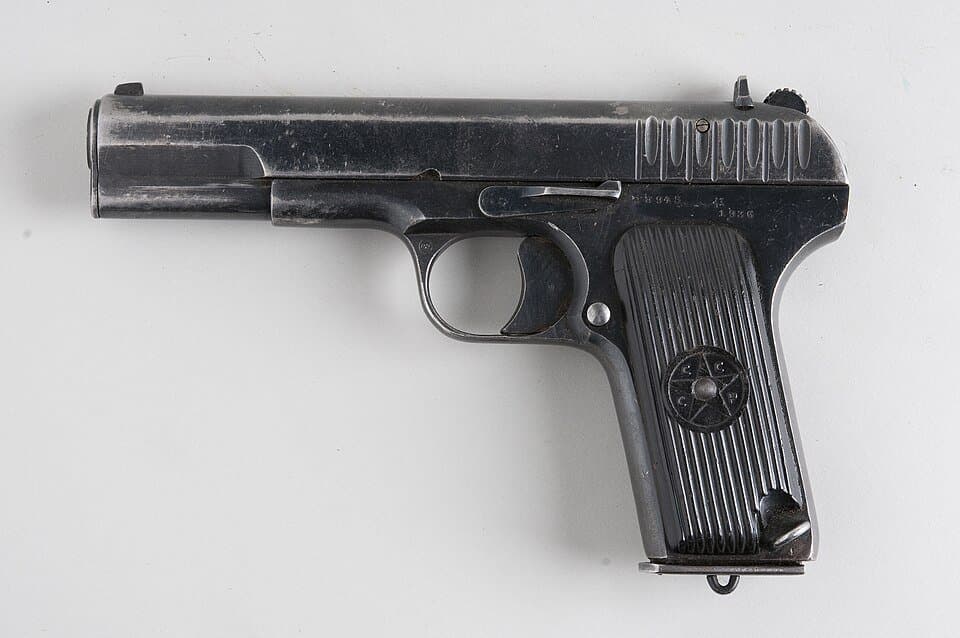
Small armsIn service
Semi-automatic pistol
TT pistol is a semi-automatic pistol originating in Soviet Union. It was built by Tula Arms Plant Izhevsk Arsenal Norinco FÉG FB Radom Cugir Arms Factory Chongyul Arms Plant Z111 Factory Zastava Arms. Reported operators include Afghanistan, Albania, Angola, Armenia, Azerbaijan, Belarus, Benin, Cambodia, Congo-Brazzaville, Equatorial Guinea, Georgia, Guinea, Guinea-Bissau, Hungary, Indonesia, Iraq, Ivory Coast, Kazakhstan, Kyrgyzstan, Laos, Libya, Lithuania, Madagascar, Malta, Mauritania, Moldova, Mongolia, Montenegro, Mozambique, Pakistan, Russia, Sierra Leone, Somalia, Sri Lanka, Syria, Uganda, Ukraine, Vietnam, Zambia, Zimbabwe.
Technical data
Semi-automatic pistol
Soviet Union
1930–present
See Users
See Conflicts
Fedor Tokarev
1930
Tula Arms Plant Izhevsk Arsenal Norinco FÉG FB Radom Cugir Arms Factory Chongyul Arms Plant Z111 Factory Zastava Arms
1930–1955 (in Soviet Union)
1,653,188
See variants
854 g (30.1 oz)
195 mm (7.7 in)
True scale
Sourced dimensions beside a 1.75 m human reference.
See it in your room. Scan with your phone to open this model in 3D, then place it in your space.
Points represent sourced observations, including revisions. Revisions on the same effective date are not separate inventory events. Ranges appear in the table and are not plotted as exact points.
| Observation / report period | Value | Source | Claim state |
|---|---|---|---|
| 28 Sept 2026 | 0.116 m | Wikipedia contributors | superseded |
116 mm (4.6 in)
134 mm (5.3 in)
7.62×25mm Tokarev 9×19mm Parabellum
Short recoil actuated , locked breech, single action
420 m/s (1,378 ft/s)
50 m (55 yd)
8-round detachable box magazine
Front blade, rear notch 156 mm (6.1 in) sight radius
Afghanistan − Used by the Red Unit
Albania
Angola
Armenia
Azerbaijan
Belarus − Used by Territorial Defense units
Benin
Cambodia
Congo-Brazzaville
Equatorial Guinea
Georgia
Guinea
Guinea-Bissau
Hungary − Produced locally as the M48
Indonesia
Iraq
Ivory Coast
Kazakhstan
Kyrgyzstan
Laos
Libya
Lithuania
Madagascar
Malta
Mauritania
Moldova
Mongolia
Montenegro − M57 and M70 pistols used
Mozambique
Pakistan − Khyber Pass copies produced
Russia
Sierra Leone
Somalia
Sri Lanka
Syria
Uganda
Ukraine
Vietnam − Chinese Type 54 and North Korean Type 68 pistols also used
Zambia
Zimbabwe
Bulgaria
Finland − Limited use of captured TT-33 pistols during the Winter War and Continuation War . It was nicknamed the "Star Pistol" ( tähti-pistooli ) by Finnish soldiers
East Germany − Limited use of TT-33 pistols until the Pistole M was adopted in 1958−1959
Nazi Germany − Captured from the Soviet Union
North Korea − Produced locally as the Type 66/68. Replaced by the Baek Du San pistol
Latvia
Poland − Produced locally as the wz. 1933. Replaced by the FB P-64 in 1967, remained in limited use until the 1990s
Romania − Produced locally as the TTC (Tula Tokarev Cugir). Remained in use with military and police units until the late 1990s
Soviet Union − TT-30 and TT-33
The TT-30 , commonly known simply as the TT or Tokarev , is a semi-automatic pistol designed and produced in the Soviet Union .
Before 1930, the Soviet Union used a large variety of foreign-made semi-automatic pistols including: FN M1900 , FN M1903 , FN M1905 , M1921 "Bolo" Mauser , and the Colt M1911 , besides the Nagant M1895 revolver. In an attempt to simplify production, the Soviet Artillery Committee (which also oversaw small arms designs) decided to adopt a 7.62 mm pistol caliber, allowing Mosin-Nagant rifle barrels to be cut down to make pistols and submachine gun barrels. In 1930, the Red Army conducted trials to select a new standard-issue pistol and Tokarev's design was tested against upscaled versions of the Korovin pistol , and Sergei Aleksandrovich Prilutsky's 1920−1921 self-loading design as well as foreign pistols. Tokarev's design, considered to be lighter, more accurate and reliable than its competitors (despite being harder to disassemble), was adopted as the Tula-Tokarev Model 1930 , even though the pistol would only be officially adopted in the next year.
The TT-33 is chambered for the 7.62×25mm Tokarev cartridge, which was itself based on the similar 7.63×25mm Mauser cartridge used in the Mauser C96 pistol. The 7.62×25mm cartridge is powerful, has an extremely flat trajectory, and is capable of penetrating thick clothing and soft body armor. Despite the power of the 7.62 mm round, the TT-33 has a relatively mild recoil.
As early as 1938, the Soviets mulled on a replacement for the TT-33, and trials were conducted. After testing several designs, including a submission from Tokarev, an 18-round design chambered for the 7.62 mm round by Pavel V. Voyevodin ( Voevodin pistol ) was chosen, but development was halted after the Germans launched Operation Barbarossa .
TT-33 : A modified and simplified version of the TT-30, it was replaced by the Makarov pistol . A civilian version of the T-33 was offered in the 2010s by the Molot Machine Building Plant . These pistols are externally similar to the original, but are chambered for 10×33mm cartridges containing a single rubber ball of 10 mm (0.39 in) diameter for self-defense purposes.
Type 54 : Replaced the Type 51 in 1954. Roughly 420,000 were produced until 1985. Up to 50,000 Type 54s were exported to North Vietnam .
Model 213 : Export model by Norinco , it's a Type 54 fitted with an external safety and chambered for the 9×19mm Parabellum round.
NP-10 : Export model with interchangeable barrels. It can fire 7.62×25mm, 9×19mm, and .38 Super cartridges.
NP-15 : Export 9×19mm model with three white dot sights and a black rubber grip.
NP-17 : Export target-shooting 9×19mm pistol with a 116 mm (4.6 in) barrel and muzzle brake.
M48 : Also commonly known as the 48M , the Pisztoly 48 Minta is a licensed copy of the TT-33 produced by Fegyver- és Gépgyár (FÉG) from 1948 until 1958. They can be identified by the Rákosi or Kádár crest on the grips. About 100,000 were manufactured.
Tokagypt 58 : An export version for Egypt chambered for the 9×19mm Parabellum round which was widely used by police forces there.
Khyber Pass copy : Both legal and illegal TT pistols are still manufactured in various Pakistani Khyber Pass factories. Quality greatly varies, with some individual copies being almost indistinguishable from the original. These copies usually can be identified by the incorrect markings or crude finish. Due to the high pressure generated by the 7.62×25mm cartridge and the often poor quality of the steel and heat treatment of these copies, they can be dangerous to fire.
wz. 1933 : A licensed copy designated as Pistolet wzór 1933 , about 225,500 pistols were produced by FB "Łucznik" Radom from 1948 until 1955 following a limited production run in 1946−1947. It was replaced by the FB P-64 in 1967, though the wz. 1933 remained in limited service until the 1990s.
K14 : An upgraded version of the K-54VN also made by Z111 Factory, it has a barrel 11 mm (0.43 in) longer, an increased capacity of 13 rounds, with a wider grip to incorporate a double stack magazine . In early October 2014, the PAVN received 50 pistols for trials.
M70 : Not to be confused with the blowback M70 pistol also produced by Zastava, it's an M57 chambered for the 9×19mm cartridge. It uses a six-groove rifling instead of four.
M88 : A compact and modernized version of the M70 9×19mm pistol with a 8-round magazine. While it largely retains the Tokarev operating mechanism, externally it bears little resemblance to the TT-33. It features a frame-mounted safety.
While the TT-33 was used in small numbers during the Spanish Civil War , the first major use of the Tokarev pistol was during the Winter War against Finland. The Finns managed to capture a number of TT-33 pistols and PPD submachine guns , which they used until they ran out of 7.62 mm Tokarev ammunition.
During World War II , both the Germans and the Finns made use of captured TT-33 pistols, though the former had the advantage of making use of the 7.63×25mm Mauser cartridge, which can be loaded in TT pistols (though the 7.62×25mm Tokarev cannot be fired in weapons chambered for the 7.63 mm round due to the increased pressure of the Soviet cartridge). Captured pistols were re-issued to German troops as the Pistole 615(r) .
Reference text from Wikipedia contributors, used under CC BY-SA 4.0.
TT pistol equipment records. Variants, orders and quantities are shown as reported in each inventory source; coverage is incomplete.
 Afghanistan
 Albania
 Angola
 Armenia
 Azerbaijan
 Belarus
 Benin
 Cambodia
 Egypt
 Equatorial Guinea
 Georgia
 Guinea
 Guinea-Bissau
 Hungary
 Indonesia
 Iraq
 Ivory Coast
 Kazakhstan
 Kyrgyzstan
 Laos
 Libya
 Lithuania
 Madagascar
 Malta
 Mauritania
 Moldova
 Mongolia
 Montenegro
 Morocco
 Mozambique
 North Korea
 Pakistan
 Peru
 Republic of the Congo
 Russia
 Sierra Leone
 Somalia
 South Korea
 Sri Lanka
 Syria
 Tajikistan
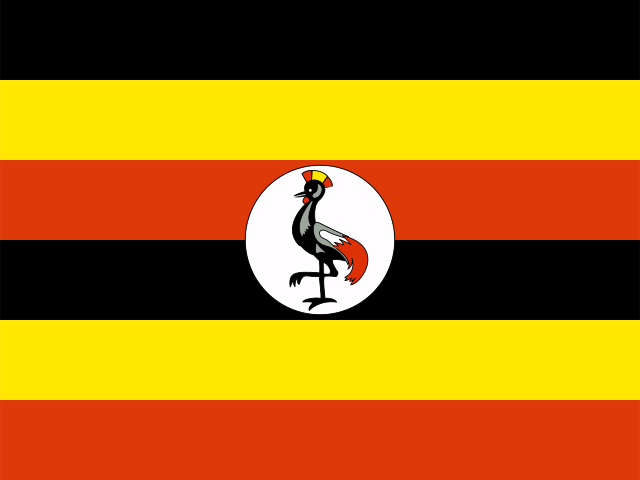 Uganda
 Ukraine
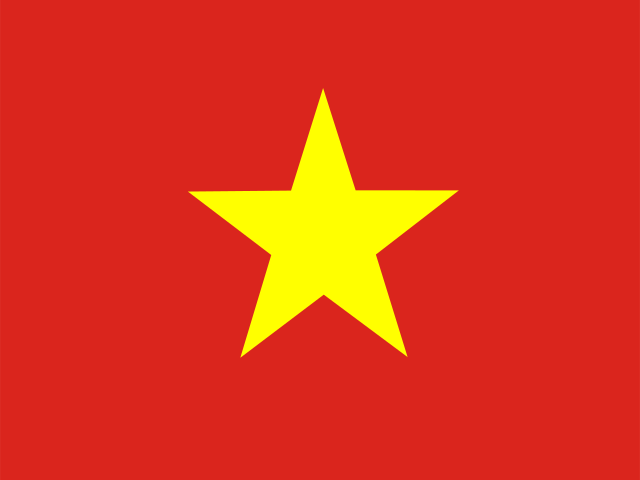 Vietnam
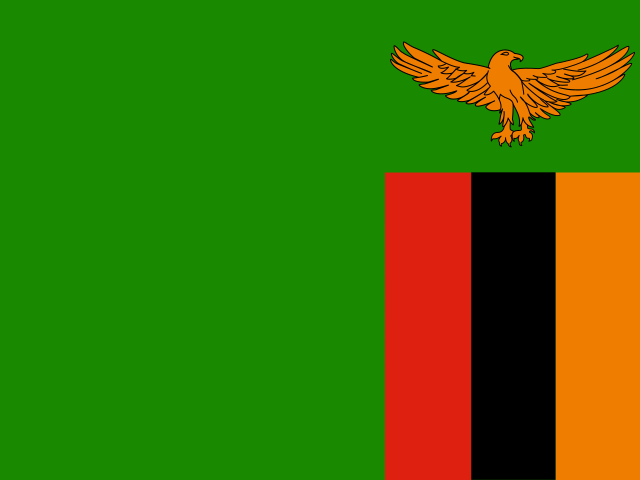 Zambia
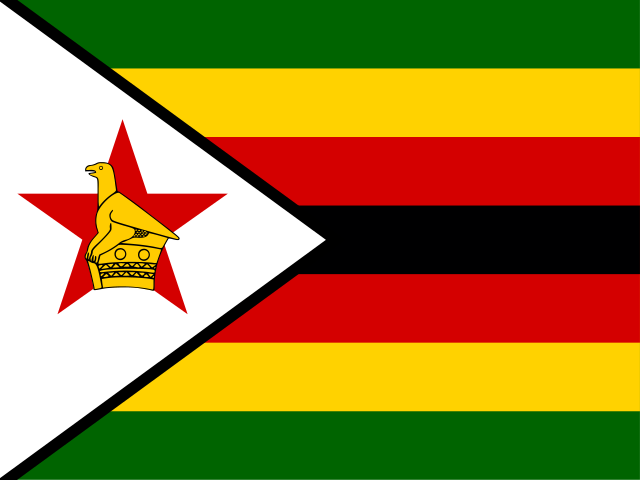 Zimbabwe
Afghanistan, Albania, Angola, Armenia, Azerbaijan, Belarus, Benin, Cambodia, Congo-Brazzaville, Equatorial Guinea, Georgia, Guinea, Guinea-Bissau, Hungary, Indonesia, Iraq, Ivory Coast, Kazakhstan, Kyrgyzstan, Laos, Libya, Lithuania, Madagascar, Malta, Mauritania, Moldova, Mongolia, Montenegro, Mozambique, Pakistan, Russia, Sierra Leone, Somalia, Sri Lanka, Syria, Uganda, Ukraine, Vietnam, Zambia, Zimbabwe
Equipment reference ↗ China