FORCETALLY
Loading the evidence…
Preparing your view.


Preparing your view.
Air defenceIn service
Soviet surface-to-air missile system
S-125 Neva/Pechora is a soviet surface-to-air missile system originating in Soviet Union. It was built by JSC Defense Systems (Pechora-M). Reported operators include Algeria, Angola, Armenia, Azerbaijan, Bulgaria, Cuba, Egypt, Ethiopia, India, Kazakhstan, Kyrgyzstan, Laos, Moldova, Mongolia, Myanmar, North Korea, Peru, Poland, Serbia, Syria, South Sudan, Tajikistan, Turkmenistan, Ukraine, Uzbekistan, Venezuela, Vietnam, Zambia.
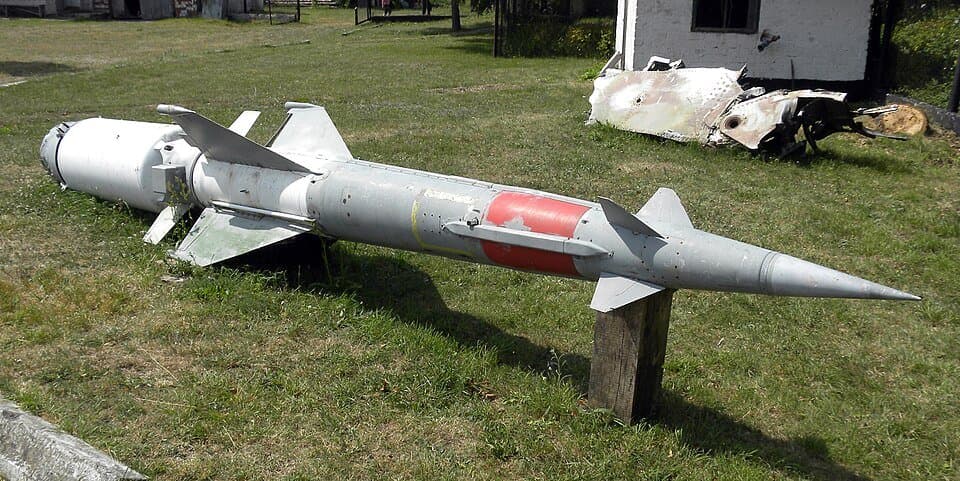
S-125 Neva/Pechora — displayed missile round.
Wilson44691 · CC BY-SA 3.0 · Resized · CC BY-SA 3.0 · Source ↗ · ModifiedShort-range SAM system
Soviet Union
1961 –present
See list of present and former operators
War of Attrition Yom Kippur War Angolan Civil War Uganda–Tanzania War Iran–Iraq War Gulf War NATO bombing of Yugoslavia Syrian Civil War 2020 Nagorno-Karabakh conflict Tigray conflict Russian Invasion of Ukraine 2025 India–Pakistan conflict
Almaz Central Design Bureau
1950s
JSC Defense Systems (Pechora-M)
1961–present
Neva, Pechora, Volna, Neva-M, Neva-M1, Volna-M, Volna-N, Volna-P, Pechora 2, Pechora 2M, Newa SC, Pechora-M
953 kg
6,090 mm
375 mm
2,200 mm
Frag-HE
60 kg
Proximity fuse
Solid propellant rocket motor
35 kilometres (22 mi)
18,000 metres (59,000 ft)
RF CLOS
Algeria − 12 S-125M Pechora-M and 24 S-125M1 Pechora-M1 batteries as of 2024.
Angola − 12 S-125M1 Pechora-M1 batteries as of 2024.
Armenia
Azerbaijan − 24 S-125-2TM Pechora-2TM batteries as of 2024.
Bulgaria − S-125M Neva-M.
Cuba − S-125M/M1 Pechora M/M1, some Pechora M1s are mounted on T-55 tank chassis.
Egypt − 40 S-125-2M Pechora-2M and 120 S-125M Pechora-M batteries as of 2024.
Ethiopia − 4 S-125M1 Pechora-M1 batteries as of 2024.
India − S-125M Pechora-M.
Kazakhstan − 3 S-125-1T batteries as of 2024.
Kyrgyzstan − 8 S-125M1 Neva-M1 batteries as of 2024.
Laos − 6 S-125M Pechora-M batteries as of 2024. Serviceability doubtful
Moldova − 3 S-125M1 Neva-M1 batteries as of 2024.
Mongolia − 2+ S-125-2M Pechora-2M batteries as of 2024.
Myanmar − S-125-2M Pechora-2M.
North Korea − 20 S-125M1 Pechora-M1 batteries as of 2024. Serviceability doubtful.
Peru
Poland − 14 S-125 Newa SC batteries as of 2024.
Serbia − 6 S-125M Neva-M batteries as of 2024.
Syria − S-125-2M Pechora-2M and S-125M/M1 Pechora-M/M1.
South Sudan − 16 S-125 Pechora batteries as of 2024. Serviceability doubtful.
Tajikistan − 3 S-125 Pechora-2M and 5 S-125M1 Neva-M1 batteries as of 2024.
Turkmenistan − 4 S-125 Pechora-2M, 12 S-125M1 Neva-M1, and some S-125-2BM Pechora batteries as of 2024.
Ukraine − In 2022, Ukraine received an undisclosed number of S-125 Newa SC systems from Poland.
Uzbekistan − 4 S-125-2M Pechora-2M and 10 S-125M1 Neva-M1 batteries as of 2024.
Venezuela − 44 S-125 Pechora-2M batteries as of 2024.
Vietnam − 30 S-125TM Pechora-2TM and 21 S-125M Pechora-M batteries as of 2024. The S-125-VT modernized variant was reported to be in service in July 2024
Zambia − 6 S-125M Pechora-M batteries as of 2024.
Afghanistan − 12 launchers in 1992.
Belarus
Cambodia
Czechoslovakia − 120 launchers in 1992, passed on to successor states.
Czech Republic
East Germany
Finland − 12 launchers in 1992, designated as the ItO-79.
Georgia
Hungary − 24 launchers in 1992.
Iraq
Islamic State − 2 batteries captured from the Syrian Army in 2016, non-operational
Libya − 132 launchers prior to the 2011 Libyan Civil War .
Mali − 12 launchers in 1992, in 2014, Mali's remaining stockpile of V-601 missiles was disposed of.
Mozambique − 12 launchers in 2002
North Yemen
Russia − 100 launchers in 2002.
Serbia and Montenegro − 16 launchers in 2002, passed on to Serbia
Slovakia
Somalia − 8 launchers in 1991.
South Yemen
Soviet Union − 1,250 launchers in 1991, passed on to successor states.
Tanzania
Tigray People's Liberation Front
Yemen − 12 launchers in 2002, most were upgraded to the Pechora-2M standard
Yugoslavia − 140 launchers in 1992.
The S-125 Neva/Pechora ( Russian : С-125 "Нева"/"Печора" , NATO reporting name SA-3 Goa ) is a Soviet surface-to-air missile system that was designed by Aleksei Isaev to complement the S-25 and S-75 .
The S-125 Neva/Pechora ( Russian : С-125 "Нева"/"Печора" , NATO reporting name SA-3 Goa ) is a Soviet surface-to-air missile system that was designed by Aleksei Isaev to complement the S-25 and S-75 . It has a shorter effective range and lower engagement altitude than either of its predecessors and also flies slower, but due to its two-stage design it is more effective against more maneuverable targets. It is also able to engage lower flying targets than the previous systems, and being more modern it is much more resistant to ECM than the S-75. The 5V24 (V-600) missiles reach around Mach 3 to 3.5 in flight, both stages powered by solid fuel rocket motors . The S-125, like the S-75 , uses radio command guidance. The naval version of this system has the NATO reporting name SA-N-1 Goa and original designation M-1 Volna (Russian Волна – wave ).
The S-125 was first deployed between 1961 and 1964 around Moscow , augmenting the S-25 and S-75 sites already ringing the city, as well as in other parts of the USSR . In 1964, an upgraded version of the system, the S-125M "Neva-M" and later S-125M1 "Neva-M1" was developed. The original version was designated SA-3A by the US DoD and the new Neva-M named SA-3B and (naval) SA-N-1B . The Neva-M introduced a redesigned booster and an improved guidance system. The S-125 was not used against U.S. forces in Vietnam , because the Soviets feared that China (after the souring of Sino-Soviet relations in 1960), through which most, if not all of the equipment meant for North Vietnam had to travel, would try to copy the missile.
A Yugoslav Army 250th Air Defense Missile Brigade 3rd battery equipped with S-125 system shot down a F-117 Nighthawk stealth attack aircraft on March 27, 1999 during the Kosovo War (the only recorded downing of a stealth aircraft) near village Buđanovci , about 45 km from Belgrade. The pilot LT.COL. Darrell Patrick Zelko ejected and was later found by US search and rescue forces. An S-125 also shot down a NATO F-16 fighter on May 2 (its pilot; Lt. Col David L. Goldfein , the commander of 555th Fighter Squadron , managed to eject and was later rescued by a combat search-and-rescue (CSAR) mission).
V-600 (or 5V24 ) has the smallest warhead with 60 kg of high explosive. It has a range of about 15 km.
V-601 (or 5V27 ): the upgraded S-125M (1970) system uses the 5V27 missile, with a length of 6.09 m, a wing span of 2,200 mm and a body diameter of 375 mm. This missile weighs 953 kg at launch, and has a 70 kg warhead containing 33 kg of HE and 4,500 fragments. The minimum range is 3.5 km, and the maximum is 35 km (with the Pechora 2A). The intercept altitudes are between 100 m and 18 km. Other sources claim the intercept altitudes between 20 m and 14 km. The minimum range is 2.5 km, and the maximum is 22 km
P-15 radar (NATO codename "Flat Face") or P-15M(2) (NATO codename "Squat Eye") 380 kW C-band target acquisition radar (also used by the 2K12 Kub and 9K33 Osa , range 250 km/155 miles)
SNR-125 (NATO codename "Low Blow") 250 kW I/D-band tracking, fire control and guidance radar (range 40 km/25 miles, second mode 80 km/50 miles) Its parts: An UV-10, 3 cm wavelength, narrow beam transmitter/receiver antenna; 2 pcs of UV-11, 3 cm wavelength, wide beam receiver antenna for target tracking, an UV-12, decimeter wavelength, missile command transmitter antenna and a 9Sh33A camera (optical channel).
The P-15 is mounted on a van (P-15M(2) on a taller mast for better performance against low-altitude targets) and also an IFF (Identifies Friend or Foe), SNR-125 on a trailer and PRV-11 on a box-bodied trailer.
Work on a naval version M-1 Volna (SA-N-1) started in 1956, along with work on a land version. It was first mounted on a rebuilt Kotlin class destroyer (Project 56K) Bravyi and tested in 1962. In the same year, the system was accepted. The basic missile was a V-600 (or 4K90) (range: from 4 to 15 km, altitude: from 0.1 to 10 km). Fire control and guidance is carried out by 4R90 Yatagan radar, with five parabolic antennas on a common head. Only one target can be engaged at a time (or two, for ships fitted with two Volna systems). In case of emergency, Volna could be also used against naval targets, due to short response time.
The first launcher type was the two-missile ZIF-101, with a magazine for 16 missiles. In 1963 an improved two-missile launcher, ZIF-102, with a magazine for 32 missiles, was introduced to new ship classes. In 1967 Volna systems were upgraded to Volna-M (SA-N-1B) with V-601 (4K91) missiles (range: 4–22 km, altitude: 0.1–14 km).
In 1974 - 1976 some systems were modernized to Volna-P standard, with an additional TV target tracking channel and better resistance to jamming. Later, improved V-601M missiles were introduced, with lower minimal attack altitude against aerial targets (system Volna-N ).
It is also possible to fire the Pechora-2M system against cruise missiles . Deployment time 25 minutes, protected from the active interference, and anti-radiation missiles (total in practical shooting)
Early warning radar is replaced by anti-stealth radar Kasta 2E 2, target distance at 2.5–32 km, target altitude - 0.02–20 km, missile launchers can be positioned at up to 10 kilometers away from the control center. Speed up to 1000 m/s (target), Used rocket 5V27DE, by weight the warhead + 50% range of flight splinters + 350%. Probability of hitting the target 1st rocket: at a distance up to 25 km - 0,72-0,99, detection range with the radar cross section = 2 sq meters about 100 km, with RCS = 0.15 sq m - about 50 km, with no interference. When using active jamming - 40 km. ADMS "Pechora-2M" has the ability to interfacing with higher level command post and radar remote using telecode channels. Is equally effective at any time during the day and at night (optical location, daytime and nighttime, and also thermal imager) was awarded a contract to overhaul Egypt's S-125 SAM system. These refurbished weapons have been reintroduced as the S-125 Pechora 2M.
In October 2010, Ukrainian Aerotechnica announced a modernized version of S-125 named S-125-2D Pechora . As of 2018 according to the UkrOboronProm, the S-125 surface-to-air missile underwent an integrated modification of all elements, including modernization of missiles, as well as the use of a new radar station built on solid-state elements. The distance of the Ukrainian S-125 modernization's engagement area, 40 km, is greater than that of the Russian one.
Reference text from Wikipedia contributors, used under CC BY-SA 4.0.
True scale
Sourced dimensions beside a 1.75 m human reference.
Points represent sourced observations, including revisions. Revisions on the same effective date are not separate inventory events. Ranges appear in the table and are not plotted as exact points.
| Observation / report period | Value | Source | Claim state |
|---|---|---|---|
| 28 Sept 2026 | 0.375 m | Wikipedia contributors | superseded |
S-125 Neva/Pechora equipment records. Variants, orders and quantities are shown as reported in each inventory source; coverage is incomplete.
 Algeria
Air Force exact named equipment holdings: S-125M. Active, operational-reserve and training units excluding equipment in store; November 2025 IISS assessment. Named service only; no parent-force or national total inferred. Source role: AIR DEFENCE / Short-range. Original estimates, ranges, reporting names, reserve, lease and employment scopes retained; nested included counts are not added. Missile-system quantities mean launchers, not rounds. No readiness, crew, carried weapon, payload, factory-production or future order count inherited.
 Angola
Reported count for S-125 Pechora. Service scope: National Air Force of Angola; does not replace a national total. 1 distinct quantity component(s) from the same source list; shared rowspan cells counted once. Explicit source inventory scope: active; no other stock status or total inferred. Count column(s): in service: 12. Origin: Soviet Union. The listed variants/roles are the scope, not an immediately deployable count. Dates are the count-cell citations' stated source period (2021), not the article revision. 2021 cited publication year. Edition or publication years do not claim an exact inventory census day.
 Armenia
Number column of the Wikipedia list table under "Static surface-to-air missile system". The list's own wording applies; it is a compiled secondary source, not an official census.
 Azerbaijan
Reported count for Pechora-2TM. Service scope: Azerbaijani Air Forces; does not replace a national total. 1 distinct quantity component(s) from the same source list; shared rowspan cells counted once. Explicit source inventory scope: active; no other stock status or total inferred. Count column(s): in service: 3 units. Origin: Russia. The listed variants/roles are the scope, not an immediately deployable count. The components do not establish one inventory census date; the stored date is the retrieved source snapshot.
 Bulgaria
 Cuba
 Egypt
Air Defence Command exact named equipment holdings: S-125M Pechora-M. Active, operational-reserve and training units excluding equipment in store; November 2025 IISS assessment. Named service only; no parent-force or national total inferred. Source role: AIR DEFENCE / Short-range. Original estimates, ranges, reporting names, reserve, lease and employment scopes retained; nested included counts are not added. Missile-system quantities mean launchers, not rounds. No readiness, crew, carried weapon, payload, factory-production or future order count inherited.
 Ethiopia
Number column of the Wikipedia list table under "Surface-to-air missile systems". The list's own wording applies; it is a compiled secondary source, not an official census.
 India
Air Force exact named equipment holdings: S-125M Pechora-M (RS-SA-3B Goa). Active, operational-reserve and training units excluding equipment in store; November 2025 IISS assessment. Named service only; no parent-force or national total inferred. Source role: AIR DEFENCE / Short-range. Original estimates, ranges, reporting names, reserve, lease and employment scopes retained; nested included counts are not added. Missile-system quantities mean launchers, not rounds. No readiness, crew, carried weapon, payload, factory-production or future order count inherited.
 Kazakhstan
Reported count for S-125. Service scope: Ground forces equipment; does not replace a national total. 1 distinct count cell(s) from the same source list; shared rowspan cells counted once. Retired, wholly reserve and on-order rows are excluded; the reported count retains any explicitly mixed stock scope in the quoted row. Count column(s): quantity: 3. Origin: Soviet Union. The listed variants/roles are the scope, not an immediately deployable count. Dates are the count-cell citations' stated source period (2024), not the article revision. 2024 cited source edition. Edition or publication years do not claim an exact inventory census day.
 Kyrgyzstan
Reported count for S-125 Neva/Pechora · S-125M1. Service scope: Kyrgyz Air Force; does not replace a national total. 1 distinct count cell(s) from the same source list; shared rowspan cells counted once. Retired, wholly reserve and on-order rows are excluded; the reported count retains any explicitly mixed stock scope in the quoted row. Count column(s): quantity: 8. Origin: Soviet Union. The listed variants/roles are the scope, not an immediately deployable count. Explicitly named source subset; this is not a whole-family total and does not cover other listed designs. Dates are the count-cell citations' stated source period (2024), not the article revision. 2024 cited source edition. Edition or publication years do not claim an exact inventory census day.
 Laos
Army exact named equipment holdings: S-125M Pechora-M† (RS-SA-3 Goa). Active, operational-reserve and training units excluding equipment in store; November 2025 IISS assessment. Named service only; no parent-force or national total inferred. Source role: AIR DEFENCE / Short-range. Original estimates, ranges, reporting names, reserve, lease and employment scopes retained; nested included counts are not added. Missile-system quantities mean launchers, not rounds. No readiness, crew, carried weapon, payload, factory-production or future order count inherited.
 Libya
Reported count for S-125-2DM1. Service scope: Libyan Army; does not replace a national total. 1 distinct count cell(s) from the same source list; shared rowspan cells counted once. Retired, wholly reserve and on-order rows are excluded; the reported count retains any explicitly mixed stock scope in the quoted row. Count column(s): quantity: 10. Origin: Ukraine Libya. The listed variants/roles are the scope, not an immediately deployable count. The components do not establish one inventory census date; the stored date is the retrieved source snapshot.
 Moldova
Reported count for S-125. Service scope: Air Force; does not replace a national total. 1 distinct count cell(s) from the same source list; shared rowspan cells counted once. Retired, wholly reserve and on-order rows are excluded; the reported count retains any explicitly mixed stock scope in the quoted row. Count column(s): numbers: 3. Origin: Soviet Union. The listed variants/roles are the scope, not an immediately deployable count. The components do not establish one inventory census date; the stored date is the retrieved source snapshot.
 Mongolia
 Mozambique
Reported count for S-125 Neva. Service scope: Land Forces; does not replace a national total. 1 distinct count cell(s) from the same source list; shared rowspan cells counted once. Retired, wholly reserve and on-order rows are excluded; the reported count retains any explicitly mixed stock scope in the quoted row. Count column(s): quantity: 103. Origin: Soviet Union. The listed variants/roles are the scope, not an immediately deployable count. Dates are the count-cell citations' stated source period (2016), not the article revision. 2016 cited publication year. Edition or publication years do not claim an exact inventory census day.
 Myanmar
 North Korea
Reported count for S-125. Service scope: Korean People's Army Air Force; does not replace a national total. 1 distinct count cell(s) from the same source list; shared rowspan cells counted once. Excludes retired/reserve/on-order rows. Count column(s): in service: 300 missiles. Origin: Soviet Union. The listed variants/roles are the scope, not an immediately deployable count. The components do not establish one inventory census date; the stored date is the retrieved source snapshot.
 Peru
 Poland
Air Force exact named equipment holdings: S-125 Newa SC. Active, operational-reserve and training units excluding equipment in store; November 2025 IISS assessment. Named service only; no parent-force or national total inferred. Source role: AIR DEFENCE / Short-range. Original estimates, ranges, reporting names, reserve, lease and employment scopes retained; nested included counts are not added. Missile-system quantities mean launchers, not rounds. No readiness, crew, carried weapon, payload, factory-production or future order count inherited.
 Serbia
Air Force and Air Defence exact named equipment holdings: S-125M Neva-M (RS-SA-3 Goa). Active, operational-reserve and training units excluding equipment in store; November 2025 IISS assessment. Named service only; no parent-force or national total inferred. Source role: AIR DEFENCE / Short-range. Original estimates, ranges, reporting names, reserve, lease and employment scopes retained; nested included counts are not added. Missile-system quantities mean launchers, not rounds. No readiness, crew, carried weapon, payload, factory-production or future order count inherited.
 South Sudan
Army exact named equipment holdings: S-125 Pechora (RS-SA-3 Goa)†. Active, operational-reserve and training units excluding equipment in store; November 2025 IISS assessment. Named service only; no parent-force or national total inferred. Source role: AIR DEFENCE / Short-range. Original estimates, ranges, reporting names, reserve, lease and employment scopes retained; nested included counts are not added. Missile-system quantities mean launchers, not rounds. No readiness, crew, carried weapon, payload, factory-production or future order count inherited.
 Syria
 Tajikistan
 Turkmenistan
 Uganda
Reported count for S-125 Neva. Service scope: Army equipment; does not replace a national total. 1 distinct count cell(s) from the same source list; shared rowspan cells counted once. Retired, wholly reserve and on-order rows are excluded; the reported count retains any explicitly mixed stock scope in the quoted row. Count column(s): quantity: 4. Origin: Soviet Union. The listed variants/roles are the scope, not an immediately deployable count. The components do not establish one inventory census date; the stored date is the retrieved source snapshot.
 Ukraine
 Uzbekistan
 Venezuela
Reported count for S-125 Pechora-2M. Country-wide list; no individual service specified. 1 distinct count cell(s) from the same source list; shared rowspan cells counted once. Excludes retired/reserve/on-order rows. Count column(s): quantity: 44. Origin: Russia. The listed variants/roles are the scope, not an immediately deployable count. The components do not establish one inventory census date; the stored date is the retrieved source snapshot.
 Vietnam
Air Force exact named equipment holdings: S-125M Pechora-M (RS-SA-3 Goa). Active, operational-reserve and training units excluding equipment in store; November 2025 IISS assessment. Named service only; no parent-force or national total inferred. Source role: AIR DEFENCE / Short-range. Original estimates, ranges, reporting names, reserve, lease and employment scopes retained; nested included counts are not added. Missile-system quantities mean launchers, not rounds. No readiness, crew, carried weapon, payload, factory-production or future order count inherited.
 Zambia
Air Force exact named equipment holdings: S-125M Pechora-M (RS-SA-3 Goa). Active, operational-reserve and training units excluding equipment in store; November 2025 IISS assessment. Named service only; no parent-force or national total inferred. Source role: AIR DEFENCE / Short-range. Original estimates, ranges, reporting names, reserve, lease and employment scopes retained; nested included counts are not added. Missile-system quantities mean launchers, not rounds. No readiness, crew, carried weapon, payload, factory-production or future order count inherited.
Algeria, Angola, Armenia, Azerbaijan, Bulgaria, Cuba, Egypt, Ethiopia, India, Kazakhstan, Kyrgyzstan, Laos, Moldova, Mongolia, Myanmar, North Korea, Peru, Poland, Serbia, Syria, South Sudan, Tajikistan, Turkmenistan, Ukraine, Uzbekistan, Venezuela, Vietnam, Zambia
Equipment reference ↗Keep exploring
Reported count for S-125. Service scope: Azerbaijani Land Forces; does not replace a national total. 1 distinct count cell(s) from the same source list; shared rowspan cells counted once. Excludes retired/reserve/on-order rows. Count column(s): number: 54. Origin: unstated. The listed variants/roles are the scope, not an immediately deployable count. The components do not establish one inventory census date; the stored date is the retrieved source snapshot.
Reported count for Pechora 2M · 2M (SA-3). Service scope: Egyptian Army; does not replace a national total. 1 distinct count cell(s) from the same source list; shared rowspan cells counted once. Excludes retired/reserve/on-order rows. Count column(s): quantity: 70. Origin: Soviet Union. The listed variants/roles are the scope, not an immediately deployable count. The components do not establish one inventory census date; the stored date is the retrieved source snapshot.
 France
 United Kingdom
 Japan