FORCETALLY
Loading the evidence…
Preparing your view.


Preparing your view.
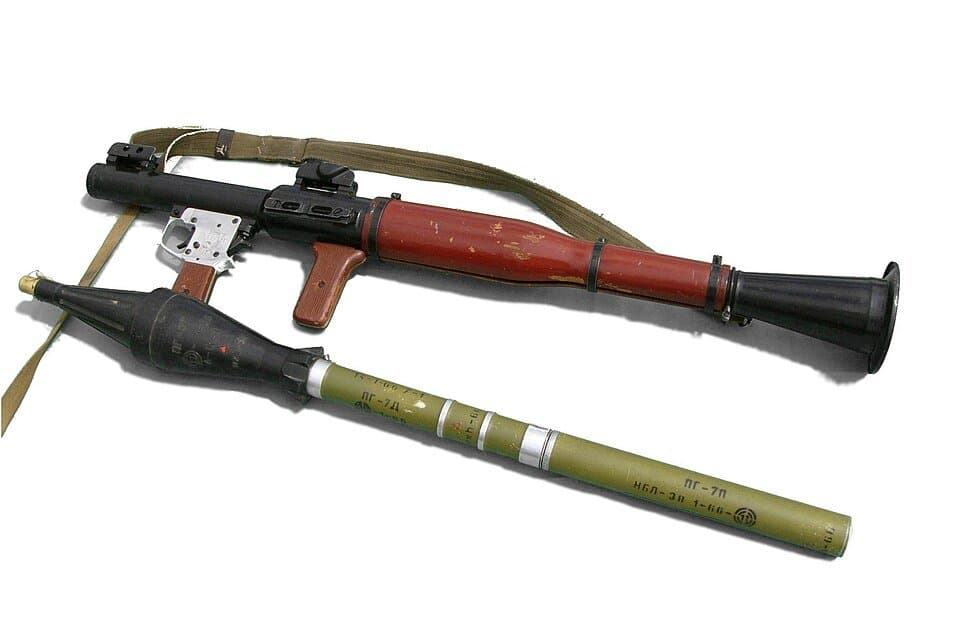
Anti-tank weaponsIn service
Hand-held rocket launcher
RPG-7 is a hand-held rocket launcher originating in Soviet Union. It was built by Bazalt and Degtyarev plant (Russia).
Technical data
True scale
See it in your room. Scan with your phone to open this model in 3D, then place it in your space.
Points represent sourced observations, including revisions. Revisions on the same effective date are not separate inventory events. Ranges appear in the table and are not plotted as exact points.
| Observation / report period | Value | Source | Claim state |
|---|---|---|---|
| 28 Sept 2026 | 40 mm | Wikipedia contributors | superseded |
| 28 Sept 2026 | 40 mm | Wikipedia contributors | superseded |
| 28 Sept 2026 | 40 mm | Wikipedia contributors | superseded |
| 28 Sept 2026 | 40 mm | Wikipedia contributors | superseded |
| 28 Sept 2026 | 40 mm | Wikipedia contributors | superseded |
| 28 Sept 2026 | 40 mm | Wikipedia contributors | superseded |
| 28 Sept 2026 | 40 mm | Wikipedia contributors | superseded |
| 28 Sept 2026 | 40 mm | Wikipedia contributors | approved |
Hand-held rocket launcher
Soviet Union
1961–present
See Users
See Conflicts
Bazalt
1958
Bazalt and Degtyarev plant (Russia)
c. US$350
1958–present
9,000,000+
RPG-7V2 (current model) RPG-7D3 (paratrooper) Type 69 RPG (China) PSRL-1 (Airtronic USA)
6.3 kg (13.9 lb) (without a telescopic sight) 7 kg (15.4 lb) (with PGO-7)
950 mm (37.4 in)
85 mm (3.3 in)
40 mm (1.6 in)
115 m/s (380 ft/s) (boost) 300 m/s (980 ft/s) (flight)
330 m (1,080 ft) (PG-7V)
700 m (2,300 ft) (OG-7V) (self detonates at c. 920 m (3,020 ft))
PGO-7 (2.7×), UP-7V telescopic sight and 1PN51 / 1PN58 night vision sights Red dot reflex sight
Albania
Algeria
Angola
Armenia
Azerbaijan
Bangladesh
Belarus
Benin
Botswana
Bulgaria
Burkina Faso
Cambodia
Cape Verde
Central African Republic
Chad
China
Congo-Brazzaville
Congo-Kinshasa
Croatia
Cuba
Cyprus
Czech Republic
Djibouti
Egypt
Ethiopia
Eritrea
Estonia
Fiji
Georgia
Ghana
Guinea
Guyana
Honduras
Hungary
Indonesia
Iran
Iraq
Israel
Jordan
Kurdistan
Kazakhstan
Kyrgyzstan
Laos
Latvia
Lebanon
Lesotho
Liberia
Libya
Madagascar
Malaysia
Mali
Malta
Mauritania
Moldova
Transnistria
Mongolia
Morocco
Mozambique
Myanmar
Nicaragua
Nigeria
Niger
North Korea
North Macedonia
Pakistan
Papua New Guinea
Philippines
Poland
Romania
Russia
Rwanda
Sahrawi Arab Democratic Republic
Sao Tome and Principe
Senegal
Serbia
The RPG-7 is a portable, reusable, unguided, shoulder-launched anti-tank rocket launcher .
The RPG-7 is a portable, reusable, unguided, shoulder-launched anti-tank rocket launcher .
The launcher is reloadable and based on a steel tube, 40 mm (1.6 in) in diameter, 950 mm (37 in) long, and weighing 7 kg (15 lb). The middle of the tube is wood wrapped to protect the user from heat and the end is flared. Sighting is usually optical with a back-up iron sight , and passive infrared and night sights are also available. The launchers designated RPG-7N1 and RPG-7DN1 can thus mount the multi-purpose night vision scope 1PN51 and the launchers designated RPG-7N2 and RPG-7DN2 can mount the multi-purpose night vision scope 1PN58 .
As with similar weapons, the grenade protrudes from the launch tubes. It is 40–105 mm (1.6–4.1 in) in diameter and weighs between 2 kg (4.4 lb) and 4.5 kg (9.9 lb). It is launched by a gunpowder booster charge, giving it an initial speed of 115 m/s (380 ft/s), and creating a cloud of light grey-blue smoke that can give away the position of the shooter. The rocket motor ignites after 10 m (33 ft) and sustains flight out to 500 m (1,600 ft) at a maximum velocity of 295 m/s (970 ft/s). The grenade is stabilized by two sets of fins that deploy in-flight: one large set on the stabilizer pipe to maintain direction and a smaller rear set to induce rotation. The grenade can fly up to 1,100 m (3,600 ft); the fuze sets the maximum range, usually 920 m (3,020 ft).
According to the United States Army Training and Doctrine Command (TRADOC) Bulletin 3u (1977) Soviet RPG-7 Antitank Grenade Launcher—Capabilities and Countermeasures , the RPG-7 munition has two sections: a "booster" section and a "warhead and sustainer motor" section. These must be assembled into the ready-to-use grenade. The booster consists of a "small strip powder charge" that serves to propel the grenade out of the launcher; the sustainer motor then ignites and propels the grenade for the next few seconds, giving it a top speed of 294 m/s (960 ft/s). The TRADOC bulletin provides anecdotal commentary that the RPG-7 has been fired from within buildings, which agrees with the two-stage design. It is stated that only a 2 metres (6.6 feet) standoff to a rear obstruction is needed for use inside rooms or fortifications. The fins not only provide drag stabilization, but are designed to impart a slow rotation to the grenade.
U.S.-made lightweight version of the RPG-7, weighing only 3.5 kg. Service life of about 500–1000 rounds.
The RPG-7 can fire a variety of warheads for anti-armor ( HEAT , PG-Protivotankovaya Granata) or anti-personnel ( HE , OG-Oskolochnaya Granata) purposes, usually fitting with an impact (PIBD) and a 4.5 second fuze . Armor penetration is warhead dependent and ranges from 300–600 mm (12–24 in) of RHA ; one warhead, the PG-7VR, is a 'tandem charge' device, used to defeat reactive armor with a single shot. The Russian Ministry of Defense said in December 2023 that it has modified the RPG-7V grenade launcher in order to shoot 82-mm mines.
PG-7VL [c.1977] – improved 93 mm (3.7 in) HEAT warhead effective against most vehicles and fortified targets.
PG-7VR [c.1988] – tandem charge warhead designed to penetrate up to 750 mm (30 in) rolled homogeneous armour (RHA) equivalence of explosive reactive armor (ERA) and the conventional armor underneath, or penetrate up to 900mm RHA without ERA. It has a range of 200 m (660 ft).
TBG-7V Tanin [c.1988] – 105 mm (4.1 in) thermobaric warhead for anti-personnel and urban warfare.
OG-7V [c.1999] – 40 mm (1.6 in) fragmentation warhead for anti-personnel warfare. Has no sustainer motor.
PG-7V [c.1961] – baseline 85 mm (3.3 in) HEAT warhead capable of penetrating 260 mm (10 in) RHA .
PG-7VM [c.1969] – improved 70 mm (2.8 in) HEAT warhead capable of penetrating 300 mm (12 in) RHA.
PG-7VS [c.1972] – improved 73 mm (2.9 in) HEAT warhead capable of penetrating 400 mm (16 in) RHA.
PG-7VS1 [c.mid-1970s] – cheaper PG-7VS version capable of penetrating 360 mm (14 in) RHA.
A 1976 U.S. Army evaluation of the weapon gave the hit probabilities on a 5-by-2.5-metre (16.4 ft × 8.2 ft) panel moving sideways at 4 m/s (13 ft/s). Crosswinds cause additional issues as the round steers into the wind; in an 11 km/h (6.8 mph) wind, firing at a stationary tank sized target, the gunner cannot expect to get a first-round hit more than 50% of the time at 180 m (590 ft).
During the first and second Chechen wars , the Chechen Republic of Ichkeria used RPG-7s which they had captured from Soviet bases and used them against Russian armored columns. During the first war, Russians may have lost 100 tanks and 250 armoured fighting vehicles (AFVs) in Grozny. The Chechens were able to knock out T-72s with three or four RPG-7 hits. Against T-72s with explosive reactive armor , the Chechens fired an RPG in close range (within 50 m (160 ft)) to detonate the armor and followed this with RPG hits on the then exposed area of the tank, also from close range. The RPG-7 was also effective against AFVs, buildings and personnel.
Reference text from Wikipedia contributors, used under CC BY-SA 4.0.
Sourced dimensions beside a 1.75 m human reference.
RPG-7 equipment records. Variants, orders and quantities are shown as reported in each inventory source; coverage is incomplete.
 Poland
Approximate count for RPG-7 · RPG-7 RPG-7D RPG-7DN1 RPG-7W. Service scope: Polish Land Forces; does not replace a national total. 1 distinct count cell(s) from the same source list; shared rowspan cells counted once. Excludes retired/reserve/on-order rows. Count column(s): quantity: ~2,000. Origin: Soviet Union. The listed variants/roles are the scope, not an immediately deployable count. The components do not establish one inventory census date; the stored date is the retrieved source snapshot.
Albania, Algeria, Angola, Armenia, Azerbaijan, Bangladesh, Belarus, Benin, Botswana, Bulgaria, Burkina Faso, Cambodia, Cape Verde, Central African Republic, Chad, China, Congo-Brazzaville, Congo-Kinshasa, Croatia, Cuba, Cyprus, Czech Republic, Djibouti, Egypt, Ethiopia, Eritrea, Estonia, Fiji, Georgia, Ghana, Guinea, Guyana, Honduras, Hungary, Indonesia, Iran, Iraq, Israel, Jordan, Kurdistan, Kazakhstan, Kyrgyzstan, Laos, Latvia, Lebanon, Lesotho, Liberia, Libya, Madagascar, Malaysia, Mali, Malta, Mauritania, Moldova, Transnistria, Mongolia, Morocco, Mozambique, Myanmar, Nicaragua, Nigeria, Niger, North Korea, North Macedonia, Pakistan, Papua New Guinea, Philippines, Poland, Romania, Russia, Rwanda, Sahrawi Arab Democratic Republic, Sao Tome and Principe, Senegal, Serbia
Equipment reference ↗ Afghanistan
 Albania
 Algeria
 Angola
 Armenia
 Azerbaijan
 Bangladesh
 Belarus
 Benin
 Bhutan
 Bolivia
 Bosnia and Herzegovina
 Botswana
 Bulgaria
 Burkina Faso
 Burundi
 Cambodia
 Cape Verde
 Central African Republic
 Chad
 China
 Comoros
 Croatia
 Cuba
 Cyprus
 Czechia
 Democratic Republic of the Congo
 Djibouti
 Ecuador
 Egypt
 Equatorial Guinea
 Eritrea
 Estonia
 Ethiopia
 Fiji
 Georgia
 Ghana
 Guinea
 Guinea-Bissau
 Guyana
 Honduras
 Hungary
 Indonesia
 Iran
 Iraq
 Israel
 Jordan
 Kazakhstan
 Kuwait
 Kyrgyzstan
 Laos
 Latvia
 Lebanon
 Lesotho
 Liberia
 Libya
 Madagascar
 Malaysia
 Mali
 Malta
 Mauritania
 Mexico
 Moldova
 Mongolia
 Morocco
 Mozambique
 Myanmar
 Namibia
 Nicaragua
 Niger
 Nigeria
 North Korea
 North Macedonia
 Northern Cyprus
 Pakistan
 Papua New Guinea
 Peru
 Philippines
 Republic of the Congo
 Romania
 Russia
 Rwanda
 São Tomé and Príncipe
 Saudi Arabia
 Senegal
 Serbia
 Slovakia
 Somalia
 South Africa
 Sudan
 Suriname
 Syria
 Tajikistan
 Tanzania
 Tunisia
 Türkiye
 Turkmenistan
 Uganda
 Ukraine
 Uzbekistan
 Vietnam
 Zambia
 Zimbabwe