FORCETALLY
Loading the evidence…
Preparing your view.


Preparing your view.
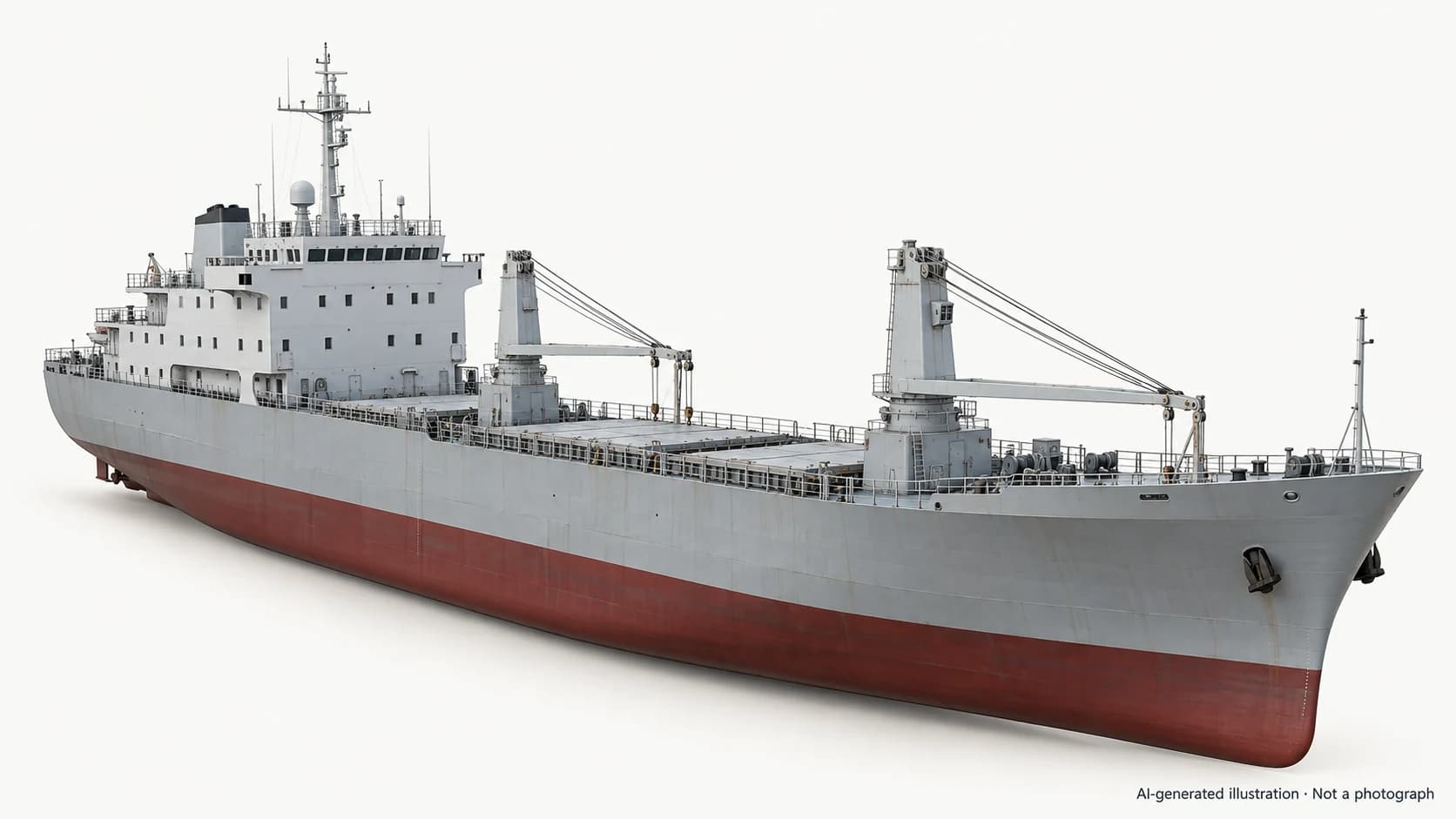
Naval support & landing craftIn service
Cargo ship / troopship
Qiongsha-class cargo ship is a cargo ship / troopship. Reported operators include People's Liberation Army Navy.
 China
AI-generated illustration · Not a photograph — Representative exterior of Qiongsha-class cargo ship; geometry is illustrative. Not evidence for specifications. — Representative Qiongsha cargo-ship exterior; other class conversions not depicted.
ForceTally · AI-generated illustration · Not a photograph · AI-generated · OpenAI output terms · Source ↗ · ModifiedQiongsha
People's Liberation Army Navy
Galați-class cargo ship
Darong-class transport
1980s
1980s–
6
6
4
2
Cargo ship / troopship
2,150 t (2,120 long tons ; 2,370 short tons )
86 m (282 ft 2 in)
13.4 m (44 ft 0 in)
3.9 m (12 ft 10 in)
1,320 bhp (984 kW)
16 kn (30 km/h; 18 mph)
2,500 nmi (4,600 km; 2,900 mi)
navigational radar
8x 14.5mm heavy machine guns (Cargo ship) 4x 14.5mm heavy machine guns (Hospital Ship)
The difference between the military and civilian version besides the fact that the military version is armed with heavy machine guns is that in addition to cargo, the civilian version also carried 219 passengers in cabins divided into two classes.
Cargo capacity of the military version is identical to that of civilian version: 200 tons of solid cargo, 150 tons of freshwater.
Experience of deployment of Qiongsha class cargo ship revealed that the medical service was not sufficient because in addition to island garrisons, there was also a great demand from local fishermen population. Rudimentary treatment does not meet the demand, and a more dedicated version to provide better medical treatment was needed. As a result, decision was made to convert two of the six cargo ships to medical ships. Two ships, Nan-Yun 832 and Nan-Yun 833 were converted, and this medical version is capable of handling up to 130 patient simultaneously. The passenger carrying capability no longer existed as a result of the conversion, but these ships retained the cargo carrying capacity of 350 tons. The armament is reduced by a half, from the original eight heavy machine guns to four.
Some of the Qiongsha class cargo ship are converted to troopships when they are not converted to ambulance transport/medical evacuation ships. These troopships still maintained the original cargo carrying capacity of 350 tons, but lack the emergency medical treatment capability because the clinical care facility on board the cargo version is deleted to make more rooms for additional troops, with the number of passengers carried is increased to 400.
Propulsion: 3 East German 8NVD48A-2U diesel engines @ 1320 hp each\
Armament: 8 14.5 mm heavy machine guns (4 for ambulance transport version)
Qiongsha class Nan-Yun 832 Guangzhou Shipyard International 1980s 1980s Active South Sea Fleet
{"datatype": "wikibase-item", "datavalue": {"type": "wikibase-entityid", "value": {"entity-type": "item", "id": "Q148", "numeric-id": 148}}, "hash": "4af4c54b84d57b351eb3ac76d982a0b89e36d91c", "property": "P495", "snaktype": "value"}
country of origin People's Republic of China 0 references
country of origin People's Republic of China 0 references
country of origin People's Republic of China 0 references
乗員:59名
Reference text from Wikipedia contributors, used under CC BY-SA 4.0.
True scale
Sourced dimensions beside a 1.75 m human reference.
Points represent sourced observations, including revisions. Revisions on the same effective date are not separate inventory events. Ranges appear in the table and are not plotted as exact points.
| Observation / report period | Value | Source | Claim state |
|---|---|---|---|
| 28 Sept 2026 | 13.4 m | Wikipedia contributors | superseded |
| 28 Sept 2026 | 13.4 m | Wikipedia contributors | superseded |
| 28 Sept 2026 | 13.4 m | Wikipedia contributors | superseded |
| 28 Sept 2026 | 13.4 m | Wikipedia contributors | superseded |
| 28 Sept 2026 | 13.4 m | Wikipedia contributors | approved |
Qiongsha-class cargo ship equipment records. Variants, orders and quantities are shown as reported in each inventory source; coverage is incomplete.
Keep exploring
Cargo ship
 Argentina
Vehicle cargo ship
 United States
Ro-ro ferry / Troopship
 Japan
B561 type troopship
 Poland
Dry cargo / Ammunition ship
United StatesType C2 ship
United States