FORCETALLY
Loading the evidence…
Preparing your view.


Preparing your view.
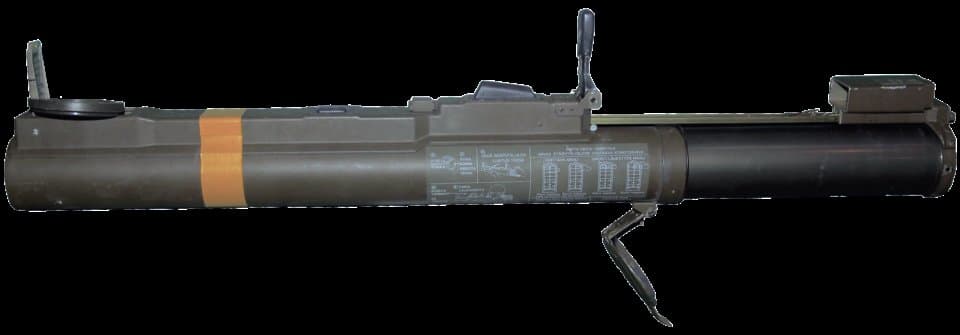
Anti-tank weaponsIn service
Anti-tank disposable rocket-propelled grenade launcher
M72 LAW is a anti-tank disposable rocket-propelled grenade launcher originating in United States. It was built by Norway: NAMMO ( Raufoss , Norway) U.S.: NAMMO Defense Systems ( Mesa , Arizona ) Türkiye: under license by MKEK.
 United States
Anti-tank disposable rocket-propelled grenade launcher
United States
1963–present
See Operators
Vietnam War Cambodian Civil War Laotian Civil War Sino-Vietnamese War Lebanese Civil War Nicaraguan Revolution Falklands War Salvadoran Civil War Gulf War Bougainville Civil War Somali Civil War Bosnian War War in Afghanistan Iraq War Syrian Civil War Yemeni Civil War Russo-Ukrainian War Gaza war
FA Spinale, CB Weeks and PV Choate
Patent filed 1963
Norway: NAMMO ( Raufoss , Norway) U.S.: NAMMO Defense Systems ( Mesa , Arizona ) Turkey: under license by MKEK
1963–1980 2004–present
2.5 kg (5.5 lb) (M72A1–3) / 3.6 kg (7.9 lb) (M72A4–7)
630 mm (24.8 in) (unarmed) 881 mm (34.67 in) (armed)
66 mm (2.6 in)
145 m/s (480 ft/s)(M72A1–3) 200 m/s (660 ft/s)(M72A4–7)
200 m (660 ft), 220 m (720 ft) (A4–7)
Point-initiated, base-detonated
Argentina
Australia
Austria
Belgium
Brazil
Canada
Colombia
Chile
Cyprus
Denmark
Egypt
El Salvador
Israel
Italy
Japan
Finland
France
Georgia
Greece
Iraq
Kosovo
Kyrgyzstan
Luxembourg
Lithuania
Malaysia
Mexico
Morocco
Netherlands
New Zealand
Norway
Philippines
Poland
Portugal
Romania
Somalia
Somaliland
South Korea
Spain
Syria
Taiwan
Thailand
Turkey
Ukraine
United Kingdom
United States
Yemen
Vietnam
Free Syrian Army
FNLA
Cambodia
China : launchers captured and used in Sino-Vietnamese War and Sino-Vietnamese conflicts , replaced by the PF-89 , PF-98 and DZJ-08 anti-tank grenade launcher.
South Vietnam
The M72 LAW ( light anti-tank weapon , also referred to as the light anti-armor weapon or LAW as well as LAWS : light anti-armor weapons system) is a man-portable 66 mm (2.6 in) disposable unguided anti-tank weapon.
The M72 LAW ( light anti-tank weapon , also referred to as the light anti-armor weapon or LAW as well as LAWS : light anti-armor weapons system) is a man-portable 66 mm (2.6 in) disposable unguided anti-tank weapon.
The weapon consists of a rocket within a launcher consisting of two tubes, one inside the other. While closed, the outer assembly serves as a watertight container for the rocket and the percussion-cap firing mechanism that activates the rocket. The outer tube contains the trigger, the arming handle, front and rear sights, and the rear cover. The inner tube contains the channel assembly, which houses the firing pin assembly, including the detent lever. When extended, the inner tube telescopes outward toward the rear, guided by the channel assembly, which rides in an alignment slot in the outer tube's trigger housing assembly. This causes the detent lever to move under the trigger assembly in the outer tube, both locking the inner tube in the extended position and cocking the weapon. Once armed, the weapon is no longer watertight, even if the launcher is collapsed into its original configuration. It is a line of sight weapon with a range around 200 meters (660 ft).
It is a line of sight weapon with a range around 200 meters (660 ft).
When fired, the striker in the rear tube impacts a primer, which ignites a small amount of powder that "flashes" down a tube to the rear of the rocket and ignites the propellant in the rocket motor. The rocket motor burns completely before leaving the mouth of the launcher, producing a backblast of gases around 1,400 °F (760 °C). The rocket propels the 66 mm (2.6 in) warhead forward without significant recoil. As the warhead emerges from the launcher, six fins spring out from the base of the rocket tube, stabilizing the warhead's flight. The early LAW warhead, developed from the M31 HEAT rifle grenade warhead, uses a simple piezoelectric fuse system. On impact with the target, the front of the nose section is crushed, causing a microsecond electric current to be generated, which detonates a booster charge located in the base of the warhead, which sets off the main warhead charge. The force of the main charge forces the copper liner into a directional particle jet that, in relation to the size of the warhead, is capable of a massive penetration.
A unique mechanical set-back safety on the base of the detonator grounds the circuit until the missile has accelerated out of the tube. The acceleration causes the three disks in the safety mechanism to rotate 90° in succession, ungrounding the circuit; the circuit from the nose to the base of the detonator is then completed when the piezoelectric crystal is crushed on impact.
The weapon can be fired from inside buildings as long as the structures are at least 3.7 by 4.6 m (12 by 15 ft) in size, which is about 50 cubic meters (1,800 ft 3 ) in volume, and have sufficient ventilation. The Department of the Army previously rated the weapon as safe to fire from enclosure, but this rating was removed in 2010 after the introduction of the safer AT4 CS . However, some modern variants of the LAW are specifically designed with fire-from-enclosure (FFE) capability.
In late 2021, Nammo unveiled the concept of a multi- rotor unmanned aerial vehicle (UAV) equipped with a LAW. The tube is mounted facing downward, enabling the drone operator to fire on tanks and armored vehicles from a top attack position while remaining 3 to 4 km (1.9 to 2.5 mi) away.
M72 LAWs used 66 mm (2.6 in) rockets, which were issued with the launcher itself. Improvements to the launcher and differences in the ammunition were differentiated by a single designation. The M72A2's warhead penetrated 30 cm (12 in) of armor.
A training variant of the M72 LAW, designated M190 , also exists. This weapon is reloadable and uses the 35 mm (1.4 in) M73 training rocket. A subcaliber training device that uses a special tracer cartridge also exists for the M72. A training variant used by the Finnish armed forces fires 7.62 mm (0.300 in) tracer rounds.
The US Army tested other 66 mm rockets based on the M54 rocket motor used for the M72. The M74 TPA (thickened pyrophoric agent) had an incendiary warhead filled with TEA ( triethylaluminum ); this was used in the M202A1 FLASH (flame assault shoulder weapon) four-tube launcher. The XM96 RCR (riot control rocket) had a CS gas -filled warhead for crowd control and was also intended for use with the M202, though the rocket never entered service.
The M72 rocket has been in Australian service since the Vietnam War. Currently, the Australian Defence Force uses the M72A6 variant, known as the "light direct fire support weapon", as an anti-structure and secondary anti-armor weapon. The weapon is used by ordinary troops at the section (squad) level and complements the heavier 84 mm (3.3 in) Carl Gustav recoilless rifle and Javelin missile , which are generally used by specialized fire support and anti-armor troops.
The M72 LAW is used in the Finnish Army (some 70,000 pieces), where it is known under the designations 66 KES 75 (M72A2, no longer in service) and 66 KES 88 (M72A5). In accordance with the weapon's known limitations, a pair of "tank-buster" troops crawl to a firing position around 50 to 150 meters (160 to 490 ft) away from the target, bringing with them four to six LAWs, which are then used in rapid succession until the target is destroyed or incapacitated. Due to its low penetration capability, it is used mostly against lightly armored targets. The M72 is the most common anti-tank weapon in the Finnish Army. Finland has recently upgraded its stocks to the M72 EC LAW Mk.I version. It is designated 66 KES 12 Claimed penetration for the M72 EC LAW is 450 mm (18 in) of rolled homogeneous armor steel plate, nearly twice that of the M72A2. It also fields the bunker-buster version that contains 440 g (0.97 lb) of DPX-6 explosive, named M72 ASM RC, and locally designated 66 KES 12 RAK . The oldest version of the 66 KES 75 is now retired.
The Republic of China Army (Taiwan) uses the M72 as a secondary anti-armor weapon for infantry units. It is used primarily as a backup to the Javelin and BGM-71 TOW anti-tank weapons. The weapon was later reverse-engineered into the "Type 1 66 mm anti-armor rocket", which was introduced from M72 A2, but is more-popularly nicknamed as the "Type 66 rocket" due to its caliber. After several decades of application, the Type 66mm anti-armor rocket has evolved into Kestrel (67mm) model since 2008.
The British Army employed the NAMMO M72, designated as the "Rocket 66 mm HEAT L1A1," until it was phased out and replaced by the LAW 80 in the 1980s. The M72 saw active use during the 1982 Falklands War, where it was primarily utilized to suppress Argentinian defensive positions at close range. Additionally, it was used against an assault amphibious vehicle during the initial invasion and played a role in damaging the Argentinian warship ARA Guerrico during the invasion of South Georgia .
In February 2005, The Naval Surface Warfare Center , Dahlgren Division (NSWCDD) issued a solicitation to procure 2,558 M72A7 66mm HE LAW w/Graze Fuze Function and NVD Mount with the award date estimated as mid-May 2005. U.S. Marine Corps officials also identified the M72A7 LAW as an urgent requirement in support of the global war on terrorism , with the USMC initially purchasing 1,136 M72A7s in 2005. The U.S. Marine Corps increased M72A7 LAW purchases after 2005, with the service purchasing about 23,000 over a three-year period from 2007 to 2009. Later in 2010, the U.S. Army also began using the M72A7 LAW in Afghanistan because it was found to be a useful small and lightweight rocket system for engaging short- and medium-range targets. Foot patrols particularly benefited from it due to Afghanistan's difficult terrain and high elevations. The U.S. Marine Corps was still purchasing M72A7 LAW rockets as of March 2023.
The M72A7 LAW is an improved version of its predecessors, featuring a better rocket motor that increases velocity to 200 m/s (660 ft/s) for greater accuracy beyond 200 meters (660 feet), a Picatinny rail for mounting laser pointers and night sights, and the warhead contains a copper explosively formed penetrator (EFP), instead of a conical shaped charge . While the EFP has reduced penetration compared to the previous LAWs with a conical shaped charge , it creates a larger hole, resulting in greater spalling inside armored vehicles and increased fragmentation behind urban walls, making it more destructive. Safety was also improved with an insensitive munition warhead to reduce the risk of accidental detonation.
Instead, they function as recoilless launchers, using a propellant charge to propel a 66mm fin-stabilized ballistic projectile toward the target.
Length : Extended: less than 1 m (39 in) Closed: 0.67 m (26 in)
Weight : Complete M72A2: 2.3 kg (5.1 lb) Complete M72A3: 2.5 kg (5.5 lb)
Front sight : reticle graduated in 25 m range increments
Caliber : 66 mm (2.6 in)
Length : 508 mm (20.0 in)
Weight : 1.0 kg (2.2 lb)
Muzzle velocity : 145 m/s (480 ft/s)
Minimum range (combat) : 10 m (33 ft)
Minimum arming range : 10 m (33 ft)
Maximum range : 1,000 m (3,300 ft)
Penetration : 300 mm (12 in)
Stationary target : 200 m (220 yd)
Moving target : 165 m (180 yd)
Weight: 3.45 kg
Length: 780 mm
The M72, also known as the M72A5-C1 High Explosive Anti-Tank (HEAT) Self-Contained Weapon, is a short-range, single-shot, fire and throw-away weapon that can be used to defend against light armoured vehicles and structures. The 66-mm warhead can penetrate up to 350 mm of armour. The M72 Light Anti-Tank Weapon has been in service since 1963 by the United States, and has been in-service with the Canadian Armed Forces since the late 1960’s. Specifications Specifications Weight: 3.45 kg Length: 780 mm Maximum Range: Up to 350 m
The M72, also known as the M72A5-C1 High Explosive Anti-Tank (HEAT) Self-Contained Weapon, is a short-range, single-shot, fire and throw-away weapon that can be used to defend against light armoured vehicles and structures. The 66-mm warhead can penetrate up to 350 mm of armour. The M72 Light Anti-Tank Weapon has been in service since 1963 by the United States, and has been in-service with the Canadian Armed Forces since the late 1960’s. Specifications Specifications Weight: 3.45 kg Length: 780 mm Maximum Range: Up to 350 m Effective range: 220 m
The M72, also known as the M72A5-C1 High Explosive Anti-Tank (HEAT) Self-Contained Weapon, is a short-range, single-shot, fire and throw-away weapon that can be used to defend against light armoured vehicles and structures. The 66-mm warhead can penetrate up to 350 mm of armour.
Reference text from Wikipedia contributors, used under CC BY-SA 4.0.
True scale
Sourced dimensions beside a 1.75 m human reference.
See it in your room. Scan with your phone to open this model in 3D, then place it in your space.
Points represent sourced observations, including revisions. Revisions on the same effective date are not separate inventory events. Ranges appear in the table and are not plotted as exact points.
| Observation / report period | Value | Source | Claim state |
|---|---|---|---|
| 28 Sept 2026 | 66 mm | Wikipedia contributors | superseded |
| 28 Sept 2026 | 66 mm | Wikipedia contributors | superseded |
| 28 Sept 2026 | 66 mm | Wikipedia contributors | superseded |
| 28 Sept 2026 | 66 mm | Wikipedia contributors | superseded |
| 28 Sept 2026 | 66 mm | Wikipedia contributors | superseded |
| 28 Sept 2026 | 66 mm | Wikipedia contributors | superseded |
| 28 Sept 2026 | 66 mm | Wikipedia contributors | superseded |
| 28 Sept 2026 | 66 mm | Wikipedia contributors | approved |
The M72, also known as the M72A5-C1 High Explosive Anti-Tank (HEAT) Self-Contained Weapon, is a short-range, single-shot, fire and throw-away weapon that can be used to defend against light armoured vehicles and structures. The 66-mm warhead can penetrate up to 350 mm of armour.
M72 LAW equipment records. Variants, orders and quantities are shown as reported in each inventory source; coverage is incomplete.
 Argentina
 Australia
 Austria
 Belgium
 Bolivia
 Brazil
 Canada
 Chile
 Colombia
 Cyprus
 Denmark
 Ecuador
 Egypt
 El Salvador
 Finland
Reported count for 66 KES 12 PST 66 KES 12 RAK. Service scope: Finnish Army; does not replace a national total. 1 distinct count cell(s) from the same source list; shared rowspan cells counted once. Excludes retired/reserve/on-order rows. Count column(s): quantity: 70,000. Origin: United States Norway. The listed variants/roles are the scope, not an immediately deployable count. The components do not establish one inventory census date; the stored date is the retrieved source snapshot.
 France
 Georgia
 Greece
Reported count for M72 LAW. Service scope: Hellenic Army; does not replace a national total. 1 distinct count cell(s) from the same source list; shared rowspan cells counted once. Retired, wholly reserve and on-order rows are excluded; the reported count retains any explicitly mixed stock scope in the quoted row. Count column(s): quantity: 10,841. Origin: United States. The listed variants/roles are the scope, not an immediately deployable count. The components do not establish one inventory census date; the stored date is the retrieved source snapshot.
 Iraq
 Israel
 Italy
 Japan
 Kosovo
 Kyrgyzstan
 Lebanon
 Lithuania
 Luxembourg
 Malaysia
 Mexico
 Morocco
 Netherlands
 New Zealand
 Northern Cyprus
 Norway
 Paraguay
 Philippines
 Poland
 Portugal
 Romania
 Somalia
 South Korea
 Spain
 Switzerland
 Syria
 Taiwan
 Thailand
 Türkiye
 Ukraine
 United Kingdom United States
 Vietnam
 Yemen
Argentina, Australia, Austria, Belgium, Brazil, Canada, Colombia, Chile, Cyprus, Denmark, Egypt, El Salvador, Israel, Italy, Japan, Finland, France, Georgia, Greece, Iraq, Kosovo, Kyrgyzstan, Luxembourg, Lithuania, Malaysia, Mexico, Morocco, Netherlands, New Zealand, Norway, Philippines, Poland, Portugal, Romania, Somalia, Somaliland, South Korea, Spain, Syria, Taiwan, Thailand, Türkiye, Ukraine, United Kingdom, United States, Yemen, Vietnam
Equipment reference ↗Keep exploring
Disposable anti-tank rocket - propelled grenade launcher
Rocket-propelled grenade ( anti-tank , disposable)
United KingdomAnti-tank rocket-propelled grenade launcher
Disposable anti-tank rocket launcher
Disposable Anti-tank rocket launcher
 Russia
Disposable Rocket-propelled grenade