FORCETALLY
Loading the evidence…
Preparing your view.


Preparing your view.
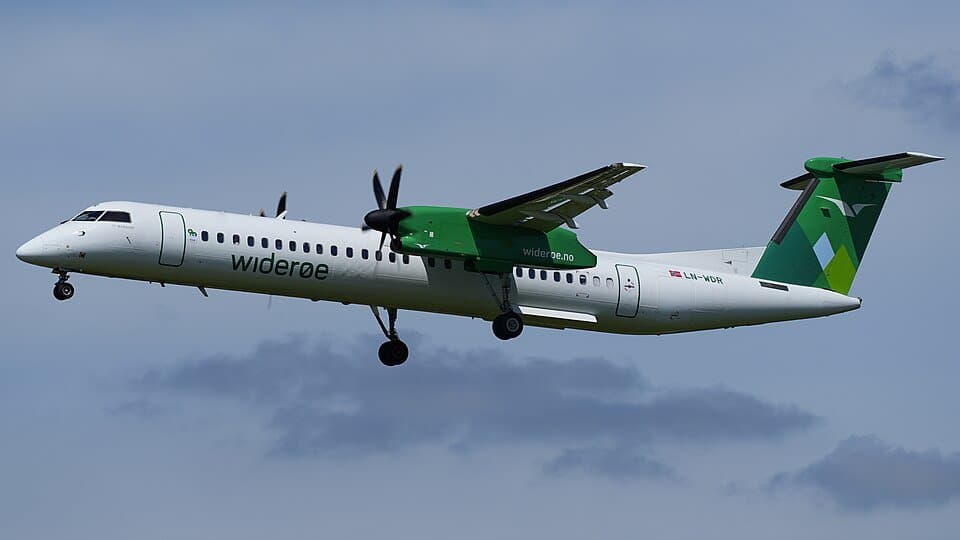
Support aircraftIn serviceProfile in progress
Turboprop regional airliner
De Havilland Canada Dash 8 is a turboprop regional airliner originating in Canada. It was built by de Havilland Canada (1983–1992) Bombardier Aerospace (1992–2019) De Havilland Canada (2019–2022). Reported operators include QantasLink WestJet Encore Widerøe Voyageur Airways.
 Canada
No check recorded yet.
fr.wikipedia.org ↗ · Field absent
Checked 29 Sept 2026No mapped field recovered. Stored full text retained for further extraction; this is not a claim that unstructured prose has been manually exhausted.
Mapped labelled specifications
Bombardier Q Series — Wikipédia Aller au contenu Menu principal Menu principal déplacer vers la barre latérale masquer Navigation Page d’accueil Portails thématiques Article au hasard Contact Contribu
www.wikidata.org ↗ · Field absent
Checked 29 Sept 2026No mapped field recovered. Stored full text retained for further extraction; this is not a claim that unstructured prose has been manually exhausted.
Mapped labelled specifications
1983 airliner family Bombardier Q Series DHC8 DHC-8 Bombardier Dash 8 edit Language Label Description Also known as default for all languages de Havilland Canada DHC-8 – English de Havilland Canada DH
No check recorded yet.
www.af.mil ↗ · Access blocked
Checked 29 Sept 2026Source blocked/unavailable; HTTP 403
Official equipment index linked profile names
Access Denied Access Denied You don't have permission to access "http://www.af.mil/robots.txt" on this server. Reference #18.635d1502.1790692133.3d4609a https://errors.edgesuite.net/18.635d1502.1790692133.3d4609a
cpeground.army.mil ↗ · Access blocked
Checked 29 Sept 2026Source blocked/unavailable; HTTP 403
Official equipment index linked profile names
<HTML><HEAD> <TITLE>Access Denied</TITLE> </HEAD><BODY> <H1>Access Denied</H1> You don't have permission to access "http://cpeground.army.mil/robots.txt" on this server.<P> Reference #18.853f655f.1790710614.a5e194c <P>https://errors.edgesuite.net/18.853f655f.1790710614.a5e194c</P> </BODY> </HTML>
www.aetc.af.mil ↗ · Access blocked
Checked 29 Sept 2026Source blocked/unavailable; HTTP 403
Official equipment index linked profile names
<HTML><HEAD> <TITLE>Access Denied</TITLE> </HEAD><BODY> <H1>Access Denied</H1> You don't have permission to access "http://www.aetc.af.mil/robots.txt" on this server.<P> Reference #18.5e1e1202.1790710614.f71e11a <P>https://errors.edgesuite.net/18.5e1e1202.1790710614.f71e11a</P> </BODY> </HTML>
asc.army.mil ↗ · Page not found
Checked 29 Sept 2026No exact name or stored alias among retained equipment links. This is index coverage, not proof the specification is unpublished.
Official equipment index linked profile names
U.S. Army Weapon Systems - USAASC Skip to main content search account Menu DACM U.S. Army DACM Office Digital Transformation Acquisition Functional Areas DACM Hot Topics DACM Newsletter Senior Rater Potential Evaluation Supervisor’s Corner DACM Program Timelines CAREER CIVILIAN Civilian Career Planning Steps Civilian Career Models Civilian Programs OFFICER Officer Onboarding and Career Planning Officers in the Army Acquisition Workforce Officer Programs NCO NCO Onboarding and Career Planning NCO
www.canada.ca ↗ · Page not found
Checked 29 Sept 2026No exact name or stored alias among retained equipment links. This is index coverage, not proof the specification is unpublished.
Official equipment index linked profile names
Defence equipment - Canada.ca Skip to main content Skip to "About government" Language selection Français fr / Gouvernement du Canada Search Search National Defence Search Menu Main Menu Jobs and the workplace Immigration and citizenship Travel and tourism Business and industry Benefits Health Taxes Environment and natural resources National security and defence Culture, history and sport Policing, justice and emergencies Transport and infrastructure Canada and the world Money and finances Scien
www.canada.ca ↗ · Page not found
Checked 29 Sept 2026No exact name or stored alias among retained equipment links. This is index coverage, not proof the specification is unpublished.
Official equipment index linked profile names
Equipment - Canada.ca Skip to main content Skip to "About government" Language selection Français fr / Gouvernement du Canada Search Search Canada.ca Search Menu Main Menu Jobs and the workplace Immigration and citizenship Travel and tourism Business and industry Benefits Health Taxes Environment and natural resources National security and defence Culture, history and sport Policing, justice and emergencies Transport and infrastructure Canada and the world Money and finances Science and innovati
www.canada.ca ↗ · Page not found
Checked 29 Sept 2026No exact name or stored alias among retained equipment links. This is index coverage, not proof the specification is unpublished.
Official equipment index linked profile names
Vehicles - Canada.ca Skip to main content Skip to "About government" Language selection Français fr / Gouvernement du Canada Search Search Canada.ca Search Menu Main Menu Jobs and the workplace Immigration and citizenship Travel and tourism Business and industry Benefits Health Taxes Environment and natural resources National security and defence Culture, history and sport Policing, justice and emergencies Transport and infrastructure Canada and the world Money and finances Science and innovatio
www.canada.ca ↗ · Page not found
Checked 29 Sept 2026No exact name or stored alias among retained equipment links. This is index coverage, not proof the specification is unpublished.
Official equipment index linked profile names
Weapons - Canada.ca Skip to main content Skip to "About government" Language selection Français fr / Gouvernement du Canada Search Search Canada.ca Search Menu Main Menu Jobs and the workplace Immigration and citizenship Travel and tourism Business and industry Benefits Health Taxes Environment and natural resources National security and defence Culture, history and sport Policing, justice and emergencies Transport and infrastructure Canada and the world Money and finances Science and innovation
www.canada.ca ↗ · Page not found
Checked 29 Sept 2026No exact name or stored alias among retained equipment links. This is index coverage, not proof the specification is unpublished.
Official equipment index linked profile names
Royal Canadian Air Force aircraft - Canada.ca Skip to main content Skip to "About government" Language selection Français fr / Gouvernement du Canada Search Search Canada.ca Search Menu Main Menu Jobs and the workplace Immigration and citizenship Travel and tourism Business and industry Benefits Health Taxes Environment and natural resources National security and defence Culture, history and sport Policing, justice and emergencies Transport and infrastructure Canada and the world Money and finan
No check recorded yet.
en.wikipedia.org ↗ · Field absent
Checked 30 Sept 2026Recorded cached-source extraction and article inspection. No matching scoped field was extracted; this is not a claim that all five sources were checked.
Retained English infobox, specifications and article text
"Dash 8" redirects here. For the train locomotive line, see GE Dash 8 Series . Dash 8 Q-Series Widerøe Q400 General information Type Turboprop regional airliner National origin Canada Manufacturer de Havilland Canada (1983–1992) Bombardier Aerospace (1992–2019) De Havilland Canada (2019–2022) Status
No check recorded yet.
No check recorded yet.
No check recorded yet.
No check recorded yet.
Turboprop regional airliner
Canada
de Havilland Canada (1983–1992) Bombardier Aerospace (1992–2019) De Havilland Canada (2019–2022)
Production suspended since 2022, pending new facility
QantasLink WestJet Encore Widerøe Voyageur Airways
1,258 (as of March 31, 2019)
1983–2005 (-100) 1995–2009 (-200) 1989–2009 (-300) 1999–2022 (-400)
1984 with NorOntair
June 20, 1983
de Havilland Canada Dash 7
De Havilland Canada E-9A Widget
Two
73 ft (22.25 m)
24 ft 7 in (7.49 m)
85 ft (25.89 m)
585 sq ft (54.4 m 2 )
Fuselage 8 ft 10 in (2.69 m), cabin 8 ft 3 in (2.52 m)
36,300 lb (16,466 kg) -100: 34,500 lb (15,600 kg)
2,150 hp (1,600 kW) -100: 1,800 hp (1,300 kW)
25,000 ft (7,620 m)
1,125 nmi (2,084 km; 1,295 mi) -100: 1,020 nmi (1,889 km; 1,174 mi)
The De Havilland Canada DHC-8 , commonly known as the Dash 8 , is a series of turboprop -powered regional airliners , introduced by de Havilland Canada (DHC) in 1984.
In 1980, de Havilland responded by dropping the short-field performance requirement and adapting the basic Dash 7 layout to use only two, more powerful engines. Its favoured engine supplier, Pratt & Whitney Canada , developed the new PW100 series engines for the role, more than doubling the power from its PT6 . Originally designated the PT7A-2R engine, it later became the PW120. When the Dash 8 rolled out on April 19, 1983, more than 3,800 hours of testing had been accumulated over two years on five PW100 series test engines. The Dash 8 first flight was on June 20, 1983.
The production of the Dash 8 Series 100 stopped in 2005, and that of the Series 200 and 300 in 2009.
At the February 2016 Singapore Airshow , Bombardier announced a high-density, 90-seat layout of the Q400, which would enter service in 2018; keeping the 28 in (71 cm) seat pitch of the Nok Air 86-seats, an extra row of seats is allowed by changing the configuration of the front right door and moving back the aft pressure bulkhead . The payload is increased by 2,000 pounds (910 kg) and the aircraft maintenance check intervals are increased: 800 hours from 600 for an A-check and 8,000 hours from 6,000 for a C-check. By August 2018, the 90-seat variant was certified before delivery to launch customer SpiceJet later in the same year. In March 2021, EASA certified the 90-seat variant for European operations; DHC believed that there were opportunities with prospective European customers as of 2021 .
The Dash 8 design has better cruise performance than the Dash 7, is less expensive to operate, and is much less expensive to maintain, due largely to having only two engines. It is a little noisier than the Dash 7 and cannot match the STOL performance of its earlier DHC forebears, although it is still able to operate from small airports with runways 3,000 ft (910 m) long, compared to the 2,200 ft (670 m) required by a fully laden Dash 7.
The aircraft has been delivered in four series. The Series 100 has a maximum capacity of 39, the Series 200 has the same capacity but offers more powerful engines, the Series 300 is a stretched, 50-seat version, and the Series 400 is further stretched to a maximum of 90 passengers. Models delivered after 1997 have cabin noise suppression and are designated with the prefix "Q". Production of the Series 100 ceased in 2005, followed by the 200 and 300 in 2009, leaving the Q400 as the only series still in production.
The Series 100 was the original 37-39 passenger version of the Dash 8 that entered service in 1984. The original engine was the Pratt & Whitney Canada PW120 and later units used the PW121. Rated engine power is 1,800 shp (1,340 kW).
1984 variant powered by either two PW120 or PW120A engines and a 33,000 lb (15,000 kg) takeoff weight.
1986 variant powered by either two PW120A or PW121 engines and a 34,500 lb (15,650 kg) takeoff weight.
1987 variant powered by two PW121 engines and a 34,500 lb (15,650 kg) takeoff weight (can be modified for a 35,200 lb [15,950 kg] take-off weight).
1992 variant powered by two PW121 engines and a 36,300 lb (16,450 kg) takeoff weight.
DHC-8-100 converted to a freighter by Voyageur Aviation, with a 10,000 lb (4,536 kg) cargo capacity.
DHC-8M-100
A United States Air Force range control aircraft that ensures that the overwater military ranges in the Gulf of Mexico are clear of civilian boats and aircraft during live fire tests of air-launched missiles and other hazardous military activities. The E-9A Widget is equipped with AN/APS-143(V)-1 radar that can detect an object in the water as small as a person in a life raft, from up to 25 mi (40 km) away. Aircraft operate out of Tyndall Air Force Base , Florida, with two aircraft assigned to the 82nd Aerial Targets Squadron for the support of training missions.
The Series 200 aircraft maintained the same 37–39 passenger airframe as the original Series 100, but was re-engined for improved performance. The Series 200 used the more powerful Pratt & Whitney Canada PW123 engines rated at 2,150 shp (1,600 kW).
The Series 300 introduced a longer airframe that was stretched 3.43 metres (11.3 ft) over the Series 100/200 and has a passenger capacity of 50–56. The Series 300 also used the Pratt & Whitney Canada PW123 engines. Rated engine power is between 2,380 shp (1,774 kW) and 2,500 shp (1,864 kW). Design service life is 80,000 flight cycles. Under an extended service program launched in 2017, the service life of Dash 8-300 is extended by 50 percent, or approximately 15 years, to 120,000 flight cycles.
The Series 400 introduced an even longer airframe that was stretched 6.83 metres (22.4 ft) over the Series 300 (10.26 metres (33.7 ft) over the Series 100/200), had slightly more wing span due to a larger wing section inboard of the engines, a stouter T-tail and had a passenger capacity of 68–90. The Series 400 uses Pratt & Whitney Canada PW150A engines rated at 4,850 shp (3,620 kW). The aircraft has a cruise speed of 360 knots (667 km/h), which is 60–90 knots (111–166 km/h) higher than its predecessors. The maximum operating altitude is 25,000 ft (7,600 m) for the standard version, although a version with drop-down oxygen masks is offered, which increases maximum operating altitude to 27,000 ft (8,200 m).
1999 variant with a maximum of 68 passengers.
1999 variant with a maximum of 70 passengers.
1999 variant with a maximum of 78 passengers.
In 2013, an Extra Capacity variant was introduced, capable of carrying a maximum of 86 passengers. The Extra Capacity variant was updated in 2016 with more closely spaced seats to carry up to 90 passengers. The first 90-seat aircraft was delivered to launch customer SpiceJet in September 2018.
Over sixteen Q400 aircraft have been adapted to the aerial firefighting role as an airtanker. This aircraft is also called the Dash 8-400AT (airtanker only) or Dash 8-400MRE (multi-role airtanker). The French Sécurité Civile operate eight multi-role airtankers, while Conair Group is currently operating a fleet of airtanker-only variants in Canada, the US, Australia and France. Conair manufactures the airtanker-only variant from their hangars in Abbotsford , Canada. This tanker can carry 2642 US gallons or 10,000 litres of retardant, foam or water and travel at 340 knots (630 km/h).
2008 converted pallet freighter variant with a payload of 9,000 kg (20,000 lb).
Cargo combi. Seats 50 passengers plus 3,720 kg (8,200 lb) of payload. First delivered to launch customer Ryukyu Air Commuter in 2015.
November 23, 2009: a DHC-8-200, being operated on behalf of United States Africa Command , made an emergency landing at Tarakigné , Mali , and was substantially damaged when the undercarriage collapsed and the starboard wing was ripped off. The accident was caused by the aircraft running out of fuel 29 seconds before the crash. The captain had opted not to refuel at the previous departure airport.
April 9, 2012: Air Tanzania Dash 8 (registration 5H-MWG) was written off at Kigoma Airport , Tanzania, in an aborted take off. All 39 people on board survived.
September 30, 2015: Luxair Flight 9562 experienced an aborted takeoff accident at Saarbrücken Airport in Germany. The Bombardier Q400 LX-LGH was damaged beyond repair when it settled back onto the runway after the gear was raised prematurely. The aircraft slid 2,400 feet and came to a stop with more than 1,100 feet remaining of the 6,562-foot paved runway. None of the 20 occupants were injured.
May 8, 2019: Biman Bangladesh Airlines Flight 60 , a Dash-8 Q400 slid off Runway 21 at Yangon International Airport , Burma, and broke into three pieces as it performed a go-around on landing. The flight originated in Dhaka, Bangladesh . Poor weather was cited as a contributing factor. At least 17 people were injured.
On September 9, 2007, the crew of SAS Flight 1209, en route from Copenhagen to Aalborg , reported problems with the locking mechanism of the right side landing gear, and Aalborg Airport was prepared for an emergency landing. Shortly after touchdown, the right main gear collapsed and the airliner skidded off the runway while fragments of the right propeller shot against the cabin, and the right engine caught fire. Of 69 passengers and four crew on board, 11 were sent to hospital, five with minor injuries. The accident was filmed by a local news channel (TV2-Nord) and broadcast live on national television.
On October 27, 2007, Scandinavian Airlines Flight 2867 en route from Bergen to Copenhagen had severe problems with the landing gear during landing in Kastrup Airport. The right wing gear did not deploy properly (or partially), and the aircraft skidded off the runway in a controlled emergency landing. The Q400 was carrying 38 passengers, two infants, and four crew members on board. No injuries were reported. The next day, SAS permanently removed its entire Dash 8 Q400 fleet from service. In a press release on October 28, 2007, the company's president said: "Confidence in the Q400 has diminished considerably and our customers are becoming increasingly doubtful about flying in this type of aircraft. Accordingly, with the Board of Directors' approval, I have decided to immediately remove Dash 8 Q400 aircraft from service." The preliminary Danish investigation determined the latest Q400 incident was unrelated to the airline's earlier corrosion problems, in this particular case caused by a misplaced O-ring found blocking the orifice in the restrictor valve .
In all, eight Q400s had landing gear failures while landing during 2007: four in Denmark, one in Germany, one in Japan, one in Lithuania, and one in South Korea. In November 2007, it was revealed that the Swedish Civil Aviation Administration had begun an investigation and found Scandinavian Airlines System culpable of cutting corners in its maintenance department. The airline reportedly made 2,300 flights in which safety equipment was not up to standard. On March 10, 2008, SAS ordered 27 more aircraft from Bombardier in a compensation deal: 14 Q400 NextGen turboprops and 13 CRJ900 jets.
On October 13, 2011, Airlines PNG Flight 1600 , Dash 8-103 P2-MCJ, was on approach to Madang Airport when the first officer accidentally pulled the power levers through the flight idle setting and into the beta setting while trying to reduce airspeed. In beta, which is intended for ground operations and slowing the aircraft after landing, the variable-pitch props transition to flat pitch. High-speed airflow through the improperly configured props caused them to overspeed and drive the engines, which caused engine damage and a total loss of engine power. The aircraft crashed during the ensuing off-airport forced landing attempt; both pilots, the flight attendant, and a single passenger survived with injuries, while the other 28 passengers died.
Reference text from Wikipedia contributors, used under CC BY-SA 4.0.
True scale
Sourced dimensions beside a 1.75 m human reference.
Points represent sourced observations, including revisions. Revisions on the same effective date are not separate inventory events. Ranges appear in the table and are not plotted as exact points.
| Observation / report period | Value | Source | Claim state |
|---|---|---|---|
| 28 Sept 2026 | 22.25 m | Wikipedia contributors | superseded |
| 28 Sept 2026 | 22.25 m | Wikipedia contributors | superseded |
| 28 Sept 2026 | 22.25 m | Wikipedia contributors | superseded |
| 28 Sept 2026 | 22.25 m | Wikipedia contributors | superseded |
| 28 Sept 2026 | 22.25 m | Wikipedia contributors | approved |
| 28 Sept 2026 | 22.25 m | Wikipedia contributors | superseded |
| 28 Sept 2026 | 22.25 m | Wikipedia contributors | superseded |
De Havilland Canada Dash 8 equipment records. Variants, orders and quantities are shown as reported in each inventory source; coverage is incomplete.
CanadaRoyal Canadian Air Force (RCAF) exact named equipment holdings: DHC-8 (CT-142). Active, operational-reserve and training units excluding equipment in store; November 2025 IISS assessment. Named service only; no parent-force or national total inferred. Source role: AIRCRAFT / TRG. Original estimates, ranges, reporting names, reserve, lease and employment scopes retained; nested included counts are not added. Missile-system quantities mean launchers, not rounds. No readiness, crew, carried weapon, payload, factory-production or future order count inherited.
Reported count for CT-142 Dash-8 · DHC-8-102. Country-wide list; no individual service specified. 1 distinct quantity component(s) from the same source list; shared rowspan cells counted once. Explicit source inventory scope: active; no other stock status or total inferred. Count column(s): in service: 4. Origin: Canada. The listed variants/roles are the scope, not an immediately deployable count. Dates are the count-cell citations' stated source period (2025), not the article revision. 2025 cited source edition. Edition or publication years do not claim an exact inventory census day.
Reported count for De Havilland Canada Dash-8. Service scope: aircraft of Canada's air forces; does not replace a national total. 1 distinct count cell(s) from the same source list; shared rowspan cells counted once. Excludes retired/reserve/on-order rows. Count column(s): no.: 6. Origin: Canada. The listed variants/roles are the scope, not an immediately deployable count. The components do not establish one inventory census date; the stored date is the retrieved source snapshot.
 Colombia
National Police Force exact named equipment holdings: DHC-8. Active, operational-reserve and training units excluding equipment in store; November 2025 IISS assessment. Named service only; no parent-force or national total inferred. Source role: AIRCRAFT / Light. Original estimates, ranges, reporting names, reserve, lease and employment scopes retained; nested included counts are not added. Missile-system quantities mean launchers, not rounds. No readiness, crew, carried weapon, payload, factory-production or future order count inherited.
 Iceland
Iceland Coast Guard exact named equipment holdings: DHC-8-300 (MP). Active, operational-reserve and training units excluding equipment in store; November 2025 IISS assessment. Named service only; no parent-force or national total inferred. Source role: AIRCRAFT / Light. Original estimates, ranges, reporting names, reserve, lease and employment scopes retained; nested included counts are not added. Missile-system quantities mean launchers, not rounds. No readiness, crew, carried weapon, payload, factory-production or future order count inherited.
 Japan
JapanCoast Guard exact named equipment holdings: DHC-8-300 (MP). Active, operational-reserve and training units excluding equipment in store; November 2025 IISS assessment. Named service only; no parent-force or national total inferred. Source role: AIRCRAFT / Light. Original estimates, ranges, reporting names, reserve, lease and employment scopes retained; nested included counts are not added. Missile-system quantities mean launchers, not rounds. No readiness, crew, carried weapon, payload, factory-production or future order count inherited.
 Kenya
KenyaDated directory active-fleet estimate for Dash 8, grouped under De Havilland Canada Dash 8. Only the explicitly listed service/role Active cells are included. Ordered, stored and upgrade aircraft are excluded. This is the directory coverage of these source types, not a national total, complete owned-fleet census or readiness count.
 Mexico
Dated directory active-fleet estimate for Dash 8, grouped under De Havilland Canada Dash 8. Only the explicitly listed service/role Active cells are included. Ordered, stored and upgrade aircraft are excluded. This is the directory coverage of these source types, not a national total, complete owned-fleet census or readiness count.
 United Arab Emirates
Reported count for Bombardier Dash 8 · MPA-D8. Service scope: United Arab Emirates Air Force; does not replace a national total. 1 distinct quantity component(s) from the same source list; shared rowspan cells counted once. Explicit source inventory scope: active; no other stock status or total inferred. Count column(s): in service: 2. Origin: Canada. The listed variants/roles are the scope, not an immediately deployable count. Dates are the count-cell citations' stated source period (2025), not the article revision. 2025 cited publication year. Edition or publication years do not claim an exact inventory census day.
 United States
US Air Force (USAF) exact named equipment holdings: E-9A. Active, operational-reserve and training units excluding equipment in store; November 2025 IISS assessment. Named service only; no parent-force or national total inferred. Source role: AIRCRAFT / ISR. Original estimates, ranges, reporting names, reserve, lease and employment scopes retained; nested included counts are not added. Missile-system quantities mean launchers, not rounds. No readiness, crew, carried weapon, payload, factory-production or future order count inherited.
QantasLink WestJet Encore Widerøe Voyageur Airways
Equipment reference ↗Reported count for Bombardier Dash 8. Service scope: Japan Coast Guard vessels and aircraft; does not replace a national total. 1 distinct quantity component(s) from the same source list; shared rowspan cells counted once. Explicit source inventory scope: active; no other stock status or total inferred. Count column(s): in service: 8. Origin: Canada. The listed variants/roles are the scope, not an immediately deployable count. The components do not establish one inventory census date; the stored date is the retrieved source snapshot.
Reported count for Bombardier Dash 8. Service scope: Japan Coast Guard vessels and aircraft; does not replace a national total. 1 distinct count cell(s) from the same source list; shared rowspan cells counted once. Excludes retired/reserve/on-order rows. Count column(s): in service: 8. Origin: Canada. The listed variants/roles are the scope, not an immediately deployable count. The components do not establish one inventory census date; the stored date is the retrieved source snapshot.
Reported count for Bombardier Dash 8 · MPA-D8. Service scope: United Arab Emirates Air Force; does not replace a national total. 1 distinct count cell(s) from the same source list; shared rowspan cells counted once. Retired, wholly reserve and on-order rows are excluded; the reported count retains any explicitly mixed stock scope in the quoted row. Count column(s): in service: 2. Origin: Canada. The listed variants/roles are the scope, not an immediately deployable count. Dates are the count-cell citations' stated source period (2025), not the article revision. 2025 cited publication year. Edition or publication years do not claim an exact inventory census day.
Reported count for E-9A Widget. Service scope: Air Force; does not replace a national total. 1 distinct count cell(s) from the same source list; shared rowspan cells counted once. Retired, wholly reserve and on-order rows are excluded; the reported count retains any explicitly mixed stock scope in the quoted row. Count column(s): inventory: 2. Origin: Canada. The listed variants/roles are the scope, not an immediately deployable count. Dates are the count-cell citations' stated source period (2025), not the article revision. Cited source 2025-06-20. Edition or publication years do not claim an exact inventory census day.
Reported count for RO-6. Service scope: United States Army; does not replace a national total. 1 distinct count cell(s) from the same source list; shared rowspan cells counted once. Retired, wholly reserve and on-order rows are excluded; the reported count retains any explicitly mixed stock scope in the quoted row. Count column(s): quantity: 11. Origin: Canada. The listed variants/roles are the scope, not an immediately deployable count. Dates are the count-cell citations' stated source period (2022), not the article revision. Cited source 2022-11-23. Edition or publication years do not claim an exact inventory census day.