FORCETALLY
Loading the evidence…
Preparing your view.


Preparing your view.
Cruise & anti-ship missilesIn service
Anti-ship missile
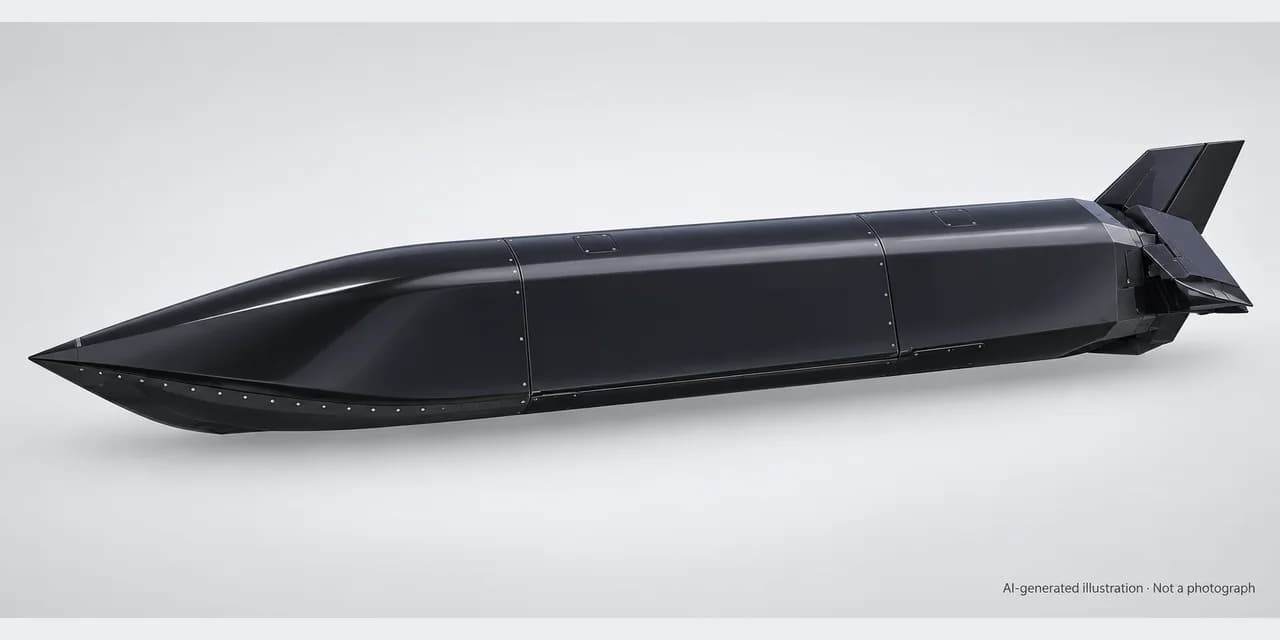
AGM-158C LRASM is a anti-ship missile originating in United States. It was built by Lockheed Martin.
 United States
AGM-158C LRASM — AI-generated illustration · Not a photograph
ForceTally · All rights reserved · Reference photograph: U.S Navy · Public domain · AI-generated illustration · Commercial use permitted · Source ↗ · ModifiedTechnical data
Anti-ship missile
United States
2018–present
United States Air Force United States Navy Royal Australian Air Force
DARPA
2009–2017
Lockheed Martin
USD $3.24 million (FY24)
2017–present
2,760 lb (1,250 kg) est.
14 ft (4.26 m) est.
25 in (635 mm) est.
18 in (450 mm) est.
8 ft 10 in (2.7 m)
WDU-42/B HE blast fragmentation penetrator
1,000 lb (453.6 kg)
FMU-156/B fuze
Williams F107-WR-105 turbofan
200 nmi (370 km) est.
Mach 0.9 (310 m/s; 1,100 km/h)
GPS , INS , IIR ( EO ), with AI guidance in on-board sensors (to detect high-value target)
Moving wings, 2 horizontal tailplanes & 1 vertical stabilizer
9 ft 10 in (3 m) CEP
Air launched: – B-1 Lancer – B-2 Spirit – F-15E Strike Eagle (integrating) – F-15EX Eagle II (integrating) – F/A-18E/F Super Hornet – F-35 Lightning II – P-8 Poseidon (integrating) Surface launched: – Mk 41 VLS – HIMARS (exploring)
Janes & AFA
The AGM-158C LRASM ( Long Range Anti-Ship Missile , colloquially pronounced lə- RAZ -ehm ) is a stealth air launch anti-ship cruise missile developed for the United States Air Force and United States Navy by the Defense Advanced Research Projects Agency ( DARPA ).
The LRASM is based on the AGM-158B JASSM-ER , but incorporates a multi-mode passive RF , a new weapon data-link and altimeter, and an uprated power system. It can be directed to attack enemy ships by its launch platform, receive updates via its datalink , or use onboard sensors to find its target. LRASM will fly towards its target at medium altitude then drop to low altitude for a sea skimming approach to counter missile defenses . The AGM-158B JASSM-ER was estimated to have a maximum range of 500 nmi (930 km). However, LRASM's range is shorter than the JASSM-ER it's based upon, due to the extra space for the navigation/sensor/passive radar needs. Lockheed Martin has claimed the missile's range is greater than 200 nmi (370 km).
Some naval advisors have proposed increasing the LRASM's capabilities to serve dual functions as a ship-based land attack weapon in addition to anti-ship roles. By reducing the size of its 1,000 lb (450 kg) warhead to increase range from some 300 mi (480 km) to 1,000 mi (1,600 km), the missile would still be powerful enough to destroy or disable warships while having the reach to hit inland targets. With the proper guidance system, a single missile would increase the Navy's flexibility rather than needing two missiles specialized for different roles.
On 27 August 2013, Lockheed conducted the first flight test of the LRASM, launched from a B-1B . Halfway to its target, the missile switched from following a planned route to autonomous guidance. It autonomously detected its moving target, a 260 ft (79 m) unmanned ship out of three in the target area, and hit it in the desired location with an inert warhead. The purpose of the test was to stress the sensor suite, which detected all the targets and only engaged the one it was told to. Two more flight tests were planned the year, involving different altitudes, ranges, and geometries in the target area. Two launches from vertical launch systems were planned for summer 2014. The missile had a sensor designed by BAE Systems . The sensor is designed to enable targeted attacks within a group of enemy ships protected by sophisticated air defense systems. It autonomously located and targeted the moving surface ship. The sensor uses advanced electronic technologies to detect targets within a complex signal environment, and then calculates precise target locations for the missile control unit.
Guidance: Semi-autonomous
Warhead: 1,000-lb Blast Fragmentation
Range 106 suppliers
Speed Passive RF
Country of Origin United States
Manufacturer Lockheed Martin
Range >200 nmi (370 km) est.; up to ~500 nmi in extended variants
Speed High-subsonic
Guidance System GPS/INS, IIR (EO), passive RF/ESM, AI target recognition
Reference text from Wikipedia contributors, used under CC BY-SA 4.0.
True scale
Sourced dimensions beside a 1.75 m human reference.
Points represent sourced observations, including revisions. Revisions on the same effective date are not separate inventory events. Ranges appear in the table and are not plotted as exact points.
| Observation / report period | Value | Source | Claim state |
|---|---|---|---|
| 17 Oct 2026 | 0.635 m | thedefensewatch.com | approved |
Length 14 ft (4.26 m)
Diameter 25 in (635 mm)
Launch Weight ~2,760 lb (1,250 kg)
Warhead Weight 1,000 lb (453.6 kg)
AGM-158C LRASM equipment records. Variants, orders and quantities are shown as reported in each inventory source; coverage is incomplete.
United States Air Force United States Navy Royal Australian Air Force
Equipment reference ↗Keep exploring
 Australia
 Israel
 Iran
 United Kingdom
 Italy