FORCETALLY
Loading the evidence…
Preparing your view.


Preparing your view.
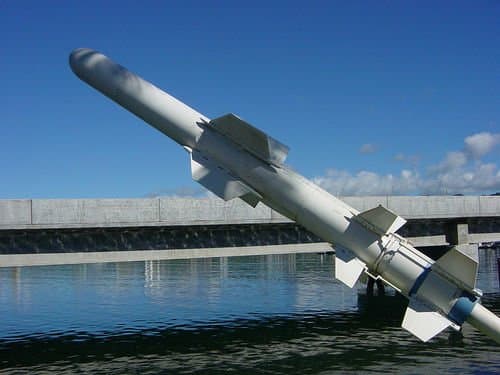
Cruise & anti-ship missilesIn service
Anti-ship missile
Harpoon (missile) is a anti-ship missile originating in United States. It was built by McDonnell Douglas Boeing Defense, Space & Security. Reported operators include Royal Australian Navy, Royal Australian Air Force, Belgian Navy, Brazilian Air Force, Royal Canadian Navy, Chilean Navy, Chilean Air Force, Royal Danish Navy, Egyptian Air Force, Egyptian Navy, German Navy, Hellenic Air Force, Hellenic Navy, Indian Air Force, Indian Navy, Indonesian Navy, Islamic Republic of Iran Navy, Israeli Air Force, Israeli Navy, Japan Maritime Self-Defense Force, Royal Malaysian Air Force, Mexican Navy, Royal Moroccan Air Force, Royal Netherlands Navy, Pakistan Air Force, Pakistan Navy, Polish Navy, Portuguese Air Force, Portuguese Navy, Qatar Emiri Air Force, Republic of Korea Air Force, Republic of Korea Navy, Royal Saudi Air Force, Royal Saudi Navy, Republic of Singapore Air Force, Republic of Singapore Navy, Spanish Air and Space Force, Spanish Navy, Republic of China Air Force, Republic of China Navy, Royal Thai Navy, Turkish Air Force, Turkish Navy, United Arab Emirates Navy, Royal Navy, Royal Air Force, Ukrainian Navy, United States Air Force, United States Navy, United States Marine Corps, United States Coast Guard.
 United States
Technical data
Anti-ship missile
United States
1977–present
See operators
Iran–Iraq War Russo-Ukrainian War
McDonnell Douglas Boeing Defense, Space & Security
US$ 1,406,812 for Harpoon Block II (2020)
7,500
1,523 lb (691 kg) including booster
12.6 ft (3.8 m), air-launched; 15 ft (4.6 m), surface- and submarine-launched
13.5 in (34 cm)
3 ft (0.91 m)
488 pounds (221 kg)
True scale
Sourced dimensions beside a 1.75 m human reference.
See it in your room. Scan with your phone to open this model in 3D, then place it in your space.
Points represent sourced observations, including revisions. Revisions on the same effective date are not separate inventory events. Ranges appear in the table and are not plotted as exact points.
| Observation / report period | Value | Source | Claim state |
|---|---|---|---|
| 28 Sept 2026 | 0.34 m | Wikipedia contributors | superseded |
| 28 Sept 2026 | 0.34 m | Wikipedia contributors | superseded |
| 28 Sept 2026 | 0.34 m | Wikipedia contributors | superseded |
| 28 Sept 2026 | 0.34 m | Wikipedia contributors | superseded |
| 5 Oct 2026 | 0.34 m | Wikipedia contributors | approved |
Impact fuze
Teledyne CAE J402 turbojet/solid propellant booster for surface and submarine launch; greater than 600 lb f (2,700 N) of thrust
Greater than 77 nmi (143 km), ship-launched Harpoon Block I & Block IC; Greater than 67 nmi (124 km), ship-launched Harpoon Block II; 120 nmi (220 km), air-launched Block IC
Sea-skimming
537 mph (864 km/h ; 240 m/s ; Mach 0.71), ship-launched Harpoon Block I & air-launched Harpoon Block IC; Greater than 537 mph (864 km/h ; 240 m/s ; Mach 0.71), ship-launched Harpoon Block IC & Block II
Sea-skimming cruise monitored by radar altimeter , active radar terminal homing.
RGM-84A surface ship/TEL-launched AGM-84A air-launched UGM-84A submarine-launched
Royal Australian Navy
Royal Australian Air Force
Belgian Navy
Brazilian Air Force
Royal Canadian Navy
Chilean Navy
Chilean Air Force
Royal Danish Navy
Egyptian Air Force
Egyptian Navy
German Navy
Hellenic Air Force
Hellenic Navy
Indian Air Force
Indian Navy
Indonesian Navy (Block 1D) (retired)
Islamic Republic of Iran Navy
Israeli Air Force
Israeli Navy
Japan Maritime Self-Defense Force
Royal Malaysian Air Force
Mexican Navy
Royal Moroccan Air Force
Royal Netherlands Navy
Pakistan Air Force
Pakistan Navy
Polish Navy
Portuguese Air Force
Portuguese Navy
Qatar Emiri Air Force - Harpoon Block 2 on order for use with F-15QA
Republic of Korea Air Force
Republic of Korea Navy
Royal Saudi Air Force
Royal Saudi Navy
Republic of Singapore Air Force
Republic of Singapore Navy
Spanish Air and Space Force
Spanish Navy
Republic of China Air Force
Republic of China Navy
Royal Thai Navy
Turkish Air Force
Turkish Navy
United Arab Emirates Navy
Royal Navy (retired)
Royal Air Force
Ukrainian Navy
United States Air Force
United States Navy
United States Marine Corps
United States Coast Guard (retired)
The Harpoon is an all-weather, over-the-horizon , anti-ship missile manufactured by McDonnell Douglas (now Boeing Defense, Space & Security ).
In 1965, the United States Navy began studies for a missile in the 24-nautical-mile (45 km) range class for use against surfaced submarines . The name Harpoon was assigned to the project. The sinking of the Israeli destroyer Eilat in 1967 by a Soviet-built Styx anti-ship missile shocked senior United States Navy officers, who until then had not appreciated the threat posed by anti-ship missiles. In 1970 Chief of Naval Operations Admiral Elmo Zumwalt accelerated the development of Harpoon as part of his "Project Sixty" initiative, hoping to add much-needed striking power to U.S. surface warships such as the Ticonderoga -class cruiser .
The Harpoon has also been adapted for carriage on several aircraft, including the P-3 Orion , the P-8 Poseidon , the AV-8B Harrier II , the F/A-18 Hornet and the U.S. Air Force B-52H bombers . The Harpoon was purchased by many nations, including India, Japan, Singapore , South Korea, Taiwan , the United Arab Emirates and most NATO countries.
The Block 1 missiles were designated A/R/UGM-84A in US service and UGM-84B in the UK. Block 1B standard missiles were designated A/R/UGM-84C, Block 1C missiles were designated A/R/UGM-84D. Block 1 used a terminal attack mode that included a pop-up to approximately 5,900 feet (1,800 m) before diving on the target; Block 1B omitted the terminal pop-up; and Block 1C provided a selectable terminal attack mode.
This version featured a larger fuel tank and re-attack capability, allowing it to search for a target again if the initial radar acquisition failed by searching in a clover-leaf pattern, but was not produced in large numbers because its intended mission (warfare with the Warsaw Pact countries of Eastern Europe) was considered to be unlikely following the Dissolution of the Soviet Union . The range is 150 miles (240 km). Block 1D missiles were designated A/RGM-84F.
This version entered service in 1999, gives the SLAM a re-attack capability, as well as an image comparison capability similar to the Tomahawk cruise missile ; that is, the weapon can compare the target scene in front of it with an image stored in its onboard computer during terminal phase target acquisition and lock on (this is known as DSMAC ). Block 1G missiles A/R/UGM-84G; the original SLAM-ER missiles were designated AGM-84H (2000-2002) and later ones the AGM-84K (2002 onwards).
It increases the ship-launched Harpoon missile's range from the Block II's 70 nmi (81 mi; 130 km) to 167.5 nmi (192.8 mi; 310.2 km), along with a new lighter 300 lb (140 kg) warhead and a more fuel-efficient engine with electronic fuel controls.
In December 1988, a Harpoon launched by an F/A-18 Hornet fighter from the aircraft carrier USS Constellation killed one sailor when it struck the merchant ship Jagvivek , a 250 ft (76 m) long Indian-owned ship, during an exercise at the Pacific Missile Range near Kauai , Hawaii . A Notice to Mariners had been issued warning of the danger, but Jagvivek left port before receiving the communication and subsequently strayed into the test range area, and the Harpoon missile, loaded just with an inert dummy warhead, locked onto it instead of its intended target.
Reference text from Wikipedia contributors, used under CC BY-SA 4.0.
Harpoon (missile) equipment records. Variants, orders and quantities are shown as reported in each inventory source; coverage is incomplete.
 Australia
 Brazil
 Chile
 Germany
 India
 Italy
 Malaysia
 Morocco
Reported count for Harpoon (missile). Service scope: Royal Moroccan Army; does not replace a national total. 1 distinct count cell(s) from the same source list; shared rowspan cells counted once. Excludes retired/reserve/on-order rows. Count column(s): quantity: 124 km. Origin: unstated. The listed variants/roles are the scope, not an immediately deployable count. The components do not establish one inventory census date; the stored date is the retrieved source snapshot.
 Pakistan
 Portugal
 Singapore
 Spain
 Taiwan
 Thailand
 Ukraine United States
Royal Australian Navy, Royal Australian Air Force, Belgian Navy, Brazilian Air Force, Royal Canadian Navy, Chilean Navy, Chilean Air Force, Royal Danish Navy, Egyptian Air Force, Egyptian Navy, German Navy, Hellenic Air Force, Hellenic Navy, Indian Air Force, Indian Navy, Indonesian Navy, Islamic Republic of Iran Navy, Israeli Air Force, Israeli Navy, Japan Maritime Self-Defense Force, Royal Malaysian Air Force, Mexican Navy, Royal Moroccan Air Force, Royal Netherlands Navy, Pakistan Air Force, Pakistan Navy, Polish Navy, Portuguese Air Force, Portuguese Navy, Qatar Emiri Air Force, Republic of Korea Air Force, Republic of Korea Navy, Royal Saudi Air Force, Royal Saudi Navy, Republic of Singapore Air Force, Republic of Singapore Navy, Spanish Air and Space Force, Spanish Navy, Republic of China Air Force, Republic of China Navy, Royal Thai Navy, Turkish Air Force, Turkish Navy, United Arab Emirates Navy, Royal Navy, Royal Air Force, Ukrainian Navy, United States Air Force, United States Navy, United States Marine Corps, United States Coast Guard
Equipment reference ↗Keep exploring
 Iran
 United Kingdom
 South Korea
 Japan