FORCETALLY
Loading the evidence…
Preparing your view.


Preparing your view.
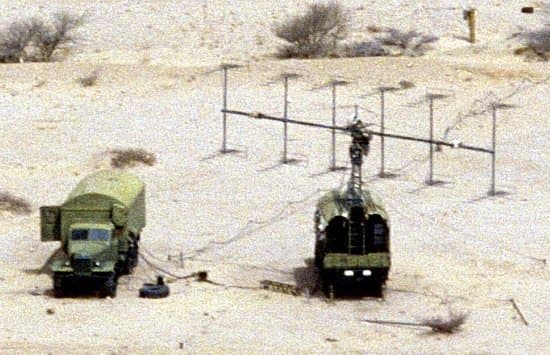
Radar & sensorsIn service
Early Warning Ground Control
P-12 radar is a early Warning Ground Control originating in Soviet Union. Reported operators include Angola, East Germany, Egypt, Moldova, Serbia, Iran, Soviet Union, Vietnam.
Points represent sourced observations, including revisions. Revisions on the same effective date are not separate inventory events. Ranges appear in the table and are not plotted as exact points.
| Observation / report period | Value | Source | Claim state |
|---|---|---|---|
| 29 Sept 2026 | 180 kW | Wikipedia contributors | superseded |
| 29 Sept 2026 | 180 kW | Wikipedia contributors | superseded |
| 29 Sept 2026 | 180 kW | Wikipedia contributors | superseded |
| 29 Sept 2026 | 180 kW | Wikipedia contributors | approved |
Soviet Union
1956
Early Warning Ground Control
VHF
200 km
25 km
360 degrees
1 km range
180 kW
Angola
East Germany
Egypt
Moldova
Serbia
Iran
Soviet Union
Vietnam
The P-12 "Yenisei" (also referred to by the NATO reporting name "Spoon Rest A" in the west) was an early VHF radar developed and operated by the former Soviet Union .
In 1958 a modernised variant of the P-12 passed the testing process and entered into service as the P-12M, the modernised radar featured the ability to shift the radar frequency within a range of 10 MHz. A further modernisation came in 1962 in the form of the P-12MP which featured improved reliability, reduced side lobe radiation and the ability to be paired with a centimeter band search radar, in 1970 the radar was provided with flicker equipment to improve immunity to anti-radiation missiles . The final variant of the P-12 was the P-12NP which was also produced as the P-12NA with a different transport chassis. The P-12NP compared with the previous P-12MP featured improved detection ranges and reliability as well as the ability to locate the control cabin up to 500 meters from the antenna to improve crew survivability as a result of attack on the radar.
The main differences between the earlier P-10 and the P-12 included a new antenna feed system with lower side lobes, reduced to 4% of the main lobe. The P-12 also offered a greater frequency range and greater frequency agility, being able to retune to four pre-set frequencies automatically as well as automatic frequency fine tuning. Finally Yenisei had greater accuracy with improved detection range (250 km) and better protection against passive and active interference. In addition to frequency agility the P-12 was the first Russian radar system to use the coherent cancellation moving target indicator (MTI) method to eliminate ground clutter.
P-12M – Serbian modernization done by the Military Technical Institute (VTI) in Belgrade together with other defense industry firms, almost everything changed except antenna, complete digital data acquisition and modern displays for better representation of tactical situation to operators including modern data link and remote control. Speed of data processing increased and range extended to 350km.
П-12 «Енисей» была разработана в 1954 — 1956 годах в специальном конструкторском бюро СКБ-197 под руководством главного конструктора Е. В. Бухвалова, принята на вооружение вооружённых сил СССР в 1956 году и серийно выпускалась Нижегородским телевизионным заводом им. В. И. Ленина .
Reference text from Wikipedia contributors, used under CC BY-SA 4.0.
P-12 radar equipment records. Variants, orders and quantities are shown as reported in each inventory source; coverage is incomplete.
Angola, East Germany, Egypt, Moldova, Serbia, Iran, Soviet Union, Vietnam
Equipment reference ↗ Angola
 Armenia
 Egypt
 Iran
 Moldova
 Serbia
 Vietnam
 Germany
 Sweden