FORCETALLY
Loading the evidence…
Preparing your view.


Preparing your view.
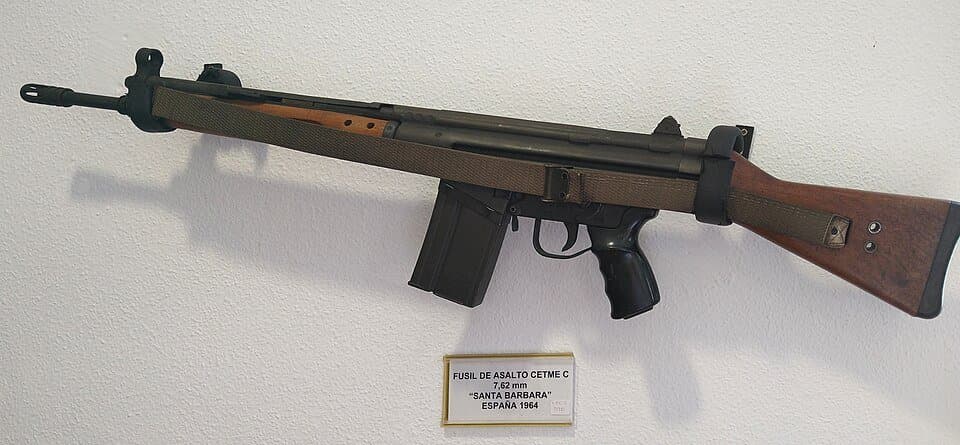
Small armsIn service
Battle rifle
CETME rifle is a battle rifle originating in Francoist Spain / Spanish transition to democracy. It was built by Centro de Estudios Técnicos de Materiales Especiales (CETME). Reported operators include Biafra, Bolivia, Chad, Republic of the Congo, People's Republic of the Congo, Democratic Republic of the Congo, Djibouti, Dominican Republic, France, Equatorial Guinea, Guatemala, Lebanon, Mauritania, Nigeria, Spain, Zaire, West Germany.
Technical data
Battle rifle
Francoist Spain / Spanish transition to democracy
1961–present
See Users
Ifni War Basque conflict Algerian War Congo Crisis Nigerian Civil War Zemla Intifada Sahrawi insurgency Western Sahara War Lebanese Civil War
Ludwig Vorgrimler
1948–1950
Centro de Estudios Técnicos de Materiales Especiales (CETME)
1950–1983
9.9 lb (4.49 kg)
40 in (1,016 mm)
17.7 in (450 mm)
7.92×41mm CETME (Model A) 7.62×51mm CETME (early Model B) 7.62×51mm NATO (other models)
Roller-delayed blowback
Full-auto: 550-650 rounds per minute
2580 ft/sec (786 m/s)
20-round detachable box magazine
Iron sights
Biafra : Biafran Armed Forces
Bolivia : 1,500 Model C rifles acquired for army reserves in 2003, in use with Grupo Delta of the Policia Nacional
Chad
Republic of the Congo
People's Republic of the Congo
Democratic Republic of the Congo
Djibouti
Dominican Republic
France : Commandos Marine used CETME-B rifles seized aboard a smuggling boat during the Algerian War, and kept them in limited service until the 1990s.
Equatorial Guinea
Guatemala : Most rifles disposed of in 1981
Lebanon : Lebanese Armed Forces
Mauritania
Nigeria
Spain Spanish Armed Forces Guardia Civil stored Cetme Model C rifles reintroduced to replace worn out Cetme Model LC rifles
Zaire
West Germany : CETME Model A
The CETME Model 58 is a stamped-steel, select-fire battle rifle produced by the Spanish armaments manufacturer Centro de Estudios Técnicos de Materiales Especiales (CETME) .
The CETME Model 58 is a stamped-steel, select-fire battle rifle produced by the Spanish armaments manufacturer Centro de Estudios Técnicos de Materiales Especiales (CETME) . The Model 58 used a 20-round box magazine and was chambered for the 7.62×51mm NATO round (although originally designed for the 7.92×41mm CETME cartridge and later for the reduced power Spanish 7.62×51mm cartridge). The CETME 58 would become the foundation of the widely deployed German Heckler & Koch G3 battle rifle. Semi-automatic variants were also produced for the civilian market.
The requirements for the original design specified that the rifle weigh no more than 4.1 kg, had an effective range of 1,000 metres and a large magazine capacity. This required an ambitious development of rifle technology but the CETME engineers, based on earlier German experiments, believed this would be possible using an unconventional projectile.
Thus the 7.92×41mm CETME, CA-001 cartridge was developed and unveiled in 1953.
The rounds weighed 6.8 grams and had a muzzle velocity of 800 m/s.
Sources from the time indicate that at 1,000 metres, the dispersion characteristics of the bullet were equal to those of normal rifle projectiles despite its light weight.
In addition, sources state that at 1,000 metres, the projectile could perforate Spanish, Russian, Italian, Czech and German helmets.
Later on in development, the Bundesgrenzschutz informed CETME that they were interested in the rifle but requested the cartridge diameter be reduced from 7.92mm to 7.62mm and that the same 41mm cartridge case should be used. This was accomplished after considerable time and effort, with the new round being designated the 7.62×41mm CETME, CA-002. Despite the rifle performing excellently with this cartridge, the Bundesgrenzschutz later stated that they could only adopt it if it was rechambered for the 7.62×51mm NATO cartridge due to standardisation agreements and thus the weapon was redesigned for this NATO cartridge, designated by the Spanish as Modelo B.
The first prototype rifles fired the same 7.92×33mm Kurz round as the StG45, and a variety of experimental 7.92 and 7.62mm cartridges were tested before settling on the 7.62×51mm CETME . This round, chosen due to requirements of the then-interested West German Bundesgrenzschutz , was dimensionally identical to 7.62×51mm NATO , but with a lighter bullet and powder charge to reduce recoil, making the fully automatic fire more controllable. In December 1956, the West German Bundeswehr received 400 CETME A rifles for intensive trials. Due to the tests performed by the Bundesamt für Wehrtechnik und Beschaffung , the ergonomy of the rifle was improved. With feedback from Heckler & Koch , the rifle was able to fire the fully powered 7.62×51mm NATO round due to the better quality of its steel. The Model B went on to be the foundation of the widely deployed Heckler & Koch G3 battle rifle.
The CETME B rifle in 7.62×51mm CETME was adopted as the Fusil de Asalto CETME Modelo 1958 de 7,62mm by the Spanish Army in September 1957 and its production began in Spain during 1961. The CETME series of battle rifles were manufactured in four basic models; the A, B, C and E models. The primary difference in the production models is the modes of fire, the absence of bipod and lighter weight for later models.
From 1957, the Dutch company Nederlandse Wapen en Munitiefabriek also demonstrated the CETME/H&K Model B rifle to the Royal Netherlands Army , the Netherlands Marine Corps , Finland (chambered in 7.62×39mm ), Ecuador and Dominican Republic , but no gun was produced nor ordered.
The Model As were the developmental prototypes. These models were unusual in that they fired from the closed bolt in semi-automatic and from the open bolt in full-auto mode. Later production models fire from only the closed bolt. The Model As are easily identified by the position of rear sight and bipod folded back to form the fore-stock. In 1954, the rifle saw limited introduction in the Spanish Army. They used the 7.92×41mm CETME.
The Model B was the first production model. It had a perforated steel handguard and chambered for the 7.62×51mm CETME round. The 7.62×51mm CETME differed from the standard 7.62×51mm NATO round by having a lighter full-metal-jacketed, plastic-cored lead bullet and a reduced propellant charge. The parts for the Model B are for most part interchangeable with the later Model C rifles.
The Spanish Army adopted a variant of the Model B re-engineered for the more powerful 7.62×51mm NATO round. The reliable functioning of roller-delayed blowback mechanisms is limited by specific ammunition and arm parameters like bullet weight, propellant charge, barrel length and amount of wear. The Model B could be converted to fire the 7.62×51mm NATO round if the bolt group and return spring were replaced with that of the Model C. These modified rifles were known as Model 58-64-C and by 1971 all the Spanish CETME B rifles had been upgraded.
The Model C was a lightweight version that was chambered for the 7.62×51mm NATO round and had wooden fore-stocks. The Model C is virtually identical to the Model B. However, certain components had been strengthened to better deal with the increased forces and stress exerted by the application of the standard 7.62×51mm NATO round. It had become the Spanish standard rifle by 1964.
The CETME Model L was a downsized variant of the CETME system, chambered for the 5.56×45mm NATO cartridge. It was adopted by the Spanish Army in 1984 and was in service until it was replaced by the Heckler and Koch G36 rifle in 1999.
NATO 7.62×51mm ammunition may safely be used in the CETME sporter, while commercial .308 ammunition is not recommended for use due to the tendency of the extractor to tear off the rims of the softer civilian brass.
Reference text from Wikipedia contributors, used under CC BY-SA 4.0.
True scale
Sourced dimensions beside a 1.75 m human reference.
See it in your room. Scan with your phone to open this model in 3D, then place it in your space.
Points represent sourced observations, including revisions. Revisions on the same effective date are not separate inventory events. Ranges appear in the table and are not plotted as exact points.
| Observation / report period | Value | Source | Claim state |
|---|---|---|---|
| 1 Oct 2026 | 0.45 m | Wikipedia contributors | superseded |
| 1 Oct 2026 | 0.45 m | Wikipedia contributors | superseded |
| 2 Oct 2026 | 0.45 m | Wikipedia contributors | approved |
CETME rifle equipment records. Variants, orders and quantities are shown as reported in each inventory source; coverage is incomplete.
 Bolivia
 Chad
 Democratic Republic of the Congo
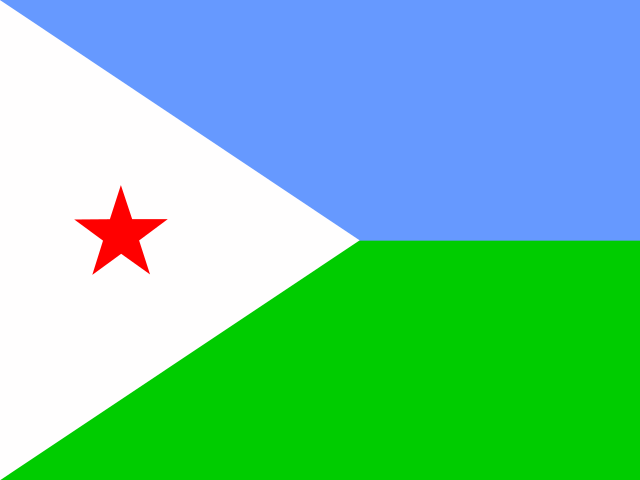 Djibouti
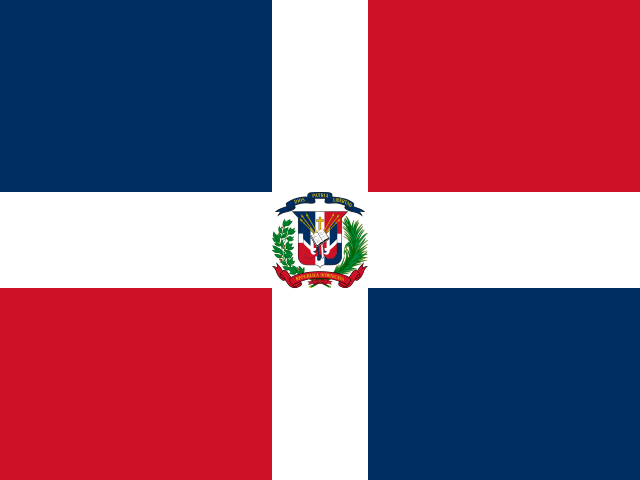 Dominican Republic
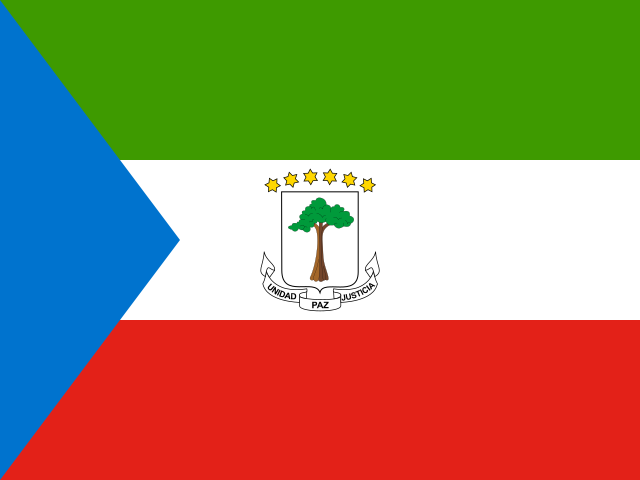 Equatorial Guinea
 France
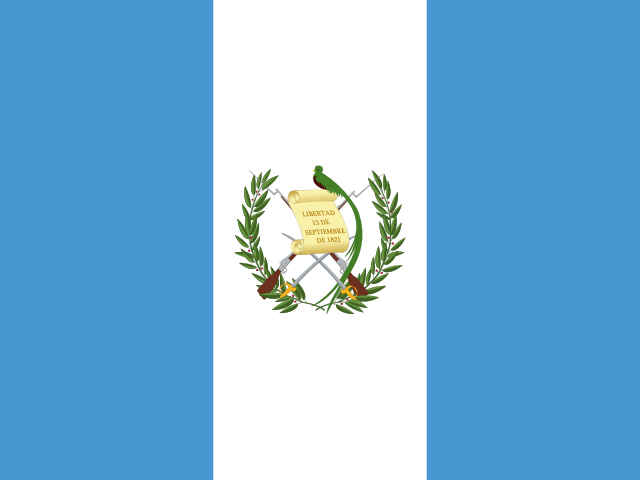 Guatemala
 Lebanon
 Mauritania
 Nigeria
 Republic of the Congo
 Spain
Biafra, Bolivia, Chad, Republic of the Congo, People's Republic of the Congo, Democratic Republic of the Congo, Djibouti, Dominican Republic, France, Equatorial Guinea, Guatemala, Lebanon, Mauritania, Nigeria, Spain, Zaire, West Germany
Equipment reference ↗ Belgium
 Germany
 Japan
 United States