FORCETALLY
Loading the evidence…
Preparing your view.


Preparing your view.
Support aircraftIn serviceProfile in progress
Narrow-body jet airliner
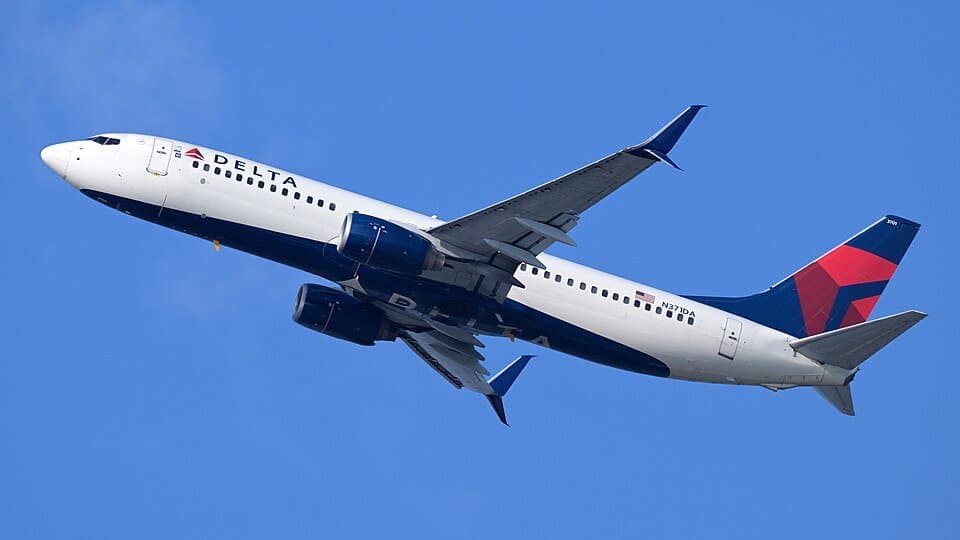
Boeing 737 Next Generation is a narrow-body jet airliner originating in United States. It was built by Boeing Commercial Airplanes. Reported operators include Southwest Airlines Ryanair United Airlines American Airlines.
 United States
No check recorded yet.
en.wikipedia.org ↗ · Page not found
Checked 29 Sept 2026English is the origin-language edition already used in step1; no different native edition applies.
English article identity and interlanguage links
Boeing 737 Next Generation
www.wikidata.org ↗ · Field absent
Checked 29 Sept 2026No mapped field recovered. Stored full text retained for further extraction; this is not a claim that unstructured prose has been manually exhausted.
Mapped labelled specifications
airliner family (1997–present) 737 NG B737 NG Boeing 737NG 737NG 737 Next Generation edit Language Label Description Also known as default for all languages Boeing 737 Next Generation – English Boeing
www.boeing.com ↗ · Page not found
Checked 29 Sept 2026No exact name/designation URL in retained manufacturer sitemap
Manufacturer robots/sitemap lookup
User-agent: * Disallow: /nosearch/ Sitemap: https://www.boeing.com/sitemap.xml
www.boeing.com ↗ · Page not found
Checked 29 Sept 2026No exact name/designation URL in retained manufacturer sitemap
Manufacturer robots/sitemap lookup
/ /commercial /commercial/737ng /commercial/737ng/737-next-generation-design-highlights /commercial/737max /commercial/737max/737-max-update_ar /commercial/737max/737-max-update_ar/737-max-software-updates_ar /commercial/737max/737-max-update_ar/737-max-contacts_ar /commercial/737max/737-max-update_
www.wojsko-polskie.pl ↗ · Access blocked
Checked 29 Sept 2026Source blocked/unavailable; HTTP None
Official equipment index linked profile names
('Connection aborted.', RemoteDisconnected('Remote end closed connection without response'))
polishdefenceindustry.gov.pl ↗ · Page not found
Checked 29 Sept 2026No exact name or stored alias among retained equipment links. This is index coverage, not proof the specification is unpublished.
Official equipment index linked profile names
The Polish Defence and Security Equipment Catalogue - Portal Przedsiębiorcy Sektora Obronnego Strona główna Baza przedsiębiorców Instytucje EDF Aktualności O nas Kontakt Treść Menu główne Wyszukiwarka wpisz czego szukasz a a a wybierz język pl en fr es ukr Portal Przedsiębiorcy Sektora Obronnego Baza przedsiębiorców Strona główna Baza przedsiębiorców Instytucje EDF Aktualności O nas Kontakt Strona główna > Aktualności > The Polish Defence and Security Equipment Catalogue > drukuj stronę The Poli
No check recorded yet.
Narrow-body jet airliner
United States
Boeing Commercial Airplanes
In service, military variants in production
Southwest Airlines Ryanair United Airlines American Airlines
7,123 as of June 2026
1996–2020 (civilian variants) 1996–present (military variants)
December 17, 1997 with Southwest Airlines
February 9, 1997 ( 1997-02-09 )
Boeing 737 Classic
Boeing Business Jet Boeing C-40 Clipper Boeing E-7 Wedgetail Boeing P-8 Poseidon Coulson 737 Fireliner
Boeing 737 MAX
2
160 passengers in two classes or 175 in one class, and 1,591 ft 3 (45.1 m 3 ) of cargo
129 ft 6 in (39.47 m)
117 ft 5 in (35.79 m) with winglets, 112 ft 7 in (34.32 m) without winglets
12 ft 4 in (3.76 m) (fuselage)
1,341.2 sq ft (124.60 m 2 )
91,300 lb (41,413 kg)
174,200 lb (79,016 kg)
6,875 US gal (5,725 imp gal; 26,020 L)
2 × CFM International CFM56-7B26 turbofan engine, 26,300 lbf (117 kN) thrust each
Mach 0.82
520 mph (837 km/h, 452 kn) at 39,000 ft (12,000 m) (long-range cruise)
390 mph (630 km/h, 340 kn)
3,368 mi (5,421 km, 2,927 nmi)
41,000 ft (12,000 m)
7,598 ft (2,316 m)
5,200 ft (1,600 m)
The 737NG is an upgrade of the 737 Classic (–300/–400/–500) series. Compared to the 737 Classic, it has a redesigned wing with a larger area, a wider wingspan, greater fuel capacity, higher maximum takeoff weight and longer range. It has CFM International CFM56-7 series engines, a glass cockpit , and upgraded and redesigned interior configurations. The series includes four variants, the –600/–700/–800/–900, seating between 108 and 215 passengers. The 737NG's primary competition is the Airbus A320 family .
In July 2008, Boeing offered Messier-Bugatti-Dowty 's new carbon brakes for the Next-Gen 737s, which were intended to replace steel brakes and would reduce the weight of the brake package by 550–700 pounds (250–320 kg) depending on whether standard or high-capacity steel brakes were fitted. A weight reduction of 700 pounds (320 kg) on a 737-800 would result in a 0.5% reduction in fuel burn. Delta Air Lines received the first Next-Gen 737 model with this brake package, a 737-700, at the end of July 2008.
This short-field design package is an option on the 737-600, -700, and -800 and is standard equipment for the new 737-900ER. These enhanced short-runway versions could increase pay or fuel loads when operating on runways under 5,000 feet (1,500 m). Landing payloads were increased by up to 8,000 lb on the 737-800 and 737-900ER and up to 4,000 lb on the 737-600 and 737-700. Takeoff payloads were increased by up to 2,000 lb on the 737-800 and 737-900ER and up to 400 lb on the 737-600 and 737-700. The package includes:
Increased flight-spoiler deflection from 30 to 60°, improving aerodynamic braking on landing.
The CFM56-7BE engine began ground testing in September 2009, and began flight testing in early 2010 in Victorville, California. The first aircraft to receive the enhancement update is line number 3700, registered as B-5596, a 737-800, which later was delivered to China Southern Airlines .
Boeing was to increase 737 production from 31.5 units per month in September 2010 to 35 in January 2012 and to 38 units per month in 2013. Production rate was 42 units per month in 2014, and was planned to reach rates of 47 units per month in 2017 and 52 units per month in 2018.
In 2016, the monthly production rate was targeted to reach 57 units per month in 2019, even to the factory limit of 63 units later. A single airplane was then produced in the Boeing Renton Factory in 10 days, less than half what it was a few years before. The empty fuselage from Spirit AeroSystems in Wichita, Kansas , enters the plant on Day 1. Electrical wiring is installed on day 2 and hydraulic machinery on day 3. On day 4, the fuselage is crane-lifted and rotated 90°, wings are mated to the airplane in a six-hour process, along with landing gear , and the airplane is again rotated 90°. The final assembly process begins on Day 6 with the installation of airline seats , galleys , lavatories , overhead bins , etc. Engines are attached on day 8 and it rolls out of the factory for test flights on day 10.
The wing was redesigned with a new, thinner airfoil section, and a greater chord and increased wingspan (by 16 ft [4.9 m]) increased the wing area by 25%, which also increased total fuel capacity by 30%. New quieter and more fuel-efficient CFM56-7B engines are used. Higher maximum takeoff weights are offered. The 737NG includes redesigned vertical stabilizers, and winglets are available on most models.
The 737NG encompasses the -600, -700, -800, and -900 with improved performance and commonality retained from previous 737 models. The wing, engine, and fuel-capacity improvements combined increase the 737's range by 900 nautical miles [nmi] (1,700 km; 1,000 mi) to over 3,000 nmi (5,600 km; 3,500 mi), permitting transcontinental service.
The 737-600 was launched by SAS in March 1995, with the first aircraft delivered in September 1998. A total of 69 have been produced, with the last aircraft delivered to WestJet in 2006. Boeing displayed the 737-600 in its price list until August 2012. The 737-600 replaces the 737-500 and is similar to the Airbus A318 . Winglets were not an option. WestJet was to launch the -600 with winglets, but dropped them in 2006.
In November 1993, Southwest Airlines launched the Next-Generation program with an order for 63 737-700s and took delivery of the first one in December 1997. It replaced the 737-300, typically seating 126 passengers in two classes to 149 in all-economy configuration, similar to the Airbus A319 .
In long-range cruise, it burns 4,440 lb (2,010 kg) per hour at Mach 0.785 (518 mph; 450 kn; 834 km/h) and FL410, increasing to 4,620–4,752 lb (2,096–2,155 kg) at Mach 0.80 – Mach 0.82 (528–541 mph; 459–470 kn; 850–871 km/h). As of July 2018, all -700 series on order, 1,128 -700, 120 -700 BBJ, 20 -700C, and 14 -700W aircraft, have been delivered. By June 2018, around 1000 were in service: half of them with Southwest Airlines, followed by WestJet with 56 and United Airlines with 39. The value of a new -700 stayed around $35 million from 2008 to 2018. A 2003 aircraft was valued for $15.5 million in 2016 and $12 million in 2018 and will be scrapped for $6 million by 2023.
Boeing launched the 737-700ER (Extended Range) on January 31, 2006, with All Nippon Airways as the launch customer. Inspired by the Boeing Business Jet , it features the fuselage of the 737-700 and the wings and landing gear of the 737-800. When outfitted with nine auxiliary fuel tanks, it can hold 10,707 US gallons (40,530 L; 8,915 imp gal) of fuel with a 171,000-pound (78,000 kg) maximum takeoff weight, but with a cargo payload capacity significantly decreased from 966 to 165 ft 3 (27.4 to 4.7 m 3 ), trading payload for increased range of 5,775 nmi (10,695 km; 6,646 mi). The first was delivered on February 16, 2007, to ANA with 24 business-class and 24 premium-economy seats only. A 737-700 can typically accommodate 126 passengers in two classes. It is similar to the Airbus A319LR .
The Boeing 737-800 is a stretched version of the 737-700. It replaced the 737-400 and competes primarily with the Airbus A320 . The 737-800 seats 162 passengers in a two-class layout or 189 passengers in a one-class layout. The 737-800 was launched on September 5, 1994. Launch customer Hapag-Lloyd Flug received the first one in April 1998.
Modifications to the 737-800 airframe include installing a large cargo door, a cargo-handling system, and additional accommodations for nonflying crew or passengers. The aircraft is designed to fly up to 1,995 nmi (3,695 km; 2,296 mi) at a MTOW of 174,100 lb (79,000 kg).
In 2015, Boeing launched the 737-800SF passenger to freighter conversion program with Aeronautical Engineers Inc (AEI). The conversion can be completed by AEI or third parties such as HAECO . GECAS was the initial customer. It has a 52,800-pound (23,900 kg) payload capacity, and a range of 2,000 nautical miles (3,700 km; 2,300 mi). It received its supplemental type certificate from the FAA in early 2019. In March 2019, the first AEI converted aircraft was delivered to Ethiopian Airlines on lease from GECAS. The Civil Aviation Administration of China cleared it in January 2020. Aircraft lessor Macquarie AirFinance ordered four 737-800SFs in March 2021.
Boeing later introduced the 737-900, an even longer variant stretched to 138 ft 2 in (42.11 m). Because the −900 retains the same exit configuration of the -800, seating capacity is limited to 189, although aircraft equipped with a typical two-class layout was to seat about 177. The 737-900 also retains the maximum takeoff weight and fuel capacity of the −800, trading range for payload. Alaska Airlines launched the 737-900 in November 1997, and the model first flew on August 3, 2000. Alaska Airlines accepted the first delivery on May 15, 2001. The type proved unpopular, with only 52 delivered, before being replaced by the improved 737-900ER.
Up to two auxiliary fuel tanks in the cargo hold and standard winglets improved the range of the stretched jet to that of other 737NG variants, while an additional pair of exit doors and a flat rear pressure bulkhead increased maximum seating capacity to 220 passengers. Airlines may deactivate (plug) the additional exit doors if the total configured capacity of the plane is 189 passengers or fewer.
On October 11, 1999, Boeing launched the BBJ2. Based on the 737-800, it is 19 ft 2 in (5.84 m) longer than the BBJ1, with 25% more cabin space and twice the baggage space, but with slightly reduced range. It is also fitted with auxiliary fuel tanks in the cargo hold and winglets. The first BBJ2 was delivered on February 28, 2001. A total of 23 BBJ2s was delivered to customers.
The BBJ3 aircraft is based on the 737-900ER aircraft. The BBJ3 is approximately 16 feet (4.9 m) longer than the BBJ2 and has a slightly shorter range. Seven BBJ3s were delivered to customers.
^ 110 passengers
^ 126 passengers
^ 162 passengers
^ 178 passengers
Capacity: 160 passengers in two classes or 175 in one class, and 1,591 ft 3 (45.1 m 3 ) of cargo
Length: 129 ft 6 in (39.47 m)
Wingspan: 117 ft 5 in (35.79 m) with winglets, 112 ft 7 in (34.32 m) without winglets
Width: 12 ft 4 in (3.76 m) (fuselage)
Wing area: 1,341.2 sq ft (124.60 m 2 )
Empty weight: 91,300 lb (41,413 kg)
Max takeoff weight: 174,200 lb (79,016 kg)
Powerplant: 2 × CFM International CFM56-7B26 turbofan engine, 26,300 lbf (117 kN) thrust each
Cruise speed: 520 mph (837 km/h, 452 kn) at 39,000 ft (12,000 m) (long-range cruise)
Never exceed speed : 390 mph (630 km/h, 340 kn)
Range: 3,368 mi (5,421 km, 2,927 nmi)
Service ceiling: 41,000 ft (12,000 m)
Takeoff distance: 7,598 ft (2,316 m)
Landing distance: 5,200 ft (1,600 m)
Reference text from Wikipedia contributors, used under CC BY-SA 4.0.
True scale
Sourced dimensions beside a 1.75 m human reference.
Points represent sourced observations, including revisions. Revisions on the same effective date are not separate inventory events. Ranges appear in the table and are not plotted as exact points.
| Observation / report period | Value | Source | Claim state |
|---|---|---|---|
| 28 Sept 2026 | 39.47 m | Wikipedia contributors | superseded |
| 28 Sept 2026 | 39.47 m | Wikipedia contributors | superseded |
| 28 Sept 2026 | 39.47 m | Wikipedia contributors | superseded |
| 28 Sept 2026 | 39.47 m | Wikipedia contributors | superseded |
| 28 Sept 2026 | 39.47 m | Wikipedia contributors | superseded |
| 28 Sept 2026 | 39.47 m | Wikipedia contributors | superseded |
| 28 Sept 2026 | 39.47 m | Wikipedia contributors | superseded |
| 28 Sept 2026 | 39.47 m | Wikipedia contributors | approved |
Boeing 737 Next Generation equipment records. Variants, orders and quantities are shown as reported in each inventory source; coverage is incomplete.
 Australia
 Peru
Peru Poland
Reported count for Boeing 737 · 800 / Boeing 737 · BBJ2. Service scope: Polish Air Force; does not replace a national total. 2 distinct count cell(s) from the same source list; shared rowspan cells counted once. Excludes retired/reserve/on-order rows. Count column(s): in service: 1 / in service: 2. Origin: United States. The listed variants/roles are the scope, not an immediately deployable count. The components do not establish one inventory census date; the stored date is the retrieved source snapshot.
Southwest Airlines Ryanair United Airlines American Airlines
Equipment reference ↗