


Preparing your view.
At a glance
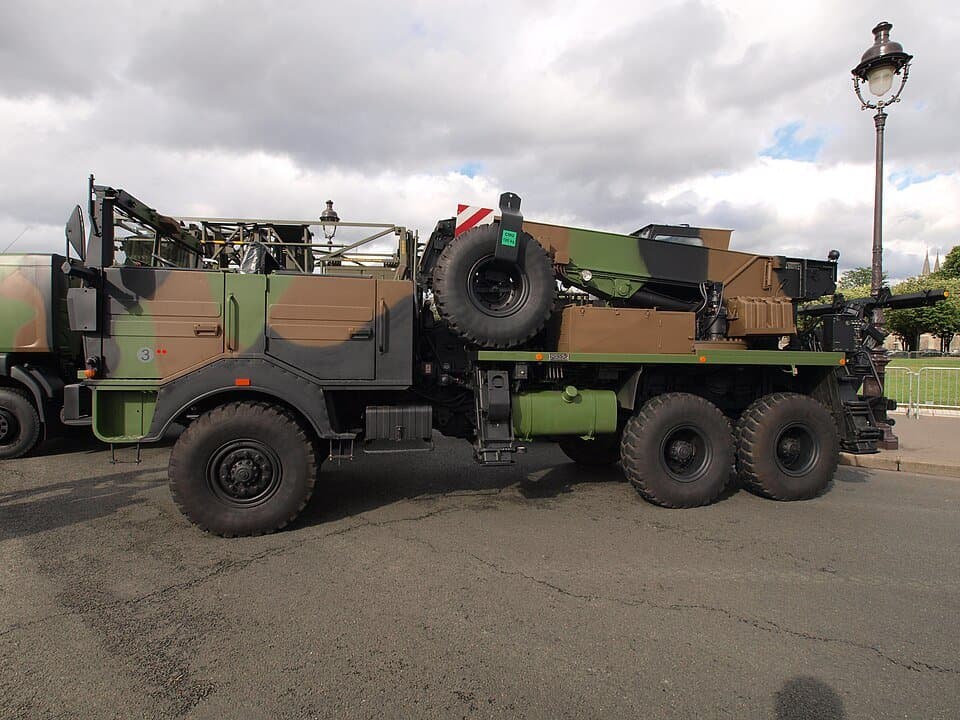
Renault TRM 10000larger figure on 3 of 3
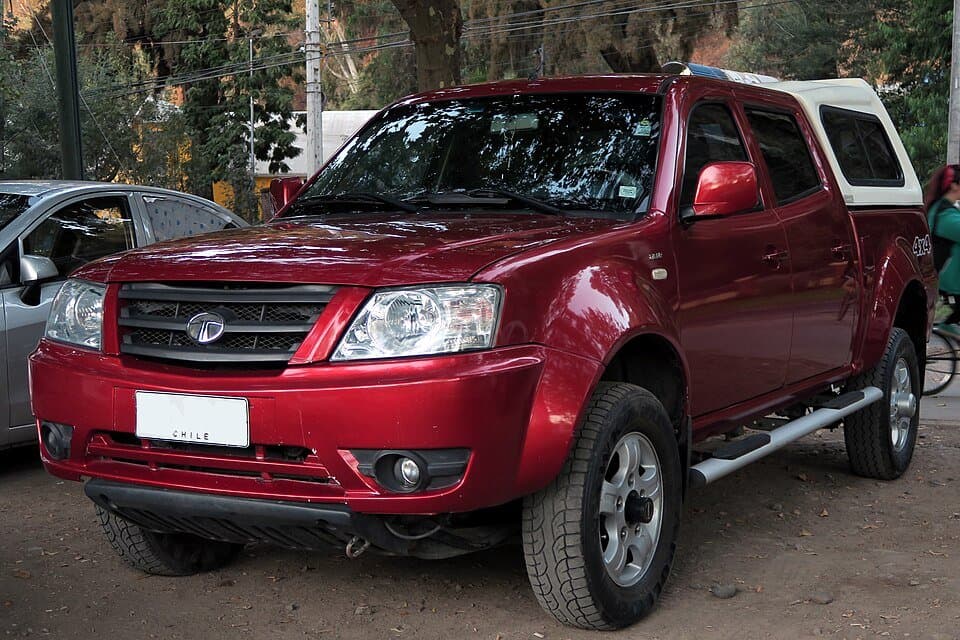
Tata Telcolinelarger figure on 0 of 3
Counts only measures both sources give with the same scope. A larger figure is not a better system.
Measured figures
Empty; Empty weight
Single source10 290 kg[source]
Maximum; Maximum speed
Single source89 km/h[source]
Operational; Operational range
Single source1,200 km[source]
Renault 9.8-liter diesel
Single sourceRenault 9.8-liter diesel 264 hp[source]
Bars compare reported quantities only. A larger figure does not make a system better; configurations and test conditions differ.
Configuration
| Specification | Renault TRM 10000 | Tata Telcoline |
|---|---|---|
| Type | Heavy cargo truck[source] | — |
| Place of origin | France[source] | — |
| In service | 1987–Present[source] | — |
| Used by | French Army[source] | — |
| Manufacturer | Renault Trucks[source] | Tata Motors[source] |
| Produced | 1985 to Present[source] | — |
| No. built | ~1000[source] | — |
| Variants | Renault TRM 700-100 Renault TRM 10000 CLD[source] | — |
| Payload capacity | 10,000 kg[source] | — |
| Ground clearance | 0.63 m[source] | — |
| Fuel capacity | 500 l[source] | — |
| Production | — | 1988–present[source] |
| Body style | — | 2-door pick-up 4-door pick-up[source] |
| Also called | — | Tatamobile 206 Tata Pick-Up Tata 207 Tata TL Tata Loadbeta[source] |
| Assembly | — | Pune , India Pekan, Pahang , Malaysia[source] |
| Layout | — | Front-engine, rear-wheel-drive Front-engine four-wheel-drive[source] |
| Platform | — | Tata X2[source] |
| Related | — | Tata Sierra Tata Estate Tata Sumo Tata Safari[source] |
| Engine | — | diesel : 1948 cc Peugeot XD88 I4 1948 cc 483DL I4 1948 cc 483DL turbo I4 2179 cc Dicor I4 2956 cc Dicor 497SP I4[source] |
| Transmission | — | 5-speed manual[source] |
| Wheelbase | — | 2,825–3,150 mm (111.2–124.0 in)[source] |
| Curb weight | — | 1,715–1,995 kg (3,781–4,398 lb)[source] |
| Role | — | mid-size pickup truck made[source] |
| Source measurement | — | The Tatamobile 206 is a mid-size pick-up produced on a flexible body-on-frame chassis (called Tata X2 platform ) in both short wheelbase (single cab, 2 seats) and long wheelbase (crew cab, 5 seats) with rear or four wheel drive : the 4WD version has a higher ground clearance for improved off-road use. On the same X2 platform, Tata Motors produced the compact 3-door Tata Sierra SUV (launched in 1991), the 5-door Tata Estate wagon and the 5-door Safari SUV, Sumo and Spacio . Originally in India, it was powered by a naturally aspirated 2.0-litre (1,948 cc) diesel Peugeot XD88 engine (assembled under licence by Tata in India) that produced 63 hp (47 kW). In 1994, a Tata-built, stroked version of the unrelated Peugeot XUD9 engine with the same displacement as the old XD88 was added. A turbocharged version that produced 92 hp (69 kW) was also available.[source]Tata Telcoline · First generation (1988–2008); only the objects and conditions stated in this passage In 1990, Tata started exporting the Tatamobile to South Africa with the name Telcoline and in 1994, Tata introduced a facelift for the Indian market with revised headlights. Tata also began exporting the vehicle to Europe. In Italy, it was sold as the Tata Pick-Up in single and crew-cab form with two trim levels: base level and Orciari , a more equipped version built by Italian firm Orciari with two-tone paint, front bull-bar, alloy wheels, air conditioning and a more refined interior. The engines available in Europe were the 2.0-litre Peugeot naturally aspirated diesel (63 HP) and turbo diesel (92 HP). With the introduction of the Euro 3 emission standards, the naturally aspirated version was phased out and the power of the turbocharged version was reduced to 88 horsepower.[source]Tata Telcoline · First generation (1988–2008); only the objects and conditions stated in this passage In August 2002, a more substantial facelift was introduced: new front and rear bumpers, bonnet and front grille that houses the new Tata logo. Moreover, changes are made to the mechanicals and the new 3.0-litre diesel engine is introduced (the same used in the Tata 407 ). With the new engine, Tata changed the Indian market name from Tatamobile to Tata 207 DI . The 3.0-litre (2956 cc) naturally aspirated diesel produced 58 HP but had more torque than the outgoing 2.0-litre Peugeot unit, while the turbocharged version produced 87 HP and was homologated to meet Euro 4 regulations.[source]Tata Telcoline · First generation (1988–2008) / 2002 facelift; only the objects and conditions stated in this passage In September 2003, a joint venture was signed between Tata Motors and Phoenix Venture Holdings ( MG Rover group) for the distribution and sale of the Tata 207 DI in the United Kingdom . In 2006 Tata introduced to the Indian market the 207 DI EX, a single cab version with flat load body and long wheelbase. In Europe the new 2.2 litre Dicor turbodiesel common rail engine Euro 4 that produce 140 horsepower was introduced. The 2.2-litre was based on the design of the 2,179 cc PSA DW12 engine and was re-engineered by Tata and AVL.[source]Tata Telcoline · First generation (1988–2008) / 2002 facelift; only the objects and conditions stated in this passage The presentation took place in the form of a definitive prototype at the Bologna Motor Show in December 2006, with production starting in May 2007 at the Pune plant (India) and thereafter beginning sales in India, Europe and South Africa. The final name chosen by Tata Motors is Xenon to avoid confusion with the previous Telcoline remaining in production. In Europe, it is equipped with the new 2.2-litre Dicor turbodiesel common rail Euro 4 producing 140 horsepower and a 5-speed manual gearbox.[source]Tata Telcoline · Second generation (2006–present); only the objects and conditions stated in this passage In 2012, with the introduction of the Euro 5 regulations in Europe, the 2.2 Dicor engine was revised with the introduction of VGT, DPF filter and a power rise to 150 horsepower.[source]Tata Telcoline · Second generation (2006–present); only the objects and conditions stated in this passage In 2010, the pick up started assembly in Thailand by the Tata- Thonburi joint venture . In 2011, the CNG version was launched in Thailand powered by a new 2,1 litre straight-4 DOHC engine with 115 HP. A Xenon XT (Cross Terrain) double cab 4-door, 5-seater variant was launched in 2009. The Xenon has been well received in Europe, especially in Spain and Italy.[source]Tata Telcoline · Second generation (2006–present); only the objects and conditions stated in this passage |