Loading the evidence…
Preparing your view.


At a glance
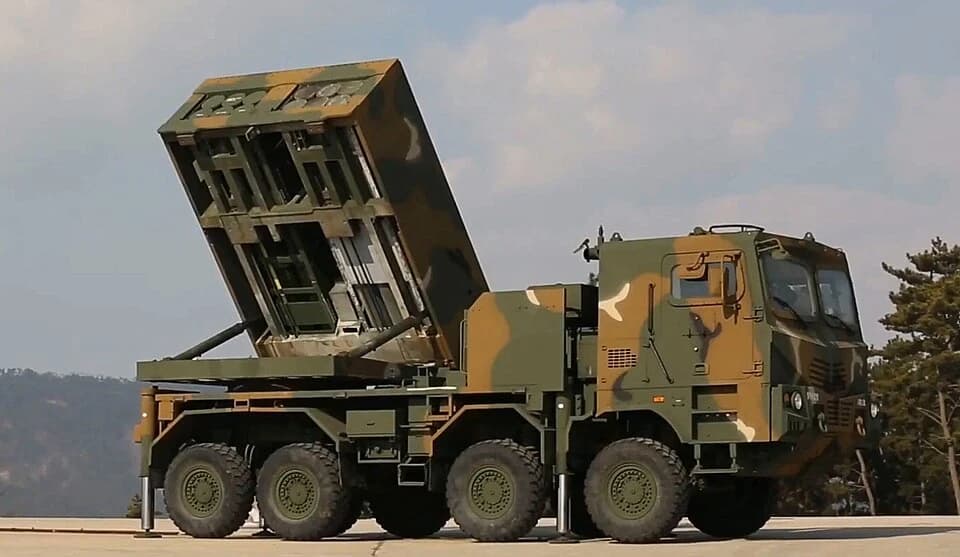
K239 Chunmoolarger figure on 2 of 4
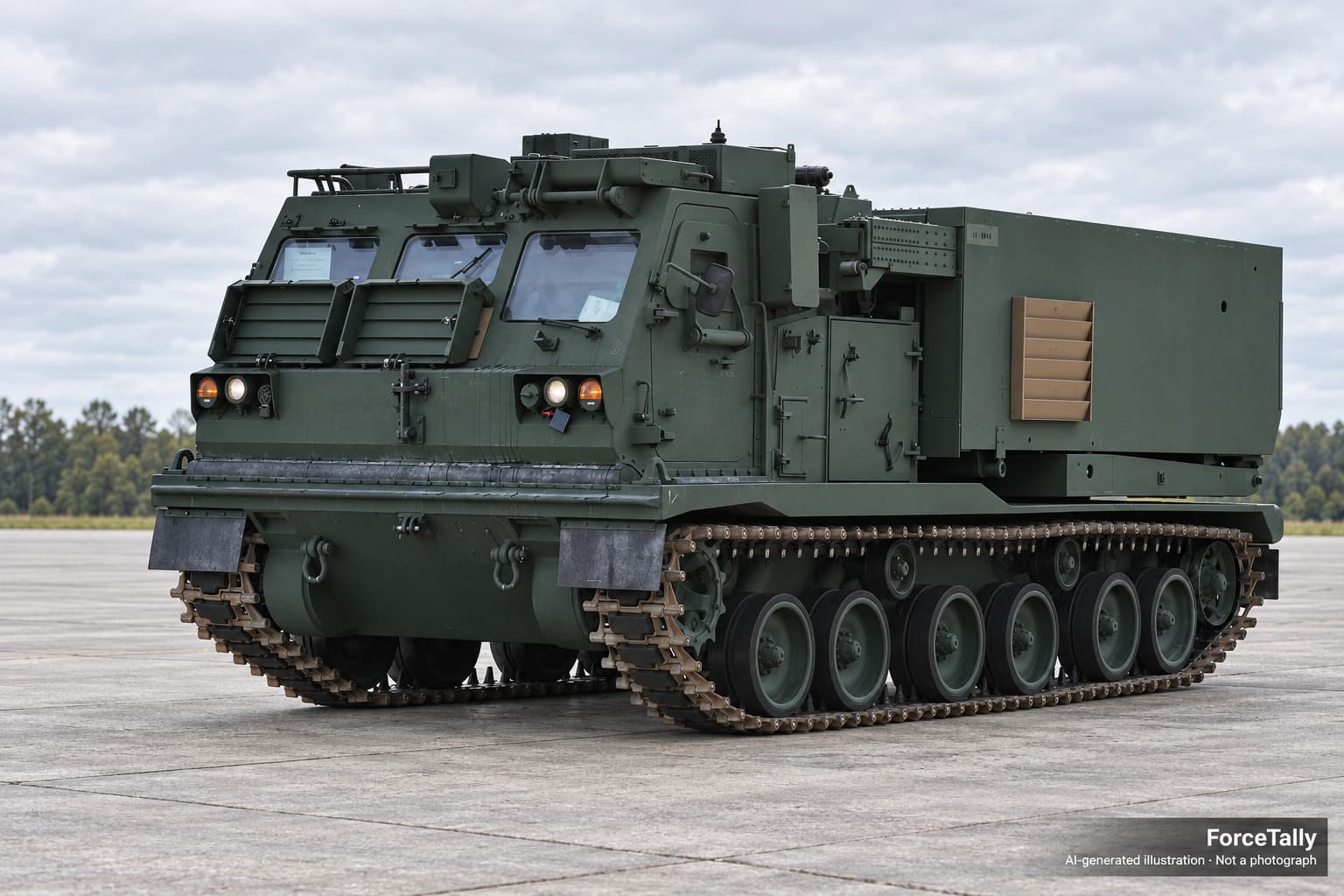
M270 Multiple Launch Rocket Systemlarger figure on 2 of 4
Measured figures
Length
Single source9 meters (29 ft 6 in)[source]
Length
Single sourceConfiguration
| Specification | K239 Chunmoo | M270 Multiple Launch Rocket System |
|---|---|---|
| Type | Multiple rocket launcher Tactical ballistic missile[source] | Multiple rocket launcher[source] |
| Place of origin | South Korea[source] | United States[source] |
| In service | 2015–present[source] | 1983–present[source] |
| Used by | See Operators[source] | See Operators |
Counts only measures both sources give with the same scope. A larger figure is not a better system.
Operational; Operational range
Single sourceEffective; CGR-080
Single sourceEffective; CTM-290
Single sourceEffective; CTM-MR/ASBM
Single sourceEffective; K33
Single sourceEffective; KM26A2
Single source36 km (K33) 45 km (KM26A2) 80 km (CGR-080) 160 km (CTM-MR/ASBM) 290 km (CTM-290)[source]
450 km (280 mi)[source]
Operational; Operational range
Single sourceEffective; M26
Single sourceHD Hyundai Infracore DV11K 6-cylinder water-cooled diesel engine
Single sourceHD Hyundai Infracore DV11K 6-cylinder water-cooled diesel engine 450 hp (340 kW)[source]
Cummins VTA-903 diesel engine at 2600 rpm
Single sourceM270A1
Single sourceCummins VTA-903 diesel engine 500 hp (373 kW) at 2600 rpm 600 hp (447 kW) (M270A1)[source]
Bars compare reported quantities only. A larger figure does not make a system better; configurations and test conditions differ.
| Designer | Agency for Defense Development (launcher) Doosan DST (vehicle) Hanwha (rocket) Samyang Comtech (armor)[source] | Ling-Temco-Vought[source] |
|---|
| Designed | 2009–2013[source] | 1977[source] |
|---|
| Manufacturer | Hanwha Aerospace (2015–present) Korea Defense Industry (2020–present) Huta Stalowa Wola (2023–present)[source] | Lockheed Martin Diehl BGT Defence Krauss-Maffei Wegmann Aérospatiale - Matra[source] |
|---|
| Unit cost | ₩ 3.6 billion ( US$ 2.94 million) per one launcher+K239L vehicle (2020)[source] | Domestic cost: $2.3 million per one launcher (FY 1990) $4.9 million (in 2024) per one launcher $168,000 per one M31 GMLRS (FY 2023) Export cost: $434,000 per one M31ER GMLRS (FY 2022)[source] |
|---|
| Produced | 2014–present[source] | 1980–present[source] |
|---|
| No. built | 356/705[source] | — |
|---|
| Variants | Homar-K[source] | M270, M270A1, M270A2, MARS II , LRU, MLRS-I[source] |
|---|
| Rate of fire | 6 rds/in 30 sec (CGR-080)[source] | M26 : ~3s per round ATACMS : ~30s per round[source] |
|---|
| Armor | Samyang Comtech Steel / Ceramic + Polymer Matrix Composites ( STANAG 4569 Level 2 )[source] | 5083 aluminum hull, 7039 aluminum cab[source] |
|---|
| Main armament | 20×2 K33 6×2 KM26A2 6×2 CGR-080 4×2 CTM-MR/ASBM 1×2 CTM-290[source] | 12 × MLRS or 4 x PrSM or 2 × MGM-140 ATACMS[source] |
|---|
| Power/weight | 14.5 hp/t (10.81 kW/t)[source] | 18.9 hp/ST (15.5 kW/t) (M270)[source] |
|---|
| Transmission | Allison Transmission 4500SP[source] | Cross-drive turbo transmission, fully electronically controlled[source] |
|---|
| Fuel capacity | 250 liters (66 U.S. gal)[source] | — |
|---|
| Guidance system | GPS-aided INS[source] | — |
|---|
| Accuracy | 9 m CEP (CTM-290) 15 m CEP (CGR-080)[source] | — |
|---|
| Role | rocket artillery system[source] | — |
|---|
| Source measurement | In October 2025 at ADEX 2025 in Seoul, Hanwha Aerospace unveiled the High-Performance Multiple Rocket Launcher (HPMRL). Developed for Marine Corps usage as a more mobile launcher than the K239 Chunmoo, the HPMRL prototype weighs 19 tons and is 8.5 meters long, 2.6 meters wide, and 3.2 meters high. Its smaller size means that HPMRL only carry a single ammunition pod of the type used by Chunmoo. However, HPMRL is capable of being transported by C-130 aircraft without disassembly and can fire from the deck of a moving ship in Sea State 5 . With initial development of HPMRL as an internal Hanwha program being complete, full-scale development in cooperation with DAPA is expected to start in 2030.[source]K239 Chunmoo · History; only the objects and conditions stated in this passage The K239 is capable of launching K33 131 mm rockets, but not 130 mm rockets (such as the K30, K37 and K38), which are used in the existing K136 Kooryong rocket artillery system. The K239 launcher carries two launch pods, each of which can hold three types of loadouts:[source]K239 Chunmoo · Design; only the objects and conditions stated in this passage 20 K33 131 mm unguided rockets, previously used on the K136 Kooryong, with a range of 36 kilometers (22 mi) (40 total).[source]K239 Chunmoo · Design; only the objects and conditions stated in this passage Six KM26A2 230 mm rockets which are based on the M26 227 mm unguided DPICM rocket used in M270 MLRS vehicles operated by the South Korean Army, with a range of 45 kilometers (28 mi) (12 total).[source]K239 Chunmoo · Design; only the objects and conditions stated in this passage Six 239 mm chunmoo guided rockets (CGR-080) with either high explosive penetration warheads , or cluster bombs with 300 bomblets, designed for the K239 Chunmoo with a range of 80 kilometers (50 mi) (12 total).[source]K239 Chunmoo · Design; only the objects and conditions stated in this passage The CGR-080 239 mm rockets are 3.96 meters (13.0 ft) long and GPS -aided INS guided, and the rocket is designed to be equipped with two types of warheads, a high explosive warhead developed as a bunker buster , or a cluster bomb warhead, with hundreds of bomblets, for use against personnel in a wide area. The high explosive warhead bursts on impact for use against personnel and bursts after a delay to destroy bunkers; it was a requirement of the ROK Army for the guided rocket to have a penetrator warhead to be used as a bunker buster solution against the large number of bunkers along the DMZ . A guided rocket containing cluster bombs is capable of extensive artillery fire on a specific area of three times the area of a soccer field .[source]K239 Chunmoo · Design; only the objects and conditions stated in this passage Two different types of rocket pods can be loaded at once. The rocket pod can launch six 239 mm rockets in 30 seconds and a total of 12 rockets in one minute, and it's possible to reload two rocket pods in seven minutes. The launch vehicle is based on a Doosan DST (now Hanwha Defense ) K239L 8×8 truck chassis with an armored cab that protects its 3-man crew from small arms fire and artillery shell splinters as well as providing NBC protection . The vehicle can climb 60% slopes (20 degrees), and is equipped with an Anti-lock Braking System (ABS), Run-flat tires , and a Central Tire Inflation System (CTIS). Each Chunmoo launcher is paired with an K239T Ammunition Support Vehicle (ASV) which uses the same type of truck chassis and carries four reload pods. An ROK Army Chunmoo battery consists of 18 vehicles and uses a K200A1 as a command vehicle.[source]K239 Chunmoo · Design; only the objects and conditions stated in this passage It is equipped with a load-lifting device, similar to that of the MLRS. The estimated maximum recharging time is 10 minutes.[source]K239 Chunmoo · Design / System features; only the objects and conditions stated in this passage The Korean army requested that the Chunmoo be designed to fire different types of ammunition. This includes 227 mm standard MLRS, but also 131 mm and 239 mm South Korean rockets. The maximum range of the 131 mm ammunition is up to 36 kilometers (22 mi) and approximately 80 kilometers (50 mi) for the 239 mm ammunition.[source]K239 Chunmoo · Design / System features; only the objects and conditions stated in this passage On 27 April 2022, South Korean Defense Acquisition Program Administration announced a plan to develop a vehicle-mounted tactical surface-to-surface guided weapon (Ure-2). The purpose of this development project is to improve the existing Ure-1 to increase the range from 180 kilometers (110 mi) to 290 kilometers (180 mi) and integrate tactical ballistic missile systems into various types of Transporter Erector Launcher (TEL) such as the K239 Chunmoo. The development project is scheduled to begin in 2023 and plans to complete the development with a total budget of 1.56 trillion won ( US$ 1.232 billion) by 2034.[source]K239 Chunmoo · Improvements / Ure-2 (CTM-290); only the objects and conditions stated in this passage On 21 December 2022, the Agency for Defense Development conducted a public test of Ure-2 under further development at Anheung Proving Ground . The missile was mounted on the K239 Chunmoo vehicle and hit a target 200 kilometers away after it was launched.[source]K239 Chunmoo · Improvements / Ure-2 (CTM-290); only the objects and conditions stated in this passage On 24 April 2024, ADD conducted a test launch of CTM-290 integrated into the Homar-K system in the presence of Poland's Deputy Defense Minister Paweł Bejda and government officials from each country. The missile that was launched successfully hit the target after flying for more than 200 seconds.[source]K239 Chunmoo · Improvements / Ure-2 (CTM-290); only the objects and conditions stated in this passage In June 2022, South Korean Agency for Defense Development (ADD) revealed efforts to increase the range of the Chunmoo's 239 mm rockets to 200 kilometers (120 mi). This would give them range similar to the North Korean 300 mm KN-09 . Research and development efforts are evaluating ducted rocket propulsion technology, which adds an air inlet that absorbs external air and combines it with a gas generator for combustion to produce greater thrust, as well as a valve that controls the flow of gas for maneuvering. There is also research into a larger 400 mm rocket based on a miniaturized version of the Ure surface to surface missile , which the Chunmoo could carry four of.[source]K239 Chunmoo · Improvements / Extended-range rockets; only the objects and conditions stated in this passage Homar-K (English: Lobster ; K for koreański , meaning Korean) is a Polish multiple launch rocket system combining the improved K239 launcher and Jelcz P882.57 8x8 chassis (ultimately to be replaced with the third-generation Jelcz P883.57 chassis) produced by Huta Stalowa Wola . Built to meet Polish military requirements, the system is equipped with Topaz Integrated Combat Management System and is armed with a South Korean 239 mm CGR-080 guided rocket produced in Poland under license as well as a 600 mm CTM-290 tactical ballistic missile (Chunmoo Tactical Missile) with a range of 290 kilometers (180 mi). Further development is underway for integration with Polish 122 mm M-21 Feniks unguided rocket.[source]K239 Chunmoo · Variants / Homar-K; only the objects and conditions stated in this passage A supply contract for 288 Chunmoo MLRS mounted on Jelcz 8x8 chassis and equipped with Polish TOPAZ Integrated Combat Management System along with 23 thousand missiles with the range of 80 and 290 kilometers was signed in Poland on October 19, 2022.[source]K239 Chunmoo · Export / Poland; only the objects and conditions stated in this passage On 27 September 2022, Hanwha Defense signed a memorandum of understanding (MOU) with Norway's Kongsberg Gruppen to introduce the K239 Chunmoo multiple rocket artillery system. On 27 January 2026, the Norwegian Parliament approved the government's proposal to purchase the K239 Chunmoo system with a budget of 19 billion krone . Hanwha Aerospace will sign a supply contract with the Norwegian government in January and will be supplied to the Norwegian Army from 2029. On 30 January 2026, the Norwegian government, through The Norwegian Defence Materiel Agency (NDMA) signed a contract for procuring 16 K239 Chunmoo systems and a significant amount of precision-guided missiles, plus training and logistical support from Hanwha Areospace. There will be three types of missiles with a range of up to 500 kilometers. Hanwha will set up a production line for the missiles in Poland, which will supply all the European operators. The K239 mobile launchers are expected to be delivered in 2028 and 2029, with the missiles expected to be delivered in 2030 and 2031.[source]K239 Chunmoo · Export / Norway; only the objects and conditions stated in this passage Royal Saudi Land Forces – 36 in service with Royal Saudi Land Forces.[source]K239 Chunmoo · Operators / Current operators; only the objects and conditions stated in this passage Croatian Army – A total of 18 K239 Chunmoo self-propelled rocket launchers with accompanying assets and systems. The procurement package includes CTM-290 tactical ballistic missiles with a precision strike range exceeding 300 km.[source]K239 Chunmoo · Operators / Future operators; only the objects and conditions stated in this passage Norwegian Army – A total of 16 K239 launchers and a significant number of precision-guided missiles, with a range of up to 500 kilometers plus training and logistical support. The Contract was signed with Hanwha Aerospace on 30 January 2026.[source]K239 Chunmoo · Operators / Future operators; only the objects and conditions stated in this passage | The M993 is the designation of the M987 carrier when it is used in the MLRS. The M987/M993 is a lengthened derivative of the Bradley Fighting Vehicle chassis, in which the ground contact length is increased from 154 to 170.5 inches (391 to 433 cm). Originally called the Fighting Vehicle System, the M987 chassis was designed to serve as the basis for many other vehicles. These included the XM1070 Electronic Fighting Vehicle, the M4 Command and Control Vehicle, the Armored Treatment and Transport Vehicle and the Forward Area Armored Logistics System, the latter encompassing three vehicles, including the XM1007 AFARV rearm vehicle.[source]M270 Multiple Launch Rocket System · Description / Overview; only the objects and conditions stated in this passage The original GSRS plan called for 8.3-inch (210 mm) diameter rockets. After European allies became involved with the project, these were replaced with 8.9-inch (227 mm) rockets in order to accommodate the AT2 mine .[source]M270 Multiple Launch Rocket System · Description / Overview; only the objects and conditions stated in this passage The M31 GMLRS Unitary rocket transformed the M270 into a point target artillery system for the first time. Due to Global Positioning System (GPS) guidance and a single 200-pound (90 kg) high-explosive warhead, the M31 could hit targets accurately with less chance of collateral damage while needing fewer rockets to be fired, reducing logistical requirements. The unitary warhead also made the MLRS able to be used in urban environments. The M31 had a dual-mode fuse with point detonation and delay options to defeat soft targets and lightly fortified bunkers respectively, with the upgraded M31A1 equipped with a multi-mode fuse adding a proximity airburst mode for use against personnel in the open; proximity mode can be set for 10 or 30 feet (3 or 10 m) Height of Burst (HOB). The GMLRS has a minimum engagement range of 9 mi (15 km) and can hit a target out to 43 mi (70 km), impacting at a speed of Mach 2.5. In 2009 Lockheed Martin announced that a GMLRS had been successfully test fired out to 57 mi (92 km).[source]M270 Multiple Launch Rocket System · Description / Overview; only the objects and conditions stated in this passage |
|---|

| Launcher capacity | The rocket pod can launch six 239 mm rockets in 30 seconds and a total of 12 rockets in one minute, and it's possible to reload two rocket pods in seven minutes.[source]K239 Chunmoo · Design · 239 mm rocket load, two firing pods; excludes K239T support-vehicle reloads and battery vehicle totals | 12 GMLRS rocket load[source]The M270 launcher · rocket load |
|---|
| Wars | — | Persian Gulf War War in Afghanistan Iraq War Russo-Ukrainian War Russian invasion of Ukraine Gaza war[source] |
|---|
| Suspension | — | Torsion bar[source] |
|---|
| Entered service | — | 1982, US Army[source] |
|---|
| First use in action | — | 1991, Gulf War[source] |
|---|
| Weight loaded | — | 54,578 pounds (24,756 kg)[source] |
|---|
| Height (stowed) | — | 8 ft 5 in (2.57 m)[source] |
|---|
| Height (max. elevation) | — | not available[source] |
|---|
| Maximum road speed | — | 40 mph (64 km/h)[source] |
|---|
| Cruise range | — | 300 miles (480 km)[source] |
|---|
| Reload time | — | 4 minutes (M270) 3 minutes (M270A1)[source] |
|---|
| Average unit cost | — | $2.3 million per launcher (FY 1990), $168,000 per M31 GMLRS rocket (FY 2023)[source] |
|---|
| Reported operators | — |
|---|
Effective; M26A1/A2
Single sourceEffective; M30/31
Single sourceMaximum; ATACMS : 103 or 165 or
Single sourceMaximum; Maximum firing range
Single sourceM26 : 20 mi (32 km) M26A1/A2: 28 mi (45 km) M30/31: 57 mi (92 km)[source]
ATACMS : 103 or 186 mi (165 or 300 km)[source]
300 mi (483 km)[source]
In April 2011, the first modernized MLRS II and M31 GMLRS rocket were handed over to the German Army's Artillery School in Idar Oberstein. The German Army operates the M31 rocket up to a range of 56 miles (90 km). A German developmental artillery system, called the Artillery Gun Module , has used the MLRS chassis on its developmental vehicles.[source]M270 Multiple Launch Rocket System · Description / Overview; only the objects and conditions stated in this passage
In early March 2021, Lockheed announced they had successfully fired an extended-range version of the GMLRS out to 50 miles (80 km), part of an effort to increase the rocket's range to 93 miles (150 km). Later in March the ER GMLRS was fired out to 84 miles (135 km). In September 2023, Lockheed announced an ER GMLRS test achieved its maximum range of 93 miles (150 km). The US Army approved the ER GMLRS for production in May 2024.[source]M270 Multiple Launch Rocket System · Description / Overview; only the objects and conditions stated in this passage
MLRS launchers were deployed during Operation Desert Storm. Its first use was on 18 January 1991, when Battery A of the 6th Battalion, 27th Field Artillery fired eight ATACMS missiles at Iraqi SAM sites. In one engagement, three MLRS batteries fired 287 rockets at 24 separate targets in less than five minutes, an amount that would have taken a cannon battalion over an hour to fire. In early February 1991, 4-27 FA launched the biggest MLRS night fire mission in history, firing 312 rockets in a single mission. When ground operations began on 24 February 1991, 414 rockets were fired as the US VII Corps advanced. Out of the 57,000 artillery rounds fired by the end of the war, 6,000 were MLRS rockets plus 32 ATACMS.[source]M270 Multiple Launch Rocket System · Service history / Gulf War; only the objects and conditions stated in this passage
In September 2005, the GMLRS was first used in Iraq, when two rockets were fired in Tal Afar over 31 miles (50 km) and hit insurgent strongholds, killing 48 Iraqi fighters.[source]M270 Multiple Launch Rocket System · Service history / Middle East; only the objects and conditions stated in this passage
The French army deployed them for the first time with occasional use between February and the end of April 2016 in Mali during Operation Barkhane with three M270s.[source]M270 Multiple Launch Rocket System · Service history / Mali; only the objects and conditions stated in this passage
M270A2 is a 2019 upgrade program to the US Army variant, which includes the new Common Fire Control System (CFCS) to allow the use of the Precision Strike Missile (PrSM). The update also includes a new 600 hp (450 kW) engine, upgraded and rebuilt transmission, and improved cabin armor protection. The US Army will eventually upgrade its entire fleet of 225 M270A1 and an additional 160 decommissioned M270A0 launchers.[source]M270 Multiple Launch Rocket System · Variants; only the objects and conditions stated in this passage
Range: 9–20 miles (15–32 km).[source]M270 Multiple Launch Rocket System · Rockets and missiles / MLRS; only the objects and conditions stated in this passage
The submunitions that were used in these rockets prior to their use with the GLSDB covered an area of 0.089 mi 2 (0.23 km 2 ).[source]M270 Multiple Launch Rocket System · Rockets and missiles / MLRS; only the objects and conditions stated in this passage
M26A1 ER rockets carrying 518 M85 submunitions. Range: 9–28 miles (15–45 km). The M85 submunitions are identical to the M77 submunitions, except for the fuze. The M85 use the M235 mechanical/electronic self-destruct fuze to reduce hazardous duds and the potential for fratricide or collateral damage.[source]M270 Multiple Launch Rocket System · Rockets and missiles / MLRS; only the objects and conditions stated in this passage
M26A2 ER rockets carrying 518 M77 submunitions. Interim solution until the M26A1 ER entered service. Range: 9–28 miles (15–45 km). The M26A2 ER rockets have been retired from US Army service and the remaining rockets are being destroyed.[source]M270 Multiple Launch Rocket System · Rockets and missiles / MLRS; only the objects and conditions stated in this passage
M28A1 Reduced Range Practice Rocket (RRPR) with blunt nose. Range reduced to 5.6 miles (9 km). Production ceased in favor of the M28A2.[source]M270 Multiple Launch Rocket System · Rockets and missiles / MLRS; only the objects and conditions stated in this passage
M28A2 Low Cost Reduced Range Practice Rocket (LCRRPR) with blunt nose. Range reduced to 9 kilometres (5.6 mi).[source]M270 Multiple Launch Rocket System · Rockets and missiles / MLRS; only the objects and conditions stated in this passage
AT2 German M26 variant carrying 28 AT2 anti-tank mines. Range: 9–24 miles (15–38 km)[source]M270 Multiple Launch Rocket System · Rockets and missiles / MLRS; only the objects and conditions stated in this passage
Both Lockheed Martin and the US Army report that the GMLRS has a maximum range greater than 43 miles (70 km). According to a US Department of Defense document the maximum demonstrated performance of a GMLRS is 52 miles (84 km), a figure also reported elsewhere. Another source reports a maximum range of about 56 miles (90 km). In 2009 Lockheed Martin announced that a GMLRS had been successfully test fired 57 miles (92 km).[source]M270 Multiple Launch Rocket System · Rockets and missiles / GMLRS; only the objects and conditions stated in this passage
M30 rockets carrying 404 DPICM M101 submunitions. Range: 9–57 miles (15–92 km). 3,936 produced between 2004 and 2009. Production ceased in favor of the M30A1. The remaining US Army M30 rockets have been converted to the M31 (unitary warhead) variant.[source]M270 Multiple Launch Rocket System · Rockets and missiles / GMLRS; only the objects and conditions stated in this passage
M30A1 rockets with Alternative Warhead (AW). Range: 9–57 miles (15–92 km). The M30's submunitions are replaced with about 182,000 pre-formed tungsten fragments, to give area effects, but without leaving unexploded submunitions. The system uses a proximity sensor fuze mode with a 30-foot (10 m) height of burst. Entered production in 2015.[source]M270 Multiple Launch Rocket System · Rockets and missiles / GMLRS; only the objects and conditions stated in this passage
M30A2 rockets with Alternative Warhead (AW). Range: 15–92 kilometres (9.3–57.2 mi). Improved M30A1 with Insensitive Munition Propulsion System (IMPS). The only M30 variant in production since 2019.[source]M270 Multiple Launch Rocket System · Rockets and missiles / GMLRS; only the objects and conditions stated in this passage
M31 rockets with 200-pound (91 kg) high-explosive unitary warhead. Range: 9–57 miles (15–92 km). Entered production in 2005. The warhead is produced by General Dynamics and contains 51 lb (23 kg) of PBX-109 high explosive in a steel blast-fragmentation case.[source]M270 Multiple Launch Rocket System · Rockets and missiles / GMLRS; only the objects and conditions stated in this passage
M31A1 rockets with 200-pound (91 kg) high-explosive unitary warhead. Range: 9–57 miles (15–92 km). Improved M31 with new multi-mode fuze that added airburst to the M31's fuze point detonation and delay.[source]M270 Multiple Launch Rocket System · Rockets and missiles / GMLRS; only the objects and conditions stated in this passage
M31A2 rockets with 200-pound (91 kg) high-explosive unitary warhead. Range: 9–57 miles (15–92 km). Improved M31A1 with Insensitive Munition Propulsion System (IMPS). The only M31 variant in production since 2019.[source]M270 Multiple Launch Rocket System · Rockets and missiles / GMLRS; only the objects and conditions stated in this passage
ER GMLRS rockets with extended range of up to 93 miles (150 km). Uses a slightly bigger rocket motor, a newly designed hull, and tail-driven guidance, while still being six per pod. It will come in unitary and AW variants. The first successful test flight was in March 2021. In early 2021, Lockheed Martin anticipated putting it into its production line in the fiscal year 2023 contract award and was planning to produce the new rockets at its Camden facility. In 2022 Finland became the first foreign customer to order it.[source]M270 Multiple Launch Rocket System · Rockets and missiles / GMLRS; only the objects and conditions stated in this passage
The Ground Launched Small Diameter Bomb is a weapon made by Boeing and the Saab Group , who modified Boeing's GBU-39 Small Diameter Bomb (SDB) with the addition of a rocket motor. It has a range of up to 93 miles (150 km).[source]M270 Multiple Launch Rocket System · Rockets and missiles / GLSDB; only the objects and conditions stated in this passage
The Army Tactical Missile System (ATACMS) is a series of 24-inch (610 mm) surface-to-surface missile (SSM) with a range of up to 190 miles (300 km). Each rocket pod contains one ATACMS missile. As of 2022 only the M48, M57, and M57E1 remain in the US military's active inventory.[source]M270 Multiple Launch Rocket System · Rockets and missiles / ATACMS; only the objects and conditions stated in this passage
M39 (ATACMS BLOCK I) missile with inertial guidance. The missile carries 950 M74 Anti-personnel and Anti‑materiel (APAM) bomblets. Range: 16–103 miles (25–165 km). 1,650 M39 were produced between 1990 and 1997, when production ceased in favor of the M39A1. During Desert Storm 32 M39 were fired at Iraqi targets and during Operation Iraqi Freedom a further 379 M39 were fired. The remaining M39 missiles are being updated since 2017 to M57E1 missiles. The M39 is the only ATACMS variant which can be fired by all M270 and M142 variants.[source]M270 Multiple Launch Rocket System · Rockets and missiles / ATACMS; only the objects and conditions stated in this passage
M39A1 (ATACMS BLOCK IA) missile with GPS-aided guidance. The missile carries 300 M74 Anti-personnel and Anti‑materiel (APAM) bomblets. Range: 1–186 miles (2–300 km). 610 M39A1 were produced between 1997 and 2003. During Operation Iraqi Freedom 74 M39A1 were fired at Iraqi targets. The remaining M39A1 missiles are being updated since 2017 to M57E1 missiles. The M39A1 and all subsequently introduced ATACMS missiles can only be used with the M270A1 (or variants thereof) and the M142.[source]M270 Multiple Launch Rocket System · Rockets and missiles / ATACMS; only the objects and conditions stated in this passage
M48 (ATACMS Quick Reaction Unitary (QRU) missile with GPS-aided guidance. It carries the 500-pound (230 kg) WDU-18/B penetrating high explosive blast fragmentation warhead of the US Navy 's Harpoon anti-ship missile, which was packaged into the newly designed WAU-23/B warhead section. Range: 43–186 miles (70–300 km). 176 M48 were produced between 2001 and 2004, when production ceased in favor of the M57. During Operation Iraqi Freedom 16 M48 were fired at Iraqi targets a further 42 M48 were fired during Operation Enduring Freedom . The remaining M48 missiles remain in the US Army and US Marine Corps ' arsenal.[source]M270 Multiple Launch Rocket System · Rockets and missiles / ATACMS; only the objects and conditions stated in this passage
M57 (ATACMS TACMS 2000) missile with GPS-aided guidance. The missile carries the same WAU-23/B warhead section as the M48. Range: 43–186 miles (70–300 km). 513 M57 were produced between 2004 and 2013.[source]M270 Multiple Launch Rocket System · Rockets and missiles / ATACMS; only the objects and conditions stated in this passage
The Precision Strike Missile (PrSM) is a new series of GPS-guided missiles, which began to replace ATACMS missiles in service starting in late 2023. PrSM carries a newly designed area-effects warhead and has a range of 37–310 miles (60–499 km). PrSM missiles can be launched from the M270A2 and the M142, with rockets pods containing 2 missiles. As of 2022 the PrSM is in low rate initial production with 110 missiles being delivered to the US military over the year. PrSM entered operational service on December 8, 2023.[source]M270 Multiple Launch Rocket System · Rockets and missiles / PrSM; only the objects and conditions stated in this passage
Land Precision Strike (LPS) : derived from MBDA UK 's CAMM and Brimstone products; designed to complement the GMLRS-ER by enabling the engagement of high value, time sensitive, and mobile targets out to 50–93 miles (80–150 km). MBDA graphics show that LPS could be used on a number of platforms including the M270 with an additional vehicle sporting the two way data link pod, Boxer (as a mission module), or MBDA's iLauncher .[source]M270 Multiple Launch Rocket System · Rockets and missiles / British missiles; only the objects and conditions stated in this passage
Developed by MBDA France and Safran as a candidate for the Feux Longue Portée-Terre (FLP-T) or Land Long Range Fires procurement program, the Thundart guided artillery rocket is designed to have a range of 93 miles (150 km) and the ability to be fired from the French version of the M270, the Lance-Roquettes Unitaire (LRU).[source]M270 Multiple Launch Rocket System · Rockets and missiles / French missiles; only the objects and conditions stated in this passage
In April 2012, Lockheed Martin received a $79.4 million contract to develop a GMLRS incorporating an Alliant Techsystems -designed alternative warhead to replace DPICM cluster warheads. The AW version is designed as a drop-in replacement with little modification needed to existing rockets. An Engineering and Manufacturing Development (EMD) program was to last 36 months, with the alternative warhead GMLRS expected to enter service in late 2016. The AW warhead is a large airburst fragmentation warhead that explodes 30 ft (9.1 m) over a target area to disperse penetrating projectiles. Considerable damage is caused to a large area while leaving behind only solid metal penetrators and inert rocket fragments from a 200-pound (90 kg) warhead containing approximately 182,000 preformed tungsten fragments. The unitary GMLRS also has an airburst option, but while it produces a large blast and pieces of shrapnel, the AW round's small pellets cover a larger area.[source]M270 Multiple Launch Rocket System · Rockets and missiles / Alternative Warhead Program; only the objects and conditions stated in this passage
In May 2013, Lockheed and ATK test fired a GMLRS rocket with a new cluster munition warhead developed under the Alternative Warhead Program (AWP), aimed at producing a drop-in replacement for DPICM bomblets in M30 guided rockets. It was fired by an M142 HIMARS and traveled 22 miles (35 km) before detonating. The AWP warhead will have equal or greater effect against materiel and personnel targets, while leaving no unexploded ordnance behind.[source]M270 Multiple Launch Rocket System · Rockets and missiles / Alternative Warhead Program; only the objects and conditions stated in this passage
In October 2013, Lockheed conducted the third and final engineering development test flight of the GMLRS alternative warhead. Three rockets were fired from 11 miles (17 km) away and destroyed their ground targets. The Alternative Warhead Program then moved to production qualification testing. The fifth and final Production Qualification Test (PQT) for the AW GMLRS was conducted in April 2014, firing four rockets from a HIMARS at targets 40 miles (65 km) away.[source]M270 Multiple Launch Rocket System · Rockets and missiles / Alternative Warhead Program; only the objects and conditions stated in this passage
Weight loaded: 54,578 pounds (24,756 kg)[source]M270 Multiple Launch Rocket System · Specifications; only the objects and conditions stated in this passage
Length: 22 feet 6 inches (6.86 m)[source]M270 Multiple Launch Rocket System · Specifications; only the objects and conditions stated in this passage
Width: 9 feet 9 inches (2.97 m)[source]M270 Multiple Launch Rocket System · Specifications; only the objects and conditions stated in this passage
Height (stowed): 8 ft 5 in (2.57 m)[source]M270 Multiple Launch Rocket System · Specifications; only the objects and conditions stated in this passage
Maximum road speed: 40 mph (64 km/h)[source]M270 Multiple Launch Rocket System · Specifications; only the objects and conditions stated in this passage
Cruise range: 300 miles (480 km)[source]M270 Multiple Launch Rocket System · Specifications; only the objects and conditions stated in this passage
Reload time: 4 minutes (M270) 3 minutes (M270A1)[source]M270 Multiple Launch Rocket System · Specifications; only the objects and conditions stated in this passage
Engine: Turbocharged V8 Cummins VTA903 diesel 500 hp (370 kW) ver2.[source]M270 Multiple Launch Rocket System · Specifications; only the objects and conditions stated in this passage