


Preparing your view.

At a glance
Measured figures
Empty; Empty weight
Single sourceGross; Gross weight
Single sourceMaximum take-off; Max takeoff weight
Single source4,349 kg (9,588 lb)[source]
7,157 kg (15,778 lb)[source]
9,312 kg (20,529 lb)[source]
Empty; KT-1 · Empty weight
Single sourceGross; KT-1 · Gross weight
Single sourceMaximum take-off; KT-1 · (and Maximum Landing Weight)with external stores
Single source1,910 kg (4,211 lb)[source]
2,540 kg (5,600 lb)[source]
3,311 kg (7,300 lb) (and Maximum Landing Weight)with external stores[source]
Ferry; with 3 external fuel tanks
Single sourceRange
Single source1,100 km (680 mi, 590 nmi)[source]
2,900 km (1,800 mi, 1,600 nmi) (with 3 external fuel tanks)[source]
Ferry; KT-1 · at 6,100 m (20,013 ft) with max internal and external fuel (30 minutes reserve)
Single sourceKT-1 · at 7,620 m (25,000 ft) with max internal fuel (30 minutes reserve)
Single source1,333 km (828 mi, 720 nmi) at 7,620 m (25,000 ft) with max internal fuel (30 minutes reserve)[source]
2,070 km (1,290 mi, 1,120 nmi) at 6,100 m (20,013 ft) with max internal and external fuel (30 minutes reserve)[source]
with external fuel tanks and 20 minutes reserved fuel
Single source2,000 km (1,200 mi, 1,100 nmi) (with external fuel tanks and 20 minutes reserved fuel)[source]
KT-1 · 1 × Pratt & Whitney Canada PT6A-62 turboprop engine
Single source1 × Pratt & Whitney Canada PT6A-62 turboprop engine, 708.4 kW (950.0 hp)[source]
2 × Owj turbojet engines thrust each
Single sourcein full afterburner
Single source2 × Owj turbojet engines, 15.5 kN (3,500 lbf) thrust each, 4,900 lbf (22 kN) in full afterburner.[source]
Total armament capacity
Single source3,200 kg (7,100 lb) of armaments[source]Total armament capacity
KT-1 · < at 6,100 m (20,013 ft) with max internal fuel (
Single sourceKT-1 · reserve
Single source<4 hours at 6,100 m (20,013 ft) with max internal fuel (30 minutes reserve)[source]
Bars compare reported quantities only. A larger figure does not make a system better; configurations and test conditions differ.
Configuration
| Specification | HESA Kowsar | KAI KT-1 Woongbi |
|---|---|---|
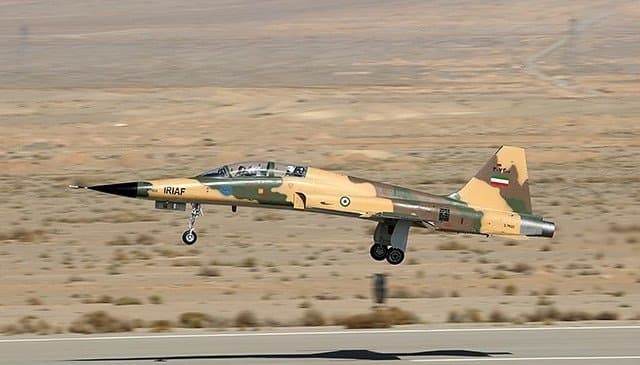
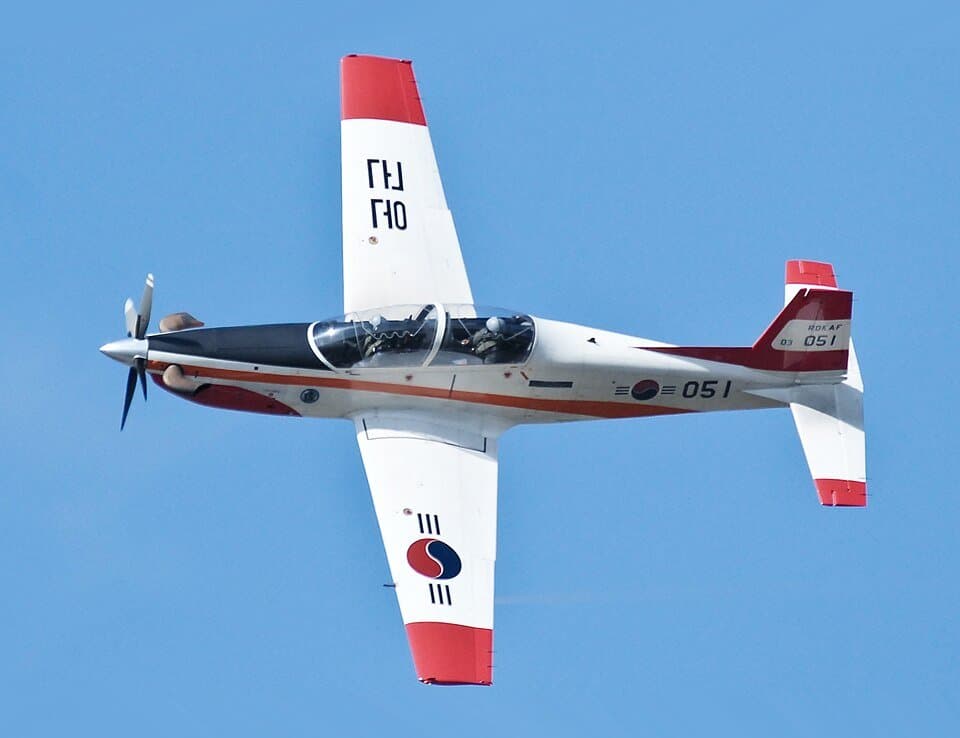
| Type | Fighter , advanced fighter trainer[source] | Basic trainer and light attack aircraft[source] |
| Manufacturer | Iran Aircraft Manufacturing Industrial Company (HESA)[source] | Korea Aerospace Industries[source] |
| Status | In service[source] | In service[source] |
| Primary user | Islamic Republic of Iran Air Force[source] | — |
| Introduction date | 3 November 2018[source] | 2000[source] |
| First flight | August 2018[source] | November 1991[source] |
| Developed from | Northrop F-5 HESA Azarakhsh HESA Saeqeh[source] | — |
| National origin | Iran[source] | South Korea[source] |
| Hardpoints | The HESA Kowsar has seven hardpoints with a total capacity of 3,200 kg (7,100 lb) of armaments and also has a 20 mm (0.79 in) cannon.[source]Stated armament stations | — |
| Designer | — | Agency for Defence Development Korea Aerospace Industries[source] |
| Primary users | — | Republic of Korea Air Force Indonesian Air Force Turkish Air Force Peruvian Air Force Senegalese Air Force[source] |
| Number built | — | 186[source] |
| Manufactured | — | 1999–present[source] |
| Fuel capacity | — | 551 L (146 US gal; 121 imp gal) in two wing tanks with provision for two 189 L (50 US gal; 42 imp gal) drop-tanks on the inboard pylons[source] |
| Aspect ratio | — | |
| Airfoil | — | root: NACA 63-218 ; tip: NACA 63-212[source] |
| Maximum fuel weight | — | 408 kg (899 lb)[source] |
| Propellers | — | 4-bladed Hartzell HC-E4N-2/E9512CB-1, 2.44 m (8 ft 0 in) diameter constant-speed fully feathering reversible propeller[source] |
| Stall speed | — | 132 km/h (82 mph, 71 kn) flaps down[source] |
| Never exceed speed | — | 648 km/h (403 mph, 350 kn)[source] |
| g limits | — | + 7 - 3.5 (aerobatic, clean)[source] |
| Wing loading | — | 206.8 kg/m 2 (42.4 lb/sq ft) with external stores[source] |
| Power/mass | — | 0.2137 kW/kg (0.1300 hp/lb)with external stores[source] |