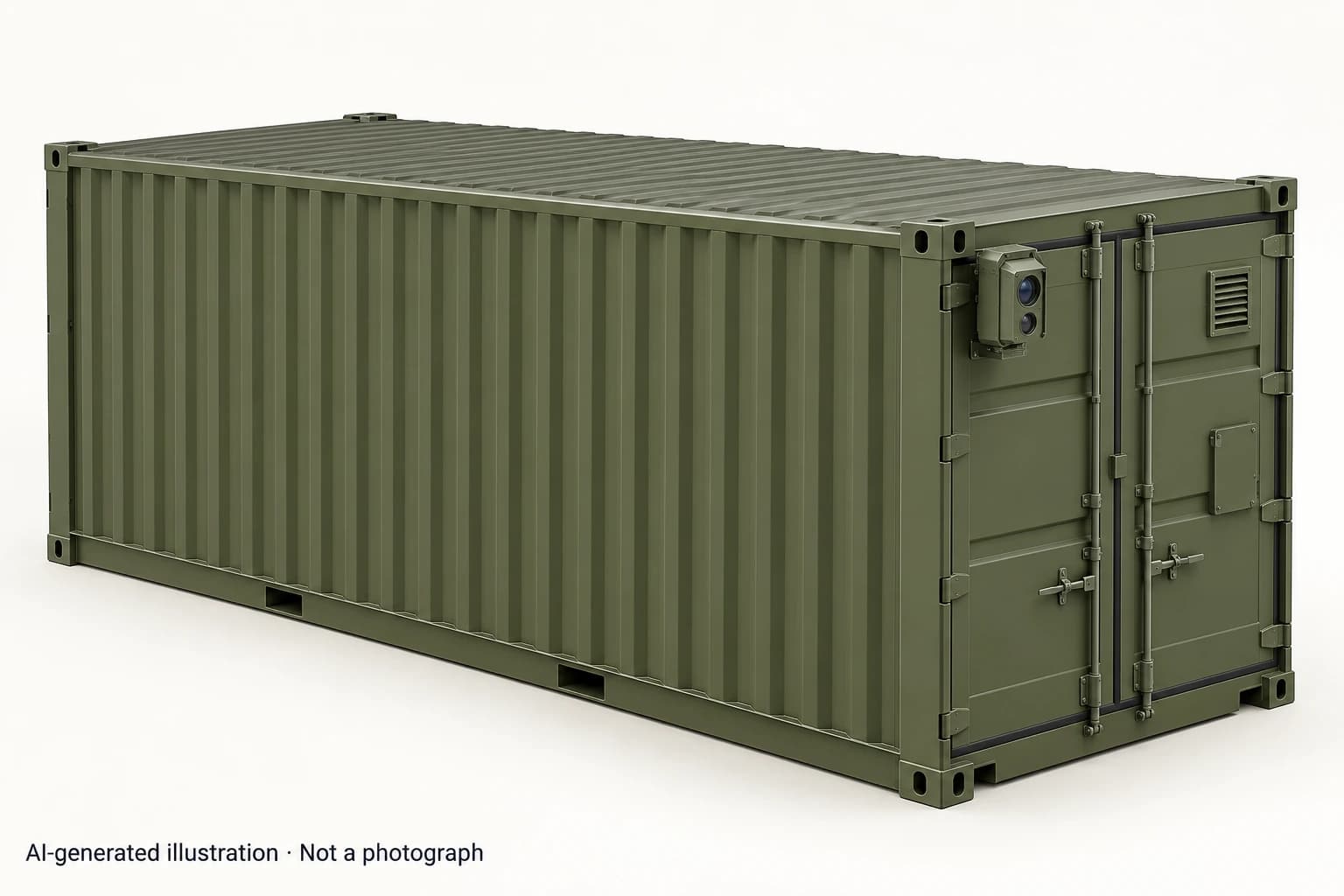

AI-generated illustration · Not a photograph
Credit
ForceTally · AI-generated illustration · Not a photograph · AI-generated · OpenAI output terms · Source ↗ · Modified


Preparing your view.

At a glance
Measured figures
Length
Single source5.90 metres (19.4 ft)[source]
Anti-ballistic missile
Single sourceConfiguration
| Specification | Gravehawk | L-SAM |
|---|---|---|
| Type | Surface-to-air missile system[source] | Long-range, mobile surface-to-air missile / anti-ballistic missile system[source] |
| Place of origin | United Kingdom[source] | South Korea[source] |
| In service | 2024[source] | 2028 (planned)[source] |
| Used by | Ukrainian Armed Forces[source] | Republic of Korea Air Force |
Anti-ballistic missile: 7 meters (23 ft)[source]
Maximum; Mach 2.5 (
Single sourceMaximum; ) (R-73 missile
Single sourceMach 2.5 (3,100 km/h; 1,900 mph) (R-73 missile)[source]
Maximum; Mach 9 (
Single sourceMaximum; Maximum speed
Single sourceBars compare reported quantities only. A larger figure does not make a system better; configurations and test conditions differ.
| Wars | War in Ukraine[source] | — |
|---|
| Designer | Team Kindred[source] | Agency for Defense Development (system) Hanwha (anti-ballistic missile) LIG Nex1 (anti-aircraft missile)[source] |
|---|
| Manufacturer | BAE Systems[source] | Hanwha Aerospace LIG Defense & Aerospace[source] |
|---|
| Produced | 2024-present[source] | 2025 (planned)[source] |
|---|
| No. built | 17[source] | — |
|---|
| Engine | Solid-fuel rocket[source] | Dual- pulsed rocket motor[source] |
|---|
| Guidance system | Infrared homing[source] | Imaging infra-red seeker[source] |
|---|
| Launch platform | Containerized twin-arm missile launcher[source] | — |
|---|
| Designed | — | Block 1: 2019–2024 Block 2: 2025–2028 (planned)[source] |
|---|
| Propellant | — | Gelled nitromethane propellant[source] |
|---|
| Flight ceiling | — | Block 1: 60 km (37 mi) Block 2 HAI: 180 km (110 mi)[source] |
|---|
| Role | — | South Korean long range surface-to-air and anti-ballistic missile system[source] |
|---|
| Source measurement | — | The L-SAM system is expected to use two types of interceptors: one for anti-air meant to target general air breathing threats such as aircraft or cruise missiles and the other for anti-ballistic . The anti-ballistic missile (ABM) consists of total of a three stages and uses a hit-to-kill system that intercepts targets with a kill vehicle that integrates an imaging infra-red (IIR) seeker and a divert attitude control system (DACS), and can intercept missiles approaching at an altitude of 50–60 kilometers (160,000–200,000 ft). L-SAM demonstrated its intercept capability by succeeding three out of a total of four missile interception tests between November 2022 and June 2023.[source]L-SAM · Development and design; only the objects and conditions stated in this passage Operating frequency : S-band (2–4 GHz)[source]L-SAM · Development and design / Long-range multifunction radar (L-MFR) / Transmit/receive module; only the objects and conditions stated in this passage On 25 April 2023, the 153rd Defense Acquisition Program Promotion Committee deliberated and approved on a plan to develop a new missile defense system with a higher intercepting altitude than the existing L-SAM with a budget of 2.71 trillion won by 2027. The new missile system, named L-SAM 2, includes high-altitude interceptor (HAI) missiles and glide phase interceptor (GPI) missiles, and is estimated to have an interception altitude of 180 km.[source]L-SAM · Improvements / Block 2; only the objects and conditions stated in this passage |
|---|
Mach 9 (3,100 m/s; 11,000 km/h)[source]