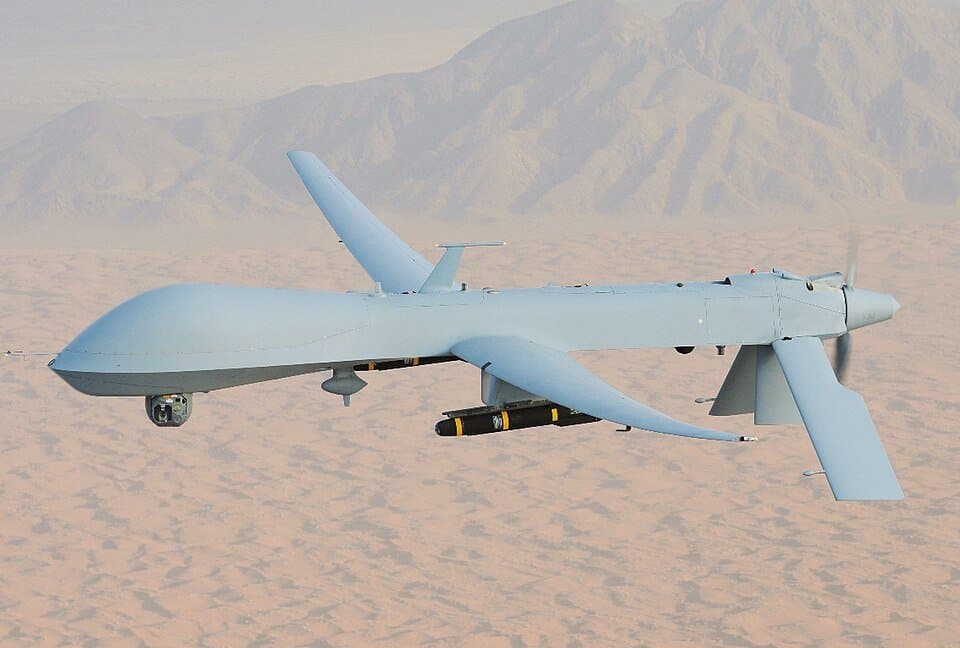

Credit
Lt. Col. Leslie Pratt · Public domain · Resized · Public domain · Source ↗ · Modified


Preparing your view.
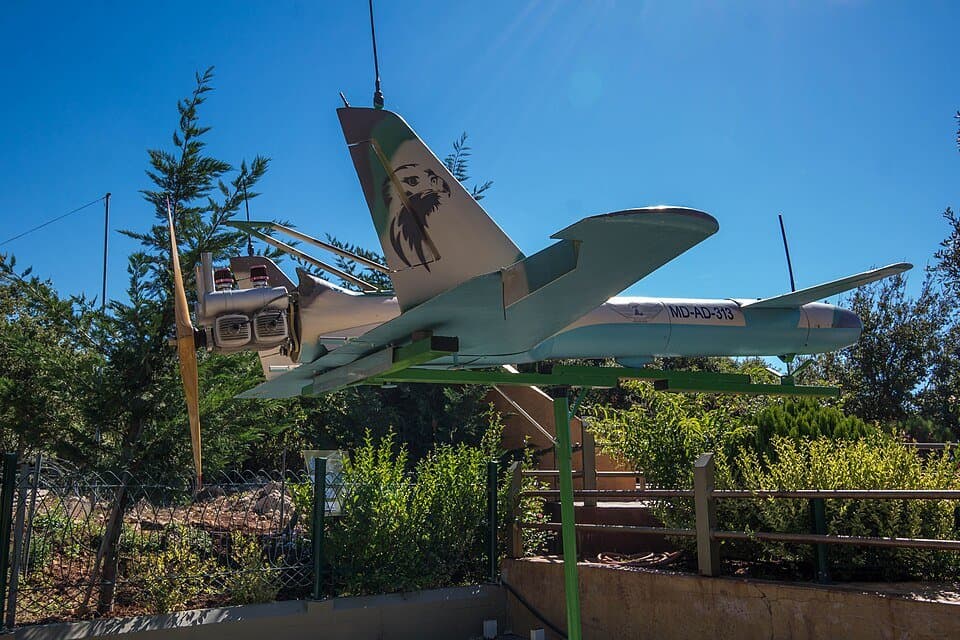

BDrones & UAVs
Ababil-1 : Loitering munition Ababil-2 Ababil-B : Target drone Ababil-S : Surveillance and reconnaissance Qasef-1 : Loitering munition Ababil-3 , Ababil-4 and Ababil-5 : Surveillance and reconnaissanc
At a glance
Measured figures
Length
Single source27 ft 0 in (8.23 m)[source]
Ababil-2 · Length
Single sourceConfiguration
| Specification | General Atomics MQ-1 Predator | HESA Ababil |
|---|---|---|
| Crew | 0, 3 on ground out of theater (remote pilot, sensor operator, and intelligence analyst), with in-theater ground handling crew[source] | none[source] |
| Type | Remote piloted aircraft/ unmanned combat aerial vehicle[source] | Ababil-1 : Loitering munition Ababil-2 Ababil-B : Target drone Ababil-S : Surveillance and reconnaissance Qasef-1 : Loitering munition Ababil-3 , Ababil-4 and Ababil-5 : Surveillance and reconnaissance Armed variant: Combat drone[source] |
| National origin | United States[source] | Iran[source] |
| Manufacturer | General Atomics Aeronautical Systems |
2.88 m (9 ft 5 in)[source]
Range
Single source675 nmi (777 mi, 1,250 km)[source]
Ababil-2 · Combat range
Single source120 km (75 mi, 65 nmi)[source]
1 × Rotax 914F 4-cylinder air-cooled turbocharged horizontally-opposed piston engine
Single source1 × Rotax 914F 4-cylinder air-cooled turbocharged horizontally-opposed piston engine, 115 hp (86 kW)[source]
Ababil-2 · 1 × WAE-342 twin-cylinder piston engine
Single source1 × WAE-342 twin-cylinder piston engine, 19 kW (25 hp)[source]
Bars compare reported quantities only. A larger figure does not make a system better; configurations and test conditions differ.
HESA Isfahan factory Syrian Scientific Studies and Research Center (Ababil-3)[source] |
| Status | In limited service[source] | In service[source] |
|---|
| Primary users | United States Air Force (retired) Italian Air Force (retired) Turkish Air Force Royal Moroccan Air Force[source] | — |
|---|
| Number built | 360 (285 RQ-1, 75 MQ-1)[source] | Unknown (Hundreds)[source] |
|---|
| Manufactured | 1995–2018[source] | 1980s–present[source] |
|---|
| Introduction date | 1 July 1995[source] | disputed[source] |
|---|
| First flight | 3 July 1994[source] | 1986[source] |
|---|
| Retired | 9 March 2018 (USAF)[source] | — |
|---|
| Developed from | General Atomics Gnat[source] | — |
|---|
| Variant | General Atomics MQ-1C Gray Eagle[source] | — |
|---|
| Developed into | General Atomics MQ-9 Reaper[source] | — |
|---|
| Fuel capacity | 851 lb (387 kg)[source] | 16 liters[source] |
|---|
| Hardpoints | 2 , with provisions to carry combinations of: Missiles: 2 × AGM-114 Hellfire (MQ-1B) 4 × Air-to-Air Stinger (ATAS) (MQ-1B) 6 × AGM-176 Griffin air-to-surface missiles[source] | — |
|---|
| Aspect ratio | 19[source] | — |
|---|
| Propellers | 2-bladed constant-speed pusher propeller[source] | 2-bladed[source] |
|---|
| Stall speed | 54 kn (62 mph, 100 km/h)[source] | — |
|---|
| Missiles | 2 × AGM-114 Hellfire (MQ-1B) 4 × Air-to-Air Stinger (ATAS) (MQ-1B) 6 × AGM-176 Griffin air-to-surface missiles[source] | — |
|---|
| Designer | — | Iran Aircraft Manufacturing Industrial Company[source] |
|---|
| Primary user | — | Iran Iraq Sudan Syria (Historical)[source] |
|---|
| Capacity | — | 40 kg payload[source] |
|---|
| Reported operators | — |
|
|---|