


Preparing your view.
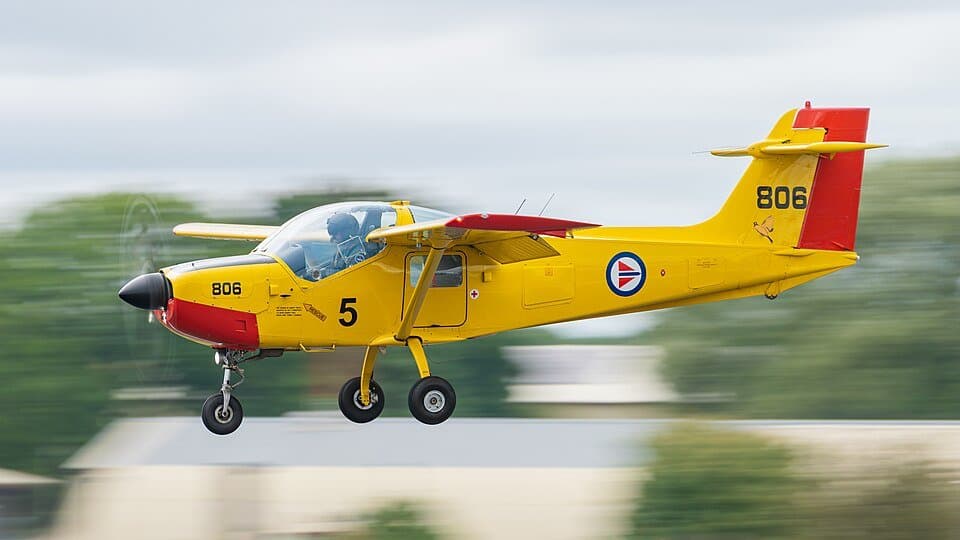

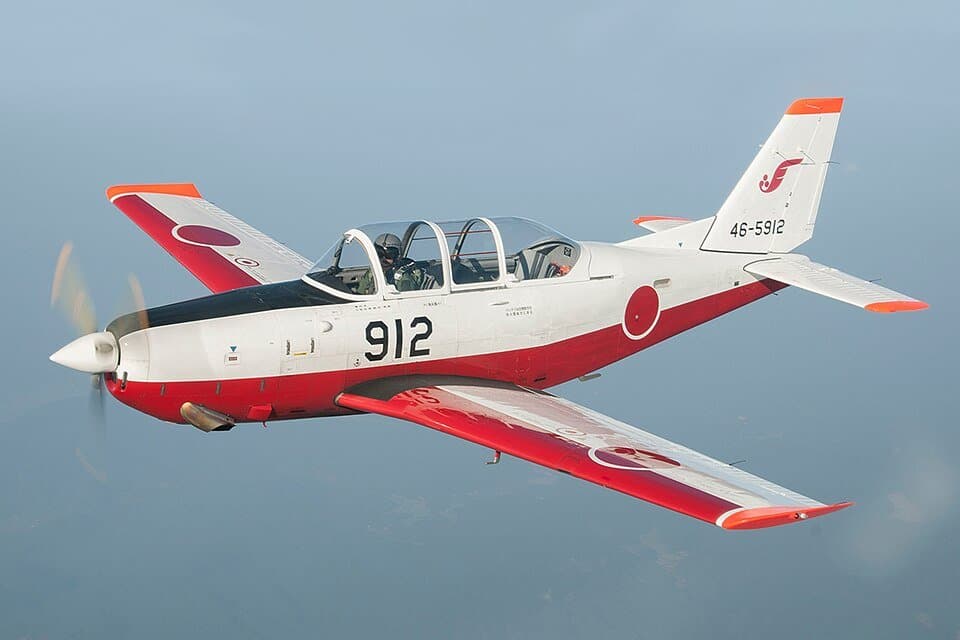
At a glance
Measured figures
T-7
Single sourceT-7 · Length
Single sourceConfiguration
| Specification | Fuji T-7 | Saab Safari |
|---|---|---|
| Type | Primary/Basic Trainer[source] | Primary trainer[source] |
| National origin | Japan[source] | — |
| Manufacturer | Fuji Heavy Industries[source] | Saab AB[source] |
| Status | Active[source] | Active[source] |
| Primary user | Japan Air Self-Defense Force |
Safari · Length
Single source7.00 m (23 ft 0 in)[source]
Maximum take-off; T-7 · Max takeoff weight
Single source1,585 kg (3,494 lb)[source]
T-7 · 1 × Rolls-Royce 250-B17F turboprop engine
Single source1 × Rolls-Royce 250-B17F turboprop engine, 336 kW (451 hp)[source]
Safari · 1 × Lycoming IO-360-A1B6 air-cooled flat-four piston engine
Single source1 × Lycoming IO-360-A1B6 air-cooled flat-four piston engine, 150 kW (200 hp)[source]
Safari · Endurance
Single source5 hr 10 min[source]
Safari · Service ceiling
Single source4,100 m (13,500 ft)[source]
Safari · 807 ft/min
Single source4.10 m/s (807 ft/min)[source]
Bars compare reported quantities only. A larger figure does not make a system better; configurations and test conditions differ.
| — |
| Number built | 49[source] | 462[source] |
|---|
| Manufactured | 2002-present[source] | 1971–1979[source] |
|---|
| Developed from | Fuji T-3[source] | Malmö MFI-9 Junior[source] |
|---|
| Airfoil | root: NACA 23016.5 ; tip: NACA 23012[source] | — |
|---|
| Propellers | 3-bladed constant-speed propeller, 2.12 m (6 ft 11 in) diameter[source] | 2-bladed Hartzell HC-C2YK-4F/FC7666A-2 constant speed propeller[source] |
|---|
| Stall speed | 104 km/h (65 mph, 56 kn) flaps and gear down[source] | 107 km/h (66 mph, 58 kn) flaps down, power off[source] |
|---|
| Wing loading | 96.1 kg/m 2 (19.7 lb/sq ft)[source] | — |
|---|
| Power/mass | 0.2114 kW/kg (0.1286 hp/lb)[source] | — |
|---|
| Take-off distance to 15 m (49 ft) | 608 m (1,995 ft)[source] | — |
|---|
| Landing distance from 15 m (49 ft) | 566 m (1,857 ft)[source] | — |
|---|
| Role | Japanese primary trainer aircraft[source] | propeller-powered basic trainer aircraft[source] |
|---|
| Source measurement | The T-7 was selected in preference to the Pilatus PC-7 in 1998, but this decision was cancelled and the competition restarted after a corruption scandal arose, with several managers from Fuji being arrested for bribing an official in Japan's ruling Liberal Democratic Party . Fuji re-entered the T-7 (then known as the T-3 Kai) and again won the restarted competition in September 2000.[source]Fuji T-7 · Design and development; only the objects and conditions stated in this passage Length: 8.59 m (28 ft 2 in)[source]Fuji T-7 · Specifications (T-7); only the objects and conditions stated in this passage Wingspan: 10.04 m (32 ft 11 in)[source]Fuji T-7 · Specifications (T-7); only the objects and conditions stated in this passage Height: 2.96 m (9 ft 9 in)[source]Fuji T-7 · Specifications (T-7); only the objects and conditions stated in this passage Wing area: 16.5 m 2 (178 sq ft)[source]Fuji T-7 · Specifications (T-7); only the objects and conditions stated in this passage Max takeoff weight: 1,585 kg (3,494 lb)[source]Fuji T-7 · Specifications (T-7); only the objects and conditions stated in this passage Powerplant: 1 × Rolls-Royce 250-B17F turboprop engine, 336 kW (451 hp)[source]Fuji T-7 · Specifications (T-7); only the objects and conditions stated in this passage Propellers: 3-bladed constant-speed propeller, 2.12 m (6 ft 11 in) diameter[source]Fuji T-7 · Specifications (T-7); only the objects and conditions stated in this passage Cruise speed: 298 km/h (185 mph, 161 kn) at 915 m (3,002 ft)[source]Fuji T-7 · Specifications (T-7); only the objects and conditions stated in this passage Stall speed: 104 km/h (65 mph, 56 kn) flaps and gear down[source]Fuji T-7 · Specifications (T-7); only the objects and conditions stated in this passage Take-off distance to 15 m (49 ft): 608 m (1,995 ft)[source]Fuji T-7 · Specifications (T-7); only the objects and conditions stated in this passage Landing distance from 15 m (49 ft): 566 m (1,857 ft)[source]Fuji T-7 · Specifications (T-7); only the objects and conditions stated in this passage | On 11 July 1969 Saab flew the prototype (SE-301) of a two/three-seat civil/military trainer or general utility aircraft allocated the designation Saab-MFI 15. Developed at Malmö Flygindustri , it was powered by a 119 kW Avco Lycoming IO-320-B2 flat-four engine and with a conventional low-set tailplane. The latter was later modified to a T-tail configuration to minimise damage when operating from rough airfields.[source]Saab Safari · Development and design; only the objects and conditions stated in this passage A military version designated originally Saab-MFI 17 was flown on 6 July 1972 and differed from the Safari by being equipped more specifically for use as a military trainer, or for artillery observation or forward air control and liaison.; this version was later named Saab Supporter. In August 1978 Saab flew a prototype version of the Safari with a 157 kW Continental flat-six turbocharged engine; designated Safari TS, it did not enter production. A trainer based on the Safari's design was built in kit form for assembly in Pakistan as the Mushshak, with 92 aircraft delivered to the Pakistani Air Force . A later batch of 120 aircraft was built entirely in Pakistan.[source]Saab Safari · Development and design; only the objects and conditions stated in this passage Saab Safari TS – a prototype fitted with a 157 kW (210 hp) turbocharged piston engine.[source]Saab Safari · Variants; only the objects and conditions stated in this passage Length: 7.00 m (23 ft 0 in)[source]Saab Safari · Specifications (Safari); only the objects and conditions stated in this passage Wingspan: 8.85 m (29 ft 0 in)[source] |
|---|
| 分類 | 初等練習機[source]T-7 10.04m[source]T-7 1基[source]T-7 / エンジン 250-B17F[source]T-7 / エンジン | — |
|---|
| Designer | — | Malmö Flygindustri[source] |
|---|
| Primary users | — | Danish Air Force Royal Norwegian Air Force Pakistan Air Force[source] |
|---|
| Introduction date | — | 1972[source] |
|---|
| First flight | — | 26 February 1971[source] |
|---|
| Variant | — | PAC MFI-17 Mushshak[source] |
|---|
| Capacity | — | 1 passenger[source] |
|---|
| Fuel capacity | — | 190 L (42 imp gal; 50 US gal)[source] |
|---|
| Never exceed speed | — | 365 km/h (227 mph, 197 kn)[source] |
|---|
| Take-off run to 15 m (50 ft) | — | 385 m (1,263 ft)[source] |
|---|
| Landing run from 15 m (50 ft) | — | 390 m (1,280 ft)[source] |
|---|
| Country of origin | — | Sweden[source]Inventory Origin column; table 1, row 13, cell 2; revision 1375830625 |
|---|
Height: 2.60 m (8 ft 6 in)[source]Saab Safari · Specifications (Safari); only the objects and conditions stated in this passage
Wing area: 11.90 m 2 (128.1 sq ft)[source]Saab Safari · Specifications (Safari); only the objects and conditions stated in this passage
Empty weight: 646 kg (1,424 lb)[source]Saab Safari · Specifications (Safari); only the objects and conditions stated in this passage
Gross weight: 1,200 kg (2,646 lb)[source]Saab Safari · Specifications (Safari); only the objects and conditions stated in this passage
Powerplant: 1 × Lycoming IO-360-A1B6 air-cooled flat-four piston engine, 150 kW (200 hp)[source]Saab Safari · Specifications (Safari); only the objects and conditions stated in this passage
Maximum speed: 236 km/h (147 mph, 127 kn) at sea level[source]Saab Safari · Specifications (Safari); only the objects and conditions stated in this passage
Cruise speed: 208 km/h (129 mph, 112 kn)[source]Saab Safari · Specifications (Safari); only the objects and conditions stated in this passage
Stall speed: 107 km/h (66 mph, 58 kn) flaps down, power off[source]Saab Safari · Specifications (Safari); only the objects and conditions stated in this passage
Never exceed speed : 365 km/h (227 mph, 197 kn)[source]Saab Safari · Specifications (Safari); only the objects and conditions stated in this passage
Endurance: 5 hr 10 min[source]Saab Safari · Specifications (Safari); only the objects and conditions stated in this passage
Service ceiling: 4,100 m (13,500 ft)[source]Saab Safari · Specifications (Safari); only the objects and conditions stated in this passage
Rate of climb: 4.10 m/s (807 ft/min)[source]Saab Safari · Specifications (Safari); only the objects and conditions stated in this passage
Take-off run to 15 m (50 ft): 385 m (1,263 ft)[source]Saab Safari · Specifications (Safari); only the objects and conditions stated in this passage
Landing run from 15 m (50 ft): 390 m (1,280 ft)[source]Saab Safari · Specifications (Safari); only the objects and conditions stated in this passage