
ASupport aircraft
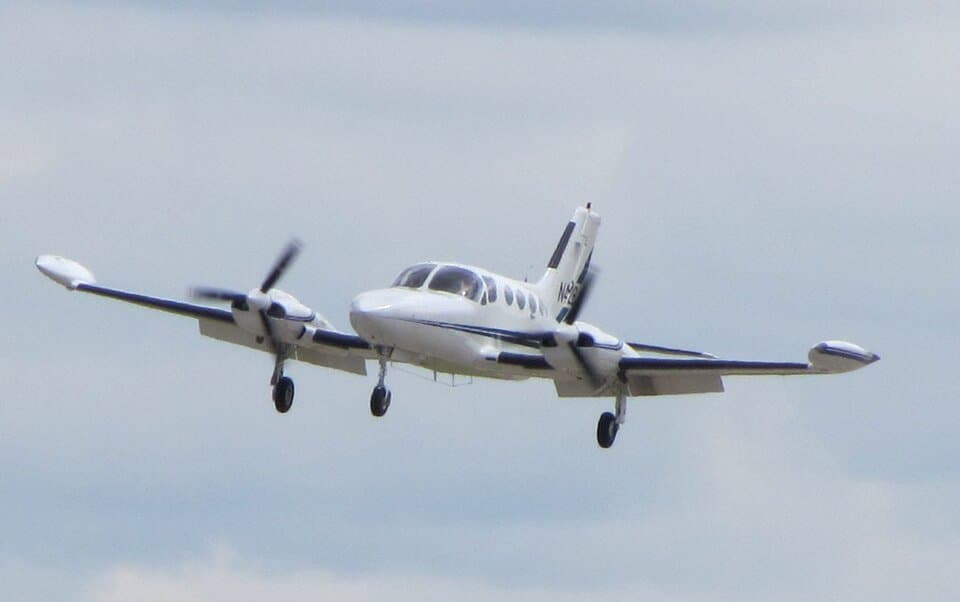
Cessna 421 Golden Eagle
American six or seven seat twin-engined light transport aircraft,
Credit
FlugKerl2 · CC BY-SA 3.0 · Resized · CC BY-SA 3.0 · Source ↗ · Modified


Preparing your view.
ASupport aircraft
American six or seven seat twin-engined light transport aircraft,

At a glance
True scale
Side by side. From every angle. A human reference for perspective.
3.24 MB · Loads when you open it| Model | Length | Width / span | Height |
|---|---|---|---|
| Cessna 421 Golden Eagle | ≈ 11.09 m | ≈ 12.53 m (Width) | ≈ 3.49 m |
| IAI Arava | ≈ 13.03 m | ≈ 20.96 m (Width) | ≈ 5.21 m |
Scaled uniformly to the sourced length of 11.09 m. The shape was turned square to the axes; the height was fitted to the sourced 3.49 m; the width was fitted to the sourced 12.53 m. Not an official model or a measured survey.
ForceTally · All rights reserved
Scaled uniformly to the sourced length of 13.03 m. The shape was turned square to the axes; the height was fitted to the sourced 5.21 m; the width was fitted to the sourced 20.96 m. Not an official model or a measured survey.
ForceTally · All rights reserved
The human reference is a generic 1.75 m figure. Models describe external size, not combat performance.
Measured figures
421C · Length
Single source36 ft 4 + 5 ⁄ 8 in (11.09 m)[source]
Configuration
| Specification | Cessna 421 Golden Eagle | IAI Arava |
|---|---|---|
| Type | Light transport[source] | Light STOL Transport aircraft[source] |
| National origin | United States[source] | — |
| Manufacturer | Cessna[source] | Israeli Aircraft Industries[source] |
| Number built | 1,916[source] | 103[source] |
IAI 201 · Length
13.03 m (42 ft 9 in)[source]
Cruise; 421C · at 25,000 ft (7,600 m) (75% power)
Single sourceMaximum; 421C · at 20,000 ft (6,100 m)
Single source256 kn (295 mph, 474 km/h) at 20,000 ft (6,100 m)[source]
240 kn (280 mph, 440 km/h) at 25,000 ft (7,600 m) (75% power)[source]
Cruise; IAI 201 · at 3,050 m (10,000 ft) (econ. cruise)
Single sourceMaximum; IAI 201 · at 3,050 m (10,000 ft)
Single source421C · 2 × Continental GTSIO-520-L turbocharged, fuel injected and geared flat-six engines each
Single source2 × Continental GTSIO-520-L turbocharged, fuel injected and geared flat-six engines, 375 hp (280 kW) each[source]
IAI 201 · 2 × Pratt & Whitney Canada PT6A-34 turboprops (750 shp) each
Single source2 × Pratt & Whitney Canada PT6A-34 turboprops , 560 kW (750 shp) each[source]
Bars compare reported quantities only. A larger figure does not make a system better; configurations and test conditions differ.
| Manufactured | 1967–1985[source] | 1972–1988[source] |
|---|
| Introduction date | 1968[source] | — |
|---|
| First flight | October 14, 1965[source] | 27 November 1969[source] |
|---|
| Developed from | Cessna 411[source] | — |
|---|
| Developed into | Cessna 425[source] | — |
|---|
| Capacity | Six passengers[source] | 24 fully equipped troops or 16 paratroopers or 2,351 kg (5,183 lb) payload[source] |
|---|
| Fuel capacity | 206 US gal (172 imp gal; 780 L) normal (usable capacity), 262 US gal (218 imp gal; 990 L) with optional wing tanks[source] | 1,663 L (439 US gal; 366 imp gal) (normal)[source] |
|---|
| Propellers | 3-bladed McCauley constant-speed propellers[source] | 3-bladed Hartzell HC-B3TN fully-feathering reversible pitch propellers[source] |
|---|
| Takeoff distance to 50 ft (15m) | 2,323 ft (708 m)[source] | — |
|---|
| Landing distance from 50 ft (15 m) | 2,293 ft (699 m)[source] | — |
|---|
| Role | American six or seven seat twin-engined light transport aircraft,[source] | light STOL utility transport aircraft[source] |
|---|
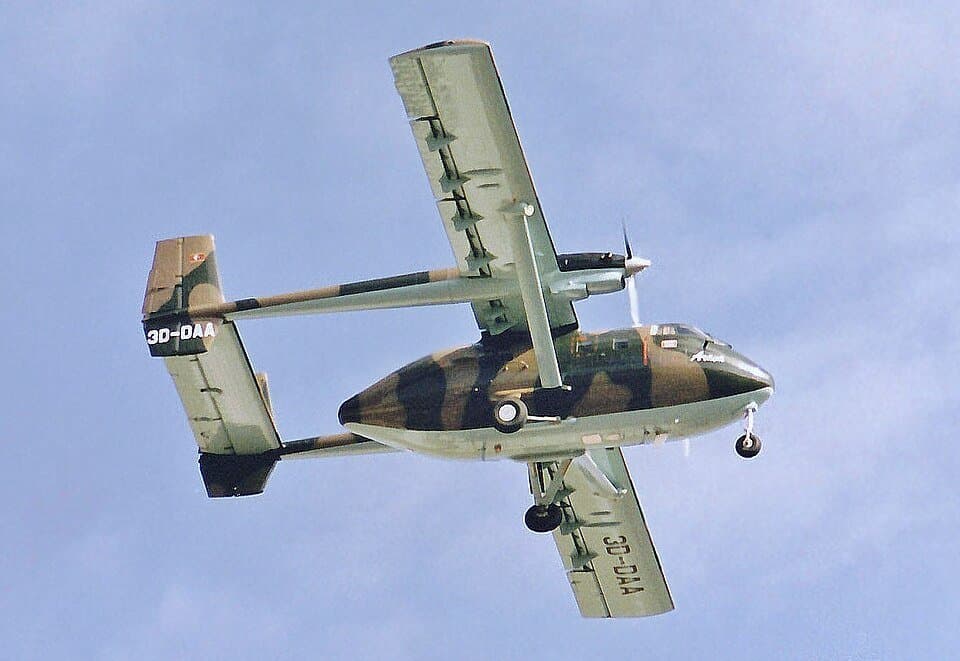
| Source measurement | The next year, 1969, the design was refined, with a three-inch stretch of the fuselage, five more gallons of fuel capacity, and a 40-pound increase in gross weight. The plane was redesignated the Cessna 421A.[source]Cessna 421 Golden Eagle · Development; only the objects and conditions stated in this passage In 1971, the design was again improved. Both empty and gross weight increased, the wingspan was increased by two feet, raising the service ceiling by 5,000 feet. The nose was stretched two feet to accommodate a larger nose baggage section. This new plane is designated the Cessna 421B.[source]Cessna 421 Golden Eagle · Development; only the objects and conditions stated in this passage Type approved 1 May 1967, powered by two Continental GTSIO-520-Ds of 375 hp (280 kW) each, maximum takeoff weight 6,800 lb (3,084 kg). 200 built.[source]Cessna 421 Golden Eagle · Variants; only the objects and conditions stated in this passage Type approved 19 November 1968, powered by two Continental GTSIO-520-Ds of 375 hp (280 kW) each, maximum takeoff weight 6,840 lb (3,103 kg). 158 built.[source]Cessna 421 Golden Eagle · Variants; only the objects and conditions stated in this passage Eight-seat light passenger transport aircraft. Type approved 28 April 1970, powered by two Continental GTSIO-520-Hs of 375 hp (280 kW) each, maximum takeoff weight 7,250 lb (3,289 kg), later models 7,450 lb (3,379 kg). 699 built.[source]Cessna 421 Golden Eagle · Variants; only the objects and conditions stated in this passage Model with new wing and landing gear. Type approved 28 October 1975, powered by two Continental GTSIO-520-Ls or Continental GTSIO-520-Ns of 375 hp (280 kW) each, maximum takeoff weight 7,450 lb (3,379 kg). 859 built.[source]Cessna 421 Golden Eagle · Variants; only the objects and conditions stated in this passage Conversion of Cessna 421C aircraft by fitting two 750hp Pratt & Whitney Canada PT6A -135 turboprop engines. Formal designation R421CP .[source]Cessna 421 Golden Eagle · Variants; only the objects and conditions stated in this passage Pakistan Army at least one 421 in use.[source]Cessna 421 Golden Eagle · Military operators; only the objects and conditions stated in this passage On December 16, 1972, a private Cessna 421 crashed into the homes at 116 and 121 Diane Drive in Cheektowaga near Buffalo Niagara International Airport . The crash killed three on board and three on the ground, and at least four people on the ground were injured.[source]Cessna 421 Golden Eagle · Accidents and incidents; only the objects and conditions stated in this passage On 4 December 1980, a Cessna 421 carrying Prime Minister of Portugal Francisco de Sá Carneiro and other government officials, crashed into buildings in Camarate seconds after takeoff, killing all 7 persons on board.[source]Cessna 421 Golden Eagle · Accidents and incidents; only the objects and conditions stated in this passage On 5 March 1984, the pilot and five passengers in a Cessna 421B, registration number N3291Q , were killed when the aircraft impacted trees 1 mile (1.6 km) northeast of Folsom Field, Alabama during an incorrectly executed nighttime instrument approach in IMC conditions. The NTSB attributed the accident to the pilot's failure to initiate a missed approach , his failure to maintain altitude, his lack of recent instrument flying experience, and his history of heart problems; contributing factors were poor visibility and adverse weather.[source]Cessna 421 Golden Eagle · Accidents and incidents; only the objects and conditions stated in this passage On June 24, 1992, a Cessna 421 VGAB (tail number N628RJ), the 40-year-old pilot and two passengers took off from Monterey. About three minutes after takeoff the Cessna collided with a hill about three miles east of the airport. The investigation revealed that ground fog and overconfidence in the pilot caused the accident. All three were killed. The pilot had about 75 hours of flight experience.[source]Cessna 421 Golden Eagle · Accidents and incidents; only the objects and conditions stated in this passage On January 30, 2006, an eight-seat twin engine Cessna 421B with four passengers crashed about 1 mile (1,600 m) south of the airport. The aircraft was heading from Kansas to Palwaukee. There were no survivors.[source]Cessna 421 Golden Eagle · Accidents and incidents; only the objects and conditions stated in this passage On April 17, 2009, a Cessna 421 crashed shortly after take-off from Fort Lauderdale Executive Airport around 11:20 a.m. Local authorities stated the aircraft crashed into a vacant home located about two miles (3.2 km) from the airport. The aircraft was en route to Fernandina Beach, Florida near Jacksonville and was due to arrive at 13:00. The Federal Aviation Administration indicated that one person was on board the aircraft, and was killed in the accident. Sebring Air Charter of Tamarac, Florida was listed on FAA records as the owner of the aircraft. The probable cause of the accident was determined to be pilot error, with an inflight fire of the right engine as a contributing factor.[source]Cessna 421 Golden Eagle · Accidents and incidents; only the objects and conditions stated in this passage On December 9, 2011, a Cessna 421C aircraft crashed shortly after takeoff less than a mile from the airport into an open field. All 4 passengers on board were killed when the aircraft burst into flames upon crashing.[source]Cessna 421 Golden Eagle · Accidents and incidents; only the objects and conditions stated in this passage On August 27, 2013, a Cessna 421C crashed just after takeoff. The aircraft had engine issues on takeoff and impacted a tree a mile after takeoff. Witnesses reported that the aircraft's takeoff run appeared slower than normal, and the aircraft was found to have used the entire runway and traveled through two different 300-foot fields.[source]Cessna 421 Golden Eagle · Accidents and incidents; only the objects and conditions stated in this passage On November 22, 2017, the left-hand engine of a Cessna 421, registration N421RX , caught fire soon after takeoff from Presque Isle; the pilot attempted to return to the airport but was unable to maintain altitude and performed a forced landing in an adjacent field. Two persons aboard the aircraft suffered minor injuries and two others were uninjured; the aircraft was badly damaged. The NTSB attributed the accident to a fuel leak onto the hot turbocharger .[source]Cessna 421 Golden Eagle · Accidents and incidents; only the objects and conditions stated in this passage On July 13, 2021, at around 10:42 am, a Cessna 421C (tail number N678SW), piloted by Mary Ellen Carlin crashed into a suburban residential area killing the pilot, passenger and a pet. Investigators found that the Cessna 421C diverged from its flight plan, resulting in a crash less than five minutes after departure.[source]Cessna 421 Golden Eagle · Accidents and incidents; only the objects and conditions stated in this passage On April 30, 2026, around 11:25pm in Wimberly Texas, a Cessna 421C crashed while carrying 5 passengers to a Pickleball tournament near Austin Texas. Officials claimed the plane went down near Round Rock Road in Hays County. The 5 passengers on board were Brooke Skypala, Glen Appling, Seren Wilson, Hayden Dillard, and Stacy Hedrick. Unfortunately, none survived and were announced deceased on arrival. The second aircraft that was coming with them made it safely to its destination.[source]Cessna 421 Golden Eagle · Accidents and incidents; only the objects and conditions stated in this passage Capacity: Six passengers[source]Cessna 421 Golden Eagle · Specifications (421C); only the objects and conditions stated in this passage Length: 36 ft 4 + 5 ⁄ 8 in (11.09 m)[source]Cessna 421 Golden Eagle · Specifications (421C); only the objects and conditions stated in this passage Wingspan: 41 ft 1 + 1 ⁄ 2 in (12.53 m)[source]Cessna 421 Golden Eagle · Specifications (421C); only the objects and conditions stated in this passage Height: 11 ft 5 + 3 ⁄ 8 in (3.49 m)[source]Cessna 421 Golden Eagle · Specifications (421C); only the objects and conditions stated in this passage Wing area: 215 sq ft (20.0 m 2 )[source]Cessna 421 Golden Eagle · Specifications (421C); only the objects and conditions stated in this passage Empty weight: 4,501 lb (2,042 kg)[source]Cessna 421 Golden Eagle · Specifications (421C); only the objects and conditions stated in this passage Max takeoff weight: 7,450 lb (3,379 kg)[source]Cessna 421 Golden Eagle · Specifications (421C); only the objects and conditions stated in this passage Powerplant: 2 × Continental GTSIO-520-L turbocharged, fuel injected and geared flat-six engines, 375 hp (280 kW) each[source]Cessna 421 Golden Eagle · Specifications (421C); only the objects and conditions stated in this passage Maximum speed: 256 kn (295 mph, 474 km/h) at 20,000 ft (6,100 m)[source]Cessna 421 Golden Eagle · Specifications (421C); only the objects and conditions stated in this passage Cruise speed: 240 kn (280 mph, 440 km/h) at 25,000 ft (7,600 m) (75% power)[source]Cessna 421 Golden Eagle · Specifications (421C); only the objects and conditions stated in this passage Range: 1,487 nmi (1,711 mi, 2,754 km) at 25,000 ft (7,600 m), econ cruise speed[source]Cessna 421 Golden Eagle · Specifications (421C); only the objects and conditions stated in this passage Service ceiling: 30,200 ft (9,200 m)[source]Cessna 421 Golden Eagle · Specifications (421C); only the objects and conditions stated in this passage Rate of climb: 1,940 ft/min (9.9 m/s)[source]Cessna 421 Golden Eagle · Specifications (421C); only the objects and conditions stated in this passage Takeoff distance to 50 ft (15m): 2,323 ft (708 m)[source]Cessna 421 Golden Eagle · Specifications (421C); only the objects and conditions stated in this passage Landing distance from 50 ft (15 m): 2,293 ft (699 m)[source]Cessna 421 Golden Eagle · Specifications (421C); only the objects and conditions stated in this passage | According to aviation journalist and ex-IAI engineer Danny Shalom, substantial work on the development of what would become the Arava commenced right after the Six-Day War between Israel and several neighbouring nations. Prior to this point, Israel Aerospace Industries (IAI) had largely confined its aircraft manufacturing efforts to producing copies of existing French and American designs, such as the IAI Nesher . However, many of the company's engineers were keen to develop beyond imitation and reverse engineering effort, for IAI and Israel to produce its own unique and indigenously produced aircraft. Around this time, the company foresaw a requirement for a new generation of transport aircraft that would suit operations from runways only 400 meters in length. IAI had forecast the international market demand for such an aircraft to be massive and that, by obtaining only a 20% market share, the company would sell between 400 and 600 aircraft throughout the life of the programme.[source]IAI Arava · Design and development / Origins; only the objects and conditions stated in this passage As the design took shape, key performance objectives included Short-Takeoff and Landing (STOL) capability, the ability to operate the type from unprepared/rough airstrips, as well as the carriage of up to 20 passengers or bulky payloads. The Arava featured a barrel -like fuselage , being relatively short but wide, while the rear of the fuselage was hinged and could swing open for easy and rapid loading and unloading. Its wingspan was long and the twin tails were mounted on booms that ran from the engine nacelles . It was fitted with a fixed nosewheel undercarriage to save weight, while the chosen powerplant was a pair of 715 eshp (533 kW) Pratt & Whitney Canada PT6 A-27 turboprop engines. The design configuration bore considerable similarity to the French Nord Noratlas transport plane, which was already being used at that time by the Israeli Air Force (IAF).[source]IAI Arava · Design and development / Origins; only the objects and conditions stated in this passage Civil passenger aircraft for up to 20 people in airline-standard configuration or up to 12 passengers in VIP configuration[source]IAI Arava · Variants; only the objects and conditions stated in this passage |
|---|
| Status | — | Out of production, limited use[source] |
|---|
| Primary users | — | Israeli Air Force (IAF) 14 other militaries[source] |
|---|
| Aspect ratio | — | 10:1[source] |
|---|
| Airfoil | — | NACA 63(215)A 417[source] |
|---|
| Stall speed | — | 115 km/h (71 mph, 62 kn) (54% flaps)[source] |
|---|
| Never exceed speed | — | 397 km/h (247 mph, 214 kn)[source] |
|---|
| Takeoff distance to 15 m (50 ft) | — | 463 m (1,520 ft)[source] |
|---|
| Landing run from 15 m (50 ft) | — | 469 m (1,540 ft)[source] |
|---|
| Country of origin | — | Israel[source] |
|---|
326 km/h (203 mph, 176 kn) at 3,050 m (10,000 ft)[source]
311 km/h (193 mph, 168 kn) at 3,050 m (10,000 ft) (econ. cruise)[source]
The military version could also be equipped with a range of weapons, in order to act in anti-submarine- or gunship roles. The weapon configuration could include two machine guns in fuselage side packs (usually 0.5" Browning), plus a third gun on the rear fuselage, and two pods containing 6 x 82 mm rocket pods or torpedoes or sonar buoys on the fuselage sides.[source]IAI Arava · Variants; only the objects and conditions stated in this passage
Bolivian Air Force – Six purchased 1975–76. One seized by Nicaragua during delivery, one in use 1987.[source]IAI Arava · Operators; only the objects and conditions stated in this passage
Ecuadorian Army – 2 in use as of December 2018. One other aircraft E-206 was written off due to a crash[source]IAI Arava · Operators; only the objects and conditions stated in this passage
Salvadoran Air Force – 3 in use as of December 2015, variant IAI Arava 202 since 2008.[source]IAI Arava · Operators; only the objects and conditions stated in this passage
Guatemalan Air Force – 1 in use as of December 2015.[source]IAI Arava · Operators; only the objects and conditions stated in this passage
Honduran Air Force – 1 in use as of December 2018.[source]IAI Arava · Operators; only the objects and conditions stated in this passage
Papua New Guinea Defence Force – 3 in use as of December 2015 but since retired.[source]IAI Arava · Operators; only the objects and conditions stated in this passage
Army of Venezuela – 11 in use as of December 2015, reducing to 4 by December 2018.[source]IAI Arava · Operators; only the objects and conditions stated in this passage
Capacity: 24 fully equipped troops or 16 paratroopers or 2,351 kg (5,183 lb) payload[source]IAI Arava · Specifications (IAI 201); only the objects and conditions stated in this passage
Length: 13.03 m (42 ft 9 in)[source]IAI Arava · Specifications (IAI 201); only the objects and conditions stated in this passage
Wingspan: 20.96 m (68 ft 9 in)[source]IAI Arava · Specifications (IAI 201); only the objects and conditions stated in this passage
Height: 5.21 m (17 ft 1 in)[source]IAI Arava · Specifications (IAI 201); only the objects and conditions stated in this passage
Wing area: 43.68 m 2 (470.2 sq ft)[source]IAI Arava · Specifications (IAI 201); only the objects and conditions stated in this passage
Empty weight: 3,999 kg (8,816 lb)[source]IAI Arava · Specifications (IAI 201); only the objects and conditions stated in this passage
Max takeoff weight: 6,804 kg (15,000 lb)[source]IAI Arava · Specifications (IAI 201); only the objects and conditions stated in this passage
Powerplant: 2 × Pratt & Whitney Canada PT6A-34 turboprops , 560 kW (750 shp) each[source]IAI Arava · Specifications (IAI 201); only the objects and conditions stated in this passage
Maximum speed: 326 km/h (203 mph, 176 kn) at 3,050 m (10,000 ft)[source]IAI Arava · Specifications (IAI 201); only the objects and conditions stated in this passage
Cruise speed: 311 km/h (193 mph, 168 kn) at 3,050 m (10,000 ft) (econ. cruise)[source]IAI Arava · Specifications (IAI 201); only the objects and conditions stated in this passage
Stall speed: 115 km/h (71 mph, 62 kn) (54% flaps)[source]IAI Arava · Specifications (IAI 201); only the objects and conditions stated in this passage
Never exceed speed : 397 km/h (247 mph, 214 kn)[source]IAI Arava · Specifications (IAI 201); only the objects and conditions stated in this passage
Range: 1,056 km (656 mi, 570 nmi) with maximum fuel[source]IAI Arava · Specifications (IAI 201); only the objects and conditions stated in this passage
Service ceiling: 7,620 m (25,000 ft)[source]IAI Arava · Specifications (IAI 201); only the objects and conditions stated in this passage
Rate of climb: 6.6 m/s (1,290 ft/min)[source]IAI Arava · Specifications (IAI 201); only the objects and conditions stated in this passage
Takeoff distance to 15 m (50 ft): 463 m (1,520 ft)[source]IAI Arava · Specifications (IAI 201); only the objects and conditions stated in this passage
Landing run from 15 m (50 ft): 469 m (1,540 ft)[source]IAI Arava · Specifications (IAI 201); only the objects and conditions stated in this passage