


Preparing your view.


At a glance
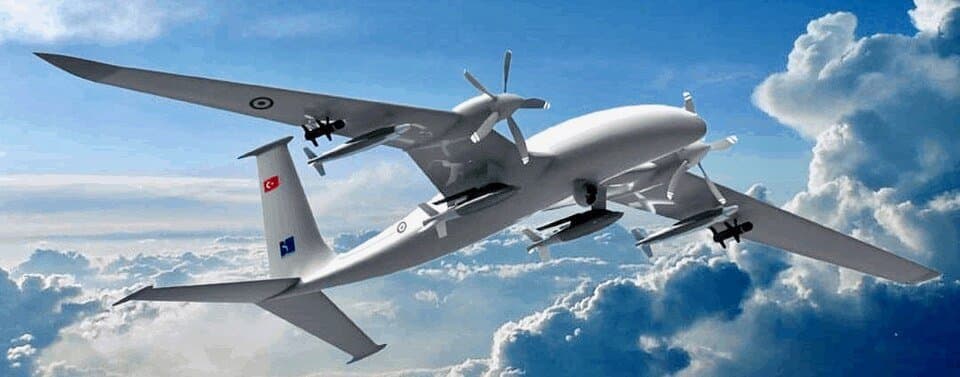
Baykar Bayraktar Akincilarger figure on 3 of 5
General Atomics MQ-9 Reaperlarger figure on 2 of 5
Counts only measures both sources give with the same scope. A larger figure is not a better system.
Measured figures
Length
Single source12.2 m (40 ft 0 in)[source]
Length
Single sourceConfiguration
| Specification | Baykar Bayraktar Akinci | General Atomics MQ-9 Reaper |
|---|---|---|
| Crew | — | 0 onboard, 2 in ground station[source] 0 onboard, 2 in ground station[source]Source text · numeric interpretation needs review |
| Type | Multirole unmanned combat aerial vehicle[source] | Unmanned combat aerial vehicle[source] Unmanned combat aerial vehicle[source] |
| National origin | Türkiye[source] | United States[source] |
in latest test
Single sourceTraveled
Single source7,500 km (4,700 mi, 4,000 nmi) Traveled 7507 Kilometers in latest test.[source]
Range: 7,500 km (4,700 mi, 4,000 nmi)[source]Baykar Bayraktar Akinci · Specifications · Range: 7,500 km (4,700 mi, 4,000 nmi) Traveled 7507 Kilometers in latest test.
2 × Ivchenko-Progress Motor Sich AI-450T turboprop engines for A variant each
Single source2 × Ivchenko-Progress Motor Sich AI-450T turboprop engines for A variant, 340 kW (450 hp) each[source]
1 × Honeywell TPE331-10 turboprop with Digital Electronic Engine Control (DEEC)
Single source1 × Honeywell TPE331-10 turboprop, 900 hp (671 kW) with Digital Electronic Engine Control (DEEC)[source]
1 × Honeywell TPE331-10 turboprop, 900 hp (671 kW) with Digital Electronic Engine Control (DEEC)[source]
Bars compare reported quantities only. A larger figure does not make a system better; configurations and test conditions differ.
United States[source]
| Manufacturer | Baykar[source] | General Atomics Aeronautical Systems[source] General Atomics Aeronautical Systems[source] |
|---|
| Designer | Baykar[source] | — |
|---|
| Status | In service[source] | In service[source] In service[source] |
|---|
| Primary user | Turkish Armed Forces[source] | — |
|---|
| Number built | 110+[source] | 575 as of 2026[source] 575 as of 2026[source] |
|---|
| Manufactured | 2019–current[source] | — |
|---|
| Introduction date | 29 August 2021[source] | 1 May 2007[source] 1 May 2007[source] |
|---|
| First flight | 6 December 2019[source] | 2 February 2001 ( 2001-02-02 )[source] 2 February 2001 ( 2001-02-02 )[source] |
|---|
| Capacity | 1500 kg (3307 lb) payload[source] | — |
|---|
| Fuel capacity | unspecified Jet-A1 or JP-8 fuel capacity[source] | 4,000 lb (1,800 kg)[source] 4,000 lb (1,800 kg)[source] |
|---|
| Propellers | 5-bladed composite constant-speed propeller[source] | — |
|---|
| Operational altitude | 9,100 m (30,000 ft)[source] | 25,000 ft (7.5 km)[source] 25,000 ft (7.5 km)[source] |
|---|
| Hardpoints | 8, with provisions to carry[source] | 7 hardpoints[source] |
|---|
| Source measurement | The aircraft has a six-ton maximum takeoff weight , of which over 1,500 kg (3,300 lb) is payload. Depending on variant, the Akıncı is equipped with two turboprop engines of either 450 hp (460 PS ; 340 kW ) or 750 hp (760 PS; 560 kW) or 850 hp (860 PS; 630 kW), as well as electronic support and ECM systems, dual satellite communication systems, air-to-air radar, collision avoidance radar, and advanced synthetic-aperture radar .[source]Baykar Bayraktar Akinci · Lead; only the objects and conditions stated in this passage With the preliminary design phase completed in June 2019, Akıncı started engine ground run testing in August 2019 with a Ukrainian Ivchenko-Progress AI-450C turboprop engine. The first engine test was accomplished on September 1, 2019. Following the completion of other technical tests, the aircraft was moved to the Turkish Army 's Çorlu Airfield Command. The UCAV made its maiden flight with automatic taxiing , take-off, 16-minute flight and successful landing on 6 December 2019.[source]Baykar Bayraktar Akinci · Development; only the objects and conditions stated in this passage Akıncı has a payload capacity of 881 lb (400 kg) internal and 2,094 lb (950 kg) external and a maximum combat load of 2,976 lb (1,350 kg). Powered by two 450 hp (460 PS ; 340 kW ) or 750 hp (760 PS; 560 kW) turboprop engines, the drone has a 66 ft (20 m) wingspan . It will be the first UAV capable of launching a cruise missile .[source]Baykar Bayraktar Akinci · Development; only the objects and conditions stated in this passage On 22 April 2021, the Bayraktar Akıncı successfully conducted its first firing tests. During the tests, the aircraft was fitted with three different variants of the indigenously developed MAM-L smart munitions . These tests also featured the first public appearance of the ROKETSAN MAM-T smart munition. From 6-7 July, the aircraft completed a test flight of 25 hours and 45 minutes, flying 7,507 km (4,053 nmi ; 4,665 mi ) and reaching an altitude of 38,039 ft (11,594 m). On August 29, 2021, the Akıncı was added to the inventory of the Turkish armed forces.[source]Baykar Bayraktar Akinci · Development; only the objects and conditions stated in this passage On 10 January 2020, first prototype made its second flight and passed over 6000 ft.[source]Baykar Bayraktar Akinci · Development / Timeline; only the objects and conditions stated in this passage On 22 August 2020, first prototype exceeded 30.000 ft (9.144 m) during flight testing.[source]Baykar Bayraktar Akinci · Development / Timeline; only the objects and conditions stated in this passage On 7 July 2021, Bayraktar Akıncı set the new national flight altitude record of Türkiye by cruising at 38,039 feet (11,594 m) for 25 hours and 46 minutes at a distance of 7,507 km[source]Baykar Bayraktar Akinci · Development / Timeline; only the objects and conditions stated in this passage On 10 July 2021, Bayraktar Akıncı conducted a 13 hours and 24 minute long flight with 1360 kg payload. During the flight Akıncı was equipped with the NEB bunker buster bomb developed by TUBITAK SAGE. Marking the heaviest bomb ever carried by an UCAV[source]Baykar Bayraktar Akinci · Development / Timeline; only the objects and conditions stated in this passage On 2 March 2022, the Baykar announced that the Bayraktar AKINCI-B version with twin 750 hp (560 kW) engines completed its maiden flight[source]Baykar Bayraktar Akinci · Development / Timeline; only the objects and conditions stated in this passage On 21 May 2022, the Bayraktar AKINCI crossed 3 countries (Türkiye, Georgia, Azerbaijan), flying approximately 2000 km.[source]Baykar Bayraktar Akinci · Development / Timeline; only the objects and conditions stated in this passage On 14 June 2022, the Bayraktar AKINCI UCAV (Unmanned Combat Aerial Vehicle) has successfully completed its first firing test from 30 kilometers away with the KGK-SIHA-82 (Winged Guidance Kit) ammunition.[source]Baykar Bayraktar Akinci · Development / Timeline; only the objects and conditions stated in this passage On 21 June 2022, the Bayraktar AKINCI B Variant took off to carry out endurance, high altitude and high speed tests, The B Variant rose to an altitude of 45,118 feet (13,752 meters) within the scope of the test, returned to Bayraktar AKINCI Flight, Training and Test Center at Çorlu Airport Command after 20 hours and 23 minutes of flight.[source]Baykar Bayraktar Akinci · Development / Timeline; only the objects and conditions stated in this passage On 24 February 2024, Akıncı C variant successfully carried out its first flight test with two 850 HP engines.[source]Baykar Bayraktar Akinci · Development / Timeline; only the objects and conditions stated in this passage Nine Akıncıs successfully flew over 1551 hours in the earthquake zone of the 2023 Türkiye-Syria earthquake . The drones were instrumental in providing continuous updates and data to the crisis response team for damage detection, search and rescue support, and coordination activities.[source]Baykar Bayraktar Akinci · Operational history; only the objects and conditions stated in this passage In May 2024, an Akıncı assisted in finding the site of the 2024 Varzaqan helicopter crash which killed Iranian president Ebrahim Raisi and foreign minister Hossein Amir-Abdollahian . The mission reportedly lasted seven hours. Afterwards, the drone drew the star and crescent .[source]Baykar Bayraktar Akinci · Operational history; only the objects and conditions stated in this passage On 28 January 2025, a GNA Bayraktar Akıncı crashed approximately 15 kilometers west of Ajaylat in northwestern Libya. Video evidence showed smoke in the sky, suggesting the drone could have been hit by missile. The cause of its loss remains unknown.[source]Baykar Bayraktar Akinci · Operational history; only the objects and conditions stated in this passage Capacity: 1500 kg (3307 lb) payload[source]Baykar Bayraktar Akinci · Specifications; only the objects and conditions stated in this passage Length: 12.2 m (40 ft 0 in)[source]Baykar Bayraktar Akinci · Specifications; only the objects and conditions stated in this passage Wingspan: 20 m (65 ft 7 in)[source]Baykar Bayraktar Akinci · Specifications; only the objects and conditions stated in this passage Height: 4.1 m (13 ft 5 in)[source]Baykar Bayraktar Akinci · Specifications; only the objects and conditions stated in this passage Max takeoff weight: 6,000 kg (13,228 lb)[source]Baykar Bayraktar Akinci · Specifications; only the objects and conditions stated in this passage Powerplant: 2 × Ivchenko-Progress Motor Sich AI-450T turboprop engines for A variant, 340 kW (450 hp) each[source]Baykar Bayraktar Akinci · Specifications; only the objects and conditions stated in this passage Powerplant: 2 × PT6A-135A turboprop engines for B variant, 560 kW (750 hp) each[source]Baykar Bayraktar Akinci · Specifications; only the objects and conditions stated in this passage Powerplant: 2 × Pratt & Whitney Canada PT6 turboprop engines for C variant, 630 kW (850 hp) each[source]Baykar Bayraktar Akinci · Specifications; only the objects and conditions stated in this passage Maximum speed: 361 km/h (224 mph, 195 kn)[source]Baykar Bayraktar Akinci · Specifications; only the objects and conditions stated in this passage Cruise speed: 280 km/h (170 mph, 150 kn)[source]Baykar Bayraktar Akinci · Specifications; only the objects and conditions stated in this passage Range: 7,500 km (4,700 mi, 4,000 nmi) Traveled 7507 Kilometers in latest test.[source]Baykar Bayraktar Akinci · Specifications; only the objects and conditions stated in this passage Service ceiling: 13,716 m (45,000 ft)[source]Baykar Bayraktar Akinci · Specifications; only the objects and conditions stated in this passage Operational altitude: 9,100 m (30,000 ft)[source]Baykar Bayraktar Akinci · Specifications; only the objects and conditions stated in this passage | The MQ-9 is a larger, heavier, more capable aircraft than the earlier General Atomics MQ-1 Predator and can be controlled by the same ground systems. The Reaper has a 950- shaft-horsepower (712 kW) turboprop engine (compared to the Predator's 115 hp (86 kW) piston engine). The greater power allows the Reaper to carry 15 times more ordnance payload and cruise at about three times the speed of the MQ-1.[source]General Atomics MQ-9 Reaper · Lead; only the objects and conditions stated in this passage The General Atomics "Predator B-001", a proof-of-concept aircraft, first flew on 2 February 2001. Abraham Karem is the designer of the Predator. The B-001 was powered by an AlliedSignal Garrett TPE331 -10T turboprop engine with 950 shaft horsepower (710 kW). It had an airframe that was based on the standard Predator airframe, except with an enlarged fuselage and wings lengthened from 48 feet (15 m) to 66 feet (20 m). The B-001 had a speed of 220 knots (410 km/h; 250 mph) and could carry a payload of 750 pounds (340 kg) to an altitude of 50,000 feet (15,000 m) with an endurance of 30 hours.[source]General Atomics MQ-9 Reaper · Development / Origins; only the objects and conditions stated in this passage The company refined the design, taking it in two separate directions. The first was a jet-powered version; "Predator B-002" was fitted with a Williams FJ44 -2A turbofan engine with 10.2 kilonewtons (2,300 lbf ) thrust. It had payload capacity of 475 pounds (215 kg), a ceiling of 60,000 feet (18 km) and endurance of 12 hours. The USAF ordered two aircraft for evaluation, delivered in 2007. The two prototype airframes B-001 and B-002 have been retired to the USAF museum at Wright-Patterson AFB. B-002 was originally equipped with the FJ-44 engine but it was removed and a TPE-331-10T was installed so that the USAF could take delivery of two aircraft in the same configuration.[source]General Atomics MQ-9 Reaper · Development / Origins; only the objects and conditions stated in this passage The second direction the design took, referred to by GA as the "Altair", was the "Predator B-003", which has a new airframe with an 84-foot (26 m) wingspan and a takeoff weight of approximately 7,000 pounds (3,200 kg). Like the Predator B-001, it is powered by a TPE-331-10YGD turboprop. This variant has a payload capacity of 3,000 pounds (1,400 kg), a maximum ceiling of 52,000 feet (16 km), and an endurance of 36 hours. |
|---|
| Primary users | — | United States Air Force U.S. Customs and Border Protection Italian Air Force Royal Air Force[source] United States Air Force U.S. Customs and Border Protection Italian Air Force Royal Air Force[source] |
|---|
| Developed from | — | General Atomics MQ-1 Predator[source] General Atomics MQ-1 Predator[source] |
|---|
| Developed into | — | General Atomics MQ-20 Avenger General Atomics Mojave[source] General Atomics MQ-20 Avenger General Atomics Mojave[source] |
|---|
| Role | — | medium-altitude long-endurance unmanned aerial vehicle (UAV, one component of an unmanned aircraft system (UAS)) capable of remotely controlled or autonomous flight operations,[source] |
|---|
300 mph (482 km/h, 260 kn)[source]
194 mph (313 km/h, 169 kn)[source]
300 mph (482 km/h, 260 kn)[source]
194 mph (313 km/h, 169 kn)[source]
MQ-9 Reaper crews (pilots and sensor operators), stationed at bases such as Creech Air Force Base , near Las Vegas , Nevada, can hunt for targets and observe terrain using multiple sensors, including a thermographic camera . One claim was that the onboard camera is able to read a license plate from two miles (3.2 km) away. An operator's command takes 1.2 seconds to reach the drone via a satellite link.[source]General Atomics MQ-9 Reaper · Development / Operation; only the objects and conditions stated in this passage
The MQ-9 is fitted with six stores pylons. The inner stores pylons can carry a maximum of 1,500 pounds (680 kg) each and allow carriage of external fuel tanks. The mid-wing stores pylons can carry a maximum of 600 pounds (270 kg) each, while the outer stores pylons can carry a maximum of 200 pounds (91 kg) each. An MQ-9 with two 1,000-pound (450 kg) external fuel tanks and 1,000 pounds (450 kg) of munitions has an endurance of 42 hours. The Reaper has an endurance of 14 hours when fully loaded with munitions.[source]General Atomics MQ-9 Reaper · Development / Operation; only the objects and conditions stated in this passage
In 2013, the Air Force Special Operations Command (AFSOC) sought the ability to pack up an MQ-9 in less than eight hours, fly it anywhere in the world aboard a C-17 Globemaster III , and then have it ready to fly in another eight hours to support special operations teams at places with no infrastructure. MQ-1 and MQ-9 drones must fly aboard cargo aircraft to travel long distances as they lack the refueling technology or speed to travel themselves; the C-17 is large enough to carry the aircraft and support systems and can land on short runways. Pilots traveling with the Reaper will use the ground control station to launch and land the aircraft, while most of the flying will be done by US-based pilots.[source]General Atomics MQ-9 Reaper · Development / Operation; only the objects and conditions stated in this passage
In October 2015, Air Force Deputy Chief of Staff for ISR Robert Otto suggested redesigning the MQ-9's GCS to be operated by one person for most missions rather than two (to fly and work the sensors) to simplify operations and reduce manpower requirements by hundreds of sensor operators. Introducing an auto-land capability would also reduce the Reaper's manpower requirements to staff launch and recovery teams. Automatic take-off and landing capabilities are already present in the RQ-4 Global Hawk and MQ-1C Gray Eagle , and are planned to be provided to the MQ-9 in 2017. The Air Force requires the manually loaded Reaper to operate from a runway at least 5,000 ft (1.5 km) long, but automated take-offs and landings would enable it to operate from a 3,000 ft (0.91 km) runway.[source]General Atomics MQ-9 Reaper · Development / Testbed and upgrades; only the objects and conditions stated in this passage
In April 2017, an MQ-9 Block 5 flew with a Raytheon ALR-69A RWR in its payload pod to demonstrate the aircraft's ability to conduct missions in the proximity of threat radars and air defenses, the first time this capability was demonstrated on a remotely piloted aircraft. In September 2020, a Reaper was flown carrying two Hellfire missiles on each of the stations previously reserved for 227 kg (500 lb) bombs or fuel tanks. A software upgrade doubled the aircraft's capacity to eight missiles.[source]General Atomics MQ-9 Reaper · Development / Testbed and upgrades; only the objects and conditions stated in this passage
A typical MQ-9 system consists of multiple aircraft, ground control station, communications equipment, maintenance spares, and personnel. A military flight crew includes a pilot, sensor operator, and Mission Intelligence Coordinator. The aircraft is powered by a 950 horsepower (710 kW) turboprop , with a maximum speed of about 260 knots (480 km/h; 300 mph) and a cruising speed of 150–170 knots (170–200 mph; 280–310 km/h).[source]General Atomics MQ-9 Reaper · Design; only the objects and conditions stated in this passage
With a 66 ft (20 m) wingspan, and a maximum payload of 3,800 lb (1,700 kg), the MQ-9 can be armed with a variety of weaponry, including Hellfire missiles and 500 lb (230 kg) laser-guided bomb units. Its endurance is 30 hours when conducting ISR missions, which decreases to 23 hours if it is carrying a full weapons load. The Reaper has a range of 1,000 nmi (1,150 mi; 1,850 km) and an operational altitude of 25,000 ft (7,600 m), which makes it especially useful for long-term loitering operations, both for surveillance and support of ground troops.[source]General Atomics MQ-9 Reaper · Design; only the objects and conditions stated in this passage
The Reaper was used as a test bed for Gorgon Stare , a wide-area surveillance sensor system. Increment 1 of the system was first fielded in March 2011 on the Reaper and could cover an area of 16 km 2 (6.2 mi 2 ); increment 2, incorporating ARGUS-IS and expanding the coverage area to 100 km 2 (39 mi 2 ), achieved initial operating capability (IOC) in early 2014. The system has 368 cameras capable of capturing five million pixels each to create an image of about 1.8 billion pixels; video is collected at 12 frames per second, producing several terabytes of data per minute.[source]General Atomics MQ-9 Reaper · Design; only the objects and conditions stated in this passage
In January 2012, General Atomics released a new trailing arm design for the Reaper's main landing gear. Benefits include an over 30% increase in landing weight capacity, a 12% increase in gross takeoff weight (from 10,500 pounds (4,800 kg) to 11,700 pounds (5,300 kg)), a maintenance-free shock absorber (eliminating the need for nitrogen pressurization), a fully rejected takeoff brake system, and provisions for automatic takeoff and landing capability and Anti-lock Brake System (ABS) field upgrades. In April 2012, General Atomics announced possible upgrades to USAF Reapers, including two extra 100-US-gallon (380 L) fuel pods under the wings to increase endurance to 37 hours. The wingspan can also be increased to 88 feet (27 m), increasing endurance to 42 hours.[source]General Atomics MQ-9 Reaper · Design; only the objects and conditions stated in this passage
The USAF has bought 38 Reaper Extended Range (ER) versions, carrying external fuel tanks (which do not affect weapon capacity), the heavy-weight landing gear, a four-bladed propeller, a new fuel management system that ensures fuel and thermal balance among external tank, wing, and fuselage fuel sources, and an alcohol-water injection (AWI) system to shorten required runway takeoff length. These features increase endurance from 27 to 33–35 hours, while the company is still pitching the lengthened wing option. The Reaper ER first flew operationally in August 2015.[source]General Atomics MQ-9 Reaper · Design; only the objects and conditions stated in this passage
The aircraft also has the sensor ball replaced with a high-definition camera, better communications that allow ground controllers to see the higher quality video, software to enable automatic detection of threats and tracking of 12 moving targets at once, and the ability to "super ripple"-fire missiles within 0.32 seconds of each other.[source]General Atomics MQ-9 Reaper · Design; only the objects and conditions stated in this passage
On 25 February 2016, General Atomics announced a successful test flight of the new Predator-B/ER version. The new version had an extended wingspan of 79 feet (24 m), increasing its endurance to 40 hours. Other improvements included short-field takeoff and landing performance, spoilers on the wings to enable precision automatic landings and provision on the wings for leading-edge de-ice and integrated low- and high-band RF antennas.[source]General Atomics MQ-9 Reaper · Design; only the objects and conditions stated in this passage
On 1 May 2007, the U.S. Air Force activated its 432nd Wing to operate MQ-9 Reapers and MQ-1 Predators at Creech Air Force Base , Nevada. The pilots first conducted combat missions in Iraq and Afghanistan that summer. On 28 October 2007, an MQ-9 achieved its first "kill", firing a Hellfire missile against Afghan insurgents in the Deh Rawood region of the mountainous Oruzgan province. By 6 March 2008, according to Air Force Lieutenant General Gary North, the Reaper had attacked 16 targets in Afghanistan using 500 lb (230 kg) bombs and Hellfire missiles.[source]General Atomics MQ-9 Reaper · Operational history / U.S. Air Force; only the objects and conditions stated in this passage
By July 2010, thirty-eight Predators and Reapers had been lost during combat operations in Afghanistan and Iraq, another nine were lost in training missions in the U.S. In 2010, the USAF conducted over 33,000 close air support missions, a more-than-20 percent increase compared with 2009. By March 2011, the USAF had 48 Predator and Reaper combat air patrols flying in Iraq and Afghanistan compared with 18 in 2007.[source]General Atomics MQ-9 Reaper · Operational history / U.S. Air Force; only the objects and conditions stated in this passage
The high demand for UAVs has caused Air Combat Command to increase pilot output from 188 in 2015 to 300 in 2017 at Holloman.[source]General Atomics MQ-9 Reaper · Operational history / U.S. Air Force; only the objects and conditions stated in this passage
Several times before the collision, the Su-27s dumped fuel on and flew in front of the MQ-9 in a reckless, environmentally unsound and unprofessional manner.[source]General Atomics MQ-9 Reaper · Operational history / U.S. Air Force; only the objects and conditions stated in this passage
He also confirmed that the US would look for the drone as well; however, the water in which it crashed was 4,000 to 5,000 feet (1,200 to 1,500 m) deep.[source]General Atomics MQ-9 Reaper · Operational history / U.S. Air Force; only the objects and conditions stated in this passage
The National Aeronautics and Space Administration (NASA) initially expressed interest in a production version of the B-002 turbofan-powered variant, but instead leased an unarmed Reaper variant, which carries the GA-ASI company name "Altair". Altair is one of the first three "Predator-B" airframes. The other two airframes, known as "Predator-B 001" and "Predator-B 002", had a maximum gross weight of 7,500 pounds (3,400 kg).[source]General Atomics MQ-9 Reaper · Operational history / NASA; only the objects and conditions stated in this passage
The Altair differs in that it has an 86-foot (26 m) wingspan (20 ft (6.1 m) greater than early and current MQ-9s). The Altair has enhanced avionics systems to better enable flights in FAA-controlled civil airspace and demonstrate "over-the-horizon" command and control capability from a ground station. These aircraft are used by NASA's Earth Science Enterprise as part of the NASA ERAST Program to perform on-location science missions.[source]General Atomics MQ-9 Reaper · Operational history / NASA; only the objects and conditions stated in this passage
In November 2006, NASA's Dryden Flight Research Center obtained an MQ-9 (and mobile ground control station), named Ikhana , for the Suborbital Science Program within the Science Mission Directorate. In 2007, Ikhana was used to survey the Southern California wildfires , supporting firefighter deployments based upon the highest need. The California Office of Emergency Services requested NASA support for the Esperanza Fire , and the General Atomics Altair was launched less than 24 hours later on a 16-hour mission to map the fire's perimeter. The fire mapping research is a joint project with NASA and the US Forest Service.[source]General Atomics MQ-9 Reaper · Operational history / NASA; only the objects and conditions stated in this passage
The NASA Ikhana was used to survey the descent of the Orion Exploration Flight Test 1 (EFT-1) module on its first test mission 5 December 2014. The aircraft loitered at 27,000 ft (8,200 m), used its IR camera to detect the capsule, then switched to the optical camera to observe its descent through parachute deployment and landing in the Pacific Ocean.[source]General Atomics MQ-9 Reaper · Operational history / NASA; only the objects and conditions stated in this passage
The United States Department of Homeland Security initially ordered one Predator B for border protection duty, referred to as MQ-9 CBP-101. It began operations 4 October 2005 and crashed in the Arizona desert on 25 April 2006. The US's NTSB determined that the crash's most likely cause was pilot error by the ground-based pilot , inadvertently shutting down the UAV's engine by failing to follow the checklist . During its operational period, the aircraft flew 959 hours on patrol and played a role in 2,309 arrests. It also contributed to the seizure of four vehicles and 8,267 pounds (3,750 kg) of marijuana.[source]General Atomics MQ-9 Reaper · Operational history / U.S. Homeland Security; only the objects and conditions stated in this passage
In February 2009, an MQ-9 began patrolling the Manitoba portion of the U.S.-Canada border and the Great Lakes region, as well as Akwesasne Mohawk territory in Ontario and northern New York. The UAV was based at Grand Forks Air Force Base and watched the 400 km (250 mi)-long border. The drone does not carry weapons and needs permission to enter Canadian airspace.[source]General Atomics MQ-9 Reaper · Operational history / U.S. Homeland Security; only the objects and conditions stated in this passage
Marine Unmanned Aerial Vehicle Squadron 1 (VMU-1) began operations with the MQ-9 on a contractor-owned, contractor-operated basis in 2018, and accepted delivery of the Marine Corps' first two MQ-9A air frames in September 2021. Marine Unmanned Aerial Vehicle Squadron 3 (VMU-3), based out of MCAS Kaneohe Bay , HI, received their first two MQ-9A air frames in April 2023, and reached initial operational capability (IOC) ahead of schedule in August 2023. Marine Unmanned Aerial Vehicle Squadron 2 (VMU-2) was re-designated as VMUT-2 in July 2023. VMUT-2 will serve as the Fleet Replacement Squadron and training squadron for the Marine Corps' UAS officers and enlisted sensor operators.[source]General Atomics MQ-9 Reaper · Operational history / U.S. Marine Corps; only the objects and conditions stated in this passage
On 19 December 2023, Canada announced a CA$2.49-billion contract for 11 MQ-9Bs, 219 Hellfire missiles, and 12 Mk82 500-lb bombs. The contract also includes six ground control stations, two new aircraft hangars, training and sustainment. The MQ-9Bs are to be stationed at 14 Wing Greenwood with 55 personnel and 19 Wing Comox, B.C with 25 personnel and in Ottawa with 160 staff at the main ground control centre and personnel forward deploying in northern Canada as required. Construction for the infrastructure to house and operate the drones is expected to begin in 2025.[source]General Atomics MQ-9 Reaper · Operational history / Other users / Canada; only the objects and conditions stated in this passage
On 24 September 2013, France's first pair of MQ-9 pilots conducted a two-hour training sortie at Holloman Air Force Base , New Mexico. Both French pilots had prior UAV experience and went through a five-week ground-based training course and 5 hours on a flight simulator before the first flight. Two additional crews were also receiving instruction at the facility. General Atomics is due to deliver two Reapers and one ground control station to the French Air Force by the end of 2013. On 26 November 2013, France declared that six pilots in three teams were operational, following 100 hours on flight simulators and 4 flights. French MQ-9s were first put into action in January 2014 at Niamey Air Base in Niger for border reconnaissance in the Sahel desert.[source]General Atomics MQ-9 Reaper · Operational history / Other users / France; only the objects and conditions stated in this passage
In November 2020, the Indian Navy began operating two leased MQ-9B SeaGuardians. The lease agreement was valid for one year and has been extended subsequently. The drones are deployed at the Naval Air Station Rajali located in Tamil Nadu and had logged close to 3,000 hours covering over 14 million square miles by August 2022.[source]General Atomics MQ-9 Reaper · Operational history / Other users / India / Lease; only the objects and conditions stated in this passage
In Libya, since 10 August 2011, as part of its contribution to NATO's Operation Unified Protector (flew about 300 hours)[source]General Atomics MQ-9 Reaper · Operational history / Other users / Italy; only the objects and conditions stated in this passage
Five Reapers can provide 36 hours of combined surveillance coverage in Afghanistan with individual sorties lasting up to 16 hours. A further five vehicles increased this to 72 hours. In total, RAF Reapers flew 71,000 flight hours in Afghanistan, and dropped 510 guided weapons (compared to 497 for Harrier and Tornado ).[source]General Atomics MQ-9 Reaper · Operational history / Other users / United Kingdom; only the objects and conditions stated in this passage
In April 2013, it was revealed that the MoD was studying the adoption of MBDA 's Brimstone missile for the MQ-9. In December 2013, several successful test firings of the Brimstone missile from a Reaper at Naval Air Weapons Station China Lake were completed to support integration with RAF Reapers. Nine missiles were fired at an altitude of 20,000 ft, at distances of 7 to 12 km (4.3 to 7.5 mi) from the targets; all nine scored direct hits against static, accelerating, weaving, and fast remotely controlled targets.[source]General Atomics MQ-9 Reaper · Operational history / Other users / United Kingdom; only the objects and conditions stated in this passage
RAF Reapers based at RAF Akrotiri in Cyprus conducted a single surveillance mission over Syria in November 2014, four in December 2014, and eight in January 2015. On 7 September 2015, Prime Minister David Cameron announced that two Islamic State fighters from Britain had been killed in an intelligence-led strike by an RAF Reaper near Raqqa, Syria, the first armed use of RAF assets in Syria during the civil war. By January 2016, RAF Reapers had flown 1,000 sorties in support of Operation Shader. Compared to operations in Afghanistan, where RAF Reapers fired 16 Hellfire missiles in 2008, 93 in 2013, and 94 in 2014, in operations against ISIL, 258 Hellfires were fired in 2015.[source]General Atomics MQ-9 Reaper · Operational history / Other users / United Kingdom; only the objects and conditions stated in this passage
A navalized Reaper, named Mariner , was proposed for the U.S. Navy's Broad Area Maritime Surveillance (BAMS) program. It had an increased fuel capacity for an endurance of up to 49 hours. Variations included one for aircraft carrier operations with folding wings for storage, shortened, reinforced landing gear, an arresting hook, cut-down or eliminated ventral flight surfaces and six stores pylons for a total load of 3,000 pounds (1,360 kilograms). The Northrop Grumman RQ-4N was selected as the BAMS winner.[source]General Atomics MQ-9 Reaper · Variants / MQ-9 / Mariner; only the objects and conditions stated in this passage
The MQ-9Bs performance changes include a 79 ft (24 m) wingspan that has winglets and enough fuel for a 40-hour endurance at 50,000 ft (15,000 m). Features include High Definition EO/IR Full Motion Video sensor, De/Anti-Icing System, TCAS, and Automatic Take-Off & Land. The system also includes a completely redesigned & modernized integrated ground control station with 4 crew stations.[source]General Atomics MQ-9 Reaper · Variants / MQ-9B (Certifiable Predator B) / SkyGuardian; only the objects and conditions stated in this passage
General Atomics continued with the development of a Naval Reaper concept, eventually culminating in a variant of the MQ-9B known as the SeaGuardian. It has an endurance of more than 18 hours and can mount an eight-hour patrol at a radius of 1,200 nmi (1,400 mi; 2,200 km) . A key part of its mission set is the Leonardo Seaspray 7500E V2 AESA radar mounted as a centerline pod with inverse synthetic aperture radar that can spot surface targets including ships, submarine periscopes, and people during search and rescue operations. The SeaGuardian can be fitted with Multimode 360 Maritime Surface Search Radar and automatic identification system (AIS).[source]General Atomics MQ-9 Reaper · Variants / MQ-9B (Certifiable Predator B) / SeaGuardian; only the objects and conditions stated in this passage
The Reaper ER is an extended range version of the MQ-9 reaper drone. The Reaper ER can fly for 34 hours which is 7 more hours than the regular MQ-9. The Reaper ER has external fuel tanks and reinforced landing gear to support the weight. The Reaper ER costs $56.5 million each and has a range 1,611 miles. The ER uses a combination of AGM-114 Hellfire missiles, GBU-12 Paveway II, GBU-38 Joint Direct Attack Munitions, GBU-49 Enhanced Paveway II, and GBU-54 Laser Joint Direct Attack Munitions.[source]General Atomics MQ-9 Reaper · Variants / Reaper ER; only the objects and conditions stated in this passage
The MQ-9A is a variant of the MQ-9 Reaper family. It can fly for 27 hours and is a multi-mission drone.[source]General Atomics MQ-9 Reaper · Variants / MQ-9A; only the objects and conditions stated in this passage
MQ-9A Block 5 has the latest version of the GA-ASI Lynx AN/APY-8 Block 20A synthetic aperture radar (SAR) with maritime wide area surveillance (MWAS) capability. It has a payload capacity of 2,087 kg which includes 1,701 kg of external stores. MQ-9A Block 5 has higher electrical power generation, auto take-off and landing capability with improved landing gear and datalinks. It has endurance up to 26 hours and can operate up to 45,000 feet.[source]General Atomics MQ-9 Reaper · Variants / MQ-9A Block 5; only the objects and conditions stated in this passage
Italian Air Force – 4 MQ-9As operational 2 MQ-9A Block 5 acquired, 4 Block 5 on order, including a ground control station. Delivery to be completed by the end of 2027. Current 4 are also being upgraded to Block 5. Amendola Air Base , province of Foggia 32° Stormo 28° Gruppo Naval Air Station Sigonella , Sicily 32° Stormo 61° Gruppo Volo[source]General Atomics MQ-9 Reaper · Operators; only the objects and conditions stated in this passage
Royal Air Force – Reaper retired in September 2025 and replaced by Protector. 16 Protector UAVs ordered for delivery starting in 2023 replacing Reaper. 10 of 16 Protectors delivered as of June 2025 with 4 in the UK and the other 6 in the US where they are used for testing and training; all 16 to be delivered by the end of 2025. RAF Waddington , Lincolnshire No. XIII Squadron No. 31 Squadron (forming on Protector UAV from 2023) No. 54 Squadron (Operational Conversion Unit; converting to Protector UAV from 2023/24) No. 56 Squadron (Test and Evaluation Squadron Protector UAV from 2023) Former: Creech Air Force Base , Nevada No. 39 Squadron (2007–2022)[source]General Atomics MQ-9 Reaper · Operators; only the objects and conditions stated in this passage
Crew: 0 onboard, 2 in ground station[source]General Atomics MQ-9 Reaper · Specifications / MQ-9A Reaper; only the objects and conditions stated in this passage
Length: 36 ft 1 in (11 m)[source]General Atomics MQ-9 Reaper · Specifications / MQ-9A Reaper; only the objects and conditions stated in this passage
Wingspan: 65 ft 7 in (20 m)[source]General Atomics MQ-9 Reaper · Specifications / MQ-9A Reaper; only the objects and conditions stated in this passage
Height: 12 ft 6 in (3.81 m)[source]General Atomics MQ-9 Reaper · Specifications / MQ-9A Reaper; only the objects and conditions stated in this passage
Empty weight: 4,901 lb (2,223 kg)[source]General Atomics MQ-9 Reaper · Specifications / MQ-9A Reaper; only the objects and conditions stated in this passage
Max takeoff weight: 10,494 lb (4,760 kg)[source]General Atomics MQ-9 Reaper · Specifications / MQ-9A Reaper; only the objects and conditions stated in this passage
Fuel capacity: 4,000 lb (1,800 kg)[source]General Atomics MQ-9 Reaper · Specifications / MQ-9A Reaper; only the objects and conditions stated in this passage
Payload: 3,800 lb (1,700 kg) Internal: 800 lb (360 kg) External: 3,000 lb (1,400 kg)[source]General Atomics MQ-9 Reaper · Specifications / MQ-9A Reaper; only the objects and conditions stated in this passage
Powerplant: 1 × Honeywell TPE331-10 turboprop, 900 hp (671 kW) with Digital Electronic Engine Control (DEEC)[source]General Atomics MQ-9 Reaper · Specifications / MQ-9A Reaper; only the objects and conditions stated in this passage
Maximum speed: 300 mph (482 km/h, 260 kn)[source]General Atomics MQ-9 Reaper · Specifications / MQ-9A Reaper; only the objects and conditions stated in this passage
Cruise speed: 194 mph (313 km/h, 169 kn)[source]General Atomics MQ-9 Reaper · Specifications / MQ-9A Reaper; only the objects and conditions stated in this passage
Range: 1,200 mi (1,900 km, 1,000 nmi)[source]General Atomics MQ-9 Reaper · Specifications / MQ-9A Reaper; only the objects and conditions stated in this passage
Endurance: 27 hr[source]General Atomics MQ-9 Reaper · Specifications / MQ-9A Reaper; only the objects and conditions stated in this passage
Service ceiling: 50,000 ft (15,420 m)[source]General Atomics MQ-9 Reaper · Specifications / MQ-9A Reaper; only the objects and conditions stated in this passage
Operational altitude: 25,000 ft (7.5 km)[source]General Atomics MQ-9 Reaper · Specifications / MQ-9A Reaper; only the objects and conditions stated in this passage
7 hardpoints Up to 1,500 lb (680 kg) on the two inboard weapons stations Up to 750 lb (340 kg) on the two middle stations Up to 150 lb (68 kg) on the outboard stations Center station not used[source]General Atomics MQ-9 Reaper · Specifications / MQ-9A Reaper; only the objects and conditions stated in this passage
Up to 8 AGM-114 Hellfire air-to-ground missiles can be carried, or four Hellfire missiles and two 500 lb (230 kg) GBU-12 Paveway II laser-guided bombs. The 500 lb (230 kg) GBU-38 Joint Direct Attack Munition (JDAM) can also be carried. In March 2014, MBDA successfully test fired a dual-mode Brimstone missile from a Reaper aircraft on behalf of the UK Ministry of Defence and Royal Air Force. Depending on mission requirements, the MQ-9 Reaper can carry multiple AIM-9X Sidewinder Block II missiles. In late 2025, MQ-9A Reapers operated by the United States Air Force were observed flying operational missions with unusually heavy Hellfire missile loads, carrying between six and ten AGM-114 missiles using multi-rail launchers, representing some of the heaviest publicly documented weapon configurations for the platform to date.[source]General Atomics MQ-9 Reaper · Specifications / MQ-9A Reaper; only the objects and conditions stated in this passage
Length: 38 ft 5 in (11.7 m)[source]General Atomics MQ-9 Reaper · Specifications / MQ-9B Skyguardian; only the objects and conditions stated in this passage
Wingspan: 78 ft 9 in (24 m)[source]General Atomics MQ-9 Reaper · Specifications / MQ-9B Skyguardian; only the objects and conditions stated in this passage
Max takeoff weight: 12,500 lb (5,670 kg)[source]General Atomics MQ-9 Reaper · Specifications / MQ-9B Skyguardian; only the objects and conditions stated in this passage
Fuel capacity: 6,000 lb (2,721 kg)[source]General Atomics MQ-9 Reaper · Specifications / MQ-9B Skyguardian; only the objects and conditions stated in this passage
Payload: 5,550 lb (2,520 kg) Internal: 800 lb (360 kg) External: 4,750 lb (2,150 kg)[source]General Atomics MQ-9 Reaper · Specifications / MQ-9B Skyguardian; only the objects and conditions stated in this passage
Maximum speed: 240 mph (390 km/h, 210 kn)[source]General Atomics MQ-9 Reaper · Specifications / MQ-9B Skyguardian; only the objects and conditions stated in this passage
Range: 6,900 mi (11,000 km, 6,000 nmi)[source]General Atomics MQ-9 Reaper · Specifications / MQ-9B Skyguardian; only the objects and conditions stated in this passage
Endurance: Over 40 hours[source]General Atomics MQ-9 Reaper · Specifications / MQ-9B Skyguardian; only the objects and conditions stated in this passage
Service ceiling: 40,000 ft (12,200 m)[source]General Atomics MQ-9 Reaper · Specifications / MQ-9B Skyguardian; only the objects and conditions stated in this passage
Up to ten air to ground Brimstone missile can be carried or 500 lb (230 kg) Paveway IV laser-guided bombs.[source]General Atomics MQ-9 Reaper · Specifications / MQ-9B Skyguardian; only the objects and conditions stated in this passage
Optional mission kits Multi-mode 360° maritime surface search radar Automatic Identification System (AIS) Anti-Submarine Warfare (ASW) Tactical and strategic SIGINT Tactical data link (Link-16) Airborne Early Warning (AEW) Communications gateway / relay[source]General Atomics MQ-9 Reaper · Specifications / MQ-9B Skyguardian; only the objects and conditions stated in this passage