


Preparing your view.

At a glance
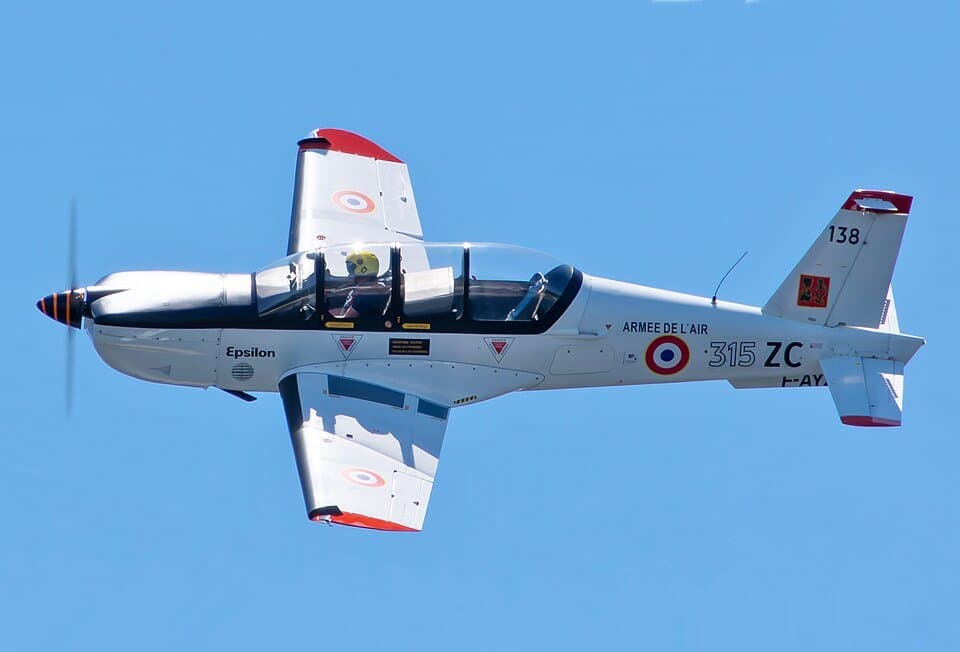
Socata TB 30 Epsilonlarger figure on 3 of 9
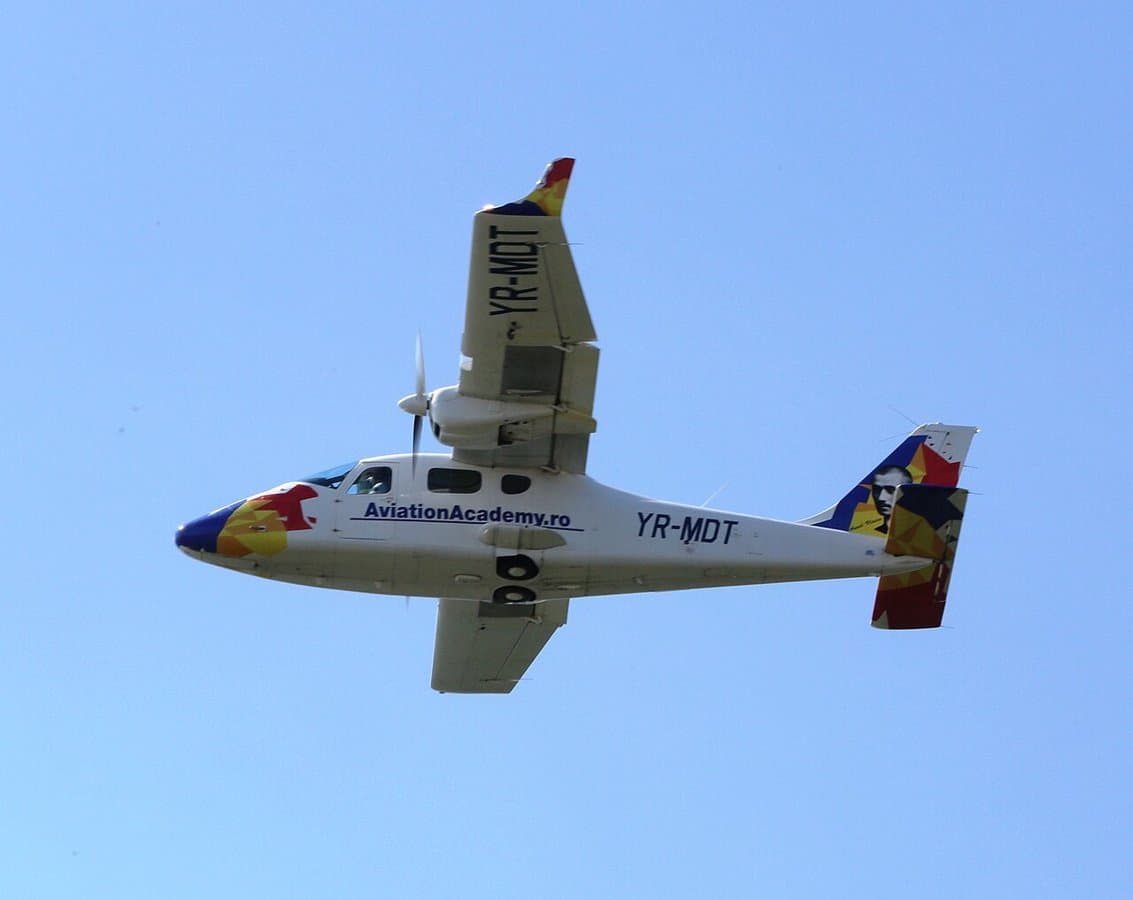
Tecnam P2006Tlarger figure on 6 of 9
True scale
Side by side. From every angle. A human reference for perspective.
3.20 MB · Loads when you open it| Model | Length | Width / span | Height |
|---|---|---|---|
| Socata TB 30 Epsilon | ≈ 7.59 m | ≈ 7.92 m (Wingspan) | ≈ 3.01 m |
| Tecnam P2006T | ≈ 8.7 m | ≈ 11.4 m (Wingspan) | ≈ 2.9 m |
Scaled uniformly to the sourced length of 7.59 m. The shape was turned square to the axes; the width was fitted to the sourced 7.92 m wingspan. Not an official model or a measured survey.
ForceTally · All rights reserved
Scaled uniformly to the sourced length of 8.7 m. The shape was turned square to the axes; the height was fitted to the sourced 2.9 m; the width was fitted to the sourced 11.4 m wingspan. Not an official model or a measured survey.
ForceTally · All rights reserved
The human reference is a generic 1.75 m figure. Models describe external size, not combat performance.
Measured figures
Length
Single source7.59 m (24 ft 11 in)[source]
Length
Single sourceConfiguration
| Specification | Socata TB 30 Epsilon | Tecnam P2006T |
|---|---|---|
| Type | Light military trainer aircraft[source] | — |
| Manufacturer | SOCATA ( Aérospatiale )[source] | Tecnam[source]P2006T |
| Status | Active service[source] | — |
| Primary users | French Air Force (historical) Portuguese Air Force Togolese Air Force Senegalese Air Force[source] | — |
| Manufactured | 1979-1989[source] |
Counts only measures both sources give with the same scope. A larger figure is not a better system.
8.7 m (28 ft 7 in)[source]
× Lycoming AEIO-540-L1B5D 6-cylinder air-cooled horizontally-opposed piston engine
Single source× Lycoming AEIO-540-L1B5D 6-cylinder air-cooled horizontally-opposed piston engine, 220 kW (300 hp)[source]
2 × Rotax 912isc 3 Sport horizontally opposed four-cylinder geared piston engines each
Single source2 × Rotax 912isc 3 Sport horizontally opposed four-cylinder geared piston engines , 75 kW (100 hp) each[source]
Bars compare reported quantities only. A larger figure does not make a system better; configurations and test conditions differ.
2007–present[source]P2006T |
| Introduction date | 1983[source] | June 2009[source]P2006T |
|---|
| First flight | 22 December 1979[source] | 13 September 2007[source]P2006T |
|---|
| Aspect ratio | 8.80[source] |
|---|
| Airfoil | root: RA 1643 (16%); tip: RA 1243 (12%)[source] | — |
|---|
| Propellers | 2-bladed constant-speed propeller[source] | 2-bladed MT Propeller MTV-21, 1.78 m (5 ft 10 in) diameter constant-speed, fully feathering[source] |
|---|
| Stall speed | 115 km/h (71 mph, 62 kn)[source] | 104 km/h (64 mph, 56 kn)[source] |
|---|
| Never exceed speed | 520 km/h (320 mph, 280 kn)[source] | — |
|---|
| Hardpoints | Up to 480 kg (1,100 lbs) on four underwing hardpoints (export versions)[source] | — |
|---|
| Country of origin | France[source]Inventory Origin column; table 1, row 15, cell 2; revision 1354808718 | — |
|---|
| Role | — | Light twin-engine utility aircraft / multi-engine trainer[source]P2006T |
|---|
| National origin | — | Italy[source]P2006T |
|---|
| Designer | — | Luigi Pascale[source]P2006T |
|---|
| Number built | — | Over 400 (as of 2025)[source]P2006T |
|---|
| Developed into | — | NASA X-57 Maxwell[source]P2006T |
|---|
| Capacity | — | 3 passengers[source] |
|---|
| Fuel capacity | — | 200 litres (44 imp gal; 53 US gal)[source] |
|---|