
FORCETALLY
Loading the evidence…
Preparing your view.


Preparing your view.

Measured figures
Configuration
| Specification | PL-17 | Popeye (missile) |
|---|---|---|
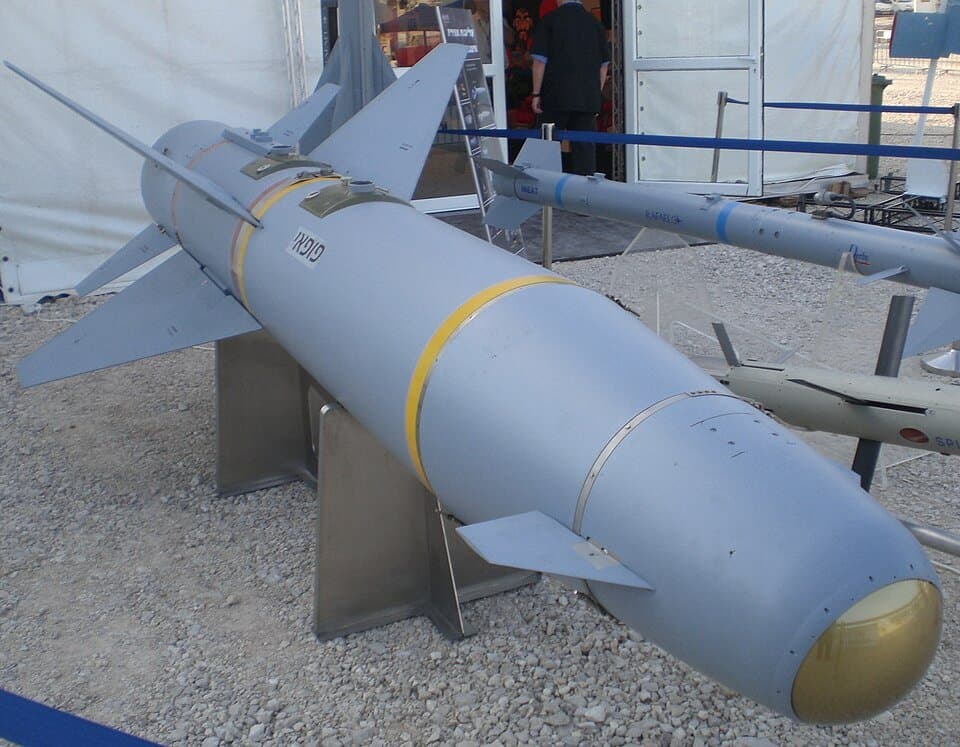
| Type | Beyond-visual-range air-to-air missile (very-long-range)[source] | Air-to-surface missile SLCM[source] |
| Place of origin | People's Republic of China[source] | Israel[source] |
| In service | 2024–present[source] | 1985–present[source] |
| Used by | People's Liberation Army Air Force People's Liberation Army Naval Air Force[source] | See Operators |
Wingspan
Single source198 cm (78 in)[source]
Bars compare reported quantities only. A larger figure does not make a system better; configurations and test conditions differ.
| Manufacturer | Shanghai Academy of Spaceflight Technology[source] | Rafael Advanced Defense Systems Lockheed Martin[source] |
|---|
| Engine | Dual-pulsed solid-propellant rocket[source] | Single-stage Solid-fuel rocket[source] |
|---|
| Guidance system | Active radar homing / infrared homing / passive radiation homing .[source] | Inertial plus IIR or TV[source] |
|---|
| Launch platform | Chengdu J-20 Shenyang J-16[source] | Fixed-wing aircraft, Dolphin class submarine (Popeye Turbo SLCM)[source] |
|---|
| Role | active radar-guided very-long-range air-to-air missile[source] | — |
|---|
| Source measurement | The PL-17 ( NATO reporting name : CH-AA-12 Auger ) or PL-20 is an active radar-guided very-long-range air-to-air missile developed by the People's Republic of China for the People's Liberation Army Air Force (PLAAF). The missile has a claimed range of around 400 km (250 mi) and is intended to target high value airborne assets (HVAA) such as tanker and early warning and control (AEW&C) aircraft.[source]PL-17 · Lead; only the objects and conditions stated in this passage PL-17 is much larger than other long-range air-to-air missiles, at 6 m (20 ft) long (whereas PL-15 , AIM-120 are measured around 4 m (13 ft) long), which contains more solid fuel. The extended length makes the missile unfit for the internal weapons bay of the Chengdu J-20 . During the flight, PL-17 would rely on inertial guidance and satellite navigation to track targets. During the terminal phase, the missile would turn on its multimodal seeker with both active radar and passive sensors. The sensors include, reportedly, a miniature active electronically scanned array (AESA) radar for tracking, passive anti-radiation seeker for locating radar-equipped targets, and a possible optical window feautring an additional infrared seeker as supplement.[source]PL-17 · Design; only the objects and conditions stated in this passage The missile body features a low-drag profile, and maneuverability is provided by four small control fins and thrust-vectoring engines. Estimates for its maximum operational range may vary, but the widely reported figure is ~400 km. The missile is powered by a dual pulse rocket motor and flies in lofted launch trajectory to achieve the reported range of 400 km (250 mi) class, according to the Royal United Services Institute . It has a top speed in excess of Mach 4.[source]PL-17 · Design; only the objects and conditions stated in this passage | — |
|---|
| Designer | — | Rafael Advanced Defense Systems[source] |
|---|
| Warhead | — | 340 kg (750 lb) blast fragmentation or 360 kg (790 lb) I-800 penetrating[source] |
|---|
| Guidance | — | Inertial plus imaging infrared or TV[source] |
|---|
| Reported operators | — |
|
|---|