


Preparing your view.

At a glance
True scale
Side by side. From every angle. A human reference for perspective.
3.16 MB · Loads when you open it| Model | Length | Width / span | Height |
|---|---|---|---|
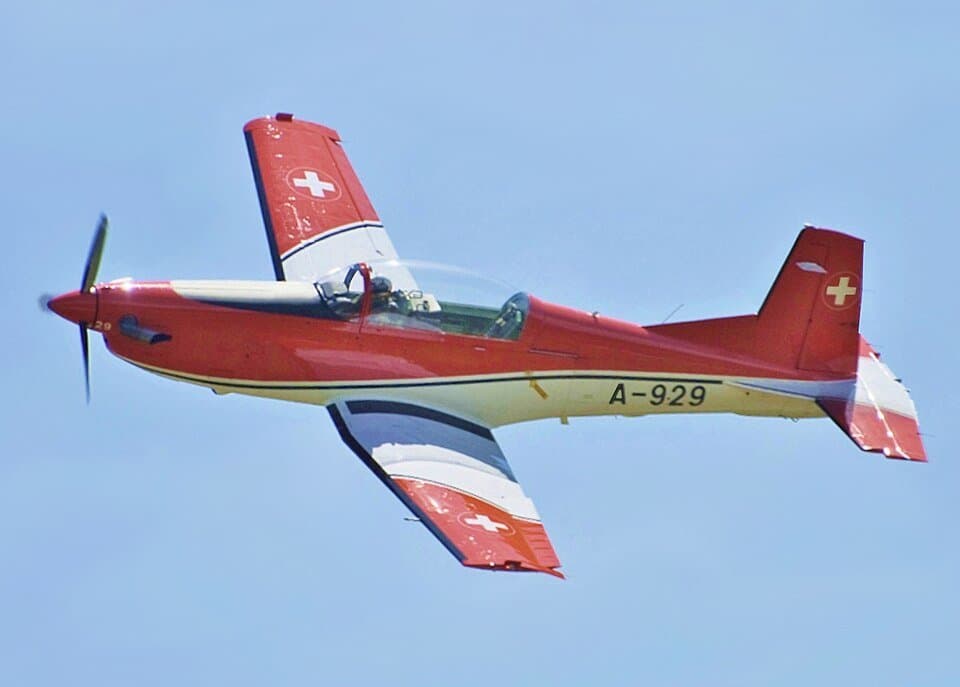
| Pilatus PC-7 | ≈ 9.78 m | ≈ 10.4 m (Wingspan) | ≈ 3.48 m |
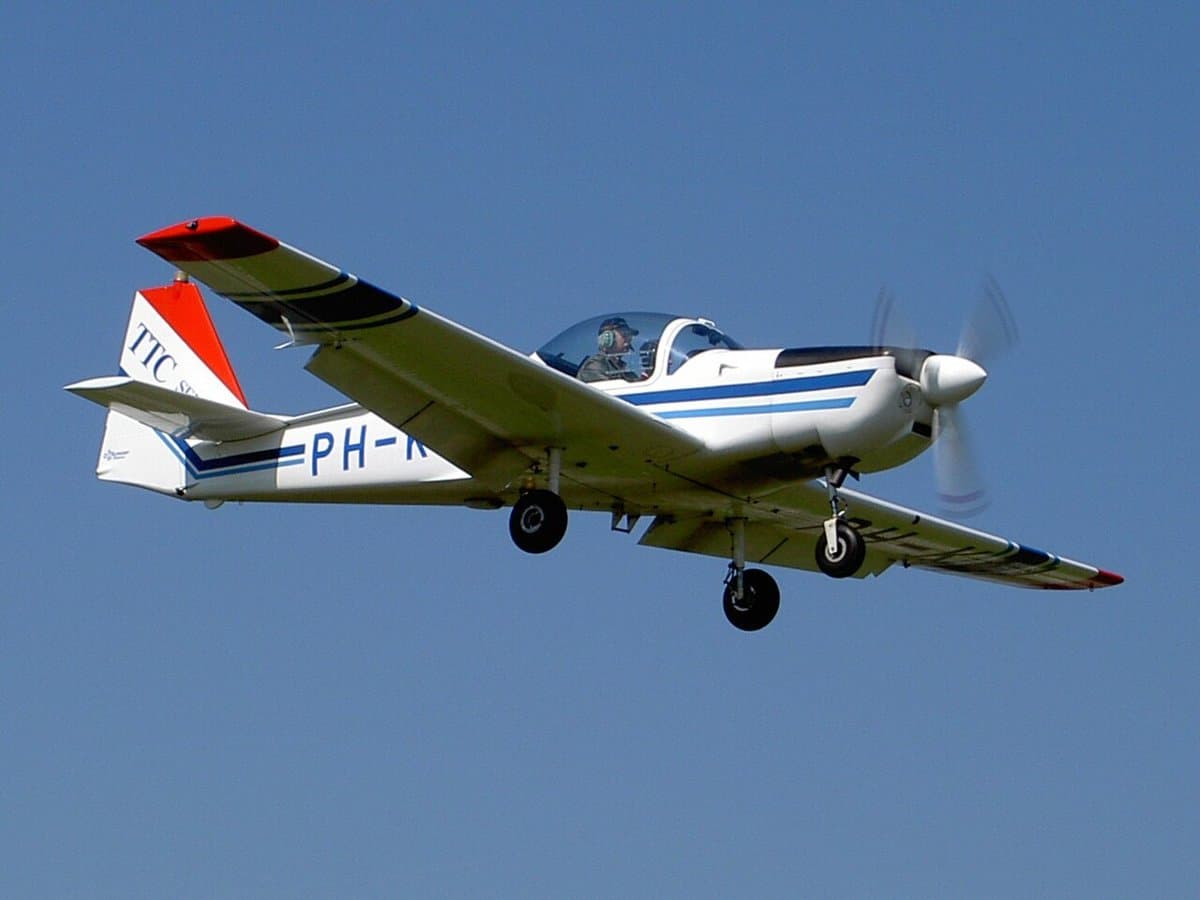
| Slingsby T67 Firefly | ≈ 7.55 m | ≈ 10.69 m (Wingspan) | ≈ 2.36 m |
Scaled uniformly to the sourced length of 9.78 m. The width was fitted to the sourced 10.4 m wingspan. Not an official model or a measured survey.
ForceTally · All rights reserved
Scaled uniformly to the sourced length of 7.55 m. The shape was turned square to the axes; the width was fitted to the sourced 10.69 m wingspan. Not an official model or a measured survey.
ForceTally · All rights reserved
The human reference is a generic 1.75 m figure. Models describe external size, not combat performance.
Measured figures
PC-7 · Length
Single source9.78 m (32 ft 1 in)[source]
T-3A · Length
Configuration
| Specification | Pilatus PC-7 | Slingsby T67 Firefly |
|---|---|---|
| Type | Trainer aircraft[source] | Trainer/tourer/sport aircraft[source]RF-6, T67 Firefly |
| Manufacturer | Pilatus Aircraft[source] | Fournier Slingsby Aviation[source]RF-6, T67 Firefly |
| Status | In service[source] | Limited Service[source]RF-6, T67 Firefly |
| Primary users | Mexican Air Force Indian Air Force South African Air Force Royal Malaysian Air Force[source] |
24 ft 10 in (7.55 m)[source]
Cruise; PC-7 · (econ. cruise at 6,095 m (19,997 ft))
Single sourceMaximum; PC-7 · (max cruise at 6,095 m (19,997 ft))
Single source412 km/h (256 mph, 222 kn) (max cruise at 6,095 m (19,997 ft))[source]
316 km/h (196 mph, 171 kn) (econ. cruise at 6,095 m (19,997 ft))[source]
Cruise; T-3A · Cruise speed
Single sourceMaximum; T-3A · Maximum speed
Single sourceFerry; PC-7 · Ferry range
Single sourcePC-7 · standard range without external drop tanks, ferry range with external drop tanks, (cruise power, at 5,000 m (16,000 ft) - 20 min reserves)
Single source1,200 km (750 mi, 650 nmi) standard range without external drop tanks, ferry range with external drop tanks, (cruise power, at 5,000 m (16,000 ft) - 20 min reserves)[source]
2,630 km (1,630 mi, 1,420 nmi)[source]
T-3A · Range
Single source407 nmi (468 mi, 753 km)[source]
PC-7 · 1 × Pratt & Whitney Canada PT6A -25A turboprop derated from
Single sourcePC-7 · 650 shp
Single source1 × Pratt & Whitney Canada PT6A -25A turboprop , 410 kW (550 hp)(derated from 485 kW (650 shp))[source]
T-3A · 1 × Textron Lycoming AEIO-540-D 6-cylinder horizontally-opposed engine
Single source1 × Textron Lycoming AEIO-540-D 6-cylinder horizontally-opposed engine, 260 hp (194 kW)[source]
PC-7 · Endurance
Single source4 hr 22 min[source]
PC-7 · (2,150 ft/min) climb to 5,000 m in 9 min 0 sec take-off run 780 m at max take-off weight, landing run 505 m at max landing weight
Single source10.9 m/s (2,150 ft/min) climb to 5,000 m in 9 min 0 sec take-off run 780 m at max take-off weight, landing run 505 m at max landing weight[source]
T-3A · 1,380 ft/min (
Single source1,380 ft/min (7.0 m/s)[source]
Bars compare reported quantities only. A larger figure does not make a system better; configurations and test conditions differ.
Royal Jordanian Air Force Bahrain Air Force[source]RF-6, T67 Firefly |
| Number built | >618[source] | > 250[source]RF-6, T67 Firefly |
|---|
| Manufactured | 1966–present[source] | 1974–1995[source]RF-6, T67 Firefly |
|---|
| Introduction date | PC-7 : 1978 PC-7 Mk.II M : 1994 PC-7 MKX : 2021[source] | — |
|---|
| First flight | PC-7 : 12 April 1966 ( 1966-04-12 ) (prototype) 18 August 1978 ( 1978-08-18 ) (production) PC-7 Mk.II M : 28 September 1992 ( 1992-09-28 )[source] | 12 March 1974[source]RF-6, T67 Firefly |
|---|
| Developed from | Pilatus P-3[source] | — |
|---|
| Developed into | Pilatus PC-9[source] | Sportavia RS-180[source]RF-6, T67 Firefly |
|---|
| Capacity | two[source] | — |
|---|
| Fuel capacity | 474 L (104 imp gal; 125 US gal) usable internal fuel, 2x 240 L (53 imp gal; 63 US gal) external fuel drop tanks • Max landing weight: 2,565 kg[source] | — |
|---|
| Hardpoints | 6 × underwing hardpoints for bombs and rockets with a capacity of 1,040 kg (2,294 lb)[source] | — |
|---|
| Aspect ratio | 6.5:1[source] | — |
|---|
| Airfoil | NACA 64 2 A-415 at root, 64 1 A-612 at tip[source] | NACA 23015/23013 (root/tip)[source] |
|---|
| Propellers | 3-bladed Hartzell HC-B3TN-2 / T10173C-8 constant-speed propeller , 2.36 m (7 ft 9 in) diameter[source] | — |
|---|
| Stall speed | 119 km/h (74 mph, 64 kn) (flaps and gear down, power off)[source] | 54 kn (62 mph, 100 km/h) (with flaps)[source] |
|---|
| Never exceed speed | 500 km/h (310 mph, 270 kn) EAS[source] | 195 kn (224 mph, 361 km/h)[source] |
|---|
| g limits | -3 / +6[source] | — |
|---|
| Alternative designation | Pilatus PC-7 Turbo Trainer[source] | — |
|---|
| Country of origin | Switzerland[source] | United Kingdom[source]Inventory Origin column; table 3, row 15, cell 2; revision 1374090926 |
|---|
| Wing loading | — | 18.8 lb/sq ft (92 kg/m 2 )[source] |
|---|
| Power/mass | — | 0.10 hp/lb (0.17 kW/kg)[source] |
|---|