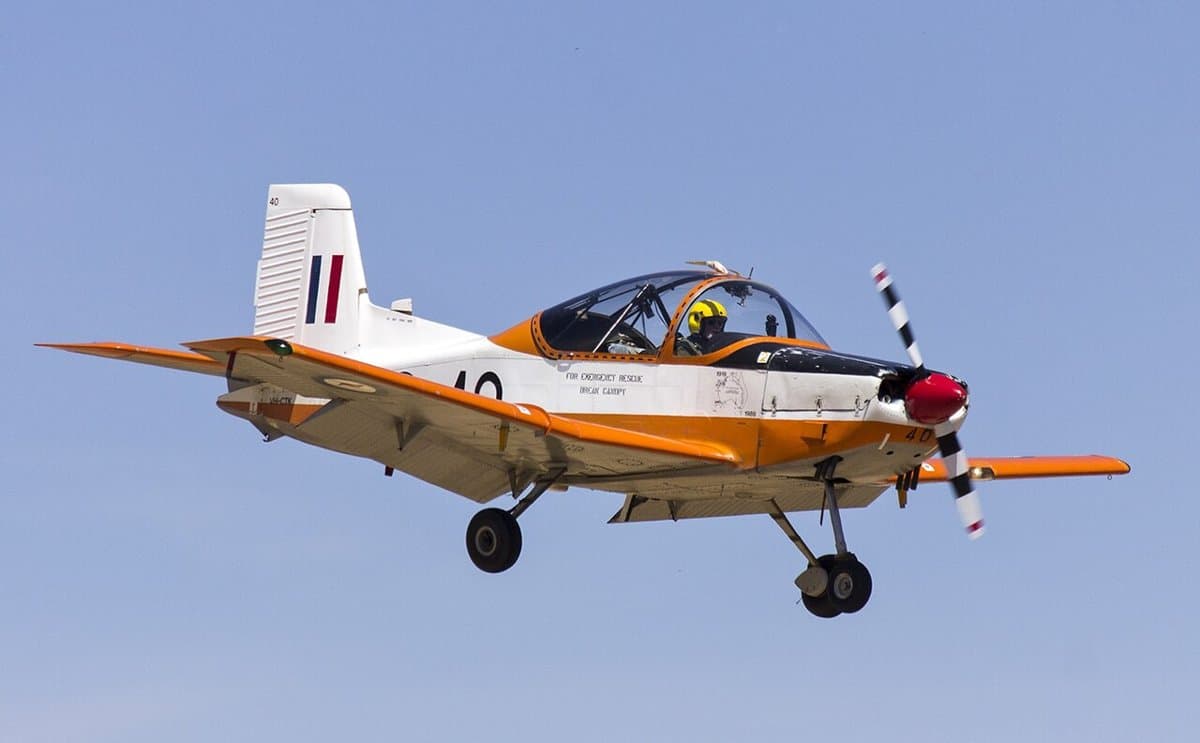

Credit
Bidgee · CC BY-SA 4.0 · Resized · CC BY-SA 4.0 · Source ↗ · Modified


Preparing your view.

At a glance
True scale
Side by side. From every angle. A human reference for perspective.
3.24 MB · Loads when you open it| Model | Length | Width / span | Height |
|---|---|---|---|
| PAC CT/4 Airtrainer | ≈ 7.2 m | ≈ 7.92 m (Wingspan) | ≈ 2.99 m |
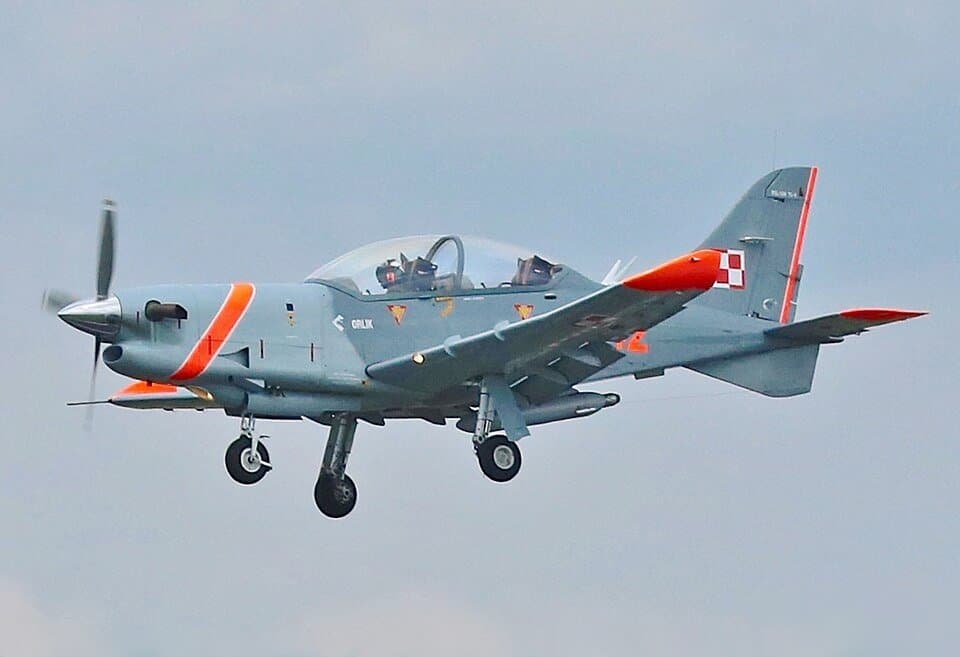
| PZL-130 Orlik | ≈ 9.3 m | ≈ 10 m (Wingspan) | ≈ 3.93 m |
Scaled uniformly to the sourced length of 7.201 m. The shape was turned square to the axes; the width was fitted to the sourced 7.92 m wingspan. Not an official model or a measured survey.
ForceTally · All rights reserved
Scaled uniformly to the sourced length of 9.3 m. The shape was turned square to the axes; thin antennas or poles standing above the body were pressed down to it, so they do not set the height; the width was fitted to the sourced 10 m wingspan. Not an official model or a measured survey.
ForceTally · All rights reserved
The human reference is a generic 1.75 m figure. Models describe external size, not combat performance.
Measured figures
CT4E · Length
Single source7.201 m (23 ft 7.5 in)[source]
Configuration
| Specification | PAC CT/4 Airtrainer | PZL-130 Orlik |
|---|---|---|
| Type | Fixed-wing Primary trainer[source] | Trainer[source] |
| National origin | New Zealand[source] | Poland[source] |
| Manufacturer | Pacific Aerospace NZAero[source] | Airbus Poland SA[source] |
| Status | Currently manufactured by NZAero[source] | — |
PZL-130TC II Orlik · Length
9.3 m (30 ft 6 in)[source]
Empty; CT4E · Empty weight
Single sourceGross; CT4E · Gross weight
Single sourceMaximum take-off; CT4E · Max takeoff weight
Single source770 kg (1,700 lb)[source]
1,180 kg (2,600 lb)[source]
1,180 kg (2,600 lb)[source]
Empty; PZL-130TC II Orlik · Empty weight
Single sourceGross; PZL-130TC II Orlik · Gross weight
Single sourceCruise; CT4E · at 2,590 m (8,500 ft) (75% power)
Single sourceMaximum; CT4E · at sea level
Single source387 km/h (240 mph, 209 kn) at sea level[source]
282 km/h (175 mph, 152 kn) at 2,590 m (8,500 ft) (75% power)[source]
Cruise; PZL-130TC II Orlik · Cruise speed
Single sourceMaximum; PZL-130TC II Orlik · Maximum speed
Single sourceCT4E · 1 × Lycoming AEIO-540 -L1B5 flat-six piston engine
Single source1 × Lycoming AEIO-540 -L1B5 flat-six piston engine, 224 kW (300 hp)[source]
PZL-130TC II Orlik · 1 × Pratt & Whitney Canada PT6A-25C turboprop 750 shp
Single source1 × Pratt & Whitney Canada PT6A-25C turboprop, 560 kW (750 shp)[source]
Bars compare reported quantities only. A larger figure does not make a system better; configurations and test conditions differ.
| Primary users | Royal New Zealand Air Force (historical) Royal Australian Air Force BAE Systems Australia Royal Thai Air Force[source] | — |
|---|
| Number built | 154[source] | 50 + 9 prototypes[source] |
|---|
| Manufactured | 1972–2008 2026-present[source] | — |
|---|
| First flight | 23 February 1972[source] | 24 October 1984[source] |
|---|
| Retired | Royal New Zealand Air Force , 4 December 2014[source] | — |
|---|
| Developed from | Victa Aircruiser[source] | — |
|---|
| Aspect ratio | 5.2:1[source] | — |
|---|
| Propellers | Hartzell Propeller HC-C3YR-4BF / FC7663-2R 1 per engine[source] | — |
|---|
| Stall speed | 82 km/h (51 mph, 44 kn) (flaps down)[source] | — |
|---|
| Never exceed speed | 387 km/h (240 mph, 209 kn)[source] | — |
|---|
| Primary user | — | Polish Air Force[source] |
|---|
| Introduction date | — | 1994[source] |
|---|
| Hardpoints | — | 6 with a capacity of 700 kg (1,500 lb)[source] |
|---|
Maximum take-off; PZL-130TC II Orlik · Max takeoff weight
Single source