


Preparing your view.
At a glance
Measured figures
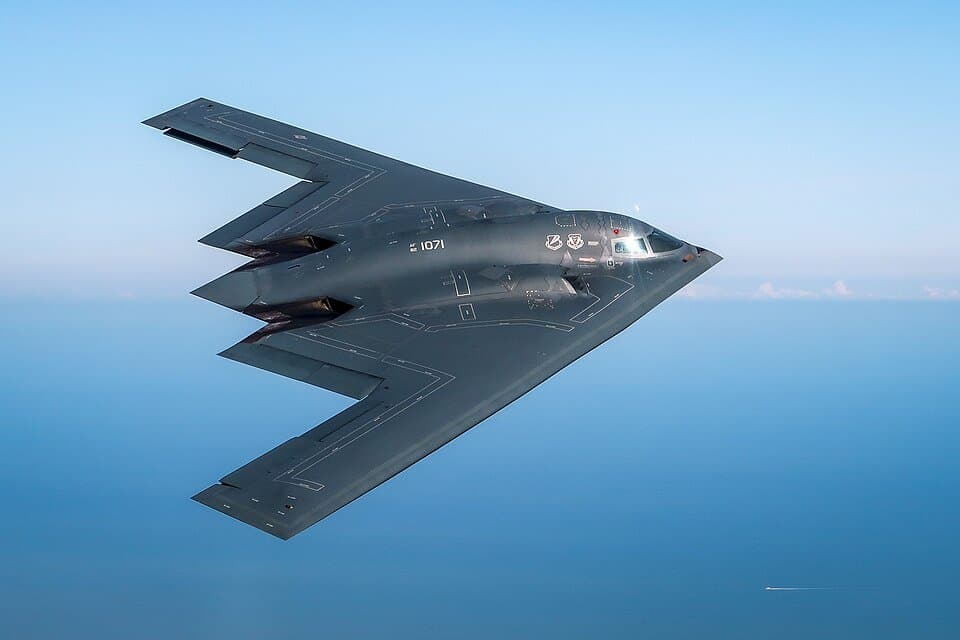
B-2 Block 30 · Length
Single source69 ft 0 in (21.0 m)[source]
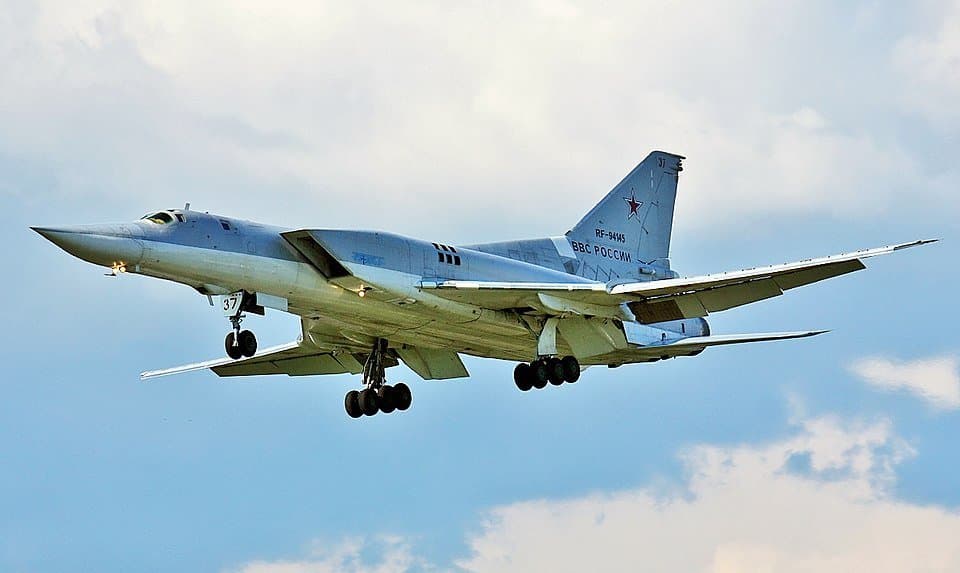
Tu-22M3 · Length
Single sourceConfiguration
| Specification | Northrop B-2 Spirit | Tupolev Tu-22M |
|---|---|---|
| Type | Stealth strategic heavy bomber[source] | Strategic bomber /Maritime strike[source] |
| National origin | United States[source] | Soviet Union[source] |
| Manufacturer | Northrop Corporation Northrop Grumman[source] | Tupolev[source] |
| Status | In service[source] | In service |
42.46 m (139 ft 4 in)[source]
Empty; B-2 Block 30 · Empty weight
Single sourceGross; B-2 Block 30 · Gross weight
Single sourceMaximum take-off; B-2 Block 30 · Max takeoff weight
Single source158,000 lb (71,700 kg)[source]
336,500 lb (152,200 kg)[source]
376,000 lb (170,600 kg)[source]
Empty; Tu-22M3 · Empty weight
Single sourceGross; Tu-22M3 · Gross weight
Single sourceCruise; B-2 Block 30 · at 40,000 ft (12,000 m) altitude
Single sourceMaximum; B-2 Block 30 · at 40,000 ft (12,000 m) altitude / Mach 0.95 at sea level
Single source630 mph (1,010 km/h, 550 kn) at 40,000 ft (12,000 m) altitude / Mach 0.95 at sea level[source]
560 mph (900 km/h, 487 kn) at 40,000 ft (12,000 m) altitude[source]
Maximum; Tu-22M3 · at 9,140 m (30,000 ft)
Single source1,997 km/h (1,241 mph, 1,078 kn) at 9,140 m (30,000 ft)[source]
Tu-22M3 · with typical 10,000 kg weapons load
Single source2,500 km (1,600 mi, 1,300 nmi) with typical 10,000 kg weapons load[source]
B-2 Block 30 · 4 × General Electric F118 -GE-100 non-afterburning turbofans thrust each
Single source4 × General Electric F118 -GE-100 non-afterburning turbofans , 17,300 lbf (77 kN) thrust each[source]
Tu-22M3 · 2 × Kuznetsov NK-25 Afterburning turbofan engines with afterburner
Single source2 × Kuznetsov NK-25 Afterburning turbofan engines, 247.9 kN (55,700 lbf) with afterburner[source]
Tu-22M3 · 3,000 ft/min
Single source15 m/s (3,000 ft/min)[source]
Bars compare reported quantities only. A larger figure does not make a system better; configurations and test conditions differ.
| Primary user | United States Air Force[source] | — |
|---|
| Number built | 21[source] | 497[source] |
|---|
| Manufactured | 1989–2000[source] | 1967–1993[source] |
|---|
| Introduction date | 1 January 1997[source] | 1972[source] |
|---|
| First flight | 17 July 1989 ( 1989-07-17 )[source] | 30 August 1969 ( 1969-08-30 )[source] |
|---|
| Successors | Northrop Grumman B-21 Raider[source] | — |
|---|
| Fuel capacity | 167,000 pounds (75,750 kg)[source] | 54,000 kg (119,050 lb) internal[source] |
|---|
| Wing loading | 67.3 lb/sq ft (329 kg/m 2 )[source] | 688 kg/m 2 (141 lb/sq ft)[source] |
|---|
| Thrust/weight | 0.205[source] | 0.45[source] |
|---|
| Primary users | — | Russian Aerospace Forces Soviet Air Forces (historical) Ukrainian Air Force (historical)[source] |
|---|
| Developed from | — | Tupolev Tu-22[source] |
|---|
| Guns | — | 1 × 23-mm GSh-23 cannon in remotely controlled tail turret[source] |
|---|
| Hardpoints | — | wing and fuselage pylons and internal weapons bay with a capacity of 24,000 kg (53,000 lb) of[source] |
|---|
| Maximum take-off weight, rocket assisted | — | 126,400 kg (278,664 lb)[source] |
|---|
Maximum take-off; Tu-22M3 · Max takeoff weight
Single source