Credit
PpPachy · CC BY-SA 3.0 · Resized · CC BY-SA 3.0 · Source ↗ · Modified


Preparing your view.

At a glance
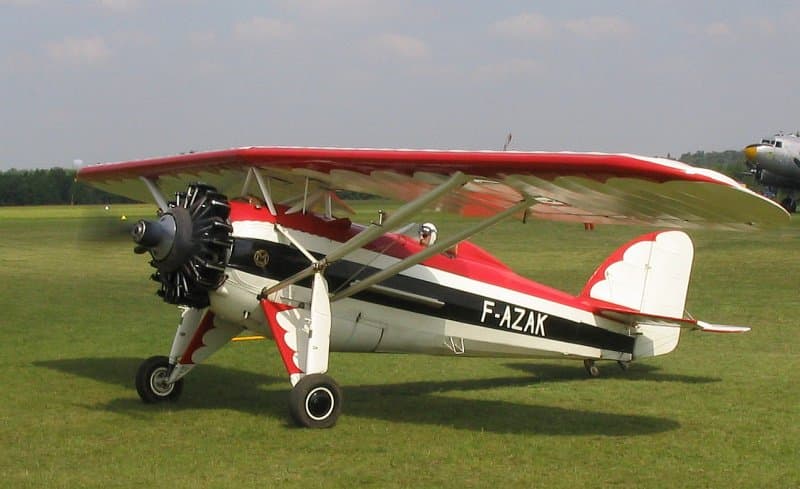
Morane-Saulnier MS.230larger figure on 0 of 1
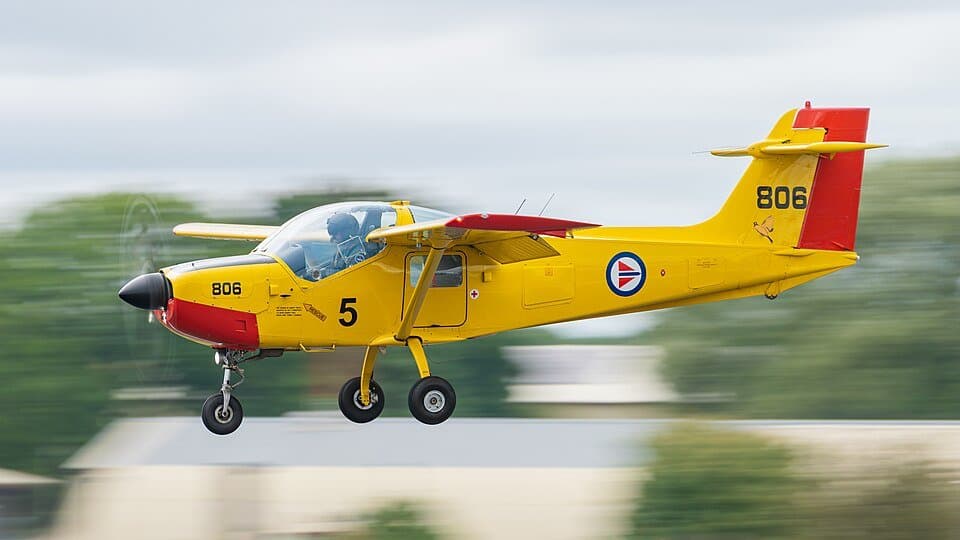
Saab Safarilarger figure on 1 of 1
Counts only measures both sources give with the same scope. A larger figure is not a better system.
Measured figures
Length
DisputedSingle-Engine, Twin-Seat Basic Trainer Monoplane Aircraft / France | 1929 / "Over 1000 of the popular French-made Morane-Saulnier MS.230 monoplane trainers were built during the pre-World War 2 period." · Length
Single sourceConfiguration
| Specification | Morane-Saulnier MS.230 | Saab Safari |
|---|---|---|
| Type | Elementary Trainer[source] | Primary trainer[source] |
| Manufacturer | Morane-Saulnier[source] | Saab AB[source] |
| Primary user | Armée de l'Air Flight School, Reims, France[source] | — |
| Number built | 1000+[source] | 462[source] |
6.942 m (22 ft 9 in)[source]
22.0 ft (6.70 m)[source]Single-Engine, Twin-Seat Basic Trainer Monoplane Aircraft / France | 1929 / "Over 1000 of the popular French-made Morane-Saulnier MS.230 monoplane trainers were built during the pre-World War 2 period."
6,95 m[source]
6,98 m[source]
6,70 m[source]
Safari · Length
Single source7.00 m (23 ft 0 in)[source]
Single-Engine, Twin-Seat Basic Trainer Monoplane Aircraft / France | 1929 / "Over 1000 of the popular French-made Morane-Saulnier MS.230 monoplane trainers were built during the pre-World War 2 period." · Width
Single source35.1 ft (10.70 m)[source]Single-Engine, Twin-Seat Basic Trainer Monoplane Aircraft / France | 1929 / "Over 1000 of the popular French-made Morane-Saulnier MS.230 monoplane trainers were built during the pre-World War 2 period."
Height
DisputedSingle-Engine, Twin-Seat Basic Trainer Monoplane Aircraft / France | 1929 / "Over 1000 of the popular French-made Morane-Saulnier MS.230 monoplane trainers were built during the pre-World War 2 period." · Height
Single source2.73 m (8 ft 11 in)[source]
9.2 ft (2.80 m)[source]Single-Engine, Twin-Seat Basic Trainer Monoplane Aircraft / France | 1929 / "Over 1000 of the popular French-made Morane-Saulnier MS.230 monoplane trainers were built during the pre-World War 2 period."
2,75 m[source]
2,80 m[source]
2,80 m[source]
Safari · Height
Single source2.60 m (8 ft 6 in)[source]
Empty; Empty weight
Single sourceEmpty; Single-Engine, Twin-Seat Basic Trainer Monoplane Aircraft / France | 1929 / "Over 1000 of the popular French-made Morane-Saulnier MS.230 monoplane trainers were built during the pre-World War 2 period." · Empty weight
Single sourceGross; Gross weight
Single sourceMaximum take-off; Single-Engine, Twin-Seat Basic Trainer Monoplane Aircraft / France | 1929 / "Over 1000 of the popular French-made Morane-Saulnier MS.230 monoplane trainers were built during the pre-World War 2 period." · Max takeoff weight
Single source834 kg (1,839 lb)[source]
1,208 kg (2,663 lb)[source]
1,830 lb (830 kg)[source]Single-Engine, Twin-Seat Basic Trainer Monoplane Aircraft / France | 1929 / "Over 1000 of the popular French-made Morane-Saulnier MS.230 monoplane trainers were built during the pre-World War 2 period."
2,535 lb (1,150 kg)[source]Single-Engine, Twin-Seat Basic Trainer Monoplane Aircraft / France | 1929 / "Over 1000 of the popular French-made Morane-Saulnier MS.230 monoplane trainers were built during the pre-World War 2 period."
830 kg[source]
829 kg[source]
Empty; Safari · Empty weight
Single sourceGross; Safari · Gross weight
Single sourceCrew
Disputedpilota ed istruttore
Single sourceSingle-Engine, Twin-Seat Basic Trainer Monoplane Aircraft / France | 1929 / "Over 1000 of the popular French-made Morane-Saulnier MS.230 monoplane trainers were built during the pre-World War 2 period." · MANNED
Single source2 (MANNED)[source]Single-Engine, Twin-Seat Basic Trainer Monoplane Aircraft / France | 1929 / "Over 1000 of the popular French-made Morane-Saulnier MS.230 monoplane trainers were built during the pre-World War 2 period."
2; un instructor y alumno[source]
2 (pilota ed istruttore)[source]pilota ed istruttore
Safari · pilot and student
Single source2 (pilot and student)[source]
Cruise; Cruise speed
Single sourceMaximum; at sea level
Single sourceMaximum; Maximum speed
Single sourceMaximum; Single-Engine, Twin-Seat Basic Trainer Monoplane Aircraft / France | 1929 / "Over 1000 of the popular French-made Morane-Saulnier MS.230 monoplane trainers were built during the pre-World War 2 period." · Maximum speed
Single source207 km/h (129 mph, 112 kn) at sea level[source]
160 km/h (99 mph, 86 kn)[source]
162 mph (260 kph | 140 kts)[source]Single-Engine, Twin-Seat Basic Trainer Monoplane Aircraft / France | 1929 / "Over 1000 of the popular French-made Morane-Saulnier MS.230 monoplane trainers were built during the pre-World War 2 period."
205 km/h[source]
Cruise; Safari · Cruise speed
Single sourceMaximum; Safari · at sea level
Single sourceRange
Single sourceOperational; Single-Engine, Twin-Seat Basic Trainer Monoplane Aircraft / France | 1929 / "Over 1000 of the popular French-made Morane-Saulnier MS.230 monoplane trainers were built during the pre-World War 2 period." · Operational range
Single source579 km (360 mi, 313 nmi)[source]
360 miles (580 km | 313 nm)[source]Single-Engine, Twin-Seat Basic Trainer Monoplane Aircraft / France | 1929 / "Over 1000 of the popular French-made Morane-Saulnier MS.230 monoplane trainers were built during the pre-World War 2 period."
580 km[source]
Range
Single source1 050 km (567 nmi )[source]
1 × Salmson 9AB 9-cylinder air-cooled radial piston engine
Single source1 × Salmson 9AB 9-cylinder air-cooled radial piston engine, 170 kW (230 hp)[source]
Safari · 1 × Lycoming IO-360-A1B6 air-cooled flat-four piston engine
Single source1 × Lycoming IO-360-A1B6 air-cooled flat-four piston engine, 150 kW (200 hp)[source]
Service ceiling
DisputedSingle-Engine, Twin-Seat Basic Trainer Monoplane Aircraft / France | 1929 / "Over 1000 of the popular French-made Morane-Saulnier MS.230 monoplane trainers were built during the pre-World War 2 period." · Service ceiling
Single source5,000 m (16,000 ft)[source]
16,404 ft (5,000 m | 3 miles)[source]Single-Engine, Twin-Seat Basic Trainer Monoplane Aircraft / France | 1929 / "Over 1000 of the popular French-made Morane-Saulnier MS.230 monoplane trainers were built during the pre-World War 2 period."
4 630 m[source]
5 000 m[source]
Safari · Service ceiling
Single source4,100 m (13,500 ft)[source]
Safari · Endurance
Single source5 hr 10 min[source]
Safari · 807 ft/min
Single source4.10 m/s (807 ft/min)[source]
Bars compare reported quantities only. A larger figure does not make a system better; configurations and test conditions differ.
| First flight |
|---|
February 1929[source] |
26 February 1971[source] |
| Fuel capacity | 220 L (58 US gal; 48 imp gal) jettison-able fuselage tank with a 22 L (5.8 US gal; 4.8 imp gal) centre-section gravity tank[source] | 190 L (42 imp gal; 50 US gal)[source] |
|---|
| Propellers | 2-bladed fixed-pitch wooden propeller[source] | 2-bladed Hartzell HC-C2YK-4F/FC7666A-2 constant speed propeller[source] |
|---|
| Never exceed speed | 260 km/h (160 mph, 140 kn)[source] | 365 km/h (227 mph, 197 kn)[source] |
|---|
| Time to altitude | 3,000 m (9,800 ft) in 11 minutes 18 seconds[source] | — |
|---|
| Wing loading | 61.3 kg/m 2 (12.6 lb/sq ft)[source] | — |
|---|
| Power/mass | 0.1429 kW/kg (0.0869 hp/lb)[source] | — |
|---|
| Role | main elementary trainer for the French Armée de l'Air throughout the 1930s[source] | propeller-powered basic trainer aircraft[source] |
|---|
| Source measurement | six built, with 179 kW (240 hp) Lorraine 7Mb , 1930.[source]Morane-Saulnier MS.230 · Variants; only the objects and conditions stated in this passage experimental version with 149 kW (200 hp) Clerget 9Ca diesel , 1930.[source]Morane-Saulnier MS.230 · Variants; only the objects and conditions stated in this passage powered by 172 kW (230 hp) Gnome-Rhône 5Ba or Gnome-Rhône 5Bc , six built in France and 16 in Portugal under licence for the Portuguese military.[source]Morane-Saulnier MS.230 · Variants; only the objects and conditions stated in this passage 186 kW (250 hp) Hispano-Suiza 9Qa engine, two built, one for U.S. Ambassador in Paris.[source]Morane-Saulnier MS.230 · Variants; only the objects and conditions stated in this passage converted from MS.130 Coupe Michelin racer with 172 kW) (230 hp) Hispano 9Qb and NACA cowling , entered in 1931 Coupe Michelin air race , 86 kW (250 hp) Hispano-Suiza 9Qa engine. Fitted with a Hispano-Suiza 9Qa engine as MS.234 #2, flown in aerobatic competition by Michael Detroyat until 1938.[source]Morane-Saulnier MS.230 · Variants; only the objects and conditions stated in this passage 224 kW (300 hp) Gnome-Rhône 7Kb engine, one built 1930.[source]Morane-Saulnier MS.230 · Variants; only the objects and conditions stated in this passage fitted with 160 kW (215 hp) Armstrong Siddeley Lynx IVC , 19 built under licence for Belgian Air Force by SABCA , first flown July 1932.[source]Morane-Saulnier MS.230 · Variants; only the objects and conditions stated in this passage 209 kW (280 hp) Salmson 9Aba engine, five built for private users, introduced 1934.[source]Morane-Saulnier MS.230 · Variants; only the objects and conditions stated in this passage Length: 6.942 m (22 ft 9 in)[source]Morane-Saulnier MS.230 · Specifications; only the objects and conditions stated in this passage Wingspan: 10.7 m (35 ft 1 in)[source]Morane-Saulnier MS.230 · Specifications; only the objects and conditions stated in this passage Height: 2.73 m (8 ft 11 in)[source]Morane-Saulnier MS.230 · Specifications; only the objects and conditions stated in this passage Wing area: 19.7 m 2 (212 sq ft)[source]Morane-Saulnier MS.230 · Specifications; only the objects and conditions stated in this passage Empty weight: 834 kg (1,839 lb)[source]Morane-Saulnier MS.230 · Specifications; only the objects and conditions stated in this passage Gross weight: 1,208 kg (2,663 lb)[source]Morane-Saulnier MS.230 · Specifications; only the objects and conditions stated in this passage Powerplant: 1 × Salmson 9AB 9-cylinder air-cooled radial piston engine, 170 kW (230 hp)[source]Morane-Saulnier MS.230 · Specifications; only the objects and conditions stated in this passage Maximum speed: 207 km/h (129 mph, 112 kn) at sea level[source]Morane-Saulnier MS.230 · Specifications; only the objects and conditions stated in this passage 193 km/h (120 mph; 104 kn) at 3,000 m (9,800 ft) 163 km/h (101 mph; 88 kn) at 5,000 m (16,000 ft)[source]Morane-Saulnier MS.230 · Specifications; only the objects and conditions stated in this passage Cruise speed: 160 km/h (99 mph, 86 kn)[source]Morane-Saulnier MS.230 · Specifications; only the objects and conditions stated in this passage Never exceed speed : 260 km/h (160 mph, 140 kn)[source]Morane-Saulnier MS.230 · Specifications; only the objects and conditions stated in this passage Range: 579 km (360 mi, 313 nmi)[source]Morane-Saulnier MS.230 · Specifications; only the objects and conditions stated in this passage Service ceiling: 5,000 m (16,000 ft)[source]Morane-Saulnier MS.230 · Specifications; only the objects and conditions stated in this passage Time to altitude: 3,000 m (9,800 ft) in 11 minutes 18 seconds[source]Morane-Saulnier MS.230 · Specifications; only the objects and conditions stated in this passage 5,000 m (16,000 ft) in 41 minutes 34 seconds[source]Morane-Saulnier MS.230 · Specifications; only the objects and conditions stated in this passage | On 11 July 1969 Saab flew the prototype (SE-301) of a two/three-seat civil/military trainer or general utility aircraft allocated the designation Saab-MFI 15. Developed at Malmö Flygindustri , it was powered by a 119 kW Avco Lycoming IO-320-B2 flat-four engine and with a conventional low-set tailplane. The latter was later modified to a T-tail configuration to minimise damage when operating from rough airfields.[source]Saab Safari · Development and design; only the objects and conditions stated in this passage A military version designated originally Saab-MFI 17 was flown on 6 July 1972 and differed from the Safari by being equipped more specifically for use as a military trainer, or for artillery observation or forward air control and liaison.; this version was later named Saab Supporter. In August 1978 Saab flew a prototype version of the Safari with a 157 kW Continental flat-six turbocharged engine; designated Safari TS, it did not enter production. A trainer based on the Safari's design was built in kit form for assembly in Pakistan as the Mushshak, with 92 aircraft delivered to the Pakistani Air Force . A later batch of 120 aircraft was built entirely in Pakistan.[source]Saab Safari · Development and design; only the objects and conditions stated in this passage Saab Safari TS – a prototype fitted with a 157 kW (210 hp) turbocharged piston engine.[source]Saab Safari · Variants; only the objects and conditions stated in this passage Length: 7.00 m (23 ft 0 in)[source]Saab Safari · Specifications (Safari); only the objects and conditions stated in this passage Wingspan: 8.85 m (29 ft 0 in)[source] |
|---|
| Propulsion | 1 x Salmson 9AB 9-cylinder air-cooled radial piston engine developing 230 horsepower driving a two-bladed propeller at the nose.[source]Single-Engine, Twin-Seat Basic Trainer Monoplane Aircraft / France | 1929 / "Over 1000 of the popular French-made Morane-Saulnier MS.230 monoplane trainers were built during the pre-World War 2 period." | — |
|---|
| Engine | Salmson 9ABb[source] un radiale Salmson 9AB[source] | — |
|---|
| Designer | — | Malmö Flygindustri[source] |
|---|
| Status | — | Active[source] |
|---|
| Primary users | — | Danish Air Force Royal Norwegian Air Force Pakistan Air Force[source] |
|---|
| Manufactured | — | 1971–1979[source] |
|---|
| Introduction date | — | 1972[source] |
|---|
| Developed from | — | Malmö MFI-9 Junior[source] |
|---|
| Variant | — | PAC MFI-17 Mushshak[source] |
|---|
| Capacity | — | 1 passenger[source] |
|---|
| Stall speed | — | 107 km/h (66 mph, 58 kn) flaps down, power off[source] |
|---|
| Take-off run to 15 m (50 ft) | — | 385 m (1,263 ft)[source] |
|---|
| Landing run from 15 m (50 ft) | — | 390 m (1,280 ft)[source] |
|---|
| Country of origin | — | Sweden[source]Inventory Origin column; table 1, row 13, cell 2; revision 1375830625 |
|---|
Maximum take-off; Max takeoff weight
Single sourceHeight: 2.60 m (8 ft 6 in)[source]Saab Safari · Specifications (Safari); only the objects and conditions stated in this passage
Wing area: 11.90 m 2 (128.1 sq ft)[source]Saab Safari · Specifications (Safari); only the objects and conditions stated in this passage
Empty weight: 646 kg (1,424 lb)[source]Saab Safari · Specifications (Safari); only the objects and conditions stated in this passage
Gross weight: 1,200 kg (2,646 lb)[source]Saab Safari · Specifications (Safari); only the objects and conditions stated in this passage
Powerplant: 1 × Lycoming IO-360-A1B6 air-cooled flat-four piston engine, 150 kW (200 hp)[source]Saab Safari · Specifications (Safari); only the objects and conditions stated in this passage
Maximum speed: 236 km/h (147 mph, 127 kn) at sea level[source]Saab Safari · Specifications (Safari); only the objects and conditions stated in this passage
Cruise speed: 208 km/h (129 mph, 112 kn)[source]Saab Safari · Specifications (Safari); only the objects and conditions stated in this passage
Stall speed: 107 km/h (66 mph, 58 kn) flaps down, power off[source]Saab Safari · Specifications (Safari); only the objects and conditions stated in this passage
Never exceed speed : 365 km/h (227 mph, 197 kn)[source]Saab Safari · Specifications (Safari); only the objects and conditions stated in this passage
Endurance: 5 hr 10 min[source]Saab Safari · Specifications (Safari); only the objects and conditions stated in this passage
Service ceiling: 4,100 m (13,500 ft)[source]Saab Safari · Specifications (Safari); only the objects and conditions stated in this passage
Rate of climb: 4.10 m/s (807 ft/min)[source]Saab Safari · Specifications (Safari); only the objects and conditions stated in this passage
Take-off run to 15 m (50 ft): 385 m (1,263 ft)[source]Saab Safari · Specifications (Safari); only the objects and conditions stated in this passage
Landing run from 15 m (50 ft): 390 m (1,280 ft)[source]Saab Safari · Specifications (Safari); only the objects and conditions stated in this passage