FORCETALLY
Loading the evidence…
Preparing your view.


Preparing your view.
At a glance
Mark 54 lightweight torpedolarger figure on 0 of 4
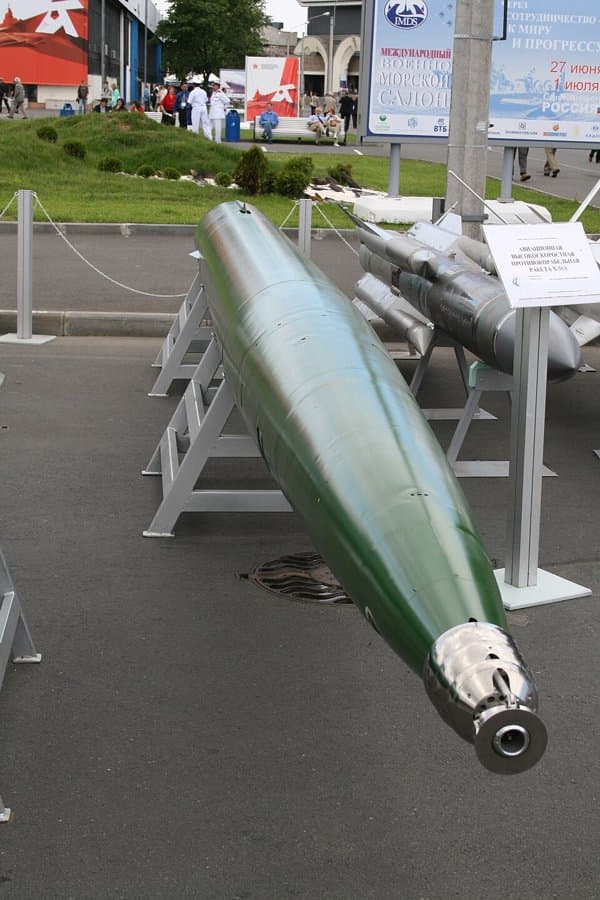
VA-111 Shkvallarger figure on 4 of 4
Measured figures
Length
Single source8 ft 10.9 in or 106.9 in (2.72 m)[source]
Length
Single sourceConfiguration
| Specification | Mark 54 lightweight torpedo | VA-111 Shkval |
|---|---|---|
| Type | Lightweight ASW torpedo[source] | Supercavitating torpedo[source] |
| Place of origin | United States[source] | Soviet Union[source] |
| In service | 2004–present[source] | 1977–present[source] |
| Used by | United States Navy Royal Australian Navy Royal Canadian Navy Royal Air Force Royal Netherlands Navy Republic of China Navy[source] |
Counts only measures both sources give with the same scope. A larger figure is not a better system.
8,200 mm (26 ft 11 in)[source]
Maximum; >
Single source>40 kn (74.1 km/h ; 46.0 mph )[source]
Maximum; Launch speed
Single sourceMaximum; Launch speed Maximum speed: in excess of
Single sourceMaximum; Maximum speed
Single sourceMaximum; Maximum speed or greater
Single sourceLaunch speed: 50 knots (93 km/h; 58 mph) Maximum speed: in excess of 200 knots (370 km/h; 230 mph)[source]
Launch speed: 50 knots (93 km/h; 58 mph) Maximum speed: 200 knots (370 km/h; 230 mph) or greater[source]
Operational; Operational range
Single source10,000 yd (9.1 km)[source]
Around (new version). Older versions only
Single sourceEffective; Effective firing range
Single sourceEffective; Shkval Shkval 2 : From
Single sourceRange
Single sourceShkval : 7 km (4.3 mi) Shkval 2 : From 11–15 km (6.8–9.3 mi)[source]
Around 11–15 km (6.8–9.3 mi) (new version). Older versions only 7 km (4.3 mi)[source]
Bars compare reported quantities only. A larger figure does not make a system better; configurations and test conditions differ.
Russian Navy and Iranian Navy[source] |
| Designer | Raytheon Systems[source] | NII-24 research institute[source] |
|---|
| Designed | 1999[source] | 1960s–70s[source] |
|---|
| Unit cost | US$839,320 (FY2014)[source] | — |
|---|
| Produced | 2003[source] | 1977–present[source] |
|---|
| Warhead | PBX N-103[source] | Conventional explosive or nuclear[source] |
|---|
| Blast yield | 238 lb (108 kg) TNT[source] | — |
|---|
| Engine | Reciprocating external combustion[source] | Solid-fuel rocket[source] |
|---|
| Propellant | Otto II (liquid)[source] | Solid-fuel[source] |
|---|
| Maximum depth | >450 metres (1,480 ft) (estimate)[source] | — |
|---|
| Guidance system | Active or passive/active acoustic homing[source] | GOLIS autonomous inertial guidance[source] |
|---|
| Launch platform | Mark 32 Surface Vessel Torpedo Tubes , ASW Aircraft, RUM-139 VL-ASROC[source] | 533 mm (21 in) torpedo tubes[source] |
|---|
| Manufacturer | Raytheon[source]Mark 54 · sole-source production award April 2003; full-rate production from October 2004 | Tactical Missiles Corporation[source] |
|---|
| Variants | — | Shkval 2, Shkval-E[source] |
|---|
| Reported operators | — |
|
|---|