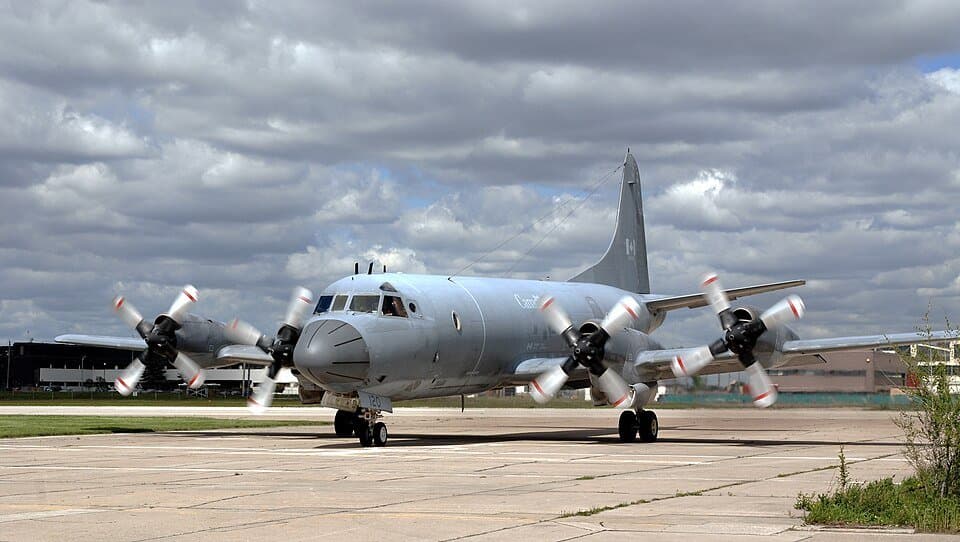

ATrainer aircraft
Lockheed CP-140 Aurora
Maritime patrol aircraft (CP-140) MPA trainer aircraft (CP-140A)
Credit
Ken Mist · CC BY-SA 2.0 · Resized · CC BY-SA 2.0 · Source ↗ · Modified


Preparing your view.
ATrainer aircraft
Maritime patrol aircraft (CP-140) MPA trainer aircraft (CP-140A)
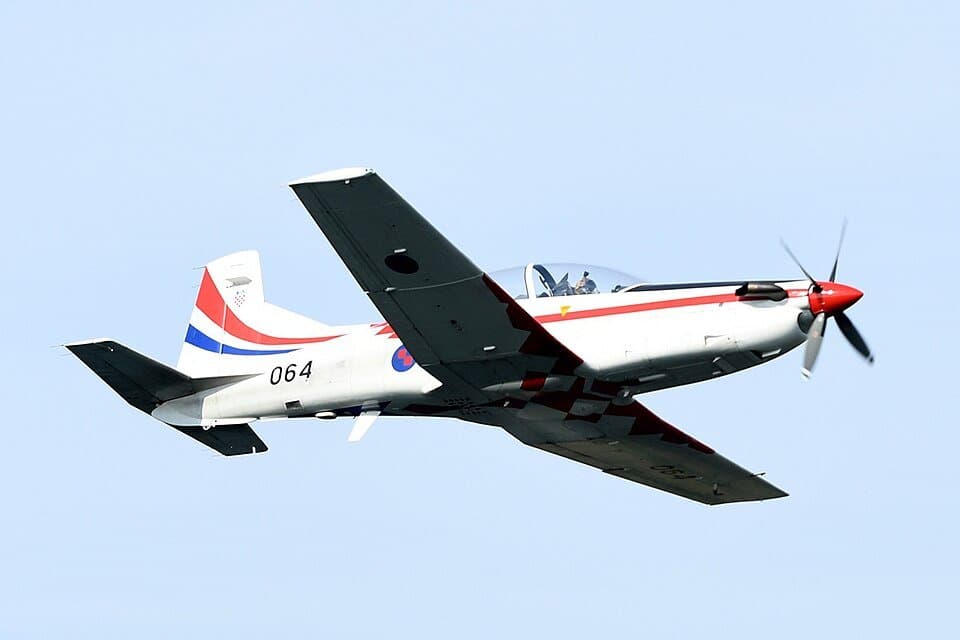

At a glance
Measured figures
CP-140 Aurora · Length
Single sourceCP-140 · Length
Single sourceConfiguration
| Specification | Lockheed CP-140 Aurora | Pilatus PC-9 |
|---|---|---|
| Crew | Mission minimum 8, typically 12 to 15[source] | one or two pilots[source] |
| Type | Maritime patrol aircraft (CP-140) MPA trainer aircraft (CP-140A)[source] | Basic/advanced trainer aircraft[source] |
| Manufacturer | Lockheed Corporation[source] | Pilatus Aircraft[source] |
| Status | Active (CP-140M only)[source] |
PC-9M · Length
Single source10.14 m (33 ft 3 in)[source]
Gross; CP-140 Aurora · Gross weight · Maximum gross weight
Single sourceGross; CP-140 · Gross weight
Single source61,362 lb (27,833 kg)[source]
64,410 kg[source]CP-140 Aurora · Maximum gross weight
Empty; PC-9M · Empty weight
Single sourceGross; PC-9M · Gross weight
Single sourceMaximum; CP-140 Aurora · Maximum speed · Maximum speed
Single sourceMaximum; CP-140 · below cruise ceiling
Single source375 kn (432 mph, 694 km/h) below cruise ceiling[source]
750 km/h[source]CP-140 Aurora · Maximum speed
Cruise; PC-9M · at 7,620 m (25,000 ft)
Single sourceMaximum; PC-9M · Maximum speed
Single sourceCP-140 · 4 × Allison T56-A-14-LFE turboprop engines each
Single source4 × Allison T56-A-14-LFE turboprop engines, 4,909 hp (3,661 kW) each[source]
PC-9M · 1 × Pratt & Whitney Canada PT6A -62 turboprop flat-rated at
Single sourcePC-9M · 950 shp
Single source1 × Pratt & Whitney Canada PT6A -62 turboprop, 857 kW (1,149 hp) flat-rated at 708 kW (950 shp)[source]
CP-140 · Hardpoints: 8 in weapons bay; 10 under-wing from capacity with a capacity of
Single sourceCP-140 · total in weapons bay, with provisions to carry combinations of
Single sourceHardpoints: 8 in weapons bay; 10 under-wing from 611 to 2,450 lb (277 to 1,111 kg) capacity with a capacity of 4,800 lb (2,177 kg) total in weapons bay, with provisions to carry combinations of:[source]
PC-9M · 4,090 ft/min
Single source20.8 m/s (4,090 ft/min)[source]
Bars compare reported quantities only. A larger figure does not make a system better; configurations and test conditions differ.
Active service[source] |
| Primary user | Royal Canadian Air Force[source] | — |
|---|
| Number built | 21 (18 CP-140M + 3 CP-140A)[source] | 265[source] |
|---|
| Introduction date | 1980[source] | — |
|---|
| First flight | 22 March 1979 (CP-140)[source] | 7 May 1984[source] |
|---|
| Retired | 2011 (CP-140A only)[source] | — |
|---|
| Developed from | Lockheed P-3 Orion[source] | Pilatus PC-7[source] |
|---|
| Aspect ratio | 7.5[source] | — |
|---|
| Airfoil | root: NACA 0014 (modified) ; tip: NACA 0012 (modified)[source] | — |
|---|
| Fuel capacity | 7,661 imp gal (9,200 US gal; 34,828 L) usable fuel in one fuselage tank and four wing integral tanks[source] | — |
|---|
| Propellers | 4-bladed Hamilton Standard 54H60, 13 ft 6 in (4.11 m) diameter constant-speed fully-feathering reversible-pitch propellers[source] | — |
|---|
| Maximum transit speed | 395 kn (455 mph; 732 km/h) at optimum altitude[source] | — |
|---|
| FAR balanced field length | 7,900 ft (2,408 m)[source] | — |
|---|
| Take-off distance to 50 ft (15 m) | 6,000 ft (1,829 m)[source] | — |
|---|
| Landing distance from 50 ft (15 m) | 3,200 ft (975 m) at 114,000 lb (51,710 kg) landing weight[source] | — |
|---|
| Hardpoints | 8 in weapons bay; 10 under-wing from 611 to 2,450 lb (277 to 1,111 kg) capacity with a capacity of 4,800 lb (2,177 kg) total in weapons bay, with provisions to carry combinations of:[source] | seven hardpoints, 3 under each wing, inner two rated at 250 kg (550 lb), outer rated at 110 kg (240 lb)[source] |
|---|
| Other | signal chargers, smoke markers , illumination flares[source] | — |
|---|
| Rockets | air-to-surface rockets can be fitted after a minor retrofit.[source] | — |
|---|
| Bombs | Mk 46 Mod V torpedoes, conventional bombs[source] | — |
|---|
| Role | maritime patrol aircraft[source] | — |
|---|
| Source measurement | Once AIMP was completed the CP-140 was designated as CP-140M.[source]Lockheed CP-140 Aurora · Design and development / Aurora Incremental Modernization Project; only the objects and conditions stated in this passage Several options had been suggested for a CP-140M replacement. These included the Boeing P-8 Poseidon and the Raytheon Sentinel , based on the Bombardier Global Express -6500, as well as late entrant PAL Aerospace Global Express 6500-based P-6.[source]Lockheed CP-140 Aurora · Operational history / Replacement; only the objects and conditions stated in this passage The RCAF had planned to downsize the fleet from eighteen to fourteen aircraft, with three already being withdrawn and a fourth test aircraft to be retired in the near future. The retirement of the CP-140 was originally expected around 2030, and could have resulted in a capability gap as the RCAF did not anticipate replacements to be delivered until 2032 to 2038. The RCAF's Weapon System Manager (WSM) had prepared plans to have the CP-140M operational until 2035 to 2040.[source]Lockheed CP-140 Aurora · Operational history / Replacement; only the objects and conditions stated in this passage Royal Canadian Air Force 404 Long Range Patrol and Training Squadron , CFB Greenwood , Nova Scotia 4 × CP-140M Aurora 405 Long Range Patrol Squadron , CFB Greenwood , Nova Scotia 11 × CP-140M Aurora and 1 × CP-140 Aurora to be retained as a test aircraft until retirement in the near future. 415 Long Range Patrol Force Development Squadron , CFB Greenwood , Nova Scotia 407 Long Range Patrol Squadron , CFB Comox , British Columbia 3 × CP-140M Aurora[source]Lockheed CP-140 Aurora · Operators; only the objects and conditions stated in this passage Length: 116 ft 10 in (35.61 m)[source]Lockheed CP-140 Aurora · Specifications (CP-140); only the objects and conditions stated in this passage Wingspan: 99 ft 8 in (30.38 m)[source]Lockheed CP-140 Aurora · Specifications (CP-140); only the objects and conditions stated in this passage Height: 33 ft 8.5 in (10.274 m)[source]Lockheed CP-140 Aurora · Specifications (CP-140); only the objects and conditions stated in this passage Wing area: 1,300 sq ft (120 m 2 )[source]Lockheed CP-140 Aurora · Specifications (CP-140); only the objects and conditions stated in this passage Gross weight: 61,362 lb (27,833 kg)[source]Lockheed CP-140 Aurora · Specifications (CP-140); only the objects and conditions stated in this passage Powerplant: 4 × Allison T56-A-14-LFE turboprop engines, 4,909 hp (3,661 kW) each[source]Lockheed CP-140 Aurora · Specifications (CP-140); only the objects and conditions stated in this passage Propellers: 4-bladed Hamilton Standard 54H60, 13 ft 6 in (4.11 m) diameter constant-speed fully-feathering reversible-pitch propellers[source]Lockheed CP-140 Aurora · Specifications (CP-140); only the objects and conditions stated in this passage Maximum speed: 375 kn (432 mph, 694 km/h) below cruise ceiling[source]Lockheed CP-140 Aurora · Specifications (CP-140); only the objects and conditions stated in this passage Maximum transit speed: 395 kn (455 mph; 732 km/h) at optimum altitude[source]Lockheed CP-140 Aurora · Specifications (CP-140); only the objects and conditions stated in this passage Range: 5,000 nmi (5,800 mi, 9,300 km)[source]Lockheed CP-140 Aurora · Specifications (CP-140); only the objects and conditions stated in this passage Endurance: 8 hours 12 minutes on station at 1,000 nmi (1,151 mi; 1,852 km) radius[source]Lockheed CP-140 Aurora · Specifications (CP-140); only the objects and conditions stated in this passage Service ceiling: 35,100 ft (10,700 m)[source]Lockheed CP-140 Aurora · Specifications (CP-140); only the objects and conditions stated in this passage FAR balanced field length: 7,900 ft (2,408 m)[source]Lockheed CP-140 Aurora · Specifications (CP-140); only the objects and conditions stated in this passage Take-off distance to 50 ft (15 m): 6,000 ft (1,829 m)[source]Lockheed CP-140 Aurora · Specifications (CP-140); only the objects and conditions stated in this passage Landing distance from 50 ft (15 m): 3,200 ft (975 m) at 114,000 lb (51,710 kg) landing weight[source]Lockheed CP-140 Aurora · Specifications (CP-140); only the objects and conditions stated in this passage Hardpoints: 8 in weapons bay; 10 under-wing from 611 to 2,450 lb (277 to 1,111 kg) capacity with a capacity of 4,800 lb (2,177 kg) total in weapons bay, with provisions to carry combinations of: Other: signal chargers, smoke markers , illumination flares[source]Lockheed CP-140 Aurora · Specifications (CP-140); only the objects and conditions stated in this passage | — |
|---|
| Country of origin | United States[source] United States[source] United States[source]Inventory Origin column; table 1, row 7, cell 2; revision 1376991819; retrieved 2026-10-02 | — |
|---|
| National origin | — | Switzerland[source] |
|---|
| Primary users | — | Swiss Air Force Slovenian Air Force and Air Defence Royal Saudi Air Force Royal Thai Air Force Irish Air Corps[source] |
|---|
| Manufactured | — | 1984–present[source] |
|---|
| Developed into | — | T-6 Texan II[source] |
|---|
| Stall speed | — | 143 km/h (89 mph, 77 kn) EAS flaps and gear up, 128 km/h (80 mph; 69 kn) flaps and gear down[source] |
|---|
| g limits | — | + 7.0 g to −3.5 g[source] |
|---|
| Take-off distance over 50 ft (15 m) obstacle at sea level | — | 1,280 ft (391 m)[source] |
|---|
| Landing distance over 50 ft (15 m) obstacle at sea level | — | 2,295 ft (700 m)[source] |
|---|
Maximum take-off; PC-9M · A view of the interior of the cockpit of a Pilatus PC-9 aircraft
Single source