


Preparing your view.
At a glance
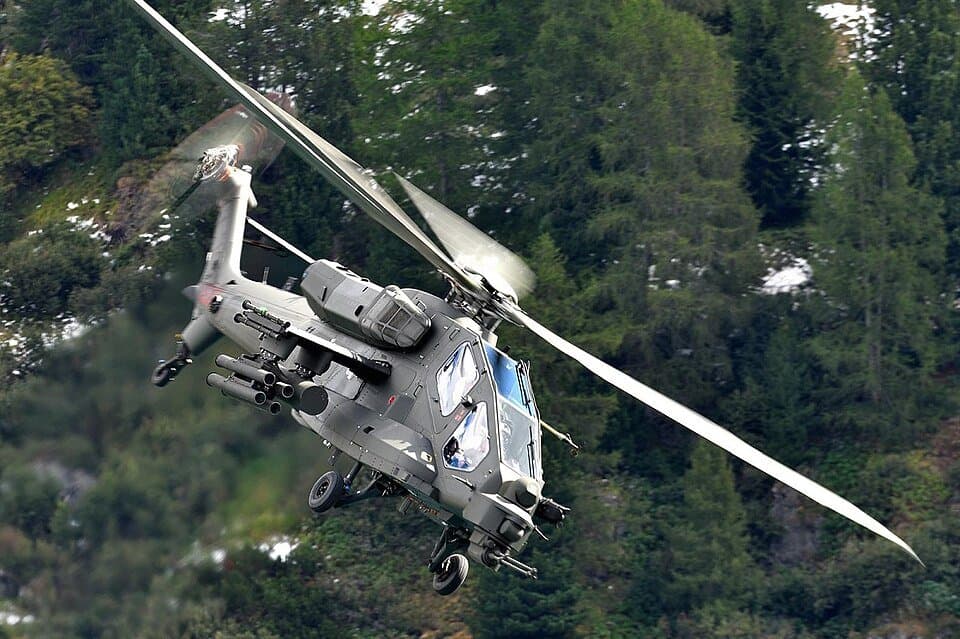
Leonardo Helicopters AW249 Fenicelarger figure on 1 of 2
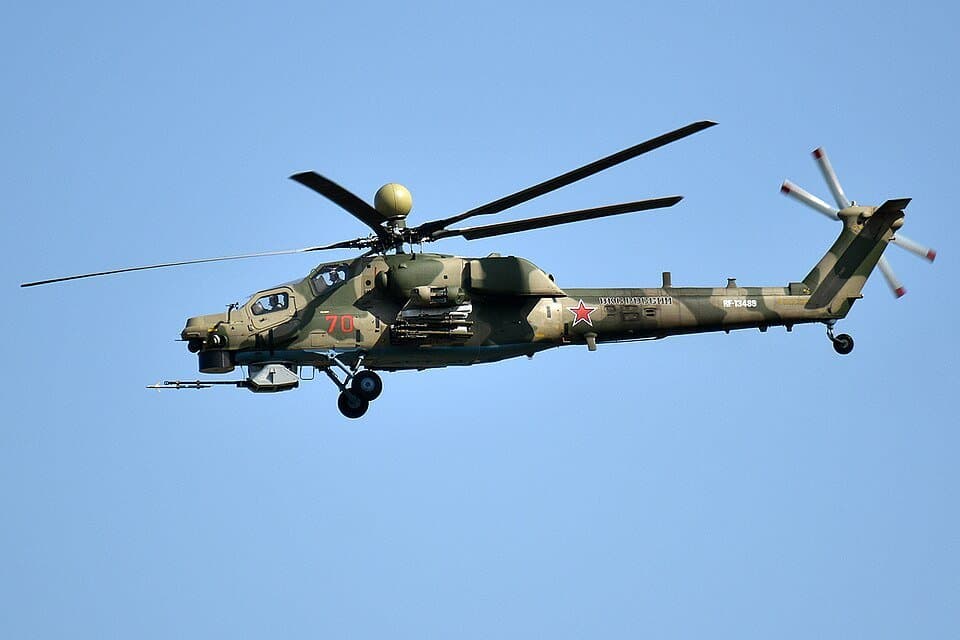
Mil Mi-28larger figure on 1 of 2
Counts only measures both sources give with the same scope. A larger figure is not a better system.
True scale
Side by side. From every angle. A human reference for perspective.
3.10 MB · Loads when you open it| Model | Length | Width / span | Height |
|---|---|---|---|
| Leonardo Helicopters AW249 Fenice | ≈ 17.63 m | ≈ 13.6 m (Width) | ≈ 5.23 m |
| Mil Mi-28 | ≈ 17.01 m | ≈ 15.04 m (Width) | ≈ 4.21 m |
Scaled uniformly to the sourced length of 17.63 m. The shape was turned square to the axes. Not an official model or a measured survey.
ForceTally · All rights reserved
Scaled uniformly to the sourced length of 17.01 m. Not an official model or a measured survey.
ForceTally · All rights reserved
The human reference is a generic 1.75 m figure. Models describe external size, not combat performance.
Measured figures
Length
Single source17.63 m (57 ft 10 in)[source]
excluding rotors
Configuration
| Specification | Leonardo Helicopters AW249 Fenice | Mil Mi-28 |
|---|---|---|
| Type | Attack helicopter[source] | Attack helicopter[source] |
| National origin | Italy[source] | Soviet Union Russia[source] |
| Manufacturer | Leonardo[source] | Mil[source] |
| Status | Under development[source] | In service |
17.01 m (55 ft 10 in) excluding rotors[source]
Cruise; Cruise speed
Single sourceMaximum; at maximum cruise power, with an average mission weight
Single source287 km/h (178 mph, 155 kn) (at maximum cruise power, with an average mission weight)[source]
259 km/h (161 mph, 140 kn)[source]
Cruise; max
Single sourceMaximum; Maximum speed
Single source10-minute loiter with 5% reserve
Single source200 km (120 mi, 110 nmi) 10-minute loiter with 5% reserve[source]
2 × General Electric CT7 -8E6 turboshaft Max take-off power: 2,503 shp ( ) Max continuous power: 2,274 shp (
Single sourcePowerplant
Single source2 × General Electric CT7 -8E6 turboshaft Max take-off power: 2,503 shp (1,866 kW) Max continuous power: 2,274 shp (1,696 kW))[source]
2 × Klimov VK-2500 turboshaft engines each
Single source2 × Klimov VK-2500 turboshaft engines, 1,636 kW (2,194 hp) each[source]
Bars compare reported quantities only. A larger figure does not make a system better; configurations and test conditions differ.
| Primary user | Italian Army Aviation[source] | — |
|---|
| Number built | 4 (early 2025)[source] | 190+ as of May 2025[source] |
|---|
| First flight | 12 August 2022[source] | 10 November 1982[source] |
|---|
| Capacity | 2,800 kg (6,200 lb) (weapons)[source] | — |
|---|
| Guns | Gatling gun Leonardo TM197B (with 3 × 20 mm barrels, Integrated Helmet Display System enslaved)[source] | 1× chin-mounted 30 mm Shipunov 2A42 cannon with 250 rounds (±110° horizontal fire)[source] |
|---|
| Hardpoints | 6 (2 under each wing, 1 on the wingtip)[source] | Two pylons under each stub wing to mount bombs, rockets, missiles, and gun pods. Main armament configurations include: 16 Ataka-V anti-tank missiles and 40 S-8 rockets , or 16 Ataka-V anti-tank missiles, and 10 S-13 rocket , or 16 Ataka-V anti-tank missiles, and two 23 mm UPK-23-250 gun pods each containing a GSh-23L with 250 rounds. Other ordnance: 9K121 Vikhr , and 9M123 Khrizantema anti-tank missiles ( 9M123VM variant for any Mi-28 variant have fire-control radar , with bonus of millimeter-wave radar ACLOS missile guidance), LMUR , 8 Igla-V and Vympel R-73 air-to-air missiles, 2 KMGU-2 mine dispensers, and a variant of 9K333 Verba air-to-air missile[source] |
|---|
| Communications | Software defined radios (civil and military), Tactical Data Link 16. LTE Gateway for tactical data transfers, wide-band Datalink for UAV control (line of sight), IFF[source] | — |
|---|
| Rockets | Hydra 70 (launchers with 7 or 19 rockets, up to 4 launchers on the hardpoints under the wings)[source] | — |
|---|
| Missiles | Air-to-ground: Rafael Spike ER2 ,or Rafael Spike LR2 (launchers with 2 or 4 missiles each, up to 4 launchers on the hardpoints under the wings) Air-to-air missiles : likely MBDA Italia Fulgur (up to 2 launchers with two rails launching missiles, can be installed on the 6 hardpoints)[source] | — |
|---|
| Optics | observation and targeting system, pilot night vision system[source] | — |
|---|
| Electronic warfare | full EW suite with passive / active countermeasures, anti-jamming, anti GPS-spoofing[source] | — |
|---|
| Human-machine | helmet display system, enhanced human machine interface, battlefield management system, integrated mission system[source] | — |
|---|
| Screens | 2 multi-core touchscreen large area displays (situational awareness), 4 multi-core touchscreen enhanced display control units (controlling the aircraft systems)[source] | — |
|---|
| Designer | — | Marat Tishchenko[source] |
|---|
| Primary users | — | Russian Air Force Algerian Air Force Iraqi Army Aviation Command Uganda Air Force[source] |
|---|
| Manufactured | — | 1982–present[source] |
|---|
| Introduction date | — | 15 October 2009 (Mi-28N)[source] |
|---|
| Fuel capacity | — | 1,337 kg (2,948 lb) / 1,720 L (450 US gal; 380 imp gal) internal fuel + up to 445 kg (981 lb) / 571 L (151 US gal; 126 imp gal) in 4x drop tanks[source] |
|---|
| Main rotor area | — | 232.35 m 2 (2,501.0 sq ft)[source] |
|---|
| Hover ceiling OGE | — | 3,600 m (11,811 ft)[source] |
|---|
| g limits | — | + 3 - 0.5[source] |
|---|
| Disk loading | — | 49.5 kg/m 2 (10.1 lb/sq ft) max[source] |
|---|
| Power/mass | — | 0.31 kW/kg (0.19 hp/lb)[source] |
|---|
Gross; Gross weight
Single source