


Preparing your view.
BAmphibious assault ships
At a glance
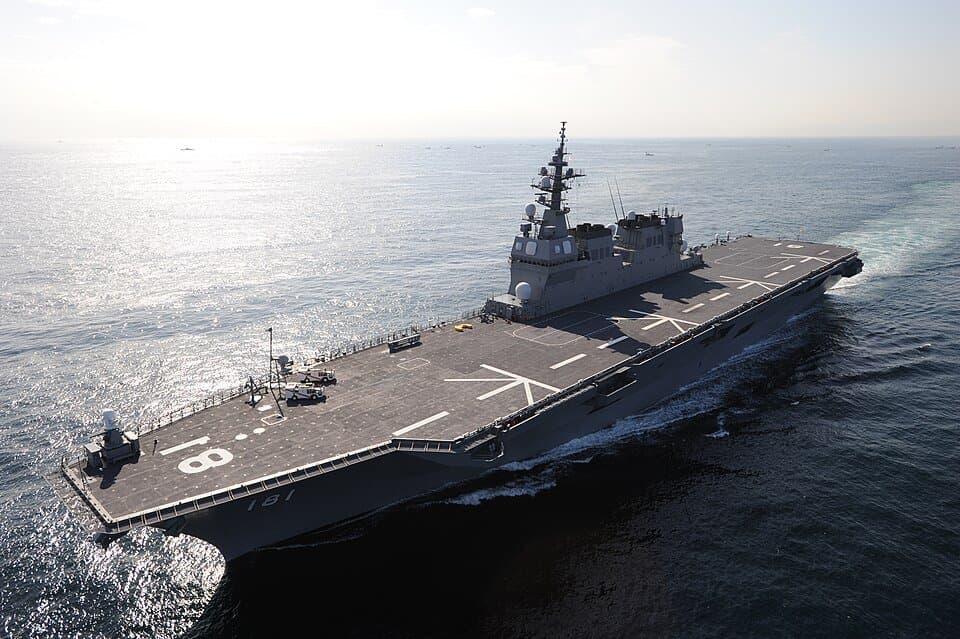
Hyūga-class helicopter destroyerlarger figure on 1 of 2
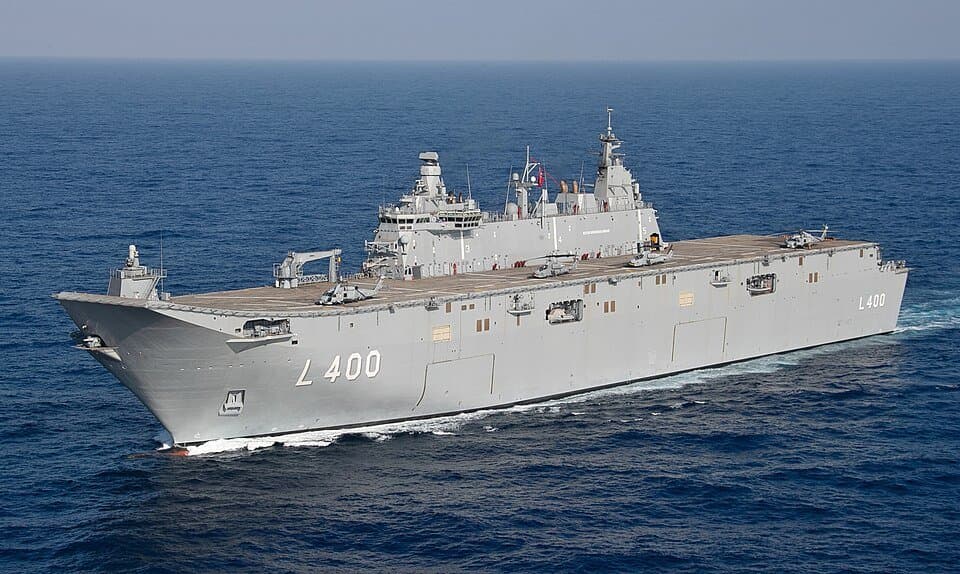
TCG Anadolularger figure on 1 of 2
Measured figures
Length
Single source197 m (646 ft)[source]
Length
Single sourceConfiguration
| Specification | Hyūga-class helicopter destroyer | TCG Anadolu |
|---|---|---|
| Displacement | 13,950 tons standard; 19,000 tons full load[source] | 27,436 tons ("amphibious assault ship" configuration) 24,660 tons ("V/STOL aircraft carrier" configuration)[source] |
| Power | COGAG , 4 Ishikawajima Harima/ General Electric LM2500-30 gas turbines Two shafts 5-bladed CP props 100,000 shaft horsepower (75 MW)[source] | 5 × 8,000 kW (11,000 hp ) Navantia Man Diesel Generators 2 × 11 MW (15,000 hp) Siemens SiPOD 2 × 1,500 kW (2,000 hp) bow thrusters[source] |
| Name | Hyūga class[source] | Anadolu[source] |
| Builders | IHI Marine United |
Counts only measures both sources give with the same scope. A larger figure is not a better system.
232 m (761 ft 2 in)[source]
( Hyūga ) 371 ( Ise )
Single source360 ( Hyūga ) 371 ( Ise )[source]
371 naval officers and seamen, 50 naval aviation personnel, 50 hospital personnel, 550-700 amphibious marines, others
Single source1223 (371 naval officers and seamen, 50 naval aviation personnel, 50 hospital personnel, 550-700 amphibious marines, others)[source]
at 16 knots (30 km/h; 18 mph)
Single source9,000 nautical miles (17,000 km; 10,000 mi) at 16 knots (30 km/h; 18 mph)[source]
Bars compare reported quantities only. A larger figure does not make a system better; configurations and test conditions differ.
| — |
| Operators | Japan Maritime Self-Defense Force[source] | — |
|---|
| Preceded by | Shirane class[source] | — |
|---|
| Succeeded by | Izumo class[source] | — |
|---|
| Built | 2006–2011[source] | — |
|---|
| In commission | 2009–present[source] | — |
|---|
| Completed | — |
|---|
| Active | — |
|---|
| Type | ASW carrier[source] | — |
|---|
| Sensors & processing systems | ATECS (advanced technology command system) OYQ-10 advanced combat direction system FCS-3 AAW system OQQ-21 ASW system NOLQ-3C EW system OPS-20C surface search radar[source] | SMART-S Mk.2 S-band 3D radar , SPN-720 Naval Precision Approach Radar, GENESIS-ADVENT Combat Management System, IRST , IFF , TDL , VMF , SATCOM , LWR , DDS , Torpedo Defense System, Aselsan Piri-100 Infrared Search and Tracking System[source] |
|---|
| Armament | 16 cells Mk 41 VLS 16 ESSM 12 RUM-139 VL ASROC 2 × 20 mm Phalanx CIWS 2 × triple 324 mm torpedo tubes 12.7mm MG[source] | 1 × RAM 2 × Phalanx CIWS 5 × 25 mm Aselsan SMASH 200/25 RCWS 4 × 12.7 mm Aselsan STAMP RCWS[source] |
|---|
| Aircraft carried | 3 × SH-60K , 1 × MCH-101 18 aircraft maximum[source] | 30 helicopters 30 to 50 UCAVs[source] |
|---|
| Aviation facilities | Flight deck and enclosed hangar[source] | — |
|---|
| Role | class of helicopter carrier[source] | — |
|---|
| Source measurement | Globalsecurity.org suggests a maximum capacity of 18-24 H-60 class helicopters, or a smaller number of larger helicopters, even though the official complement was reported as three Mitsubishi H-60 and one AgustaWestland AW101 helicopters, or three Mitsubishi H-60 and one Sikorsky CH-53 Sea Stallion helicopters. The ships have also operated JGSDF Fuji AH-64D Apache attack helicopters during joint amphibious exercises with the United States. It is speculated that future modifications may allow the operation of VTOL / STOVL fixed-wing aircraft , such as Harriers or F-35 Lightning II .[source]Hyūga-class helicopter destroyer · Design and specifications; only the objects and conditions stated in this passage In November 2009, Hyūga participated in "Annualex 21G" joint naval exercise with the US aircraft carrier USS George Washington and other USN and JMSDF ships to maintain the interoperability between the two navies.[source]Hyūga-class helicopter destroyer · Ships in the class; only the objects and conditions stated in this passage | — |
|---|
| Country of origin | Japan[source] Japan[source] | — |
|---|
| Namesake | — | Anatolia[source] |
|---|
| Ordered | — | 1 June 2015[source] |
|---|
| Builder | — | Sedef Shipbuilding, Inc.[source] |
|---|
| Cost | — | Over $1 billion [1][source] |
|---|
| Laid down | — | 7 February 2018[source] |
|---|
| Launched | — | 30 April 2019[source] |
|---|
| Commissioned | — | 10 April 2023[source] |
|---|
| Identification | — | Pennant number : L-400[source] |
|---|
| Status | — | In active service[source] |
|---|
| Class & type | — | Anadolu class (modified Juan Carlos I -class ) drone carrier - amphibious assault ship[source] |
|---|
| Depth | — | 27.5 m (90 ft 3 in)[source] |
|---|
| Endurance | — | 50 days, 30 days without replenishment[source] |
|---|
| Boats & landing craft carried | — | 6 xType LCVP[source] |
|---|
| Capacity | — | 46 Altay tanks 77 light vehicles[source] |
|---|