




Preparing your view.
At a glance
True scale
Side by side. From every angle. A human reference for perspective.
3.27 MB · Loads when you open it| Model | Length | Width / span | Height |
|---|---|---|---|
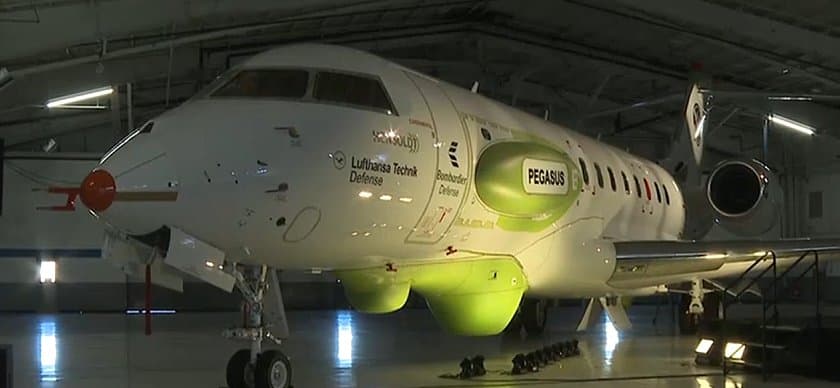
| Hensoldt Pegasus | ≈ 30.3 m | ≈ 28.7 m (Width) | ≈ 9.07 m |
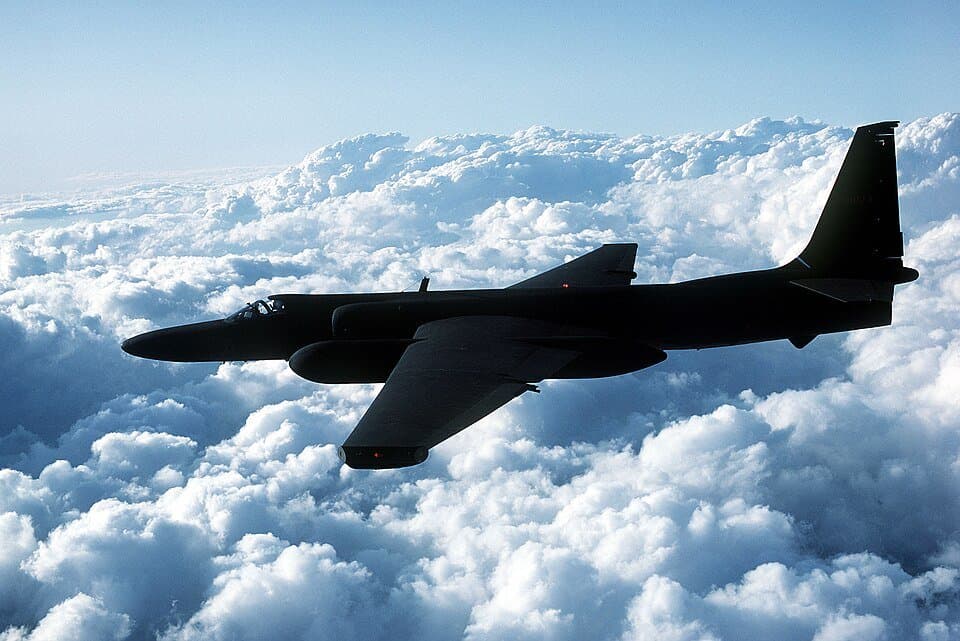
| Lockheed U-2 | ≈ 19.2 m | ≈ 31 m (Width) | ≈ 4.88 m |
Scaled uniformly to the sourced length of 30.3 m. The shape was turned square to the axes; the width was fitted to the sourced 28.7 m. Not an official model or a measured survey.
ForceTally · All rights reserved
Scaled uniformly to the sourced length of 19.2 m. The shape was turned square to the axes; the height was fitted to the sourced 4.88 m; the width was fitted to the sourced 31 m. Not an official model or a measured survey.
ForceTally · All rights reserved
The human reference is a generic 1.75 m figure. Models describe external size, not combat performance.
Measured figures
Length
Single source30.30 m (99 ft 5 in)[source]
U-2S · Length
Single sourceConfiguration
| Specification | Hensoldt Pegasus | Lockheed U-2 |
|---|---|---|
| Role | SIGINT and reconnaissance[source] | — |
| National origin | Germany Canada United States[source] | United States[source] |
| Manufacturer | General contractor : Hensoldt Sub-contractors / systems supplies : Hensoldt Bombardier Aviation Bombardier Defense Lufthansa Technik Defense[source] | Lockheed Skunk Works[source] |
| Service | German Air Force[source] | — |
| Number built |
63 ft 0 in (19.20 m)[source]
Cruise; (0.85 Mach at a cruise altitude of 41,000 ft (12,000 m))
Single sourceMaximum; (0.89 Mach at a cruise altitude of 41,000 ft (12,000 m))
Single source946 km/h (588 mph, 511 kn) (0.89 Mach at a cruise altitude of 41,000 ft (12,000 m))[source]
904 km/h (562 mph, 488 kn) (0.85 Mach at a cruise altitude of 41,000 ft (12,000 m))[source]
Cruise; U-2S · ) at 72,000 ft (22,000 m
Single sourceCruise; U-2S · Cruise speed
Single sourceU-2S · Wing area
Single source1,000 sq ft (93 m 2 )[source]
U-2S · Endurance
Single source12 hours[source]
U-2S · 9,000 ft/min (
Single source9,000 ft/min (46 m/s)[source]
Bars compare reported quantities only. A larger figure does not make a system better; configurations and test conditions differ.
3 (being manufactured)[source]
104[source] |
| Manufactured | Since 2022[source] | 1955–1989[source] |
|---|
| Introduction date | Planned for 2027[source] | 1956[source] |
|---|
| Initiated | June 2021.[source] | — |
|---|
| Developed from | Global 6000[source] | — |
|---|
| Fuel capacity | 20.43 t (45,000 lb)[source] | 2,950 US gal (2,460 imp gal; 11,200 L)[source] |
|---|
| Cabin height | 1.88 m (6.2 ft)[source] | — |
|---|
| Cabin width | 2.41 m (7.9 ft)[source] | — |
|---|
| Cabin length | 14.80 m (48.6 ft)[source] | — |
|---|
| Flight avionic | Bombardier Vision (four large displays, a head-up display, an enhanced vision system and synthetic vision system, graphic flight planning and multiscan weather radar)[source] | — |
|---|
| Radar and radio electronic signal collection and analysis | Hensoldt Kalætron Integral (30MHz to 40GHz)[source] | — |
|---|
| Source measurement | The origins of the Pegasus can be traced back to the decommissioning of the German Navy 's Breguet 1150 M Atlantic in 2010, which left a long-lasting capability gap in the Bundeswehr in the area of signal-detecting airborne long-range surveillance and reconnaissance capability. During the late 2000s and early 2010s, work was undertaken on developing the RQ-4 Global Hawk unmanned aerial vehicle (UAV) into a specialised variant, known as EuroHawk , that was originally intended as the delivery system for this capability. However, the EuroHawk was reportedly not capable of being certifiable under ICAO rules without an anti-collision system; thus preventing any operations within European airspace or the airspace of any ICAO member; accordingly, on 15 May 2013, the German government announced the immediate termination of the Eurohawk program.[source]Hensoldt Pegasus · Development / Background; only the objects and conditions stated in this passage Length: 30.30 m (99 ft 5 in)[source]Hensoldt Pegasus · Specifications; only the objects and conditions stated in this passage Wingspan: 28.70 m (94 ft 2 in)[source]Hensoldt Pegasus · Specifications; only the objects and conditions stated in this passage Height: 7.80 m (25 ft 7 in)[source]Hensoldt Pegasus · Specifications; only the objects and conditions stated in this passage Max takeoff weight: 45,246 kg (99,750 lb)[source]Hensoldt Pegasus · Specifications; only the objects and conditions stated in this passage Fuel capacity: 20.43 t (45,000 lb)[source]Hensoldt Pegasus · Specifications; only the objects and conditions stated in this passage Cabin height : 1.88 m (6.2 ft)[source]Hensoldt Pegasus · Specifications; only the objects and conditions stated in this passage Cabin width : 2.41 m (7.9 ft)[source]Hensoldt Pegasus · Specifications; only the objects and conditions stated in this passage Cabin length : 14.80 m (48.6 ft)[source]Hensoldt Pegasus · Specifications; only the objects and conditions stated in this passage Powerplant: 2 × BR700-710A2-20 turbofan , 65.6 kN (14,700 lbf) thrust each[source]Hensoldt Pegasus · Specifications; only the objects and conditions stated in this passage Maximum speed: 946 km/h (588 mph, 511 kn) (0.89 Mach at a cruise altitude of 41,000 ft (12,000 m))[source]Hensoldt Pegasus · Specifications; only the objects and conditions stated in this passage Cruise speed: 904 km/h (562 mph, 488 kn) (0.85 Mach at a cruise altitude of 41,000 ft (12,000 m))[source]Hensoldt Pegasus · Specifications; only the objects and conditions stated in this passage Range: 6,000 km (3,700 mi, 3,200 nmi)[source]Hensoldt Pegasus · Specifications; only the objects and conditions stated in this passage Service ceiling: 16,000 m (51,000 ft)[source]Hensoldt Pegasus · Specifications; only the objects and conditions stated in this passage Radar and radio electronic signal collection and analysis: Hensoldt Kalætron Integral (30MHz to 40GHz)[source]Hensoldt Pegasus · Specifications; only the objects and conditions stated in this passage | — |
|---|
| Type | — | High-altitude reconnaissance aircraft[source] |
|---|
| Designer | — | Clarence "Kelly" Johnson[source] |
|---|
| Status | — | In service[source] |
|---|
| Primary users | — | United States Air Force Central Intelligence Agency (historical) NASA Republic of China Air Force (historical)[source] |
|---|
| First flight | — | 1 August 1955 ( 1955-08-01 )[source] |
|---|
| Capacity | — | 5,000 lb (2,300 kg) payload[source] |
|---|
| Airfoil | — | root: NACA 63A409 ; tip: NACA 63A406[source] |
|---|
| Stall speed | — | 65 kn (75 mph, 120 km/h)[source] |
|---|
| Time to altitude | — | 60,000 ft (18,000 m) in 12 minutes 30 seconds[source] |
|---|
| Lift-to-drag | — | 25.6[source] |
|---|
| Wing loading | — | 40 lb/sq ft (200 kg/m 2 )[source] |
|---|
| Thrust/weight | — | 0.425[source] |
|---|
| Fuel consumption | — | 910 lb/h (410 kg/h) in cruise[source] |
|---|
Cruise; U-2S · Mach 0.715 (
Single sourceMach 0.715 (412 kn; 470 mph; 760 km/h) at 72,000 ft (22,000 m)[source]