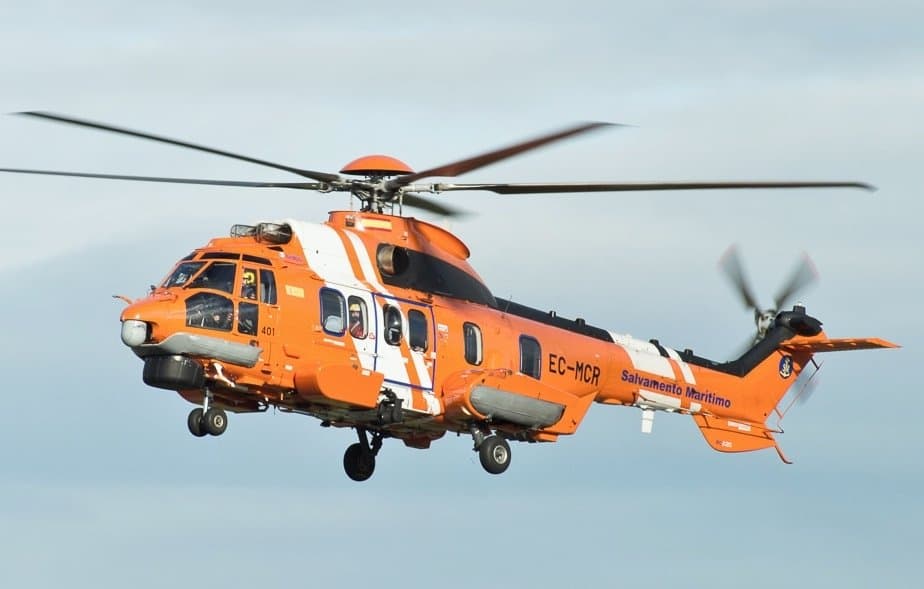
Credit
commons.wikimedia · CC BY-SA 2.5 · Resized · CC BY-SA 2.5 · Source ↗ · Modified


Preparing your view.

At a glance
Measured figures
H225 · Length
Single source19.5 m (64 ft 0 in)[source]
Mi-8MT · Length
Single sourceConfiguration
| Specification | Eurocopter EC225 Super Puma | Mil Mi-8 |
|---|---|---|
| Type | Passenger transport helicopter[source] | Transport helicopter (also several armed versions)[source] |
| National origin | Multinational[source] | Soviet Union / Russia[source] |
| Manufacturer | Eurocopter Airbus Helicopters[source] | Kazan Helicopter Plant Ulan-Ude Aviation Plant[source] |
| Primary user | CHC Helicopter[source] |
18.4 m (60 ft 4 in)[source]
Empty; H225 · Empty weight
Single sourceGross; H225 · Gross weight
Single sourceMaximum take-off; H225 · Max takeoff weight
Single source5,256 kg (11,587 lb)[source]
11,000 kg (24,251 lb)[source]
11,200 kg (24,692 lb)[source]
Empty; Mi-8MT · Empty weight
Single sourceGross; Mi-8MT · Gross weight
Single sourceH225 · 2 × Turbomeca Makila 2A1 turboshaft engines each
Single source2 × Turbomeca Makila 2A1 turboshaft engines, 1,776 kW (2,382 hp) each[source]
Mi-8MT · 2 × Klimov TV3-117MT turboshaft engines each
Single source2 × Klimov TV3-117MT turboshaft engines, 1,454 kW (1,950 hp) each[source]
H225 · 1,710 ft/min
Single source8.7 m/s (1,710 ft/min)[source]
Bars compare reported quantities only. A larger figure does not make a system better; configurations and test conditions differ.
Soviet Union (historical) Russia Approx. 80 other countries, see Operators below[source] |
| Number built | 170+ (as of 2016 )[source] | >17,000 and production continues today; world's most-produced helicopter[source] |
|---|
| Manufactured | 1999–present[source] | 1961–present[source] |
|---|
| Introduction date | December 2004[source] | 1967[source] |
|---|
| First flight | 27 November 2000[source] | 7 July 1961[source] |
|---|
| Developed from | Eurocopter AS332 Super Puma[source] | — |
|---|
| Variant | Eurocopter EC725[source] | Mil Mi-8M/Mi-17[source] |
|---|
| Capacity | 24 passengers + 1 cabin attendant[source] | 24 passengers or 12 stretchers and seat for one medical attendant or 4,000 kg (8,800 lb) on internal/external hardpoints[source] |
|---|
| Main rotor area | 206.15 m 2 (2,219.0 sq ft)[source] | 356 m 2 (3,830 sq ft)[source] |
|---|
| Never exceed speed | 324 km/h (201 mph, 175 kn)[source] | — |
|---|
| Role | long-range passenger transport helicopter[source] | family of medium twin-turbine helicopters , originally[source] |
|---|
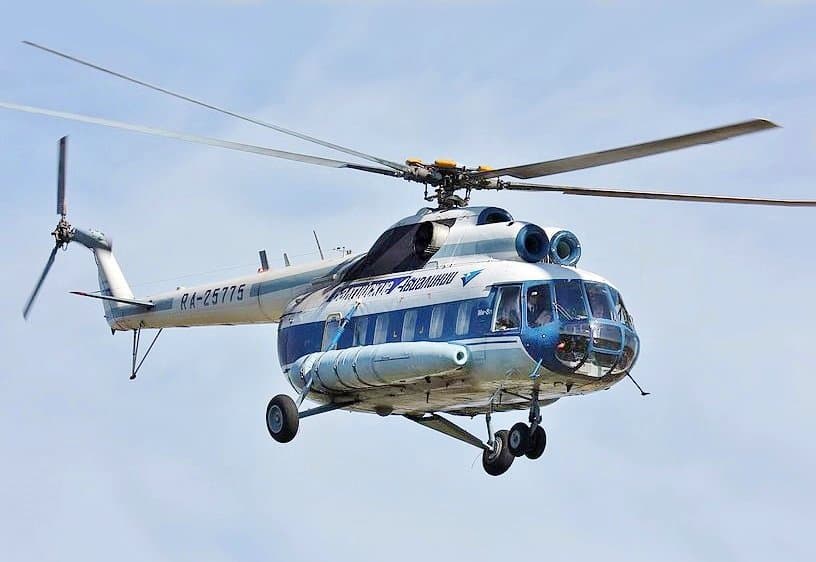
| Source measurement | The Airbus Helicopters H225 (formerly Eurocopter EC225 Super Puma ) is a long-range passenger transport helicopter developed by Eurocopter as the next generation of the civilian Super Puma family. It is a twin-engined aircraft and can carry up to 24 passengers along with two crew and a cabin attendant, dependent on customer configuration. The helicopter is marketed for offshore support and VIP passenger transport duties, as well as public service missions.[source]Eurocopter EC225 Super Puma · Lead; only the objects and conditions stated in this passage In February 2014, Airbus Helicopters announced at Heli-Expo 2014 the development of an improved variant, the EC225e. The EC225e features numerous changes including new avionics systems, such as the TCAS II collision avoidance system, an automatic identification system, and a specialized rig-approach system; it was also intended to feature an improved Turbomeca Makila 2B engine to increase the EC225e's maximum takeoff weight by 550 kg, and an additional fuel tank in the rear baggage compartment to extend its range to 300 nautical miles with up to ten passengers on board. Some, but not all, modifications can be retrofitted onto existing EC225s. In the same announcement, in February 2014, Lease Corporation International said that they had placed a $645 million order for 15 EC225e (along with 6 Airbus Helicopters EC175 ) helicopters as the launch customer. In February 2016, the Makila 2B engine was dropped from the EC225e as a cost reduction measure, development of the other structural and avionics aspects is proceeding.[source]Eurocopter EC225 Super Puma · Development; only the objects and conditions stated in this passage A key safety feature of the aircraft's main gear box (MGB) is an emergency oil spraying sub-system present in the lubrication system; this is designed to exceed the JAR 29 Standard's requirements of a 30-minute running time in the event of the loss of MGB oil pressure, and has demonstrated up to 50-minute running time. The engine also incorporates a "blade shedding" system to ensure engine integrity during an overspeed instance. Energy absorbent self-sealing fuel tanks are contained in the aircraft's sponsons , along with other equipment such as downward-facing illumination and navigation lighting fixtures. The transmission can accommodate more power than the maximum output of the engines; however two aircraft were lost in 2012 due to the cracking of the bevel gear shaft, a gearbox component. In response, the design of the transmission was modified in 2013, and the onboard health and usage monitoring system (HUMS) was upgraded to provide real-time monitoring of the bevel gear shaft against the threat of crack formation.[source]Eurocopter EC225 Super Puma · Design; only the objects and conditions stated in this passage In terms of cockpit equipment and avionics, the H225 is equipped with a full glass cockpit with active-matrix liquid crystal displays ; these include four 6-inch by 8-inch multi-functional displays as the predominant instrumentation for key flight information, two 4-inch by 5-inch monitors for displaying aircraft parameters, and a 3-inch screen for backup. The advanced helicopter cockpit and avionics system is described as serving to reduce pilot and crew workload, being used to display flight management and sub-systems information and is complete with a four-axis digital autopilot. During a typical flight, the pilot programs the route into the aircraft and then monitors it, as opposed to direct continuous control of the flight; the need for paper charts has been eliminated by these systems. Under autopilot, the automatic flight control system acts to prevent pilot actions from exceeding the established flight envelope; the H225 remains flyable with all automatic systems disabled. From initiating the startup sequence to being ready to takeoff only takes three minutes.[source]Eurocopter EC225 Super Puma · Design; only the objects and conditions stated in this passage There are currently a total of four principal configurations designed by Airbus Helicopters for the H225. The passenger transport version has a crash-worthy seating arrangement for up to 19 passengers with a high-density seating arrangement accommodating up to 28 passengers available to be fitted. The VIP transport version has a large lounge with seating for up to 12 passengers and a cabin attendant. The emergency medical services (EMS) configuration has medical units for six stretchers and four seats for medical workers. The search and rescue (SAR) configuration allows space for search and rescue equipment with an operator seat, hoistman seat and up to eight rescue seats and three stretchers. While a single pilot is capable of controlling the aircraft under visual meteorical conditions, two pilots are used in a typical crew complement and, dependent on role, a cabin attendant or flight engineer may also be present.[source]Eurocopter EC225 Super Puma · Design; only the objects and conditions stated in this passage Icelandic Coast Guard — received 2 H225s in 2019 and 1 in 2021.[source]Eurocopter EC225 Super Puma · Operators / Military operators; only the objects and conditions stated in this passage 18 February 2009: G-REDU, an EC225 LP operated by Bond Offshore Helicopters . During a night visual approach to the ETAP platform, the helicopter descended and impacted the surface of the sea. The crew's perception of the helicopter's position and orientation relative to the platform during the final approach was erroneous. All 18 people on board survived the controlled flight into terrain (water) .[source]Eurocopter EC225 Super Puma · Accidents and incidents; only the objects and conditions stated in this passage 10 May 2012: G-REDW, an EC225 LP, carried out a controlled ditching following indications of a failure of the main gearbox (MGB) lubrication system and a subsequent failure indication warning on the emergency lubrication system. An investigation by the Air Accidents Investigation Branch (AAIB) identified a 360° circumferential crack in the bevel gear vertical shaft in the main gearbox, in the vicinity of a manufacturing weld, causing disengagement of the drive to both mechanical oil pumps.[source]Eurocopter EC225 Super Puma · Accidents and incidents; only the objects and conditions stated in this passage 22 October 2012: G-CHCN, an EC225 LP of CHC Scotia, ditched in the North Sea 32 miles south west of Shetland whilst en route from Aberdeen to the West Phoenix drilling rig. All 19 on board were rescued. A special bulletin issued by the Air Accidents Investigation Branch (AAIB) said the main and standby oil pumps were not working; a 360-degree crack found on the bevel gear vertical shaft of the gearbox had prevented the oil pump gears from being driven. A worldwide grounding of the type was initiated in response. In both of the 2012 incidents, although the main gearbox lubrication system had failed, the backup system was working correctly but displaying an erroneous warning light, due to an incorrect specification of a pressure switch, which led to the helicopters being ditched.[source]Eurocopter EC225 Super Puma · Accidents and incidents; only the objects and conditions stated in this passage 29 April 2016: LN-OJF , an EC225 LP of CHC Helikopter Service , crashed at an islet near Turøy in the Bergen archipelago, en route to Bergen Airport, Flesland , from the Gullfaks B platform in the North Sea. The helicopter was carrying 11 passengers and 2 crew members; everyone on board died. Eyewitnesses reported that the main rotor separated from the hull immediately before the crash. Due to the crash, all commercial flights by EC225 helicopters, excluding search and rescue flights, were grounded by both Norwegian and British civil aviation authorities. The subsequent investigation concluded that a gear in the main rotor gearbox had failed due to a fatigue crack that had propagated under-surface, escaping detection. As a result of the incident the German Defence Ministry had also decided to ground 3 AS532 Helicopter in government use which were manufactured by the same company.[source]Eurocopter EC225 Super Puma · Accidents and incidents; only the objects and conditions stated in this passage 18 January 2023: an EC225 carrying the Minister of Internal Affairs of Ukraine , Denys Monastyrsky , his deputy Yevhen Yenin and state secretary Yurii Lubkovych , crashed at a kindergarten in Brovary , a suburb of Kyiv , Ukraine . The crash killed 14 people, including Monastyrsky, Yenin and Lubkovych; a child was also among the fatalities, while 25 others were injured.[source]Eurocopter EC225 Super Puma · Accidents and incidents; only the objects and conditions stated in this passage Capacity: 24 passengers + 1 cabin attendant[source]Eurocopter EC225 Super Puma · Specifications (H225); only the objects and conditions stated in this passage Length: 19.5 m (64 ft 0 in)[source]Eurocopter EC225 Super Puma · Specifications (H225); only the objects and conditions stated in this passage Height: 4.97 m (16 ft 4 in)[source]Eurocopter EC225 Super Puma · Specifications (H225); only the objects and conditions stated in this passage Empty weight: 5,256 kg (11,587 lb)[source]Eurocopter EC225 Super Puma · Specifications (H225); only the objects and conditions stated in this passage Gross weight: 11,000 kg (24,251 lb)[source]Eurocopter EC225 Super Puma · Specifications (H225); only the objects and conditions stated in this passage Max takeoff weight: 11,200 kg (24,692 lb)[source]Eurocopter EC225 Super Puma · Specifications (H225); only the objects and conditions stated in this passage Powerplant: 2 × Turbomeca Makila 2A1 turboshaft engines, 1,776 kW (2,382 hp) each[source]Eurocopter EC225 Super Puma · Specifications (H225); only the objects and conditions stated in this passage Main rotor diameter: 16.2 m (53 ft 2 in)[source]Eurocopter EC225 Super Puma · Specifications (H225); only the objects and conditions stated in this passage Main rotor area: 206.15 m 2 (2,219.0 sq ft)[source]Eurocopter EC225 Super Puma · Specifications (H225); only the objects and conditions stated in this passage Maximum speed: 275.5 km/h (171.2 mph, 148.8 kn)[source]Eurocopter EC225 Super Puma · Specifications (H225); only the objects and conditions stated in this passage Cruise speed: 260.5 km/h (161.9 mph, 140.7 kn)[source]Eurocopter EC225 Super Puma · Specifications (H225); only the objects and conditions stated in this passage Never exceed speed : 324 km/h (201 mph, 175 kn)[source]Eurocopter EC225 Super Puma · Specifications (H225); only the objects and conditions stated in this passage Range: 857 km (533 mi, 463 nmi)[source]Eurocopter EC225 Super Puma · Specifications (H225); only the objects and conditions stated in this passage Ferry range: 985 km (612 mi, 532 nmi)[source]Eurocopter EC225 Super Puma · Specifications (H225); only the objects and conditions stated in this passage Service ceiling: 5,900 m (19,400 ft)[source]Eurocopter EC225 Super Puma · Specifications (H225); only the objects and conditions stated in this passage Rate of climb: 8.7 m/s (1,710 ft/min)[source]Eurocopter EC225 Super Puma · Specifications (H225); only the objects and conditions stated in this passage | The prototype, which was named V-8, was designed in 1958 and based on the Mil Mi-4 with a larger cabin. Powered by an AI-24 2,010 kW (2,700 shp) Soloviev turboshaft engine, the single engined V-8 prototype had its maiden flight in June 1961 and was first shown on Soviet Aviation Day parade (Tushino Air Parade) in July 1961.[source]Mil Mi-8 · Design and development; only the objects and conditions stated in this passage Two months after the engines were completed by Isotov, the third prototype designated V-8A equipped with two 1,120 kW (1,500 shp) Isotov TV2 engines, made its first flight piloted by Nikolai Ilyushin on 2 August 1962, marking the first flight of any Soviet helicopter to fly with purpose built gas turbine engines. The aircraft completed its factory based testing in February 1963.[source]Mil Mi-8 · Design and development; only the objects and conditions stated in this passage There are numerous variants, including the Mi-8T , which, in addition to carrying 24 troops, is armed with rockets and anti-tank guided missiles . The Mil Mi-17 export version is employed by around 20 countries; its equivalent in Russian service in the Mi-8M series. The only visible differences between the Mi-8 and Mi-17 are A) the position of the tail rotor (Mi-8 right side, Mi-17 left side), B) the shape of the exhausts (Mi-8 circular, Mi-17 oval), and C) Dust shields in front of engine air intakes for the Mi-17. Also Mi-17 has some improved armour plating for its crew. The naval Mil Mi-14 version is also derived from the Mi-8.[source]Mil Mi-8 · Design and development; only the objects and conditions stated in this passage The Finnish Defence Forces and the Finnish Border Guard began using Mi-8s in the 1970s, with the Finnish Air Force receiving its first, serialed HS-2, on 28 May 1973, and the second, HS-1, on 31 May 1973. Six Mi-8Ts were obtained at first, followed by further two Mi-8Ts and two Mi-8Ps. Three of the helicopters were handed over to the Border Guard Wing. One of these was lost after sinking through ice during a landing in April 1982. It was soon replaced by a new Mi-8. |
|---|
| Designer | — | Mil Moscow Helicopter Plant[source] |
|---|
| Status | — | In service[source] |
|---|
| Developed into | — | Mil Mi-14 Mil Mi-24[source] |
|---|
| Fuel capacity | — | 3,700 L (980 US gal; 810 imp gal)[source] |
|---|
| Blade section | — | NACA 23012[source] |
|---|
| Hardpoints | — | 4,000 kg (8,818 lb) of disposable stores on six hardpoints , including 57 mm S-5 rockets , bombs, or 9M17 Phalanga ATGMs and one or two side-mounted PK machine guns[source] |
|---|
| Former operator · Albania | — | Albania[source] |
|---|
| Former operator · Artsakh | — | Artsakh[source] |
|---|
| Former operator · Bangladesh | — | Bangladesh[source] |
|---|
| Former operator · Benin | — | Benin[source] |
|---|
| Former operator · Czechoslovakia | — | Czechoslovakia[source] |
|---|
| Former operator · Croatia | — | Croatia[source] |
|---|
| Origin reported by inventory | — | Russia[source]Inventory Origin column; table 1, row 10, cell 2; revision 1376912133; retrieved 2026-10-02 Russia[source]Inventory Origin column; table 1, row 16, cell 2; revision 1377030471; retrieved 2026-10-02 Soviet Union / Russia[source]Inventory Origin column; table 1, row 3, cell 2; revision 1375734230; retrieved 2026-10-02 Russia[source]Inventory Origin column; table 2, row 7, cell 3; revision 1376303113; retrieved 2026-10-01 Soviet Union[source]Inventory Origin column; table 6, row 4, cell 3; revision 1367424876; retrieved 2026-10-01 |
|---|
| Reported operators | — |
|
|---|
Maximum take-off; Mi-8MT · Max takeoff weight
Single sourceAfter their Border Guard service, the helicopters were transferred to the civil register, but shortly thereafter to the Finnish Air Force. In 1997 it was decided that all helicopters, including the remaining five Mi-8Ts and two Mi-8Ps, should be transferred to the Army Wing at Utti . All Mi-8s have now been retired. One Mi-8 is on display at the Finnish Aviation Museum in Vantaa , and one is at the Päijänne Tavastia Aviation Museum in Asikkala , near Lahti . One Mi-8T is on display in Tuulos. The two final Mi-8Ts were given to Hungary in August 2011 with all the remaining spare parts.[source]Mil Mi-8 · Operational history / Finland; only the objects and conditions stated in this passage
On another occasions Abkhaz Mi-8MTVs were shot down by Georgian forces, by SA-14 in one case and by RPG-18 in a second case, both during 1993. In the final case, Georgian Mi-8MTV carrying civilian refugees was shot down, killing 25 people. Georgian Air Force and Police currently operate about 20 Mi-8T/MTVs.[source]Mil Mi-8 · Operational history / Georgia; only the objects and conditions stated in this passage
The Indian Air Force inducted the Mi-8 in the 1970s as part of a growing rotary-wing fleet that evolved without centralised long-term planning. Acquired in the wake of geopolitical deals and stop-gap needs, the Mi-8 formed the backbone of medium-lift capability before being succeeded by the Mi-17.[source]Mil Mi-8 · Operational history / India; only the objects and conditions stated in this passage
Between April and May 1986, Mi-8s were used in large numbers to drop radiation-absorbing materials into the No. 4 reactor of Chernobyl Nuclear Power Plant after the Chernobyl disaster , and the fire was extinguished by the combined effort of helicopters dropping over 5000 metric tons of sand, lead, clay, and neutron-absorbing boron onto the burning reactor and injecting liquid nitrogen into it. Most of the helicopters were severely irradiated and abandoned in a giant junkyard, the so-called "machines cemetery" near Chernobyl, with several disappearing from the site in later years. During the initial operation, one crashed near the power plant after hitting a construction crane cable with all the crew of four being killed in the crash. It is now known that virtually none of the neutron absorbers reached the core.[source]Mil Mi-8 · Operational history / Soviet Union; only the objects and conditions stated in this passage
On 16 August 2013, the Ministry of Defense of Ukraine reported that one of its Mi-8MSB had set a world altitude record of 9,150 metres (30,020 ft) at the Kirovske military airfield on 15 August.[source]Mil Mi-8 · Operational history / Ukraine; only the objects and conditions stated in this passage
The Ukrainian Armed Forces used Mi-8MSB along with Mi-24s in operations against separatists in Eastern Ukraine during the Russo-Ukrainian War . On 29 May 2014, a Ukrainian National Guard Mi-8 was brought down by Russian separatist forces in Donbas using a MANPADS near Slavyansk with 12 personnel, including an Army general, killed and one seriously injured. On 24 June 2014, a Ukrainian National Guard Mi-8 was shot down by separatist forces again using a MANPADS near Slavyansk with nine personnel killed. Ukrainian forces used Mi-8 helicopters to resupply forces during the Siege of Mariupol at Azovstal iron and steel works and bring in additional reinforcements for the Azov Regiment . Some 16 Mi-8s were used a number of times, two of which were shot down. Russia claimed on 5 April that it shot down two Ukrainian Mi-8s that it said were being used to evacuate commanders of the Azov Regiment . In late August 2023, it was reported that a Russian defector named Maksym Kuzminov handed over a Mi-8AMTSh to the Ukrainian forces in coordination with Ukrainian Intelligence agents.[source]Mil Mi-8 · Operational history / Ukraine; only the objects and conditions stated in this passage
During combat in the winter of 1991 in the Croatian war and in the spring of 1992 in the Bosnian War , the Yugoslav People's Army used the Mi-8 fleet for the evacuation of injured personnel, transport of cargo and search and rescue for the crews of aircraft forced down. As most flights were made behind the front, the Croatian forces were able to down just one helicopter, which was hit by small arms fire near Slavonski Brod on 4 October 1991.[source]Mil Mi-8 · Operational history / Yugoslavia; only the objects and conditions stated in this passage
The North Macedonian Air Force bought two Mi-8MT helicopters in 2001 from Ukraine . They fly in the Transport Helicopter Squadron (ex 301. Transport Helicopter Squadron). One crashed, killing all 8 passengers and 3 crew members in an accident in January 2008 .[source]Mil Mi-8 · Operational history / Yugoslavia; only the objects and conditions stated in this passage
During the Kosovo War of 1998 and 1999, the Federal Yugoslav Air Force used Mi-8s for transport of personnel and material to forces in otherwise-inaccessible mountain areas. Evacuation of injured personnel also occurred during the 1999 NATO bombing of Yugoslavia , flying at low altitude to avoid detection by NATO aircraft. In 1999, Yugoslav Mi-8s shot down at least one US Army Hunter UAV with the door gunner's 7.62 mm machine gun. Two Mi-17V helicopters secretly operated by the Special Operations Unit post-1997 were also active during the Kosovar conflict. After the unit disbanded in 2003, the helicopters were transferred to Serbia and Montenegro's air force .[source]Mil Mi-8 · Operational history / Yugoslavia; only the objects and conditions stated in this passage
As of mid-2020, the Serbian Air Force , the successor of the Federal Yugoslav Air Force, operates a small amount of Mi-8T which are now being replaced by Mi-17 helicopters. There are 13 Mi-17 in the Serbian air force currently. They are in the 138th Mixed-Transport-Aviation Squadron of 204th Air Base and 119th Combined-Arms Helicopter Squadron (ex 199th regiment) of 98th Air Base .[source]Mil Mi-8 · Operational history / Yugoslavia; only the objects and conditions stated in this passage
Vietnam- On 22 November 1992 a Vietnamese Mi-8 was sent from Hanoi carrying rescue workers for Flight 474 , but it crashed near Ô Kha mountain on the same day. All seven people aboard were killed[source]Mil Mi-8 · Operational history / Others; only the objects and conditions stated in this passage
Prototype design, a modification of the existing Mil Mi-8. Two Mi-8s were extended by 0.9 meters (3 ft), the landing gear made retractable, and a sliding door added to the starboard side of the fuselage. The Mi-18s were used in the Soviet invasion of Afghanistan , and later used as static training airframes for pilots of the Mi-8/17.[source]Mil Mi-8 · Variants / Prototypes/experimental/low production rate; only the objects and conditions stated in this passage
Version used as a gunship or direct air support platform. Airframe modifications add 2x external hard points for a total of 6, and mount a flexible 12.7 mm (0.5-inch) KV-4 machine gun in the nose. Armament of 57 mm S-5 rockets, six UV-32-57 rocket pods, 551-lb (250-kg) bombs, or four AT-2 Swatter ATGMs.[source]Mil Mi-8 · Variants / Basic military transport/airframe; only the objects and conditions stated in this passage
Civilian and military utility transport version, with accommodation for 24 passengers, fitted with tip-up seats along the cabin walls, circular cabin windows and large rear clamshell doors with a sloping hinge line. The Mi-8T is powered by two 1,677 shp (1,251 kW) Klimov TV2-117A turboshaft engines, giving the helicopter a maximum speed of 155 mph (249 km/h) at sea level.[source]Mil Mi-8 · Variants / Civil; only the objects and conditions stated in this passage
Civilian passenger transport version, with accommodation for between 28 and 32 passengers, fitted with square cabin windows, small rear clamshell doors with a vertical hinge line and a horizontally split rear airstair door in between; powered by two 1,700 hp (1,300 kW) Klimov TV2-117A turboshaft engines.[source]Mil Mi-8 · Variants / Civil; only the objects and conditions stated in this passage
Civilian VIP transport version, with accommodation for between 9 and 11 passengers, equipped with a galley and toilet.[source]Mil Mi-8 · Variants / Civil; only the objects and conditions stated in this passage
Deluxe VIP transport version, with accommodation for between 7 and 9 passengers.[source]Mil Mi-8 · Variants / Civil; only the objects and conditions stated in this passage
Capacity: 24 passengers or 12 stretchers and seat for one medical attendant or 4,000 kg (8,800 lb) on internal/external hardpoints[source]Mil Mi-8 · Specifications (Mi-8MT); only the objects and conditions stated in this passage
Length: 18.4 m (60 ft 4 in)[source]Mil Mi-8 · Specifications (Mi-8MT); only the objects and conditions stated in this passage
Height: 5.5 m (18 ft 1 in)[source]Mil Mi-8 · Specifications (Mi-8MT); only the objects and conditions stated in this passage
Empty weight: 7,100 kg (15,653 lb)[source]Mil Mi-8 · Specifications (Mi-8MT); only the objects and conditions stated in this passage
Gross weight: 11,100 kg (24,471 lb)[source]Mil Mi-8 · Specifications (Mi-8MT); only the objects and conditions stated in this passage
Max takeoff weight: 13,000 kg (28,660 lb)[source]Mil Mi-8 · Specifications (Mi-8MT); only the objects and conditions stated in this passage
Powerplant: 2 × Klimov TV3-117MT turboshaft engines, 1,454 kW (1,950 hp) each[source]Mil Mi-8 · Specifications (Mi-8MT); only the objects and conditions stated in this passage
Main rotor diameter: 21.29 m (69 ft 10 in)[source]Mil Mi-8 · Specifications (Mi-8MT); only the objects and conditions stated in this passage
Main rotor area: 356 m 2 (3,830 sq ft)[source]Mil Mi-8 · Specifications (Mi-8MT); only the objects and conditions stated in this passage
Maximum speed: 250 km/h (160 mph, 130 kn)[source]Mil Mi-8 · Specifications (Mi-8MT); only the objects and conditions stated in this passage
Cruise speed: 240 km/h (150 mph, 130 kn)[source]Mil Mi-8 · Specifications (Mi-8MT); only the objects and conditions stated in this passage
Range: 495 km (308 mi, 267 nmi)[source]Mil Mi-8 · Specifications (Mi-8MT); only the objects and conditions stated in this passage
Ferry range: 960 km (600 mi, 520 nmi)[source]Mil Mi-8 · Specifications (Mi-8MT); only the objects and conditions stated in this passage
Service ceiling: 5,000 m (16,000 ft)[source]Mil Mi-8 · Specifications (Mi-8MT); only the objects and conditions stated in this passage