
Credit
Hunini · CC BY-SA 4.0 · Resized · CC BY-SA 4.0 · Source ↗ · Modified


Preparing your view.

At a glance
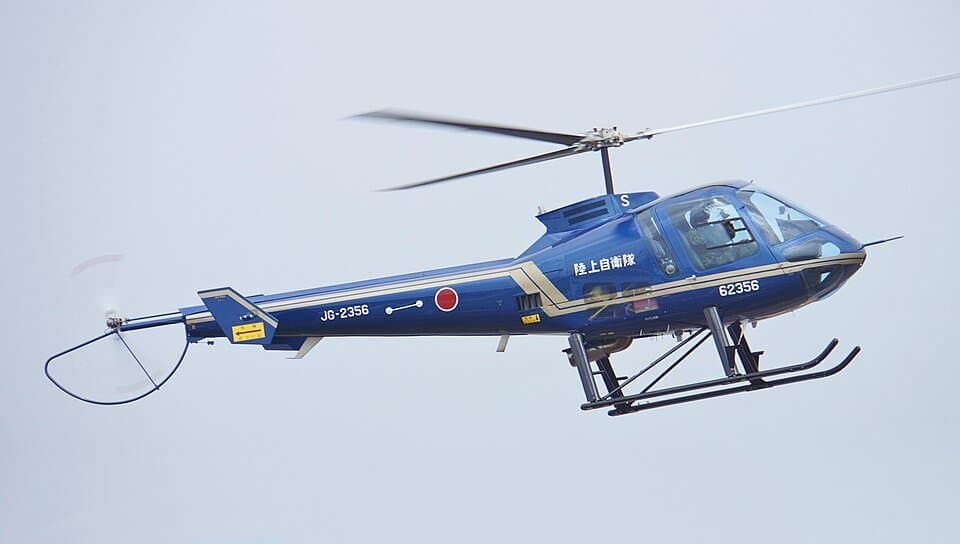
Enstrom 480larger figure on 2 of 3
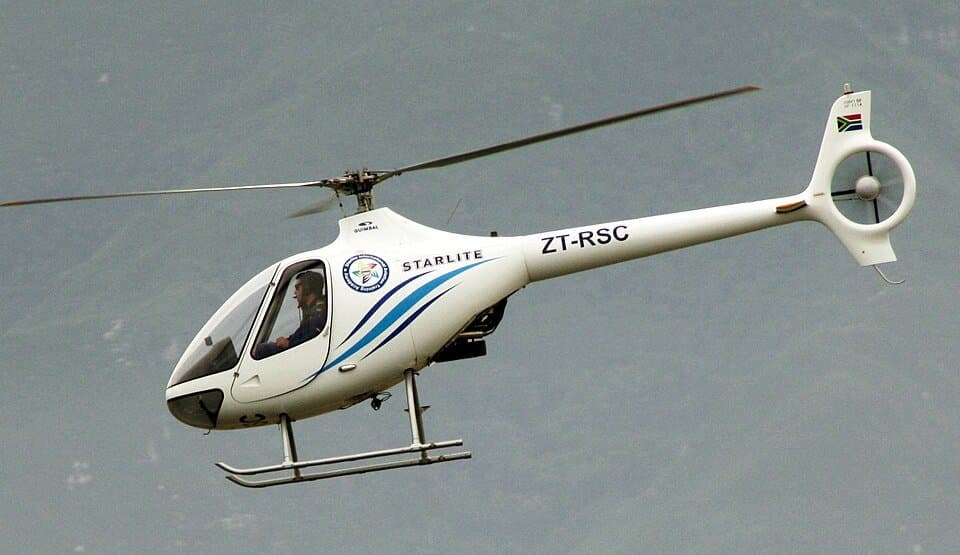
Guimbal Cabri G2larger figure on 1 of 3
Counts only measures both sources give with the same scope. A larger figure is not a better system.
Measured figures
480 · Length
Single source29 ft 10 in (9.09 m)[source]
Length
Single sourceConfiguration
| Specification | Enstrom 480 | Guimbal Cabri G2 |
|---|---|---|
| Type | Light helicopter[source] | Light helicopter[source] |
| Manufacturer | Enstrom Helicopter Corporation[source] | Hélicoptères Guimbal[source] |
| Number built | 142 (as of July 2011)[source] | 300 (July 2022)[source] |
| Manufactured | 1993–present[source] | — |
6.31 m (20 ft 8 in)[source]
Empty; 480 · Empty weight
Single sourceGross; 480 · Gross weight
Single sourceMaximum take-off; Enstrom 480B only · maximum gross weight at 10,000 to 13,000 feet density altitude; each operating-altitude condition retained separately · Enstrom 480B only · maximum gross weight at 10,000 to 13,000 feet density altitude; each operating-altitude condition retained separately · Enstrom 480B
Single sourceMaximum take-off; Enstrom 480B only · maximum gross weight at sea level to 10,000 feet density altitude; each operating-altitude condition retained separately · Enstrom 480B only · maximum gross weight at sea level to 10,000 feet density altitude; each operating-altitude condition retained separately · Enstrom 480B
Single source1,675 lb (760 kg)[source]
2,850 lb (1,293 kg)[source]
3,000 pounds[source]Enstrom 480B only · maximum gross weight at sea level to 10,000 feet density altitude; each operating-altitude condition retained separately
2,850 pounds[source]Enstrom 480B only · maximum gross weight at 10,000 to 13,000 feet density altitude; each operating-altitude condition retained separately
Empty; Empty weight
Single sourceGross; Gross weight
Single source480 · 1,500 ft/min (
Single source1,500 ft/min (7.62 m/s)[source]
Bars compare reported quantities only. A larger figure does not make a system better; configurations and test conditions differ.
| Introduction date |
|---|
1993[source] |
2008[source] |
| First flight | 7 October 1989[source] | 31 March 2005[source] |
|---|
| Developed from | Enstrom 280[source] | — |
|---|
| Capacity | four passengers[source] | — |
|---|
| Main rotor area | 804 sq ft (74.7 m 2 )[source] | — |
|---|
| Role | light helicopter[source] | two-seat light helicopter[source] |
|---|
| Source measurement | The 480 fuselage consists of a welded steel-tube framework with aluminum cover and tailcone. The pilot controls the aircraft from the left seat, which is unusual for helicopters. The aircraft does not have a hydraulic system; a trim system absorbs rotor feedback and allows the pilot to position the desired stick setting. The 480B engine is capable of producing 420 shp , but in this application it is derated to 305 shp for 5 minutes and 277 continuous shp, which is available to 13,000 MSL on a standard day. Thus hot-temperature or high-altitude operations have a considerable degree of power available. The engine drives a three-bladed rotor of 32 feet diameter and a tail rotor of 5 feet diameter. The main rotor and hubs weigh a total of 300 pounds, so there is considerable inertia in the system during a loss of power. Autorotation landings are uneventful.[source]Enstrom 480 · Design; only the objects and conditions stated in this passage Enhanced and with increased gross weight (3000 lb) and power limits, certified in February 2001 in the US. and in February 2019 in Canada. The gross weight and useful load were increased by approximately 150 pounds.[source]Enstrom 480 · Variants; only the objects and conditions stated in this passage Capacity: four passengers[source]Enstrom 480 · Specifications (480); only the objects and conditions stated in this passage Length: 29 ft 10 in (9.09 m)[source]Enstrom 480 · Specifications (480); only the objects and conditions stated in this passage Height: 9 ft 7 in (2.92 m)[source]Enstrom 480 · Specifications (480); only the objects and conditions stated in this passage Empty weight: 1,675 lb (760 kg)[source]Enstrom 480 · Specifications (480); only the objects and conditions stated in this passage Gross weight: 2,850 lb (1,293 kg)[source]Enstrom 480 · Specifications (480); only the objects and conditions stated in this passage Powerplant: 1 × Rolls-Royce Model 250-C20W turboshaft , 285 hp (215 kW)[source]Enstrom 480 · Specifications (480); only the objects and conditions stated in this passage Main rotor diameter: 32 ft 0 in (9.75 m)[source]Enstrom 480 · Specifications (480); only the objects and conditions stated in this passage Main rotor area: 804 sq ft (74.7 m 2 )[source]Enstrom 480 · Specifications (480); only the objects and conditions stated in this passage Cruise speed: 131 mph (211 km/h, 114 kn)[source]Enstrom 480 · Specifications (480); only the objects and conditions stated in this passage Range: 435 mi (700 km, 378 nmi)[source]Enstrom 480 · Specifications (480); only the objects and conditions stated in this passage Service ceiling: 13,000 ft (3,962 m)[source]Enstrom 480 · Specifications (480); only the objects and conditions stated in this passage Rate of climb: 1,500 ft/min (7.62 m/s)[source]Enstrom 480 · Specifications (480); only the objects and conditions stated in this passage | During the early 1990s, Eurocopter elected to sponsor the program, as well as providing technical assistance during testing. In April 1992, the first prototype Cabri G2-01 conducted its maiden flight , which lasted for a total of 45 minutes. In 1996, this prototype set a world record distance for a helicopter under 500 kg, with a distance of 481.32 km. In 2000, Bruno Guimbal left Eurocopter to establish a new company, Hélicoptères Guimbal, in order to certify the Cabri G2 and to place the type into commercial production. To this end, research and production facilities were set up in Aix-en-Provence Aerodrome , France.[source]Guimbal Cabri G2 · Development; only the objects and conditions stated in this passage It had originally been hoped to have the Cabri certified in 2003. In March 2005, the first production Cabri performed its first flight. Following a six-year development program and 300 hours of flight testing, the Cabri G2 received type certification from the European Aviation Safety Agency (EASA) in December 2007. The granting of EASA certification made the Cabri the first twin-seat reciprocating-engine helicopter to be certified in more than 30 years.[source]Guimbal Cabri G2 · Development; only the objects and conditions stated in this passage The Airbus Helicopters VSR700 naval UAV, powered by a 155-hp Continental CD-155 , will fly as a prototype in 2018 before a 2021 introduction.[source]Guimbal Cabri G2 · Development / Unmanned aerial vehicle; only the objects and conditions stated in this passage Various features for personal helicopter usage, such as an externally accessible 200-litre baggage compartment, power sockets within the main cabin, leather seating, and incidental under-seat storage, are also present.[source]Guimbal Cabri G2 · Design; only the objects and conditions stated in this passage The Cabri is powered by a single 180 hp (134 kW) Lycoming O-360 piston engine, which has been rated to 145 hp (108 kW) max continuous power and 160 hp (119 kW) 5-minute power. The engine incorporates a solid-state electronic ignition system which protects against over-speed upon startup and has greater reliability. The engine mounts also utilize vibration isolation techniques for increased crew comfort. The engine is positioned directly behind the cabin, making it easier to access for maintenance; while the engine exhaust is elevated above the tail boom in order to reduce noise and lower the risk of ground fires upon landing. The maintenance costs of the Cabri are claimed to be "very low", in part due to only three components on the rotorcraft being time-limited , all others being condition-limited instead. The cost per overhaul of the Cabri is half of that of comparable rotorcraft such as the Robinson R22 . |
|---|
| Country of origin | Vereinigte Staaten[source]Country of design · Entwurfsland | — |
|---|
| National origin | — | France[source] |
|---|
| Designer | — | Bruno Guimbal[source] |
|---|
| Status | — | In production[source] |
|---|
| Developed into | — | Airbus Helicopters VSR700[source] |
|---|
Gross; Max gross weight · Max gross weight
Single sourceMaximum take-off; Cabri G2 · maximum gross aircraft weight, 2024 manufacturer specification; not empty weight or payload · Cabri G2 · maximum gross aircraft weight, 2024 manufacturer specification; not empty weight or payload · Cabri G2
Single source700 kg (1,543 lb)[source]
700 kg (1540 lbs)[source]Max gross weight
430 kg (945 lbs)[source]
700 kg (1540 lbs)[source]Cabri G2 · maximum gross aircraft weight, 2024 manufacturer specification; not empty weight or payload
700 kg (1540 lbs)[source]Max gross weight
430 kg (945 lbs)[source]
A mid-air collision between a Cessna 152 and a Cabri G2 occurred on 17 November 2017 in the UK, causing four fatalities, two in each aircraft. Both aircraft were on training flights.[source]Guimbal Cabri G2 · Accidents; only the objects and conditions stated in this passage
On November 8, 2020, two Cabri G2 (Registration 9M-HCA & 9M-HCB) collided in mid-air with one of the helicopters crashing while the other crash landed safely in nearby Taman Melawati, a suburb of Kuala Lumpur, Malaysia. Two people were killed. Both were from the same Heli Club based out of Subang Airport (SZB), Malaysia on training flights.[source]Guimbal Cabri G2 · Accidents; only the objects and conditions stated in this passage
Length: 6.31 m (20 ft 8 in)[source]Guimbal Cabri G2 · Specifications; only the objects and conditions stated in this passage
Width: 1.24 m (4 ft 1 in)[source]Guimbal Cabri G2 · Specifications; only the objects and conditions stated in this passage
Height: 2.37 m (7 ft 9 in)[source]Guimbal Cabri G2 · Specifications; only the objects and conditions stated in this passage
Gross weight: 700 kg (1,543 lb)[source]Guimbal Cabri G2 · Specifications; only the objects and conditions stated in this passage
Powerplant: 1 × Lycoming O-360 -J2A piston engine , 108 kW (145 hp)[source]Guimbal Cabri G2 · Specifications; only the objects and conditions stated in this passage
Main rotor diameter: 7.2 m (23 ft 7 in)[source]Guimbal Cabri G2 · Specifications; only the objects and conditions stated in this passage
Maximum speed: 185 km/h (115 mph, 100 kn)[source]Guimbal Cabri G2 · Specifications; only the objects and conditions stated in this passage
Cruise speed: 166 km/h (104 mph, 90 kn)[source]Guimbal Cabri G2 · Specifications; only the objects and conditions stated in this passage
Range: 700 km (430 mi, 380 nmi)[source]Guimbal Cabri G2 · Specifications; only the objects and conditions stated in this passage
Endurance: 4.5 hours[source]Guimbal Cabri G2 · Specifications; only the objects and conditions stated in this passage
Service ceiling: 3,963 m (13,000 ft)[source]Guimbal Cabri G2 · Specifications; only the objects and conditions stated in this passage