
Credit
bomberpilot · CC BY-SA 2.0 · Resized · CC BY-SA 2.0 · Source ↗ · Modified


Preparing your view.

At a glance
Measured figures
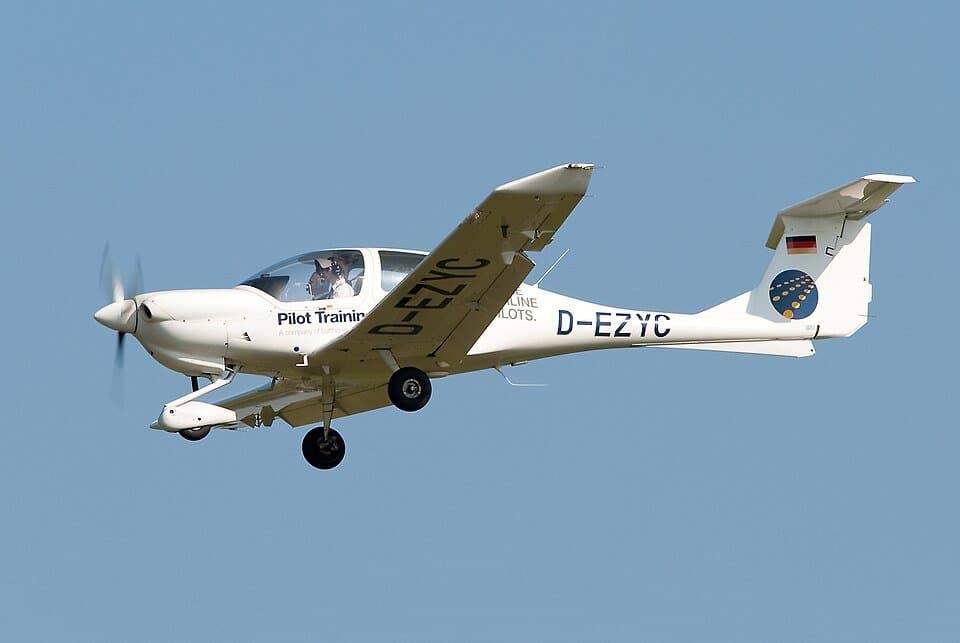
2007 model Diamond DA40 XL Diamond Star · Length
Single source8.1 m (26 ft 7 in)[source]
Configuration
| Specification | Diamond DA40 Diamond Star | Van's Aircraft RV-6 |
|---|---|---|
| Crew | one[source] | one[source] |
| Type | Light aircraft[source] | Kit aircraft[source] |
| Manufacturer | Diamond Aircraft Industries[source] | Van's Aircraft[source] |
| Status | In production[source] |
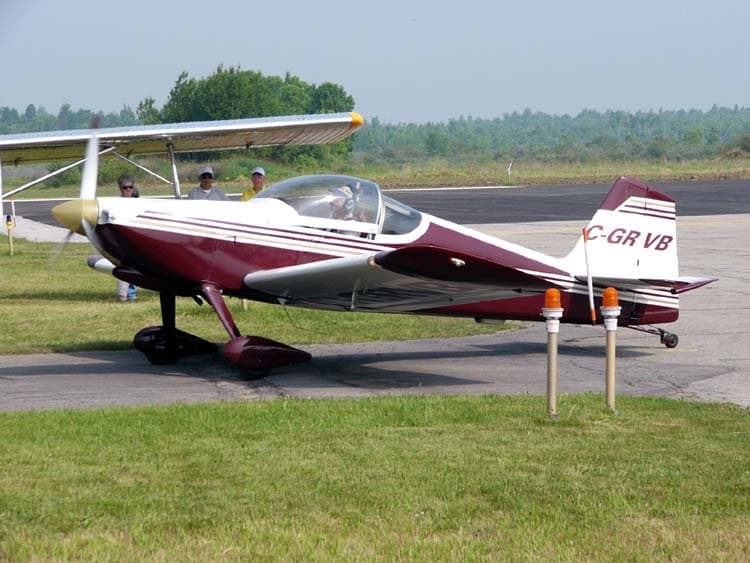
RV-6 180 hp · Length
Single source20 ft 2 in (6.15 m)[source]
Empty; 2007 model Diamond DA40 XL Diamond Star · Empty weight
Single sourceGross; 2007 model Diamond DA40 XL Diamond Star · Gross weight
Single sourceMaximum take-off; DA40 NG · FACTS AND SPECIFICATIONS · standard equipped aircraft; source states approximately specifications and may change without notice · DA40 NG · FACTS AND SPECIFICATIONS · standard equipped aircraft; source states approximately specifications and may change without notice
Single sourceMaximum take-off; DA40 XLT · FACTS AND SPECIFICATIONS · standard equipped aircraft; source states approximately specifications and may change without notice · DA40 XLT · FACTS AND SPECIFICATIONS · standard equipped aircraft; source states approximately specifications and may change without notice
Single source795 kg (1,753 lb)[source]
1,198 kg (2,641 lb)[source]
1,310 kg[source]DA40 NG · FACTS AND SPECIFICATIONS · standard equipped aircraft; source states approximately specifications and may change without notice
1,200 kg[source]DA40 XLT · FACTS AND SPECIFICATIONS · standard equipped aircraft; source states approximately specifications and may change without notice
Empty; RV-6 180 hp · Empty weight
Single sourceGross; RV-6 180 hp · Gross weight
Single source2007 model Diamond DA40 XL Diamond Star · 1 × Lycoming IO-360-M1A 4-cylinder air-cooled horizontally-opposed piston engine
Single source1 × Lycoming IO-360-M1A 4-cylinder air-cooled horizontally-opposed piston engine, 134 kW (180 hp)[source]
RV-6 180 hp · 1 × Lycoming O-360 four cylinder, four-stroke , air-cooled, horizontally-opposed aircraft engine
Single source1 × Lycoming O-360 four cylinder, four-stroke , air-cooled, horizontally-opposed aircraft engine , 180 hp (130 kW)[source]
Bars compare reported quantities only. A larger figure does not make a system better; configurations and test conditions differ.
No longer sold[source]
| Number built | 2,200 (December 2020)[source] | 2706 (November 2022)[source] |
|---|
| Manufactured | 1997–present[source] | — |
|---|
| First flight | 5 November 1997[source] | 1985[source] |
|---|
| Developed from | Diamond DA20[source] | Van's Aircraft RV-4[source] |
|---|
| Capacity | three passengers[source] | one passenger[source] |
|---|
| Airfoil | Wortmann FX 63-137[source] | — |
|---|
| Stall speed | 91 km/h (57 mph, 49 kn) flaps down[source] | 49 mph (79 km/h, 43 kn)[source] |
|---|
| Power/mass | 0.110 kW/kg (0.067 hp/lb)[source] | 0.1125[source] |
|---|
| National origin | Austria[source] | United States[source] |
|---|
| Role | Austrian four-seat, single-engine, light aircraft constructed[source] | — |
|---|
| Source measurement | In late 2006, the XL and FP models replaced the DA40-180. The FP replaced the fixed pitch propeller version of the 180 and the XL replaced the constant speed propeller version. The major difference between the new models and the 180 is the higher maximum cruise speeds. The DA40-XL is approximately four knots faster than the preceding DA40-180/G1000 with the two-blade Hartzell propeller and the "Speed Gear" option. The XL's speed increase is mostly due to the Powerflow exhaust system.[source]Diamond DA40 Diamond Star · Development; only the objects and conditions stated in this passage In October 2021, Diamond Aircraft announced an all- electric training variant, the eDA40, with initial flights scheduled for the second quarter of 2022 and EASA/FAA Part 23 certification expected in 2023. It should fly for 90 minutes, with a fast charge for 20 minutes turnarounds and operating costs 40% lower than piston aircraft.[source]Diamond DA40 Diamond Star · Development; only the objects and conditions stated in this passage The DA40-XL has a constant speed propeller and is powered by a 180 hp (130 kW) Lycoming IO-360-M1A fuel injected engine. It has a maximum cruise speed of 147 kn (272 km/h; 169 mph), burning 9.2 gallons of Avgas per hour. Its maximum takeoff weight is 2,535 lb (1,150 kg).[source]Diamond DA40 Diamond Star · Design; only the objects and conditions stated in this passage The DA40-F (marketed as the "FP") has a fixed pitch propeller, a 180 hp (130 kW) Lycoming O-360-A4M engine, which has a carburetor rather than fuel injection and a more basic interior, but is otherwise similar to the XL.[source]Diamond DA40 Diamond Star · Design; only the objects and conditions stated in this passage The DA40-TDI uses a Thielert "Centurion" 135 hp (101 kW) diesel engine and burns diesel or jet fuel . It has a constant speed propeller and FADEC (single lever) engine control. The Diesel DA40D is not certified in the US .[source]Diamond DA40 Diamond Star · Design; only the objects and conditions stated in this passage The DA40 has accumulated a very low accident record, particularly with regard to stall and spin accidents. Its overall and fatal accident rates are one-eighth that of the general aviation fleet and include no stall-related accidents. The level of safe operation is attributed to its high aspect ratio wing, low wing loading and benign flight characteristics. The aircraft can be trimmed full nose up, engine set to idle and it will descend at 600–1,200 feet per minute (180–370 m/min) at 48 kn (55 mph; 89 km/h) hands-off, a lower rate of descent than the competitor Cirrus SR22 can achieve with its airframe ballistic parachute deployed.[source]Diamond DA40 Diamond Star · Operational history; only the objects and conditions stated in this passage In a 2011 analysis by Aviation Consumer magazine, the DA40 was shown to have had a fatal accident rate of 0.35/100,000 hours, the lowest in US general aviation and considerably better than the market leading Cirrus SR20 and SR22 , which that year had a combined fatal accident rate of 1.6/100,000, despite its full aircraft parachute system. By comparison, the Cessna 172 had a fatal accident rate of 0.45/100,000 hours.[source]Diamond DA40 Diamond Star · Operational history; only the objects and conditions stated in this passage Initial model, powered by a Textron Lycoming IO-360 M1A 180 hp (135 kW) engine and a MT Propellers MTV-12-B/180-17. Maximum gross weight is 1150 kg (2535 lb) or 1200 kg (2646 lb) with modifications installed. In increasingly refined versions marketed as the DA40-180, XL, CS and XLS.[source]Diamond DA40 Diamond Star · Variants; only the objects and conditions stated in this passage Diesel model, powered by a Thielert TAE 125-01 (Centurion 1.7) or TAE 125-02-99 (Centurion 2.0) engine of 135 hp (101 kW) and MT Propellers MTV-6-A/187-129. Maximum gross weight is 1150 kg (2535 lb). Marketed primarily in Europe, although certified in Canada and Australia as well, as the DA40 TDI.[source]Diamond DA40 Diamond Star · Variants; only the objects and conditions stated in this passage Fixed pitch propeller model, powered by Textron Lycoming O-360-A4M and a Sensenich 6EM8S10-0-63 or a MT-Propeller MT 188R135-4G propeller. Maximum gross weight is 1150 kg (2535 lb). Marketed as the DA40 FP. This model is no longer offered.[source]Diamond DA40 Diamond Star · Variants; only the objects and conditions stated in this passage Latest model, offered in select markets only (DA40 model is still offered in other markets), powered by an Austro Engine AE 300 165.6 hp (123.5 kW) running on JET A-1 fuel. EASA certified April 2010. By December 2020, 500 NG models had been produced.[source]Diamond DA40 Diamond Star · Variants; only the objects and conditions stated in this passage Version with strengthened landing gear, larger tires for operation from unimproved surfaces and a 168 hp (125 kW) Austro AE300 diesel engine that burns jet fuel.[source]Diamond DA40 Diamond Star · Variants; only the objects and conditions stated in this passage All- electric training variant, announced in October 2021, initially targeting a 2022 first flight and a 2023 certification, with 90 minute endurance. Charging can be accomplished in 20 minutes but certification could slip to early 2024, and the 90-minute endurance goal could be reached only as battery technology allows. The first flight actually occurred on 20 July 2023. The company expects it to be the first EASA/FAA Part 23 certified electric aircraft.[source]Diamond DA40 Diamond Star · Variants; only the objects and conditions stated in this passage Austrian Air Force – 4 in service.[source]Diamond DA40 Diamond Star · Operators / Military; only the objects and conditions stated in this passage Bangladesh Army – 4 in service with 2 more on order. Bangladesh Army Aviation Group[source]Diamond DA40 Diamond Star · Operators / Military; only the objects and conditions stated in this passage Capacity: three passengers[source]Diamond DA40 Diamond Star · Specifications (2007 model Diamond DA40 XL Diamond Star); only the objects and conditions stated in this passage Length: 8.1 m (26 ft 7 in)[source]Diamond DA40 Diamond Star · Specifications (2007 model Diamond DA40 XL Diamond Star); only the objects and conditions stated in this passage Wingspan: 11.9 m (39 ft 1 in)[source]Diamond DA40 Diamond Star · Specifications (2007 model Diamond DA40 XL Diamond Star); only the objects and conditions stated in this passage Height: 1.98 m (6 ft 6 in)[source]Diamond DA40 Diamond Star · Specifications (2007 model Diamond DA40 XL Diamond Star); only the objects and conditions stated in this passage Wing area: 13.5 m 2 (145 sq ft)[source]Diamond DA40 Diamond Star · Specifications (2007 model Diamond DA40 XL Diamond Star); only the objects and conditions stated in this passage Empty weight: 795 kg (1,753 lb)[source]Diamond DA40 Diamond Star · Specifications (2007 model Diamond DA40 XL Diamond Star); only the objects and conditions stated in this passage Gross weight: 1,198 kg (2,641 lb)[source]Diamond DA40 Diamond Star · Specifications (2007 model Diamond DA40 XL Diamond Star); only the objects and conditions stated in this passage Powerplant: 1 × Lycoming IO-360-M1A 4-cylinder air-cooled horizontally-opposed piston engine, 134 kW (180 hp)[source]Diamond DA40 Diamond Star · Specifications (2007 model Diamond DA40 XL Diamond Star); only the objects and conditions stated in this passage Cruise speed: 279 km/h (173 mph, 151 kn) TAS[source]Diamond DA40 Diamond Star · Specifications (2007 model Diamond DA40 XL Diamond Star); only the objects and conditions stated in this passage Stall speed: 91 km/h (57 mph, 49 kn) flaps down[source]Diamond DA40 Diamond Star · Specifications (2007 model Diamond DA40 XL Diamond Star); only the objects and conditions stated in this passage Range: 1,341 km (833 mi, 724 nmi)[source]Diamond DA40 Diamond Star · Specifications (2007 model Diamond DA40 XL Diamond Star); only the objects and conditions stated in this passage Service ceiling: 5,000 m (16,000 ft)[source]Diamond DA40 Diamond Star · Specifications (2007 model Diamond DA40 XL Diamond Star); only the objects and conditions stated in this passage Rate of climb: 5.69 m/s (1,120 ft/min)[source]Diamond DA40 Diamond Star · Specifications (2007 model Diamond DA40 XL Diamond Star); only the objects and conditions stated in this passage | The RV-6 and RV-6A were replaced by the similar, but improved, RV-7 in 2001. Kit components are still available to allow builders to complete RV-6s under construction, but no new complete kits are available.[source]Van's Aircraft RV-6 · Lead; only the objects and conditions stated in this passage VanGrunsven worked diligently to create a side-by-side design with a generous 43-inch-wide (1,100 mm) cockpit that did not sacrifice the RV-4's handling, STOL performance and especially its high cruise speed. In the end the RV-6 prototype produced cruise speeds that are only 3 mph (5 km/h) slower than the RV-4 with the same engine.[source]Van's Aircraft RV-6 · Development; only the objects and conditions stated in this passage A modified version of the RV-6A is manufactured in Iran by Aviation Industries of Iran as the AVA-202. First flown in 1997, the main change from the RV-6A is a greater wingspan of 28.67 ft (8.74 m).[source]Van's Aircraft RV-6 · AVA-202; only the objects and conditions stated in this passage Length: 20 ft 2 in (6.15 m)[source]Van's Aircraft RV-6 · Specifications (RV-6 180 hp); only the objects and conditions stated in this passage Wingspan: 23 ft 0 in (7.01 m)[source]Van's Aircraft RV-6 · Specifications (RV-6 180 hp); only the objects and conditions stated in this passage Height: 5 ft 3 in (1.60 m)[source] |
|---|
| Designer | — | Richard VanGrunsven[source] |
|---|
| Variant | — | Aviation Industries of Iran AVA-202[source] |
|---|
| Developed into | — | Van's Aircraft RV-7[source] |
|---|
| Aspect ratio | — | 4.81[source] |
|---|
| Fuel capacity | — | 38 U.S. gallons (140 L; 32 imp gal)[source] |
|---|
| Wing loading | — | 14.55 lb/sq ft (71.0 kg/m 2 )[source] |
|---|
Gross; RV6 · factory-revised recommended allowed max gross weight limit; old1600lb superseded in this statement; excludes RV6A and aerobatic1375lb limits
Single source965 lb (438 kg)[source]
1,600 lb (726 kg)[source]
1650 lbs[source]RV6 · factory-revised recommended allowed max gross weight limit; old1600lb superseded in this statement; excludes RV6A and aerobatic1375lb limits
Wing area: 110 sq ft (10 m 2 )[source]Van's Aircraft RV-6 · Specifications (RV-6 180 hp); only the objects and conditions stated in this passage
Empty weight: 965 lb (438 kg)[source]Van's Aircraft RV-6 · Specifications (RV-6 180 hp); only the objects and conditions stated in this passage
Gross weight: 1,600 lb (726 kg)[source]Van's Aircraft RV-6 · Specifications (RV-6 180 hp); only the objects and conditions stated in this passage
Powerplant: 1 × Lycoming O-360 four cylinder, four-stroke , air-cooled, horizontally-opposed aircraft engine , 180 hp (130 kW)[source]Van's Aircraft RV-6 · Specifications (RV-6 180 hp); only the objects and conditions stated in this passage
Maximum speed: 210 mph (340 km/h, 180 kn)[source]Van's Aircraft RV-6 · Specifications (RV-6 180 hp); only the objects and conditions stated in this passage
Cruise speed: 199 mph (320 km/h, 173 kn)[source]Van's Aircraft RV-6 · Specifications (RV-6 180 hp); only the objects and conditions stated in this passage
Stall speed: 49 mph (79 km/h, 43 kn)[source]Van's Aircraft RV-6 · Specifications (RV-6 180 hp); only the objects and conditions stated in this passage
Range: 720 mi (1,160 km, 630 nmi) at 75% and 8000 feet[source]Van's Aircraft RV-6 · Specifications (RV-6 180 hp); only the objects and conditions stated in this passage
Service ceiling: 25,700 ft (7,800 m)[source]Van's Aircraft RV-6 · Specifications (RV-6 180 hp); only the objects and conditions stated in this passage
Rate of climb: 2,275 ft/min (11.56 m/s)[source]Van's Aircraft RV-6 · Specifications (RV-6 180 hp); only the objects and conditions stated in this passage