


Preparing your view.

At a glance
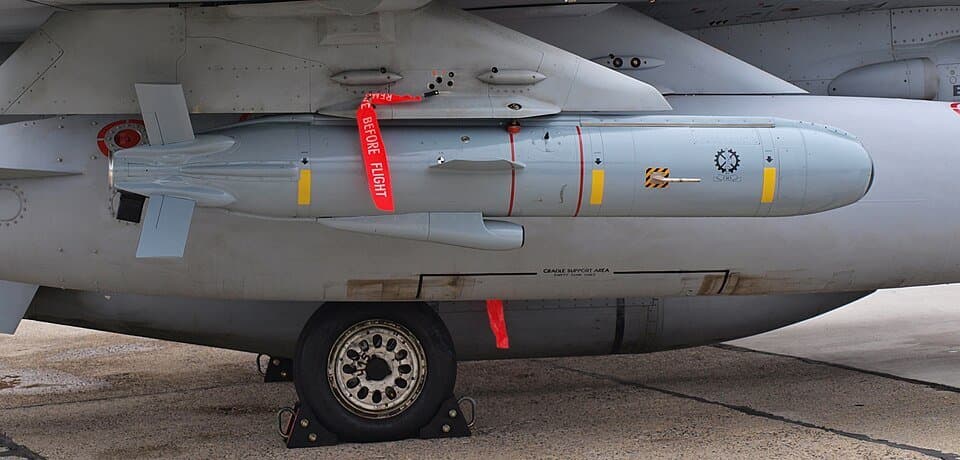
Delilah (missile)larger figure on 1 of 3
Terminal Autonomy AQ-400 Scythelarger figure on 2 of 3
Counts only measures both sources give with the same scope. A larger figure is not a better system.
Measured figures
Configuration
| Specification | Delilah (missile) | Terminal Autonomy AQ-400 Scythe |
|---|---|---|
| Type | Air-launched cruise missile / loitering munition[source] | One-way attack drone[source] |
| Place of origin | Israel[source] | Ukraine[source] |
| In service | 1980s (initial versions, limited use), fully operational 1995-present[source] | 2023–present[source] |
| Used by | See users[source] |
Diameter
Single source0.33 metres (1 ft 1 in)[source]
Warhead weight
Single source30 kilograms (66 lb)[source]
Bars compare reported quantities only. A larger figure does not make a system better; configurations and test conditions differ.
Ukraine[source] |
| Wars | Syrian Civil War 2026 Iran war[source] | Russian invasion of Ukraine[source] |
|---|
| Manufacturer | Israel Military Industries[source] | Terminal Autonomy[source] |
|---|
| Flight altitude | 28,000 feet (8,500 m)[source] | 30–3,000 m (98–9,843 ft)[source] |
|---|
| Guidance system | CCD \ IIR with GPS \ INS[source] | — |
|---|
| Accuracy | 1 metre (3 ft 3 in) CEP[source] | — |
|---|
| Launch platform | aircraft, helicopter, ground launcher, sea launcher[source] | — |
|---|
| Designed | — | 2022-2023[source] |
|---|
| Unit cost | — | USD $30,000[source] |
|---|
| Produced | — | 2023-present[source] |
|---|
| Warhead | — | 43 kg (95 lb)[source] |
|---|
| Blast yield | — | 32 kg (71 lb)[source] |
|---|
| Role | — | one-way attack drone[source] |
|---|
| Source measurement | — | It has two sets of wings, one forward and one rear, with a wingspan of 2.3 m; 30 fully-assembled Scythes can be stacked in one shipping container for transport.[source]Terminal Autonomy AQ-400 Scythe · Design; only the objects and conditions stated in this passage Overall weight is 100 kg with a 43 kg payload, of which 32 kg is the warhead which can be thermobaric or hold two 122 mm artillery shells.[source]Terminal Autonomy AQ-400 Scythe · Design; only the objects and conditions stated in this passage Using the standard gas engine and pusher propeller , the AQ-400 has a cruise speed of 144 km/h (89 mph), a top speed of 200 km/h, endurance of 6.5 hours, and a strike range of 750 km; depending on the engine option, range could be increased as far as 900 km (560 mi), or payload increased to 70 kg (150 lb) at a reduced range.[source]Terminal Autonomy AQ-400 Scythe · Design; only the objects and conditions stated in this passage Guidance at low altitude uses a laser altimeter to approach at 30 m to minimize the effects of electronic warfare to jam GPS navigation until very close to the target. At high altitudes of 3,000 m, it navigates with a visual positioning system using roads and other visible landmarks. A video link option is available so an operator can manually guide the drone to hit moving targets, but this adds costs and only works at shorter ranges. The basic Scythe airframe costs USD $15,000, which increases to USD$30,000 with a guidance system and other features; this compares to around USD$20,000 for a Shahed-136 one-way attack munition used by Russia . Swarms can use a leader-follower method, where one lead drone carrying a navigation system is followed by nine basic drones, which help saturate the target area and draw off enemy defenses from the lethal version. The use of such drones is intended to overwhelm air defenses as well as make them expend expensive interceptors against cheaper targets, exhausting their supplies over time.[source]Terminal Autonomy AQ-400 Scythe · Design; only the objects and conditions stated in this passage |
|---|
| Reported operators |
|
|
|---|