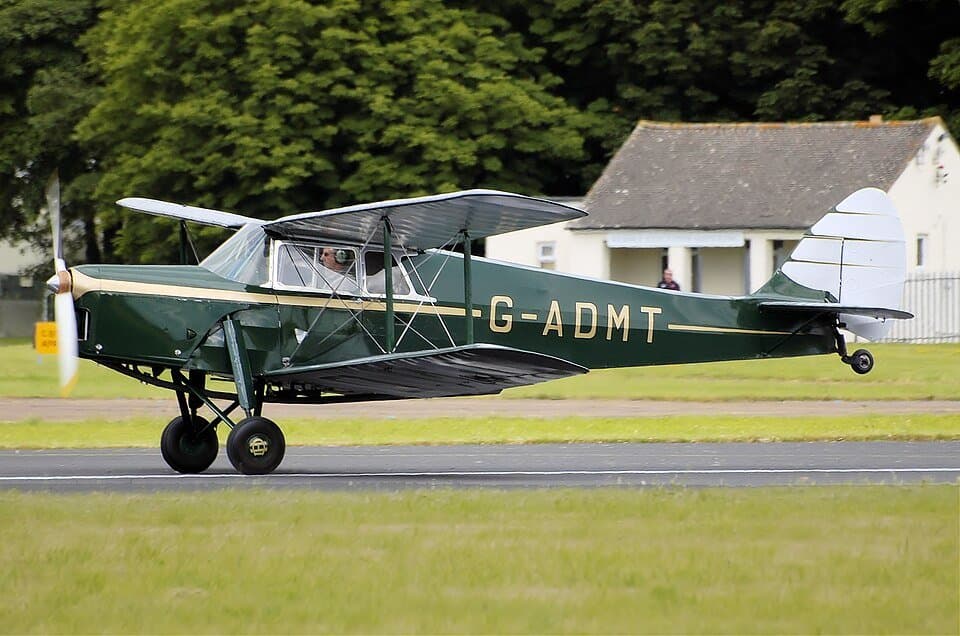
Credit
Adrian Pingstone ( Arpingstone ) · Public domain · Resized · Public domain · Source ↗ · Modified


Preparing your view.

At a glance
Measured figures
de Havilland DH.87 Hornet Moth
Single sourceDH.87B · Length
Single sourceConfiguration
| Specification | De Havilland Hornet Moth | SOCATA Rallye family |
|---|---|---|
| Type | Trainer and Tourer[source] | Tourer/trainer aircraft[source] |
| Manufacturer | de Havilland[source] | SOCATA[source] |
| Status | In limited service[source] | — |
| Primary user | private owner pilots[source] | — |
| Number built | 164 |
Length
Single source24 ft 11 + 1 ⁄ 2 in (7.61 m)[source]
7,61 m (24 ft 11½ in )[source]
7,6 m[source]de Havilland DH.87 Hornet Moth
7,6 m[source]
7,61 meter[source]
180 GT · Length
Single source7.24 m (23 ft 9 in)[source]
DH.87B · Width
Single source10 ft 9 + 1 ⁄ 2 in (3.29 m)[source]
Empty; DH.87B · Empty weight
Single sourceEmpty; Empty weight
Single sourceGross; DH.87B · Gross weight
Single source1,241 lb (563 kg)[source]
1,950 lb (885 kg)[source]
564 kg (1 241 lb )[source]
563 kg[source]
564 kg[source]
Empty; 180 GT · Empty weight
Single sourceMaximum take-off; 180 GT · Max takeoff weight
Single sourceCruise; DH.87B · at 1,000 ft (305 m)
Single sourceMaximum; DH.87B · at sea level
Single sourceMaximum; Maximum speed
Disputed124 mph (200 km/h, 108 kn) at sea level[source]
105 mph (169 km/h, 91 kn) at 1,000 ft (305 m)[source]
169 km/h[source]
200 km/h[source]
Cruise; 180 GT · Cruise speed
Single sourceMaximum; 180 GT · Maximum speed
Single sourceDH.87B · 1 × de Havilland Gipsy Major I 4-cylinder air-cooled inverted in-line piston engine
Single source1 × de Havilland Gipsy Major I 4-cylinder air-cooled inverted in-line piston engine, 130 hp (97 kW)[source]
180 GT · × Lycoming O-360-A3A 4-cylinder air-cooled horizontally-opposed piston engine
Single source× Lycoming O-360-A3A 4-cylinder air-cooled horizontally-opposed piston engine, 134 kW (180 hp)[source]
Bars compare reported quantities only. A larger figure does not make a system better; configurations and test conditions differ.
~3,300[source] |
| Manufactured | 1935–1938[source] | 1961–1982[source] |
|---|
| First flight | 9 May 1934[source] | 10 June 1959[source] |
|---|
| Capacity | 1 passenger / trainee[source] | three passengers[source] |
|---|
| Airfoil | RAF 15[source] | NACA 63A416[source] |
|---|
| Fuel capacity | 35 imp gal (42 US gal; 159 L) fuel in fuselage tank[source] | — |
|---|
| Propellers | 2-bladed fixed-pitch propeller[source] | 2-bladed variable-pitch propeller[source] |
|---|
| Stall speed | 40 mph (64 km/h, 35 kn)[source] | 92 km/h (57 mph, 50 kn)[source] |
|---|
| Time to altitude | 5,000 ft (1,524 m) in 8 minutes 45 seconds[source] | — |
|---|
| Wing loading | 7.97 lb/sq ft (38.9 kg/m 2 )[source] | 85.4 kg/m 2 (17.5 lb/sq ft)[source] |
|---|
| Power/mass | 0.067 hp/lb (0.110 kW/kg)[source] | 0.13 kW/kg (0 hp/lb)[source] |
|---|
| Source measurement | The prototype first flew at Hatfield on 9 May 1934 and, with two other pre-production aircraft, embarked on an extensive test program that resulted in the first production aircraft (designated DH.87A) completed in August 1935 having wings of greater outboard taper. These were found to cause problems, especially when landing in three-point attitude: there was a tendency for the tips to stall, causing embarrassment to the pilot and often damage to the aeroplane. From early 1936, de Havilland offered owners of the DH.87A replacement wings of the new squarer shape at a reduced price in exchange for the original wings. Designated DH.87B, new aircraft from about manufacture Number 68 were built with the new square wings. This wing reduced the overall span by 8 inches (20 cm). The alterations slightly increased overall weight at some penalty to performance.[source]De Havilland Hornet Moth · Design and development; only the objects and conditions stated in this passage Length: 24 ft 11 + 1 ⁄ 2 in (7.61 m)[source]De Havilland Hornet Moth · Specifications (DH.87B); only the objects and conditions stated in this passage Wingspan: 31 ft 11 in (9.73 m)[source]De Havilland Hornet Moth · Specifications (DH.87B); only the objects and conditions stated in this passage Width: 10 ft 9 + 1 ⁄ 2 in (3.29 m)[source]De Havilland Hornet Moth · Specifications (DH.87B); only the objects and conditions stated in this passage Height: 6 ft 7 in (2.01 m)[source]De Havilland Hornet Moth · Specifications (DH.87B); only the objects and conditions stated in this passage Wing area: 244.5 sq ft (22.71 m 2 )[source]De Havilland Hornet Moth · Specifications (DH.87B); only the objects and conditions stated in this passage Empty weight: 1,241 lb (563 kg)[source]De Havilland Hornet Moth · Specifications (DH.87B); only the objects and conditions stated in this passage Gross weight: 1,950 lb (885 kg)[source]De Havilland Hornet Moth · Specifications (DH.87B); only the objects and conditions stated in this passage Powerplant: 1 × de Havilland Gipsy Major I 4-cylinder air-cooled inverted in-line piston engine, 130 hp (97 kW)[source]De Havilland Hornet Moth · Specifications (DH.87B); only the objects and conditions stated in this passage Maximum speed: 124 mph (200 km/h, 108 kn) at sea level[source]De Havilland Hornet Moth · Specifications (DH.87B); only the objects and conditions stated in this passage Cruise speed: 105 mph (169 km/h, 91 kn) at 1,000 ft (305 m)[source]De Havilland Hornet Moth · Specifications (DH.87B); only the objects and conditions stated in this passage Stall speed: 40 mph (64 km/h, 35 kn)[source]De Havilland Hornet Moth · Specifications (DH.87B); only the objects and conditions stated in this passage Range: 620 mi (1,000 km, 540 nmi)[source]De Havilland Hornet Moth · Specifications (DH.87B); only the objects and conditions stated in this passage Service ceiling: 14,800 ft (4,500 m)[source]De Havilland Hornet Moth · Specifications (DH.87B); only the objects and conditions stated in this passage Rate of climb: 690 ft/min (3.5 m/s)[source]De Havilland Hornet Moth · Specifications (DH.87B); only the objects and conditions stated in this passage Time to altitude: 5,000 ft (1,524 m) in 8 minutes 45 seconds[source]De Havilland Hornet Moth · Specifications (DH.87B); only the objects and conditions stated in this passage | On 10 June 1959, the prototype Rallye, powered by a 90 hp (67 kW) engine, conducted its maiden flight . On 21 November 1961, the first production versions of the aircraft, designated as the MS.880B and more powerful MS.885 , received their type certification , clearing them to perform operational flights. Thereafter, a range of improvements and alterations were progressively made upon the design as new models of the Rallye were introduced; typical advances included the adoption of more powerful engines, improved payload capability, and strengthened structure, the addition of wheel fairings, increased ground clearance for the propeller, expanded rudder and ailerons , and changes to the cockpit canopy arrangement.[source]SOCATA Rallye family · Development; only the objects and conditions stated in this passage In the late 1960s, SOCATA pursued the development of an enlarged 7-seat version powered by a 300 hp (220 kW) Lycoming IO-540-K engine, the ST.60 Rallye 7. Two prototypes were constructed: a version with retractable tricycle landing gear , first flown on 3 January 1969, and an otherwise similar aircraft with fixed landing gear. However, SOCATA was not confident that a sufficient market for the aircraft existed, and no further production ensued. SOCATA subsequently introduced the enlarged MS.890 Rallye Commodore series with a heavier airframe and four seats; production and development of the MS.880 and MS.890 series continued in parallel, and the enlarged and strengthened empennage of the MS.890 was adapted to MS.880 variants using more powerful engines and those approved for spins .[source]SOCATA Rallye family · Development; only the objects and conditions stated in this passage Also in the late 1960s, United States aviation entrepreneur Alexander Berger—whose Allied Aero Industries holding company owned the Franklin Engine Company and Jacobs Aircraft Engine Company —formed a new venture to market European light aircraft under the banner of the defunct Waco Aircraft Company . Based in Pottstown, Pennsylvania , Waco made arrangements to market, sell, and service the Rallye throughout the sizable and attractive North American market, and introduced a licensed American-built version of the Rallye Commodore badged as the Waco MS.294A Minerva , powered by a 220 hp (160 kW) Franklin engine. Waco also sold the 150ST, 180CT and 235CT in the United States. However, the Rallye had little time to prove itself prior to Waco winding up its aviation activities following Berger's death in 1971. As a consequence of Waco's dissolution, third party aviation companies purchased the various leftover assets and continued to provide spare parts and services to American owners of the Rallye. |
|---|
| Engine | un de Havilland Gipsy Major , 4 cilindri[source] | — |
|---|
| Propulsion | czterocylindrowy silnik gwiazdowy de Havilland Gipsy Major[source]de Havilland DH.87 Hornet Moth 1 × 4-Zylinder-Reihenmotor de Havilland Gipsy Major mit 130 PS (luftgekühlt)[source] | — |
|---|
| National origin | — | France[source] |
|---|
| Introduction date | — | 1961[source] |
|---|
| Role | — | light aircraft[source] |
|---|
The aircraft's power was provided from one of a range of progressively more powerful air-cooled engines; such as the early Rallye Cub model, which was powered by a 100 hp (75 kW) Continental O-200-A engine, while the newer Rallye 235 variant was furnished with a 235 hp (175 kW) Lycoming O-540 engine.[source]SOCATA Rallye family · Design; only the objects and conditions stated in this passage
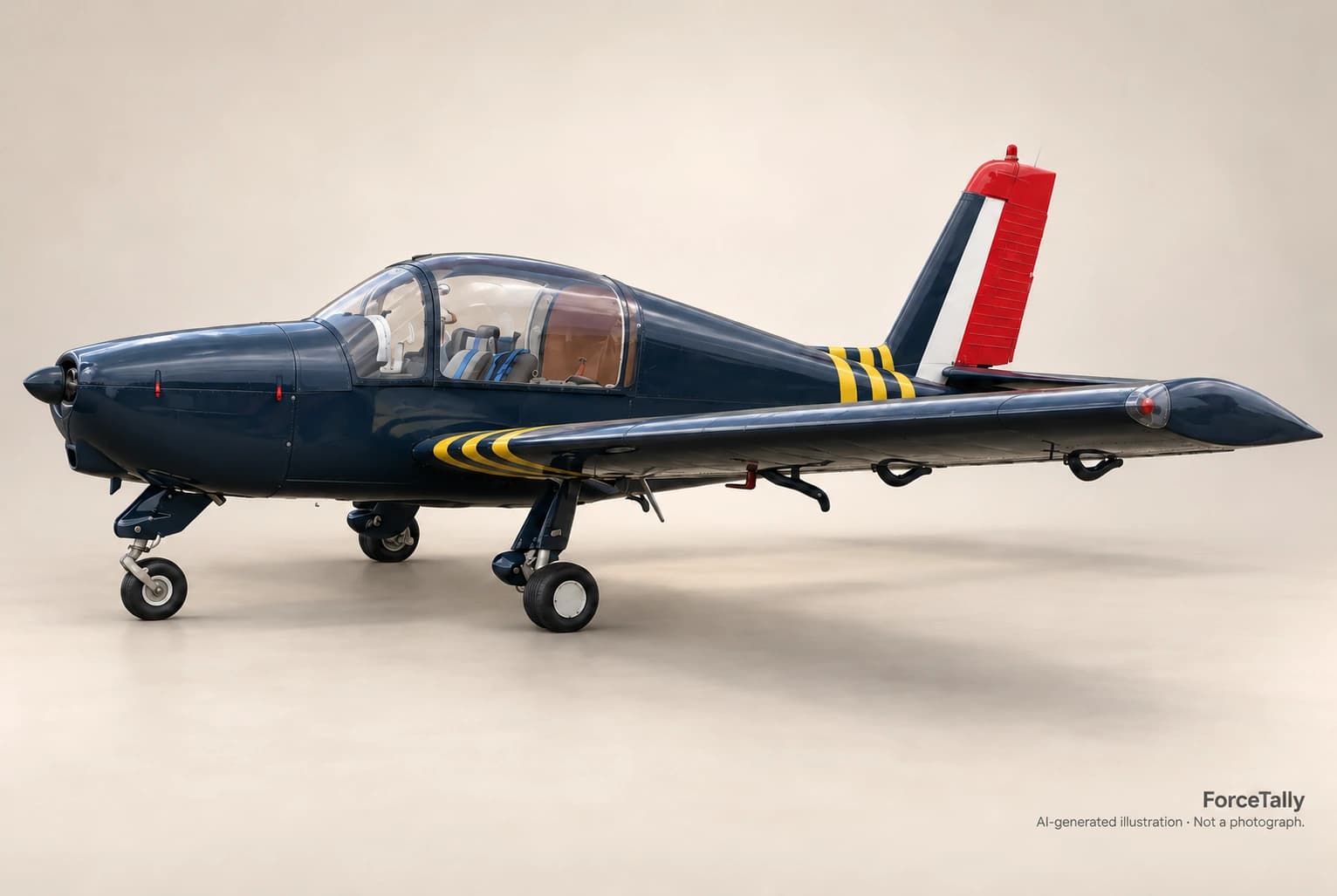
The Rallye was fitted with a bulbous cockpit, which was capable of accommodating two/three people in the basic lower-powered variants and up to four personnel within the more powerful models of the aircraft, some of which were designed to function as glider tugs and banner bearers . The canopy slides rearwards to provide access to and from the cockpit, aided by a step located just underneath the wing's trailing edge; on the ground. On the ground, the canopy should remain slightly open when occupied to allow for adequate airflow; in flight, the canopy can be left open at speed up to a maximum of 94 knots.[source]SOCATA Rallye family · Design; only the objects and conditions stated in this passage
Two-seat prototype powered by 90 hp (67 kW) Continental C90-14F , conventional landing gear , 1 built.[source]SOCATA Rallye family · Variants / French production / Lightweight airframe (MS.880 series); only the objects and conditions stated in this passage
Production version of MS.880B with 100 hp (75 kW) Continental O-200-A , 1,100 built.[source]SOCATA Rallye family · Variants / French production / Lightweight airframe (MS.880 series); only the objects and conditions stated in this passage
105 hp (78 kW) Potez engine. 12 built. Two-seat aircraft.[source]SOCATA Rallye family · Variants / French production / Lightweight airframe (MS.880 series); only the objects and conditions stated in this passage
115 hp (86 kW) Lycoming engine. 77 built. Two-seat aircraft.[source]SOCATA Rallye family · Variants / French production / Lightweight airframe (MS.880 series); only the objects and conditions stated in this passage
Two/three-seat version; first flight 1 January 1961. 145 hp (108 kW) Continental O-300 engine. 212 built.[source]SOCATA Rallye family · Variants / French production / Lightweight airframe (MS.880 series); only the objects and conditions stated in this passage
150 hp (110 kW) Lycoming engine. Three built.[source]SOCATA Rallye family · Variants / French production / Lightweight airframe (MS.880 series); only the objects and conditions stated in this passage
Two-seat trainer powered by 100 hp (75 kW) Rolls-Royce Continental O-200-A , 55 built.[source]SOCATA Rallye family · Variants / French production / Lightweight airframe (MS.880 series); only the objects and conditions stated in this passage
100T with three or four seats, 45 lb (20 kg) gross weight increase, 45 built.[source]SOCATA Rallye family · Variants / French production / Lightweight airframe (MS.880 series); only the objects and conditions stated in this passage
Four-seat version of 100-T, powered by 125 hp (93 kW) Lycoming O-235 .[source]SOCATA Rallye family · Variants / French production / Lightweight airframe (MS.880 series); only the objects and conditions stated in this passage
Four-seat Rallye 100ST, increased gross weight, enlarged tail, 150 hp (110 kW) Lycoming 0-320-E2A , 25 built.[source]SOCATA Rallye family · Variants / French production / Lightweight airframe (MS.880 series); only the objects and conditions stated in this passage
Improved Rallye 100ST powered by 110 hp (82 kW) Lycoming O-235-L2A , 76 built. Can be operated as a three/four-seat aircraft if spins are prohibited.[source]SOCATA Rallye family · Variants / French production / Lightweight airframe (MS.880 series); only the objects and conditions stated in this passage
Improved version of Rallye 150ST with 155 hp (116 kW) Lycoming O-320-D2A , 5 built.[source]SOCATA Rallye family · Variants / French production / Lightweight airframe (MS.880 series); only the objects and conditions stated in this passage
Improved version of Rallye 150T with 180 hp (130 kW) Lycoming O-360-A3A , 5 built, sold by Waco in US.[source]SOCATA Rallye family · Variants / French production / Lightweight airframe (MS.880 series); only the objects and conditions stated in this passage
The first version to incorporate four-place seating. 145 hp (108 kW) Continental engine. Eight built.[source]SOCATA Rallye family · Variants / French production / Heavy airframe (MS.890 series); only the objects and conditions stated in this passage
Similar to the MS.890 but with 150 hp (110 kW) Lycoming 0-320 engine. Later designated Rallye 150 .[source]SOCATA Rallye family · Variants / French production / Heavy airframe (MS.890 series); only the objects and conditions stated in this passage
180 hp (130 kW) Lycoming O-360 engine. Later designated Rallye 180 . Further redesignated SOCATA Gaillard or SOCATA Galérien (glider towing version).[source]SOCATA Rallye family · Variants / French production / Heavy airframe (MS.890 series); only the objects and conditions stated in this passage
220 hp (160 kW) Franklin 6A-350 engine. Later designated Rallye 220 . Some assembled and sold as Waco Minerva in US. 211 built.[source]SOCATA Rallye family · Variants / French production / Heavy airframe (MS.890 series); only the objects and conditions stated in this passage
Powered by 235 hp (175 kW) Lycoming O-540 . Redesignated SOCATA Gabier .[source]SOCATA Rallye family · Variants / French production / Heavy airframe (MS.890 series); only the objects and conditions stated in this passage
Enlarged 7-seat version, 300 hp (220 kW) Lycoming IO-540-K engine, two prototypes built.[source]SOCATA Rallye family · Variants / French production / Heavy airframe (MS.890 series); only the objects and conditions stated in this passage
Initial licence production version powered by PZL licensed 116 hp (87 kW) Franklin 4A-235 , based on Rallye 100 ST. Production 32 aircraft.[source]SOCATA Rallye family · Variants / Polish production; only the objects and conditions stated in this passage
150 hp (110 kW) Lycoming O-320 engine.[source]SOCATA Rallye family · Variants / Polish production; only the objects and conditions stated in this passage
160 hp (120 kW) Lycoming O-320 engine.[source]SOCATA Rallye family · Variants / Polish production; only the objects and conditions stated in this passage
235 hp (175 kW) Lycoming O-540 engine.[source]SOCATA Rallye family · Variants / Polish production; only the objects and conditions stated in this passage
Capacity: three passengers[source]SOCATA Rallye family · Specifications (180 GT); only the objects and conditions stated in this passage
Length: 7.24 m (23 ft 9 in)[source]SOCATA Rallye family · Specifications (180 GT); only the objects and conditions stated in this passage
Wingspan: 9.74 m (31 ft 11 in)[source]SOCATA Rallye family · Specifications (180 GT); only the objects and conditions stated in this passage
Height: 2.8 m (9 ft 2 in)[source]SOCATA Rallye family · Specifications (180 GT); only the objects and conditions stated in this passage
Wing area: 12.3 m 2 (132 sq ft)[source]SOCATA Rallye family · Specifications (180 GT); only the objects and conditions stated in this passage
Empty weight: 570 kg (1,257 lb)[source]SOCATA Rallye family · Specifications (180 GT); only the objects and conditions stated in this passage
Max takeoff weight: 1,050 kg (2,315 lb)[source]SOCATA Rallye family · Specifications (180 GT); only the objects and conditions stated in this passage
Powerplant: × Lycoming O-360-A3A 4-cylinder air-cooled horizontally-opposed piston engine, 134 kW (180 hp)[source]SOCATA Rallye family · Specifications (180 GT); only the objects and conditions stated in this passage
Maximum speed: 240 km/h (150 mph, 130 kn)[source]SOCATA Rallye family · Specifications (180 GT); only the objects and conditions stated in this passage
Cruise speed: 225 km/h (140 mph, 121 kn)[source]SOCATA Rallye family · Specifications (180 GT); only the objects and conditions stated in this passage
Stall speed: 92 km/h (57 mph, 50 kn)[source]SOCATA Rallye family · Specifications (180 GT); only the objects and conditions stated in this passage
Range: 1,300 km (810 mi, 700 nmi)[source]SOCATA Rallye family · Specifications (180 GT); only the objects and conditions stated in this passage
Service ceiling: 3,600 m (11,800 ft)[source]SOCATA Rallye family · Specifications (180 GT); only the objects and conditions stated in this passage
Rate of climb: 3.85 m/s (758 ft/min)[source]SOCATA Rallye family · Specifications (180 GT); only the objects and conditions stated in this passage