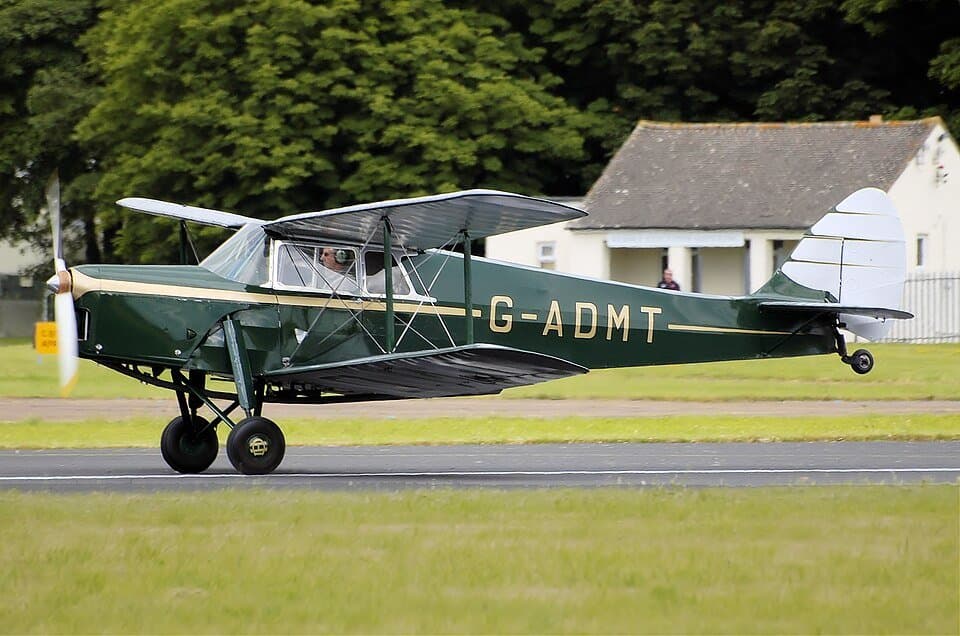
Credit
Adrian Pingstone ( Arpingstone ) · Public domain · Resized · Public domain · Source ↗ · Modified


Preparing your view.

At a glance
Measured figures
de Havilland DH.87 Hornet Moth
Single sourceDH.87B · Length
Single sourceConfiguration
| Specification | De Havilland Hornet Moth | PC-9M |
|---|---|---|
| Type | Trainer and Tourer[source] | — |
| Manufacturer | de Havilland[source] | Pilatus Aircraft[source]Manufacturer of the source-named PC-9M only; no base PC-9 geometry or variant feature inherited. |
| Status | In limited service[source] | — |
| Primary user | private owner pilots[source] | — |
| Number built | 164[source] |
Length
Single source24 ft 11 + 1 ⁄ 2 in (7.61 m)[source]
7,61 m (24 ft 11½ in )[source]
7,6 m[source]de Havilland DH.87 Hornet Moth
7,6 m[source]
7,61 meter[source]
PC-9M · Only the source-declared variant PC-9M · PC-9M
Single source10.14 m (33 ft 3 in)[source]Only the source-declared variant PC-9M
DH.87B · Width
Single source10 ft 9 + 1 ⁄ 2 in (3.29 m)[source]
de Havilland DH.87 Hornet Moth
Single sourceDH.87B · Wingspan
Single sourceWingspan
Disputed31 ft 11 in (9.73 m)[source]
9,73 m (31 ft 11 in)[source]
9,8 m[source]de Havilland DH.87 Hornet Moth
8,73 meter[source]
PC-9M · Only the source-declared variant PC-9M · PC-9M
Single source10.125 m (33 ft 3 in)[source]Only the source-declared variant PC-9M
de Havilland DH.87 Hornet Moth
Single sourceDH.87B · Height
Single sourceHeight
Single source6 ft 7 in (2.01 m)[source]
2,01 m (6 ft 7 in)[source]
2 m[source]de Havilland DH.87 Hornet Moth
2,0 m[source]
2,01 meter[source]
PC-9M · Only the source-declared variant PC-9M · PC-9M
Single source3.26 m (10 ft 8 in)[source]Only the source-declared variant PC-9M
Empty; DH.87B · Empty weight
Single sourceEmpty; Empty weight
Single sourceGross; DH.87B · Gross weight
Single source1,241 lb (563 kg)[source]
1,950 lb (885 kg)[source]
564 kg (1 241 lb )[source]
563 kg[source]
564 kg[source]
Empty; PC-9M · Only the source-declared variant PC-9M · PC-9M
Single sourceGross; PC-9M · Only the source-declared variant PC-9M · PC-9M
Single source1,725 kg (3,803 lb)
Cruise; DH.87B · at 1,000 ft (305 m)
Single sourceMaximum; DH.87B · at sea level
Single sourceMaximum; Maximum speed
Disputed124 mph (200 km/h, 108 kn) at sea level[source]
105 mph (169 km/h, 91 kn) at 1,000 ft (305 m)[source]
169 km/h[source]
200 km/h[source]
Cruise; PC-9M · Only the source-declared variant PC-9M · PC-9M · at 7,620 m (25,000 ft)
Single sourceMaximum; PC-9M · Only the source-declared variant PC-9M · PC-9M
Single sourcede Havilland DH.87 Hornet Moth
Single sourceDH.87B · Range
Single sourceRange
Single source620 mi (1,000 km, 540 nmi)[source]
1000 km[source]de Havilland DH.87 Hornet Moth
1000 km[source]
PC-9M · Only the source-declared variant PC-9M · PC-9M
Single source1,537 km (955 mi, 830 nmi)[source]Only the source-declared variant PC-9M
DH.87B · 1 × de Havilland Gipsy Major I 4-cylinder air-cooled inverted in-line piston engine
Single source1 × de Havilland Gipsy Major I 4-cylinder air-cooled inverted in-line piston engine, 130 hp (97 kW)[source]
PC-9M · Only the source-declared variant PC-9M · PC-9M · 1 × Pratt & Whitney Canada PT6A -62 turboprop
Single sourcePC-9M · Only the source-declared variant PC-9M · PC-9M · flat-rated at 950 shp
Single source1 × Pratt & Whitney Canada PT6A -62 turboprop, 857 kW (1,149 hp) flat-rated at 708 kW (950 shp)[source]Only the source-declared variant PC-9M
Bars compare reported quantities only. A larger figure does not make a system better; configurations and test conditions differ.
| — |
| Manufactured | 1935–1938[source] | — |
|---|
| First flight | 9 May 1934[source] | — |
|---|
| Capacity | 1 passenger / trainee[source] | — |
|---|
| Airfoil | RAF 15[source] | — |
|---|
| Fuel capacity | 35 imp gal (42 US gal; 159 L) fuel in fuselage tank[source] | — |
|---|
| Propellers | 2-bladed fixed-pitch propeller[source] | — |
|---|
| Stall speed | 40 mph (64 km/h, 35 kn)[source] | 143 km/h (89 mph, 77 kn) EAS flaps and gear up, 128 km/h (80 mph; 69 kn) flaps and gear down[source]Only the source-declared variant PC-9M |
|---|
| Time to altitude | 5,000 ft (1,524 m) in 8 minutes 45 seconds[source] | — |
|---|
| Wing loading | 7.97 lb/sq ft (38.9 kg/m 2 )[source] | — |
|---|
| Power/mass | 0.067 hp/lb (0.110 kW/kg)[source] | — |
|---|
| Source measurement | The prototype first flew at Hatfield on 9 May 1934 and, with two other pre-production aircraft, embarked on an extensive test program that resulted in the first production aircraft (designated DH.87A) completed in August 1935 having wings of greater outboard taper. These were found to cause problems, especially when landing in three-point attitude: there was a tendency for the tips to stall, causing embarrassment to the pilot and often damage to the aeroplane. From early 1936, de Havilland offered owners of the DH.87A replacement wings of the new squarer shape at a reduced price in exchange for the original wings. Designated DH.87B, new aircraft from about manufacture Number 68 were built with the new square wings. This wing reduced the overall span by 8 inches (20 cm). The alterations slightly increased overall weight at some penalty to performance.[source]De Havilland Hornet Moth · Design and development; only the objects and conditions stated in this passage Length: 24 ft 11 + 1 ⁄ 2 in (7.61 m)[source]De Havilland Hornet Moth · Specifications (DH.87B); only the objects and conditions stated in this passage Wingspan: 31 ft 11 in (9.73 m)[source]De Havilland Hornet Moth · Specifications (DH.87B); only the objects and conditions stated in this passage Width: 10 ft 9 + 1 ⁄ 2 in (3.29 m)[source]De Havilland Hornet Moth · Specifications (DH.87B); only the objects and conditions stated in this passage Height: 6 ft 7 in (2.01 m)[source]De Havilland Hornet Moth · Specifications (DH.87B); only the objects and conditions stated in this passage Wing area: 244.5 sq ft (22.71 m 2 )[source]De Havilland Hornet Moth · Specifications (DH.87B); only the objects and conditions stated in this passage Empty weight: 1,241 lb (563 kg)[source]De Havilland Hornet Moth · Specifications (DH.87B); only the objects and conditions stated in this passage Gross weight: 1,950 lb (885 kg)[source]De Havilland Hornet Moth · Specifications (DH.87B); only the objects and conditions stated in this passage Powerplant: 1 × de Havilland Gipsy Major I 4-cylinder air-cooled inverted in-line piston engine, 130 hp (97 kW)[source]De Havilland Hornet Moth · Specifications (DH.87B); only the objects and conditions stated in this passage Maximum speed: 124 mph (200 km/h, 108 kn) at sea level[source]De Havilland Hornet Moth · Specifications (DH.87B); only the objects and conditions stated in this passage Cruise speed: 105 mph (169 km/h, 91 kn) at 1,000 ft (305 m)[source]De Havilland Hornet Moth · Specifications (DH.87B); only the objects and conditions stated in this passage Stall speed: 40 mph (64 km/h, 35 kn)[source]De Havilland Hornet Moth · Specifications (DH.87B); only the objects and conditions stated in this passage Range: 620 mi (1,000 km, 540 nmi)[source]De Havilland Hornet Moth · Specifications (DH.87B); only the objects and conditions stated in this passage Service ceiling: 14,800 ft (4,500 m)[source]De Havilland Hornet Moth · Specifications (DH.87B); only the objects and conditions stated in this passage Rate of climb: 690 ft/min (3.5 m/s)[source]De Havilland Hornet Moth · Specifications (DH.87B); only the objects and conditions stated in this passage Time to altitude: 5,000 ft (1,524 m) in 8 minutes 45 seconds[source]De Havilland Hornet Moth · Specifications (DH.87B); only the objects and conditions stated in this passage | — |
|---|
| Engine | un de Havilland Gipsy Major , 4 cilindri[source] | — |
|---|
| Propulsion | czterocylindrowy silnik gwiazdowy de Havilland Gipsy Major[source]de Havilland DH.87 Hornet Moth 1 × 4-Zylinder-Reihenmotor de Havilland Gipsy Major mit 130 PS (luftgekühlt)[source] | — |
|---|
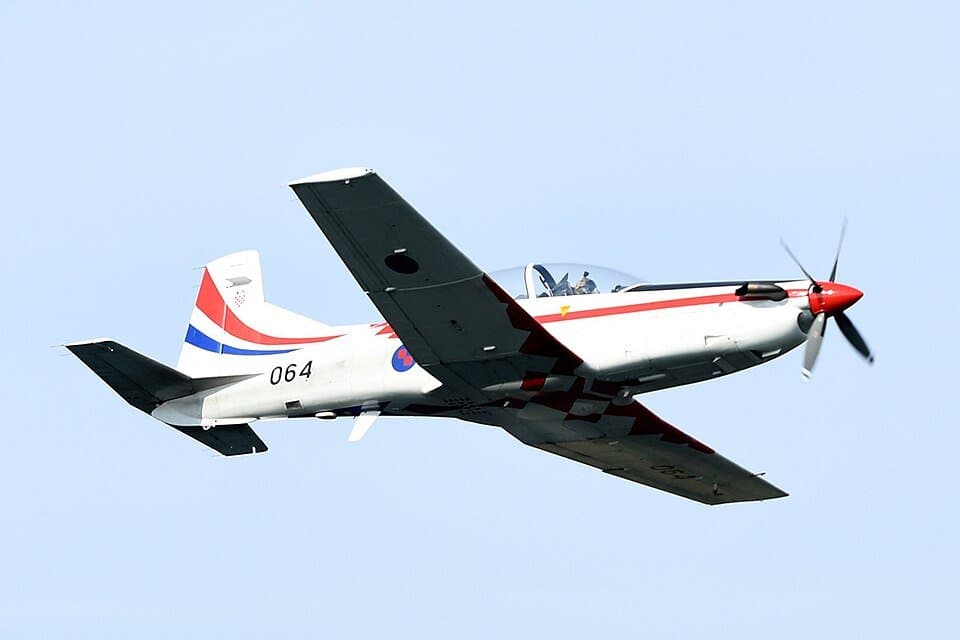
| Variant description | — | PC-9M[source]Only the source-declared variant PC-9M This version was introduced in 1997 as the new standard model. It has an enlarged dorsal fin in order to improve longitudinal stability, modified wingroot fairings, stall strips on the leading edges as well as new engine and propeller controls.[source]Only the source-declared variant PC-9M |
|---|
| Endurance | — | four hours and 30 minutes[source]Only the source-declared variant PC-9M |
|---|
| g limits | — | + 7.0 g to −3.5 g[source]Only the source-declared variant PC-9M |
|---|
| Take-off distance over 50 ft (15 m) obstacle at sea level | — | 1,280 ft (391 m)[source]Only the source-declared variant PC-9M |
|---|
| Landing distance over 50 ft (15 m) obstacle at sea level | — | 2,295 ft (700 m)[source]Only the source-declared variant PC-9M |
|---|
| Hardpoints | — | seven hardpoints, 3 under each wing, inner two rated at 250 kg (550 lb), outer rated at 110 kg (240 lb)[source]Only the source-declared variant PC-9M Hardpoints: seven hardpoints, 3 under each wing, inner two rated at 250 kg (550 lb), outer rated at 110 kg (240 lb)[source]Only the source-declared variant PC-9M |
|---|
| Country of origin | — | Switzerland[source]Inventory Origin column; table 1, row 21, cell 2; revision 1376580369 Switzerland[source]Inventory Origin column; table 1, row 14, cell 2; revision 1372375479 Switzerland[source]Inventory Origin column; table 2, row 19, cell 2; revision 1365898407 |
|---|
2,350 kg (5,181 lb)[source]Only the source-declared variant PC-9M
3,200 kg (7,055 lb) A view of the interior of the cockpit of a Pilatus PC-9 aircraft.[source]Only the source-declared variant PC-9M