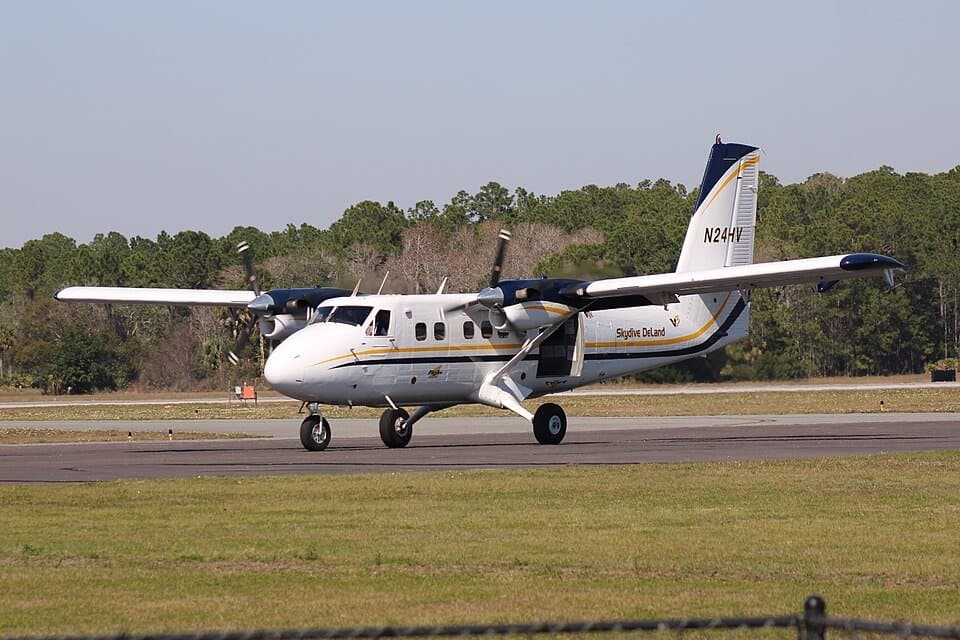

Credit
ZLEA · CC BY-SA 4.0 · Resized · CC BY-SA 4.0 · Source ↗ · Modified


Preparing your view.

At a glance
De Havilland Canada DHC-6 Twin Otterlarger figure on 3 of 3
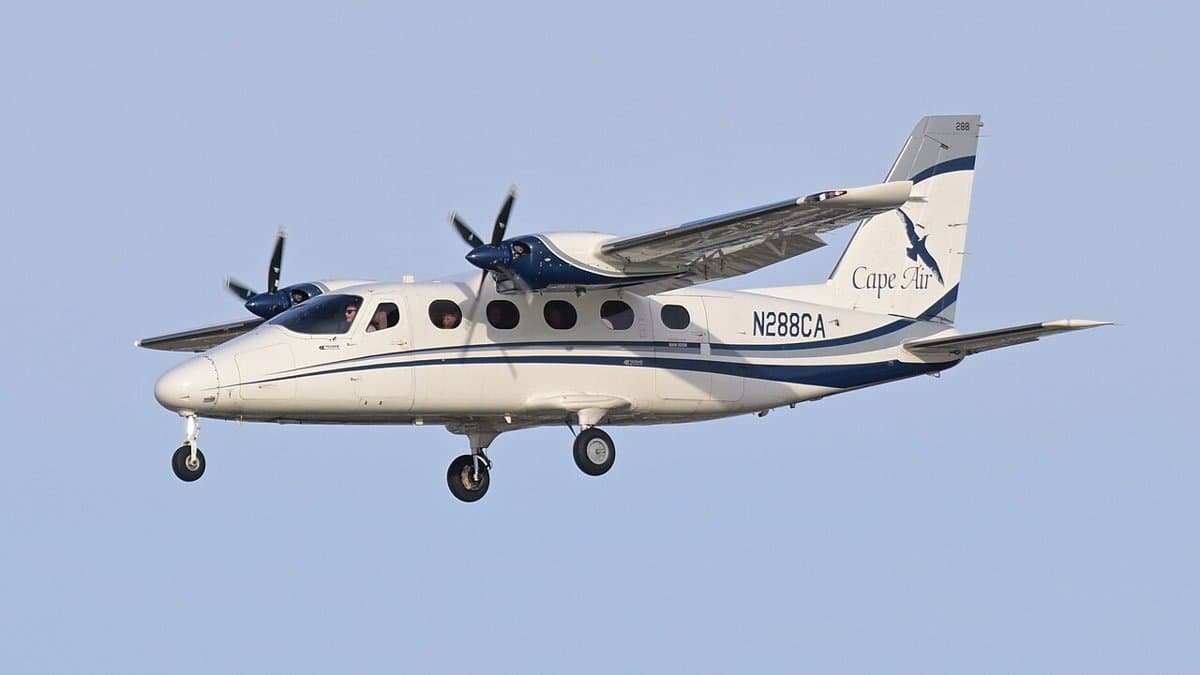
Tecnam P2012 Travellerlarger figure on 0 of 3
True scale
Side by side. From every angle. A human reference for perspective.
3.26 MB · Loads when you open it| Model | Length | Width / span | Height |
|---|---|---|---|
| De Havilland Canada DHC-6 Twin Otter | ≈ 15.09 m | ≈ 19.81 m (Width) | ≈ 5.94 m |
| Tecnam P2012 Traveller | ≈ 11.8 m | ≈ 16.6 m (Width) | ≈ 4.4 m |
Scaled uniformly to the sourced length of 15.09 m. The shape was turned square to the axes; the height was fitted to the sourced 5.94 m; the width was fitted to the sourced 19.81 m. Not an official model or a measured survey.
ForceTally · All rights reserved
Scaled uniformly to the sourced length of 11.8 m. The shape was turned square to the axes; the height was fitted to the sourced 4.4 m; the width was fitted to the sourced 16.6 m. Not an official model or a measured survey.
ForceTally · All rights reserved
The human reference is a generic 1.75 m figure. Models describe external size, not combat performance.
Measured figures
Length
Single source49 ft 6 in (15.09 m)[source]
Configuration
| Specification | De Havilland Canada DHC-6 Twin Otter | Tecnam P2012 Traveller |
|---|---|---|
| Type | Utility aircraft[source] | — |
| Manufacturer | de Havilland Canada Viking Air De Havilland Canada[source] | Tecnam[source]P2012 Traveller |
| Status | In production[source] | — |
| Number built | March 2026: 1000 (844 DHC, 156 Viking)[source] | 120[source] |
Counts only measures both sources give with the same scope. A larger figure is not a better system.
Length
11.8 m (38 ft 9 in)[source]
Cruise; Cruise speed
Single source160 kn (300 km/h)[source]
over 727 nmi (837 mi; 1,346 km)
Single source2,150 lb (980 kg) over 727 nmi (837 mi; 1,346 km)[source]
Wing area
Single source25.4 m 2 (273 sq ft)[source]
1,140 ft/min
Single source(1,285 ft/min) on STOL variant
Single source5.8 m/s (1,140 ft/min) ; 6.53 m/s (1,285 ft/min) on STOL variant[source]
Bars compare reported quantities only. A larger figure does not make a system better; configurations and test conditions differ.
| Manufactured | 1965–1988 (Series 100–300) 2008–present (Series 400) 2023–present (Series 300-G)[source] | — |
|---|
| Introduction date | 1966[source] | 22 February 2020[source]P2012 Traveller |
|---|
| First flight | 20 May 1965[source] | 21 July 2016[source]P2012 Traveller |
|---|
| Developed from | de Havilland Canada DHC-3 Otter[source] | — |
|---|
| Passengers | 20[source] | — |
|---|
| Wing geometry | 65 ft 0 in (19.81 m) span, 420 sq ft (39 m 2 ) area (10.05 AR)[source] | — |
|---|
| Powerplant | P&WC PT6 A-20[source] | — |
|---|
| Stall Speed | 65 mph (56 kn; 105 km/h)[source] | 120 km/h (75 mph, 65 kn) full flaps; 122 km/h (76 mph; 66 kn) full flaps on STOL variant[source] |
|---|
| National origin | Canada[source] | Italy[source]P2012 Traveller |
|---|
| Role | — | Utility aircraft[source]P2012 Traveller |
|---|
| Designer | — | Luigi Pascale[source]P2012 Traveller |
|---|
| Primary users | — | Cape Air FLN Frisia Luftverkehr APEX flight academy Pago Wings Pacific Air Charters[source]P2012 Traveller |
|---|
| In service | — | 2020–present[source]P2012 Traveller |
|---|
| Capacity | — | 9 passenger seats / 1,414 kg (3,117 lb) useful load including fuel[source] |
|---|
| Aspect ratio | — | 7.7[source] |
|---|
| Fuel capacity | — | 880 L (230 US gal) usable fuel[source] |
|---|
| Propellers | — | 3 or 4-bladed MT-Propeller, 1.95 m (6 ft 5 in) diameter constant-speed fully-feathering propeller[source] |
|---|
| Never exceed speed | — | 419 km/h (260 mph, 226 kn)[source] |
|---|
| Wing loading | — | 145 kg/m 2 (30 lb/sq ft)[source] |
|---|
| Power/mass | — | 6.6 kg/kW (10.8 lb/hp)[source] |
|---|
| Takeoff run | — | 564 m (1,850 ft); 445 m (1,460 ft) on STOL variant[source] |
|---|
| Takeoff distance | — | 791 m (2,595 ft); 682 m (2,238 ft) on STOL variant[source] |
|---|
| Landing run | — | 365 m (1,198 ft); 290 m (950 ft) on STOL variant[source] |
|---|
| Landing distance | — | 743 m (2,438 ft); 590 m (1,940 ft) on STOL variant[source] |
|---|
| Fuel Consumption | — | 117 L/h (31 US gal/h)[source] |
|---|
Maximum take-off; Max takeoff weight
Single source