

Credit
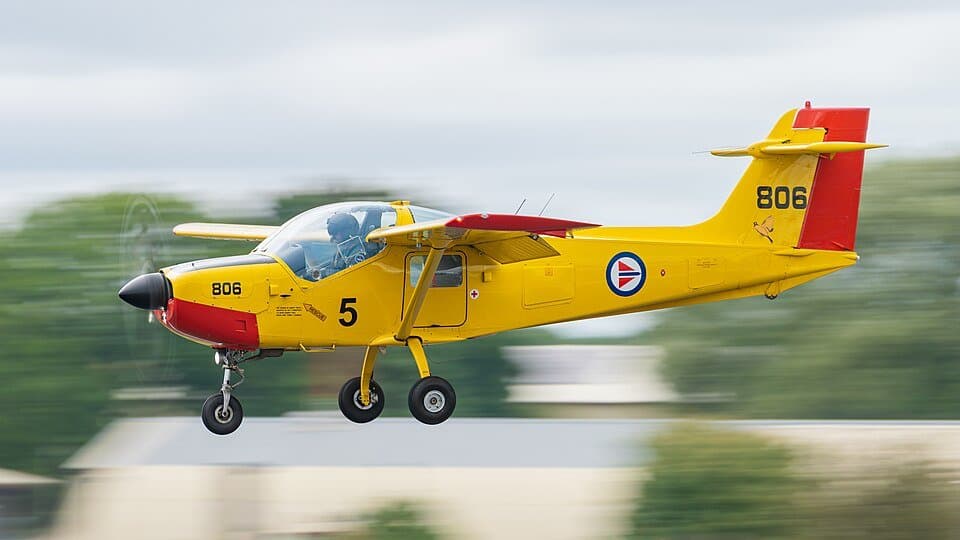
Alan Wilson from Stilton, Peterborough, Cambs, UK · CC BY-SA 2.0 · Resized · CC BY-SA 2.0 · Source ↗ · Modified


Preparing your view.
At a glance
Measured figures
DHC-1 Chipmunk · Length
Single source25 ft 5 in (7.75 m)[source]
Configuration
| Specification | De Havilland Canada DHC-1 Chipmunk | Saab Safari |
|---|---|---|
| Type | Trainer[source] | Primary trainer[source] |
| Manufacturer | de Havilland Canada[source] | Saab AB[source] |
| Status | In limited service; many examples in private use[source] | Active[source] |
| Primary users | Royal Air Force (historical) Royal Canadian Air Force (historical) Portuguese Air Force[source] |
Safari · Length
7.00 m (23 ft 0 in)[source]
Empty; DHC-1 Chipmunk · Empty weight
Single sourceGross; DHC-1 Chipmunk · Gross weight
Single sourceMaximum take-off; DHC-1 Chipmunk · Max takeoff weight
Single source1,517 lb (688 kg)[source]
2,014 lb (914 kg)[source]
2,200 lb (998 kg)[source]
Empty; Safari · Empty weight
Single sourceGross; Safari · Gross weight
Single sourceDHC-1 Chipmunk · 1 × de Havilland Gipsy Major 1C 4-cylinder air-cooled inverted in-line piston engine
Single source1 × de Havilland Gipsy Major 1C 4-cylinder air-cooled inverted in-line piston engine, 145 hp (108 kW)[source]
Safari · 1 × Lycoming IO-360-A1B6 air-cooled flat-four piston engine
Single source1 × Lycoming IO-360-A1B6 air-cooled flat-four piston engine, 150 kW (200 hp)[source]
Safari · Endurance
Single source5 hr 10 min[source]
Bars compare reported quantities only. A larger figure does not make a system better; configurations and test conditions differ.
Danish Air Force Royal Norwegian Air Force Pakistan Air Force[source] |
| Number built | 1,284 (including Canadian, British, and Portuguese production)[source] | 462[source] |
|---|
| Manufactured | 1947–1956[source] | 1971–1979[source] |
|---|
| Introduction date | 1946[source] | 1972[source] |
|---|
| First flight | 22 May 1946[source] | 26 February 1971[source] |
|---|
| Retired | 1955 (Belgium) 1972 (Canada) 1996 (United Kingdom)[source] | — |
|---|
| Airfoil | root: NACA 1415 ; tip: USA 35B[source] | — |
|---|
| Propellers | 2-bladed fixed-pitch propeller[source] | 2-bladed Hartzell HC-C2YK-4F/FC7666A-2 constant speed propeller[source] |
|---|
| Wing loading | 11.71 lb/sq ft (57.2 kg/m 2 )[source] | — |
|---|
| Power/mass | .072 hp/lb (0.118 kW/kg)[source] | — |
|---|
| Country of origin | Canada[source] | Sweden[source]Inventory Origin column; table 1, row 13, cell 2; revision 1375830625 |
|---|
| Designer | — | Malmö Flygindustri[source] |
|---|
| Developed from | — | Malmö MFI-9 Junior[source] |
|---|
| Variant | — | PAC MFI-17 Mushshak[source] |
|---|
| Capacity | — | 1 passenger[source] |
|---|
| Fuel capacity | — | 190 L (42 imp gal; 50 US gal)[source] |
|---|
| Stall speed | — | 107 km/h (66 mph, 58 kn) flaps down, power off[source] |
|---|
| Never exceed speed | — | 365 km/h (227 mph, 197 kn)[source] |
|---|
| Take-off run to 15 m (50 ft) | — | 385 m (1,263 ft)[source] |
|---|
| Landing run from 15 m (50 ft) | — | 390 m (1,280 ft)[source] |
|---|
| Role | — | propeller-powered basic trainer aircraft[source] |
|---|
| Source measurement | — | On 11 July 1969 Saab flew the prototype (SE-301) of a two/three-seat civil/military trainer or general utility aircraft allocated the designation Saab-MFI 15. Developed at Malmö Flygindustri , it was powered by a 119 kW Avco Lycoming IO-320-B2 flat-four engine and with a conventional low-set tailplane. The latter was later modified to a T-tail configuration to minimise damage when operating from rough airfields.[source]Saab Safari · Development and design; only the objects and conditions stated in this passage A military version designated originally Saab-MFI 17 was flown on 6 July 1972 and differed from the Safari by being equipped more specifically for use as a military trainer, or for artillery observation or forward air control and liaison.; this version was later named Saab Supporter. In August 1978 Saab flew a prototype version of the Safari with a 157 kW Continental flat-six turbocharged engine; designated Safari TS, it did not enter production. A trainer based on the Safari's design was built in kit form for assembly in Pakistan as the Mushshak, with 92 aircraft delivered to the Pakistani Air Force . A later batch of 120 aircraft was built entirely in Pakistan.[source]Saab Safari · Development and design; only the objects and conditions stated in this passage Saab Safari TS – a prototype fitted with a 157 kW (210 hp) turbocharged piston engine.[source]Saab Safari · Variants; only the objects and conditions stated in this passage Length: 7.00 m (23 ft 0 in)[source]Saab Safari · Specifications (Safari); only the objects and conditions stated in this passage Wingspan: 8.85 m (29 ft 0 in)[source]Saab Safari · Specifications (Safari); only the objects and conditions stated in this passage Height: 2.60 m (8 ft 6 in)[source]Saab Safari · Specifications (Safari); only the objects and conditions stated in this passage Wing area: 11.90 m 2 (128.1 sq ft)[source]Saab Safari · Specifications (Safari); only the objects and conditions stated in this passage Empty weight: 646 kg (1,424 lb)[source]Saab Safari · Specifications (Safari); only the objects and conditions stated in this passage Gross weight: 1,200 kg (2,646 lb)[source]Saab Safari · Specifications (Safari); only the objects and conditions stated in this passage Powerplant: 1 × Lycoming IO-360-A1B6 air-cooled flat-four piston engine, 150 kW (200 hp)[source]Saab Safari · Specifications (Safari); only the objects and conditions stated in this passage Maximum speed: 236 km/h (147 mph, 127 kn) at sea level[source]Saab Safari · Specifications (Safari); only the objects and conditions stated in this passage Cruise speed: 208 km/h (129 mph, 112 kn)[source]Saab Safari · Specifications (Safari); only the objects and conditions stated in this passage Stall speed: 107 km/h (66 mph, 58 kn) flaps down, power off[source]Saab Safari · Specifications (Safari); only the objects and conditions stated in this passage Never exceed speed : 365 km/h (227 mph, 197 kn)[source]Saab Safari · Specifications (Safari); only the objects and conditions stated in this passage Endurance: 5 hr 10 min[source]Saab Safari · Specifications (Safari); only the objects and conditions stated in this passage Service ceiling: 4,100 m (13,500 ft)[source]Saab Safari · Specifications (Safari); only the objects and conditions stated in this passage Rate of climb: 4.10 m/s (807 ft/min)[source]Saab Safari · Specifications (Safari); only the objects and conditions stated in this passage Take-off run to 15 m (50 ft): 385 m (1,263 ft)[source]Saab Safari · Specifications (Safari); only the objects and conditions stated in this passage Landing run from 15 m (50 ft): 390 m (1,280 ft)[source]Saab Safari · Specifications (Safari); only the objects and conditions stated in this passage |
|---|
Maximum take-off; Max takeoff weight
Single source