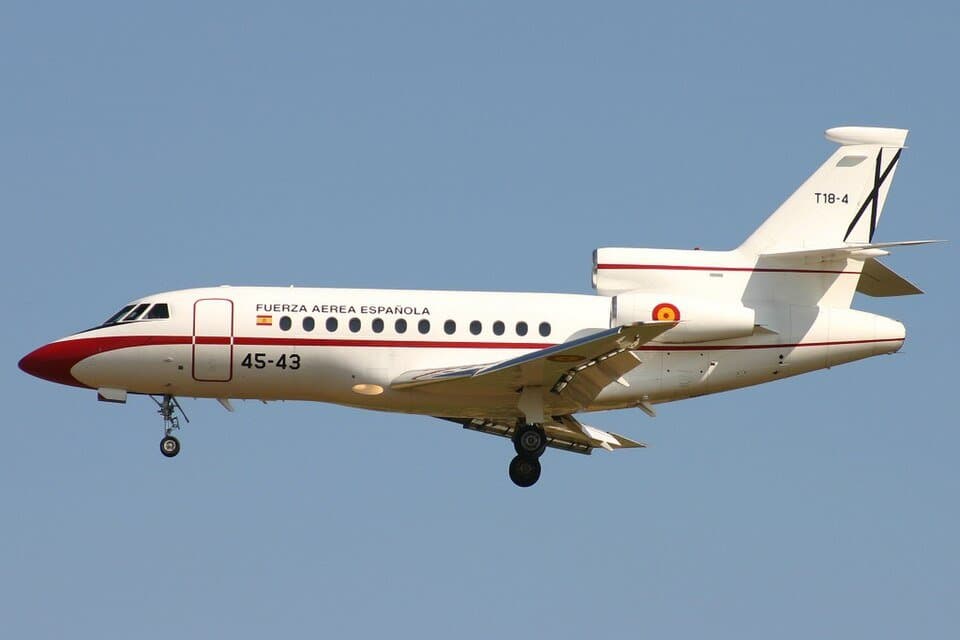



Preparing your view.
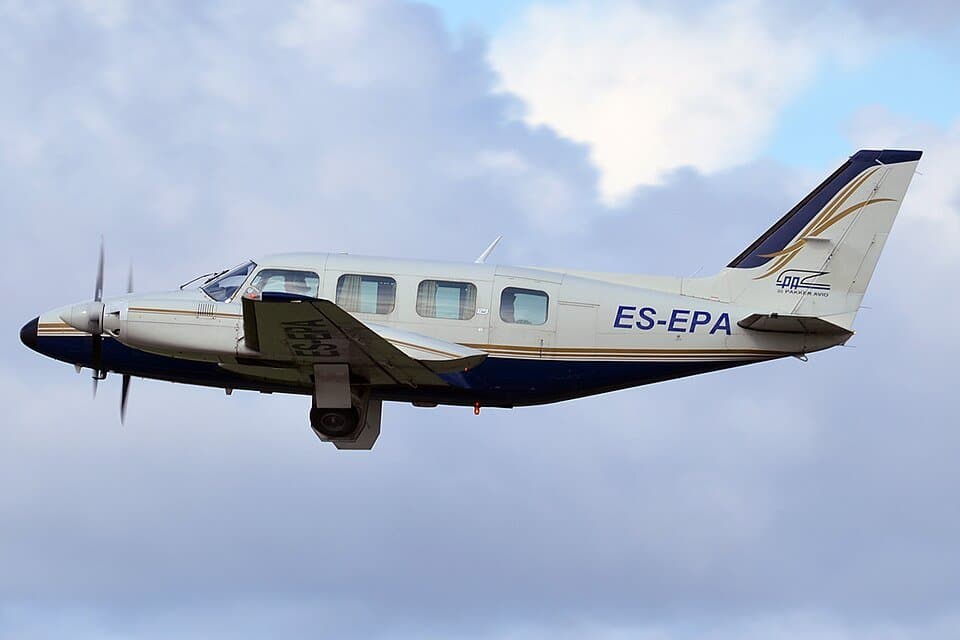
At a glance
Measured figures
Falcon 900B · Length
Single source20.21 m (66 ft 4 in)[source]
PA-31 Navajo · Length
Single sourceConfiguration
| Specification | Dassault Falcon 900 | Piper PA-31 Navajo |
|---|---|---|
| Type | Business jet[source] | Utility aircraft[source] |
| National origin | France[source] | — |
| Manufacturer | Dassault Aviation[source] | Piper Aircraft[source] |
| Status | Active service, in production[source] | Active service[source] |
32 ft 7 + 1 ⁄ 2 in (9.94 m)[source]
PA-31 Navajo · Height
Single source13 ft 0 in (3.96 m)[source]
Empty; Falcon 900B · Empty weight
Single sourceMaximum take-off; Falcon 900B · Max takeoff weight
Single source10,255 kg (22,608 lb)[source]
20,640 kg (45,503 lb)[source]
Empty; PA-31 Navajo · Empty weight
Single sourceMaximum take-off; PA-31 Navajo · Max takeoff weight
Single sourcePA-31 Navajo · 2 × Lycoming TIO-540-A air-cooled six-cylinder horizontally opposed piston engine each
Single source2 × Lycoming TIO-540-A air-cooled six-cylinder horizontally opposed piston engine , 310 hp (230 kW) each[source]
Falcon 900B · 3 × Honeywell TFE731 -5BR-1C turbofans thrust each
Single source3 × Honeywell TFE731 -5BR-1C turbofans , 21.13 kN (4,750 lbf) thrust each[source]
PA-31 Navajo · 1,445 ft/min (
Single source1,445 ft/min (7.34 m/s)[source]
Bars compare reported quantities only. A larger figure does not make a system better; configurations and test conditions differ.
| Primary users |
|---|
French Air and Space Force Japan Coast Guard Nigerian Air Force Royal Malaysian Air Force[source] |
| — |
| Number built | >500[source] | 3,942[source] |
|---|
| Manufactured | 1984–present[source] | 1967–1984[source] |
|---|
| First flight | 21 September 1984 ( 1984-09-21 )[source] | 30 September 1964[source] |
|---|
| Developed from | Dassault Falcon 50[source] | — |
|---|
| Developed into | Dassault Falcon 2000 Dassault Falcon 7X[source] | Piper PA-31T Cheyenne[source] |
|---|
| Capacity | 19 passengers[source] | 5 to 7 passengers[source] |
|---|
| Fuel capacity | 8,690 kg (19,160 lb)[source] | 190 US gal (160 imp gal; 720 L) total, 187 US gal (156 imp gal; 710 L) useable[source] |
|---|
| Aspect ratio | 7.63:1[source] | — |
|---|
| Stall speed | 158 km/h (98 mph, 85 kn) (wheels and flaps down)[source] | 73 mph (117 km/h, 63 kn) (flaps down)[source] |
|---|
| Introduction date | — | 30 March 1967[source] |
|---|
| Airfoil | — | NACA 63 4 415 at root, 63 1 212[source] |
|---|
| Propellers | — | 3-bladed Hartzell metal, fully feathering propellers, 6 ft 8 in (2.03 m) diameter[source] |
|---|
| Never exceed speed | — | 272 mph (438 km/h, 236 kn)[source] |
|---|
| Role | — | family of twin-engined low-wing tricycle gear utility aircraft[source] |
|---|
| Source measurement | — | In 1962, Piper began developing a six- to eight-seat twin-engined corporate and commuter transport aircraft under the project name Inca , at the request of company founder William T. Piper . Looking like a scaled-up PA-30 Twin Comanche , the PA-31 made its first flight on 30 September 1964, and was announced later that year. It is a low-wing monoplane with a conventional tail, powered by two 310 hp (231 kW) Lycoming TIO-540-A turbocharged engines in "tiger shark" cowlings, a feature shared with the Twin Comanche and the PA-23 Aztec .[source]Piper PA-31 Navajo · Development; only the objects and conditions stated in this passage As testing proceeded, two cabin windows were added to each fuselage side and the engines were moved further forward. The PA-31, named " Navajo " after the native American tribe, was certified by the FAA on 24 February 1966, again in mid-1966 with an increase in maximum takeoff weight (MTOW) from 6,200 to 6,500 lb (2,812 to 2,948 kg), and deliveries began in 1967.[source]Piper PA-31 Navajo · Development; only the objects and conditions stated in this passage The PA-31-300 was certified by the FAA in June 1967, the only variant without turbocharged engines: 300 hp (224 kW) Lycoming IO-540-M1A5 engines driving two-bladed propellers. Unofficially, the initial model was referred to as the PA-31-310. Only 14 PA-31-300 were built in 1968 and 1969: the smallest variant production.[source]Piper PA-31 Navajo · Development; only the objects and conditions stated in this passage In January 1966, development of the PA-31P Pressurized Navajo had begun : Piper's first pressurized aircraft. The PA-31P (or PA-31P-425 unofficially) was certified in late 1969. It was powered by 425 hp (317 kW) Lycoming TIGO-541-E engines, had a longer nose, fewer and smaller windows, 25 US gal (95 L; 21 imp gal) fuel tanks in the engine nacelles and a one-piece airstair cabin entry door instead of the split pair of doors. MTOW was increased to 7,800 lb (3,538 kg). The PA-31P was produced from 1970 to 1977.[source]Piper PA-31 Navajo · Development; only the objects and conditions stated in this passage In September 1972, Piper unveiled the PA-31-350 Navajo Chieftain, a Navajo B stretched by 2 ft (61 cm) for up to ten seats, with more powerful engines and counter-rotating propellers to prevent critical engine handling problems. The Chieftain was powered by 350 hp (261 kW) Lycoming TIO-540 variants, with an opposite-rotation LTIO-540 on the right-hand wing, and MTOW was increased to 7,000 lb (3,175 kg). Deliveries started in 1973, after a delay due to a flood caused by Hurricane Agnes at Piper's factory in Lock Haven, Pennsylvania .[source]Piper PA-31 Navajo · Development; only the objects and conditions stated in this passage The 1974 PA-31-325 Navajo C/R was based on the Navajo B. The Navajo C/R had 325 hp (242 kW), lower rated versions of the Chieftain's counter-rotating engines. It was certified in May 1974, and production commenced in the 1975 model year. The Navajo B was also superseded in 1975 by the Navajo C.[source]Piper PA-31 Navajo · Development; only the objects and conditions stated in this passage In May 1981, Piper established its T1000 Airliner Division at its Lakeland, Florida , factory. The PA-31-350T1020 (or T1020) was a PA-31-350 Chieftain optimized for and marketed for the commuter airline market, without the 40 US gal (151 L; 33 imp gal) auxiliary fuel tanks in each wing. Up to eleven seats could be fitted, and baggage capacity was reduced from 700 to 600 lb (318 to 272 kg) maximum. The first T1020 was delivered in December 1981.[source]Piper PA-31 Navajo · Development; only the objects and conditions stated in this passage The PA-31T3 (T1040) was a hybrid with the PA-31-350T1020 main fuselage, and the nose and tail of the PA-31T1 Cheyenne I . The wings were similar to the Cheyenne I's, but with reduced fuel capacity and baggage lockers in the engine nacelles similar to those of the Chieftain. An optional underbelly cargo pod was also available. The Pratt & Whitney Canada PT6A-11 turboprop engines were the same as those of the Cheyenne I. Deliveries began in July 1982. A T1050 variant was proposed, with a fuselage stretch of 11 ft 6 in (3.51 m) and seating capacity for 17, but did not proceed.[source]Piper PA-31 Navajo · Development; only the objects and conditions stated in this passage The PA-31P-350 Mojave was also a hybrid, a piston-engined Cheyenne. The Mojave combined the Cheyenne I fuselage with the Chieftain tail. The Chieftain's wings were strengthened, their span was 4 ft (1.2 m) wider and the fuel capacity was enlarged to 243 US gal (920 L; 202 imp gal). The engines variants had intercoolers , and the rear part of the nacelles were baggage lockers. The Mojave's MTOW rose by 200 lb (91 kg) to 7,200 lb (3,266 kg). Certified in 1983, like the T1020 and T1040, the Mojave was produced in 1983 and 1984; combined production with the T1020 and T1040 was below 100 aircraft. Two experimental PA-31-353s were also built in the mid-1980s.[source]Piper PA-31 Navajo · Development; only the objects and conditions stated in this passage Marketing name for 1971 improved variant with 310 hp (231 kW) Lycoming TIO-540-E turbo-charged piston engines, new airconditioning and optional pilot access door and optional wide utility door.[source]Piper PA-31 Navajo · Variants; only the objects and conditions stated in this passage Marketing name for 1974 improved variant with 310 hp (231 kW) Lycoming TIO-540-A2C engines and other minor improvements.[source]Piper PA-31 Navajo · Variants; only the objects and conditions stated in this passage Pressurized version of the PA-31 Navajo, powered by two 425-hp (317-kW) Lycoming TIGO-541-E1A piston engines.[source]Piper PA-31 Navajo · Variants; only the objects and conditions stated in this passage Referred to as the "Navajo C/R" for Counter-rotating; variant of Navajo with counter-rotating engines introduced with the PA-31-350 Chieftain. 325 hp (242 kW) Lycoming TIO-540 / LTIO-540 engines[source]Piper PA-31 Navajo · Variants; only the objects and conditions stated in this passage Stretched version of the Navajo with more powerful 350-hp (261-kW) counter-rotating engines (a Lycoming TIO-540 and a Lycoming LTIO-540) to eliminate critical engine issues.[source]Piper PA-31 Navajo · Variants; only the objects and conditions stated in this passage Also known as the T1020/T-1020; variant of the PA-31-350 Chieftain optimised for commuter airline use, with less baggage and fuel capacity and increased seating capacity (nine passengers). First flight September 25, 1981. 21 built.[source]Piper PA-31 Navajo · Variants; only the objects and conditions stated in this passage Unbuilt airliner variant with fuselage lengthened by 11 ft 6 in (3.51 m) compared to the PA-31-350.[source]Piper PA-31 Navajo · Variants; only the objects and conditions stated in this passage Turboprop conversion of EMB 820C, fitted with two Pratt & Whitney Canada PT6A-27 engines flat-rated to 550shp. The Carajá's MTOW of 8,003 pounds (3,630 kg) was 1,000 pounds (454 kg) more than that of the Chieftain.[source]Piper PA-31 Navajo · Variants; only the objects and conditions stated in this passage Re-engined Navajo with 350 hp (261 kW) Lycoming TIO-540-J2B engines, four-blade Hartzell "Q-Tip" propellers and optional winglets . Conversion designed by Colemill Enterprises of Nashville, Tennessee. The supplemental type certificates (STCs) were subsequently sold to Mike Jones Aircraft Sales, which continues to convert PA-31, PA-31-325 and PA-31-350 variants with Colemill-developed features.[source]Piper PA-31 Navajo · Variants; only the objects and conditions stated in this passage Chilean Navy purchased a single PA-31 in 1971.[source]Piper PA-31 Navajo · Operators / Military; only the objects and conditions stated in this passage July 13, 1972: An Ansett Australia Piper PA-31 Navajo aircraft, registered as VH-CIZ, crashed near Golden Grove shortly after departing Adelaide for a charter flight to Moomba Airport . All eight people on board, including the pilot and seven passengers, were killed.[source]Piper PA-31 Navajo · Accidents and incidents; only the objects and conditions stated in this passage December 3, 1983: SouthCentral Air Flight 59 , a PA-31-350 registered N35206 , carrying eight passengers and one pilot, was on the takeoff roll at Anchorage International Airport when it collided head-on with Korean Air Lines Flight 084, a McDonnell Douglas DC-10-30 freighter HL7339 . The Piper struck the DC-10's left and center main landing gear and three passengers sustained minor injuries; the DC-10 overran the runway and the three crew suffered serious injuries. Investigators determined that the Korean Air Lines pilot had become disoriented taxiing in fog, failed to follow correct procedures and confirm his position, and accidentally initiated takeoff from the wrong runway. Both aircraft were severely damaged and were written off.[source]Piper PA-31 Navajo · Accidents and incidents; only the objects and conditions stated in this passage October 8, 1998: A Castle Aviation owned and operated Piper Chieftain (N3453A) was flying from Detroit Metropolitan Airport to Portage County Airport when it was destroyed after a forced landing in a wooded area near Ravenna, Ohio, approximately 5 miles from the destination airport due to fuel starvation. The airplane had been suffering issues with the landing gear status lights during the trip which caused a circuit breaker to open. The pilot flew four more legs with the airplane in this condition, not realizing the fuel gauges were also disabled by that circuit breaker.[source]Piper PA-31 Navajo · Accidents and incidents; only the objects and conditions stated in this passage May 31, 2000: Whyalla Airlines Flight 904 was a scheduled commuter flight, operated by a Piper PA-31 Navajo which crashed while attempting to ditch in the Spencer Gulf , South Australia after suffering failures of both engines on the evening of 31 May 2000. All 8 people on board the aircraft were killed as a result of the accident. The findings of a subsequent investigation by the Australian Transport Safety Bureau highlighting the airline's operating procedures as a key factor leading to the accident were later overturned after they were contradicted by evidence presented at a coronial inquiry into the deaths of those on board the flight. The accident led to a recall by engine manufacturer Textron Lycoming which saw close to 1000 aircraft grounded worldwide while defects were rectified at an estimated cost of $A 66 million. Australia's aviation regulator, the Civil Aviation Safety Authority also mandated life jackets be carried on all aircraft operating over water after the crash.[source]Piper PA-31 Navajo · Accidents and incidents; only the objects and conditions stated in this passage 6 June 2003: An Air Adventures New Zealand Ltd Piper PA-31 Chieftain (registered ZK-NCA) crashed into trees and terrain 1.2 nmi (2.2 km; 1.4 mi) short of runway 20, killing the pilot and seven of the nine passengers on board. The aircraft was flying too low during an ILS approach in foggy weather.[source]Piper PA-31 Navajo · Accidents and incidents; only the objects and conditions stated in this passage March 15, 2013: Three people were killed when a Piper PA-31 Navajo aircraft crashed shortly after takeoff into a parking lot of a business near the departure end of the runway 9. All three occupants of the aircraft were killed, and the cause of the crash was listed as pilot error.[source]Piper PA-31 Navajo · Accidents and incidents; only the objects and conditions stated in this passage August 1, 2016: Thai Regional Airline Flight 106, a Piper PA-31 Navajo (HS-FGB) arriving from Nakhon Ratchasima Airport with two passengers, crashed at Lam Phak Chi , Nong Chok district , Bangkok . In the incident, there was one fatality (the captain in command) and four injuries.[source]Piper PA-31 Navajo · Accidents and incidents; only the objects and conditions stated in this passage February 13, 2023: A Piper PA-31 Navajo aircraft owned by Murowa (Private) Limited force-landed near Beatrice . The aircraft was transporting diamonds under armed guard from the Murowa mine to Harare when it developed an apparent engine fault. Five people were injured in the crash, including the pilot and security personnel. The diamond consignment was secured following the incident.[source]Piper PA-31 Navajo · Accidents and incidents; only the objects and conditions stated in this passage July 26, 2025: A Piper PA-31-310 Navajo C registered C-GYYP , operated by Kîsik Aerial Survey crashed approximately three minutes after takeoff from Deer Lake Regional Airport , the pilot who was the sole occupant onboard was killed.[source]Piper PA-31 Navajo · Accidents and incidents; only the objects and conditions stated in this passage January 10, 2026: A Piper PA-31-310 (N325FA) crashed after takeoff from Juan José Rondón Airport in Paipa, Colombia, the pilot and five passengers, including Colombian singer Yeison Jiménez , were killed.[source]Piper PA-31 Navajo · Accidents and incidents; only the objects and conditions stated in this passage Capacity: 5 to 7 passengers[source]Piper PA-31 Navajo · Specifications (PA-31 Navajo); only the objects and conditions stated in this passage Length: 32 ft 7 + 1 ⁄ 2 in (9.94 m)[source]Piper PA-31 Navajo · Specifications (PA-31 Navajo); only the objects and conditions stated in this passage Wingspan: 40 ft 8 in (12.40 m)[source]Piper PA-31 Navajo · Specifications (PA-31 Navajo); only the objects and conditions stated in this passage Height: 13 ft 0 in (3.96 m)[source]Piper PA-31 Navajo · Specifications (PA-31 Navajo); only the objects and conditions stated in this passage Wing area: 229 sq ft (21.3 m 2 )[source]Piper PA-31 Navajo · Specifications (PA-31 Navajo); only the objects and conditions stated in this passage Empty weight: 3,930 lb (1,783 kg)[source]Piper PA-31 Navajo · Specifications (PA-31 Navajo); only the objects and conditions stated in this passage Max takeoff weight: 6,500 lb (2,948 kg)[source]Piper PA-31 Navajo · Specifications (PA-31 Navajo); only the objects and conditions stated in this passage Powerplant: 2 × Lycoming TIO-540-A air-cooled six-cylinder horizontally opposed piston engine , 310 hp (230 kW) each[source]Piper PA-31 Navajo · Specifications (PA-31 Navajo); only the objects and conditions stated in this passage Propellers: 3-bladed Hartzell metal, fully feathering propellers, 6 ft 8 in (2.03 m) diameter[source]Piper PA-31 Navajo · Specifications (PA-31 Navajo); only the objects and conditions stated in this passage Maximum speed: 261 mph (420 km/h, 227 kn) at 15,000 ft (4,600 m)[source]Piper PA-31 Navajo · Specifications (PA-31 Navajo); only the objects and conditions stated in this passage Cruise speed: 238 mph (383 km/h, 207 kn) at 20,000 ft (6,100 m) (econ. cruise)[source]Piper PA-31 Navajo · Specifications (PA-31 Navajo); only the objects and conditions stated in this passage Stall speed: 73 mph (117 km/h, 63 kn) (flaps down)[source]Piper PA-31 Navajo · Specifications (PA-31 Navajo); only the objects and conditions stated in this passage Never exceed speed : 272 mph (438 km/h, 236 kn)[source]Piper PA-31 Navajo · Specifications (PA-31 Navajo); only the objects and conditions stated in this passage Range: 1,165 mi (1,875 km, 1,012 nmi) at 20,000 ft (6,100 m) (econ. cruise speed)[source]Piper PA-31 Navajo · Specifications (PA-31 Navajo); only the objects and conditions stated in this passage Service ceiling: 26,300 ft (8,000 m)[source]Piper PA-31 Navajo · Specifications (PA-31 Navajo); only the objects and conditions stated in this passage Rate of climb: 1,445 ft/min (7.34 m/s)[source]Piper PA-31 Navajo · Specifications (PA-31 Navajo); only the objects and conditions stated in this passage |
|---|