


Preparing your view.

At a glance
Measured figures
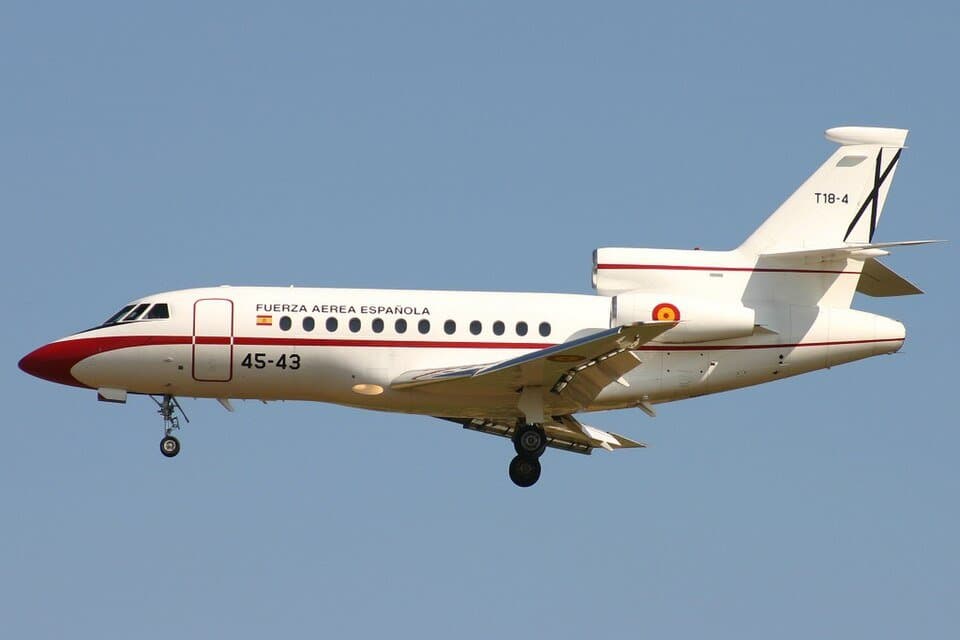
Falcon 900B · Length
Single source20.21 m (66 ft 4 in)[source]
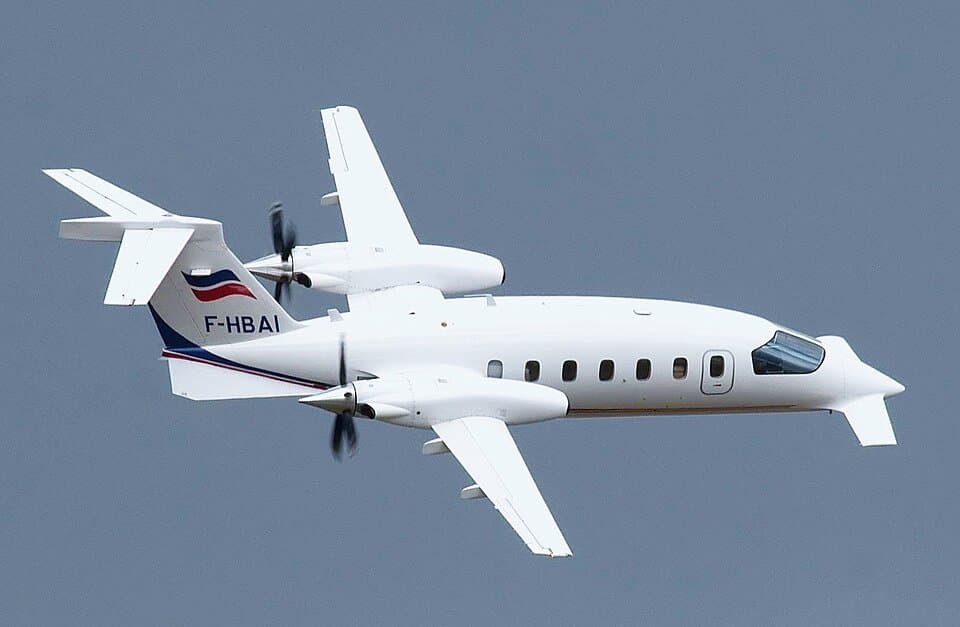
P180 Avanti EVO · Length
Configuration
| Specification | Dassault Falcon 900 | Piaggio P.180 Avanti |
|---|---|---|
| Type | Business jet[source] | Executive transport[source] |
| National origin | France[source] | Italy[source] |
| Manufacturer | Dassault Aviation[source] | Piaggio Aero[source] |
| Status | Active service, in production[source] | In production |
14.4 m (47.3 ft)[source]
P180 Avanti EVO · Height
Single source4.0 m (13 ft)[source]
Empty; Falcon 900B · Empty weight
Single sourceMaximum take-off; Falcon 900B · Max takeoff weight
Single source10,255 kg (22,608 lb)[source]
20,640 kg (45,503 lb)[source]
Empty; P180 Avanti EVO · Empty weight
Single sourceMaximum take-off; P180 Avanti EVO · Max takeoff weight
Single sourceFalcon 900B · with 8 passengers
Single source7,400 km (4,600 mi, 4,000 nmi) with 8 passengers[source]
P180 Avanti EVO · 2 × Pratt & Whitney Canada PT6 A-66B turboprop (850 shp) each ISA+28C Flat Rated
Single source2 × Pratt & Whitney Canada PT6 A-66B turboprop , 630 kW (850 shp) each ISA+28C Flat Rated[source]
Falcon 900B · 3 × Honeywell TFE731 -5BR-1C turbofans thrust each
Single source3 × Honeywell TFE731 -5BR-1C turbofans , 21.13 kN (4,750 lbf) thrust each[source]
Bars compare reported quantities only. A larger figure does not make a system better; configurations and test conditions differ.
| Primary users | French Air and Space Force Japan Coast Guard Nigerian Air Force Royal Malaysian Air Force[source] | Italian Air Force Italian Army Italian Navy Avantair (historical)[source] |
|---|
| Number built | >500[source] | 246 (Dec 2020)[source] |
|---|
| Manufactured | 1984–present[source] | 1986–present[source] |
|---|
| First flight | 21 September 1984 ( 1984-09-21 )[source] | 23 September 1986[source] |
|---|
| Developed from | Dassault Falcon 50[source] | — |
|---|
| Developed into | Dassault Falcon 2000 Dassault Falcon 7X[source] | — |
|---|
| Capacity | 19 passengers[source] | 7–9[source] |
|---|
| Fuel capacity | 8,690 kg (19,160 lb)[source] | 1,271 kg (2,802 lb)[source] |
|---|
| Aspect ratio | 7.63:1[source] | 12.3[source] |
|---|
| Stall speed | 158 km/h (98 mph, 85 kn) (wheels and flaps down)[source] | — |
|---|
| Introduction date | — | 30 September 1990[source] |
|---|
| Airfoil | — | PE 1300G (root), PE 1491G/1332G (tip)[source] |
|---|
| Max landing weight | — | 5,216 kg (11,500 lb)[source] |
|---|
| Max zero-fuel weight | — | 4,445 kg (9,800 lb)[source] |
|---|
| Cabin | — | 17.5 feet (5.3 m) long, 5.8 feet (1.8 m) high, 6.1 feet (1.9 m) wide (3.5 ft floor)[source] |
|---|
| Foreplane area | — | 2.19 m² (23.59 ft²)[source] |
|---|
| Horizontal stabilizer area | — | 3.83 m² (41.27 ft²)[source] |
|---|
| Minimum control speed | — | 190 km/h (120 mph, 100 kn)[source] |
|---|
| Time to altitude | — | 10 min to FL 250[source] |
|---|
| Wing loading | — | 343 kg/m 2 (70.3 lb/sq ft)[source] |
|---|
| Fuel consumption | — | 0.220 kg/km (0.779 lb/mi)[source] |
|---|
| Power/mass | — | 230 W/kg (0.14 hp/lb)[source] |
|---|
| Takeoff (SL, ISA) | — | 994 m (3,262 ft)[source] |
|---|
| Role | — | executive/VIP light transport aircraft ,[source] |
|---|
| Source measurement | — | The Piaggio P.180 Avanti is an executive/VIP light transport aircraft , designed by Piaggio Aero and built in Italy . It features twin, wing-mounted turboprop engines, in a pusher configuration . The Avanti seats up to nine people in a pressurized cabin and may be flown by one or two pilots . The design is of three-surface configuration, having both a small forward canard wing and a conventional tailplane, as well as its main wing, with the main wing spars passing behind the passenger cabin area. The FAI lists it as the fastest propeller-driven aircraft with speed of 927.4 km/h (576.3 mph; 500.8 kn).[source]Piaggio P.180 Avanti · Lead; only the objects and conditions stated in this passage An improved Avanti II obtained European and U.S. certification in November 2005. Six months later, 70 planes had been ordered, including 36 by Avantair . Avanti II received type approval for Russia in 2011. The Avanti II featured uprated Pratt & Whitney Canada PT6A-66B turboprop engines and flies about 18 km/h (11 mph) faster, with better fuel economy; and an all-new " glass panel " avionics suite from Rockwell Collins reduced cockpit clutter. In addition to heading, attitude and navigation information, flat panel color liquid crystal displays add collision avoidance ( TCAS ), ground proximity ( TAWS ) and real-time graphic weather depiction.[source]Piaggio P.180 Avanti · Development; only the objects and conditions stated in this passage The Avanti is marketed as being faster than other turboprops and many midsized jets, with cost efficiency as much as 40 percent better than market-competing jets, as a result of less drag and a lower fuel burn rate. Powered by the same Pratt & Whitney Canada PT6A-66 engines as the Beech Super King Air 200 , the Avanti II is 100 knots (190 km/h) faster than that model. Flying magazine judged the Avanti to be the "Fastest Civilian Turboprop Twin" in 2014, saying "Avanti's speed is pretty much on par with Cessna's M2 , while providing more space and a lower operating cost."[source]Piaggio P.180 Avanti · Development; only the objects and conditions stated in this passage First flown in 2013, the P.1HH UAV prototype crashed off Sicily in May 2016 after 100 hours of flight tests; a second prototype flew in July 2017 before two others joined. The first Avanti EVO manufactured at the new $150 million factory at Albenga Airport was delivered in 2016, one year after moving production from its previous Genoa Cristoforo Colombo Airport plant.[source]Piaggio P.180 Avanti · Development; only the objects and conditions stated in this passage On 22 November 2018, Piaggio Aerospace entered receivership after declaring itself insolvent as its restructuring plan failed. After the 2008 financial crisis , a key US fractional customer went bankrupt and P.180 Evo sales dropped from a 2008 peak of 30 deliveries to just three in 2018. By November 2018, no P.1HHs were delivered to the UAE and the Italian Ministry of Defence €766 million support for the P.2HH program was frozen as populist coalition partner Five Star Movement prioritized social programmes over defence spending.[source]Piaggio P.180 Avanti · Development; only the objects and conditions stated in this passage By December 2020, the fleet surpassed one million flight hours. 246 aircraft have been produced, of which 213 are in service: 96 in Europe, 95 in the Americas, 18 in Asia-Pacific, and four in Africa and the Middle East.[source]Piaggio P.180 Avanti · Development; only the objects and conditions stated in this passage The Piaggio P.180 Avanti has a sea-level standard-day maximum-gross-weight takeoff distance of 869 m (2,851 ft) and a landing roll of 872 m (2,861 ft).[source]Piaggio P.180 Avanti · Design; only the objects and conditions stated in this passage Deliveries were at a high of 30 in 2008, but only two in 2013.[source]Piaggio P.180 Avanti · Design; only the objects and conditions stated in this passage In 2014 Piaggio announced development of an updated version, named EVO. It uses new Hartzell composite propellers, with blades of scimitar configuration. Its wings carry new winglets; aerodynamic improvements have been incorporated, and an additional 60-gallon (400 lb) fuel tank option to increase range to 1,770 nautical miles (3,280 kilometres; 2,040 miles). The company predicts improved climb performance, 250 nmi greater range, and 3% reduction in fuel usage. The revised propeller shape, combined with a lower engine speed, promises a 68% reduction in external noise. Avanti EVO type certification was granted by EASA on 28 November 2014, and by the FAA on 6 July 2015. Projected purchase price was $7.4 million in 2014. By 2021 the equipped price was $7.695 million. The first EVO was delivered in April 2015, with five more to follow the same year.[source]Piaggio P.180 Avanti · Design; only the objects and conditions stated in this passage Medium-altitude long-endurance unmanned aerial vehicle based on the Avanti II airframe , with an increased wingspan and the ability to carry up to 1,100 pounds (500 kg) of weapons. The P.1HH HammerHead Mission Management System is based on the Selex ES (now Leonardo S.p.A. ) skyISTAR solution. The vehicle's first flight took place in December 2013 from Trapani–Birgi Italian Air Force base .[source]Piaggio P.180 Avanti · Variants; only the objects and conditions stated in this passage The Italian Air Force signed an agreement with Piaggio Aerospace to buy three Unmanned Aerial System P.1HH HammerHead (six aircraft and three ground control stations) with delivery starting from the early months of 2016. United Arab Emirates Air Force ordered eight P.1HH aircraft. On 31 May 2016 the first P.1HH prototype crashed off the Sicilian coast, delaying flight testing for thirteen months during construction of a second prototype. Piaggio flew the second prototype at Trapani–Birgi military airport on 5 July 2017 The UAE was to take delivery of six P.1HHs in 2018 and the remaining two in 2019, however by November 2018, no P.1HHs had been delivered and Piaggio Aerospace requested to be placed into receivership .[source]Piaggio P.180 Avanti · Variants; only the objects and conditions stated in this passage Piaggio develops with Leonardo, the Italian and UAE Armed Forces a P.1HH successor for 2023, with a new wing, more composite materials , and re-thought systems. With a larger wing and airframe, maximum endurance rose to 30 h, but following the 2018 Italian election , the country's €766 million program for 20 aircraft and 10 control stations was suspended.[source]Piaggio P.180 Avanti · Variants; only the objects and conditions stated in this passage In May 2017, 220 aircraft were in operation around the world, with 89 being first-generation Avanti, 126 second-generation Avanti II and 6 Avanti EVO models.[source]Piaggio P.180 Avanti · Operators / Civil; only the objects and conditions stated in this passage A Piaggio Avanti San Diego -to- Charleston flight in 2003, piloted by Joe Ritchie with co-pilot Steve Fossett , set National Aeronautic Association and Fédération Aéronautique Internationale transcontinental speed records with an average speed of 475.2 knots (880.1 km/h; 546.9 mph), breaking the previous Los Angeles to New York turboprop record of 395.21 knots set by Chuck Yeager in 1986 in a Piper Cheyenne 400LS . Elapsed time for the Avanti's coast-to-coast trip was 3:51:52.[source]Piaggio P.180 Avanti · Operators / Civil; only the objects and conditions stated in this passage Length: 14.4 m (47.3 ft)[source]Piaggio P.180 Avanti · Specifications (P180 Avanti EVO); only the objects and conditions stated in this passage Wingspan: 14 m (46 ft)[source]Piaggio P.180 Avanti · Specifications (P180 Avanti EVO); only the objects and conditions stated in this passage Height: 4.0 m (13 ft)[source]Piaggio P.180 Avanti · Specifications (P180 Avanti EVO); only the objects and conditions stated in this passage Wing area: 15.99 m 2 (172.1 sq ft)[source]Piaggio P.180 Avanti · Specifications (P180 Avanti EVO); only the objects and conditions stated in this passage Airfoil : PE 1300G (root), PE 1491G/1332G (tip)[source]Piaggio P.180 Avanti · Specifications (P180 Avanti EVO); only the objects and conditions stated in this passage Empty weight: 3,799 kg (8,375 lb)[source]Piaggio P.180 Avanti · Specifications (P180 Avanti EVO); only the objects and conditions stated in this passage Max takeoff weight: 5,488 kg (12,100 lb)[source]Piaggio P.180 Avanti · Specifications (P180 Avanti EVO); only the objects and conditions stated in this passage Fuel capacity: 1,271 kg (2,802 lb)[source]Piaggio P.180 Avanti · Specifications (P180 Avanti EVO); only the objects and conditions stated in this passage Max landing weight: 5,216 kg (11,500 lb)[source]Piaggio P.180 Avanti · Specifications (P180 Avanti EVO); only the objects and conditions stated in this passage Max zero-fuel weight: 4,445 kg (9,800 lb)[source]Piaggio P.180 Avanti · Specifications (P180 Avanti EVO); only the objects and conditions stated in this passage Cabin: 17.5 feet (5.3 m) long, 5.8 feet (1.8 m) high, 6.1 feet (1.9 m) wide (3.5 ft floor)[source]Piaggio P.180 Avanti · Specifications (P180 Avanti EVO); only the objects and conditions stated in this passage Foreplane area: 2.19 m² (23.59 ft²)[source]Piaggio P.180 Avanti · Specifications (P180 Avanti EVO); only the objects and conditions stated in this passage Horizontal stabilizer area: 3.83 m² (41.27 ft²)[source]Piaggio P.180 Avanti · Specifications (P180 Avanti EVO); only the objects and conditions stated in this passage Powerplant: 2 × Pratt & Whitney Canada PT6 A-66B turboprop , 630 kW (850 shp) each ISA+28C Flat Rated[source]Piaggio P.180 Avanti · Specifications (P180 Avanti EVO); only the objects and conditions stated in this passage Maximum speed: 740 km/h (460 mph, 400 kn) FL310 high speed cruise[source]Piaggio P.180 Avanti · Specifications (P180 Avanti EVO); only the objects and conditions stated in this passage Cruise speed: 589 km/h (366 mph, 318 kn) FL410 long range cruise[source]Piaggio P.180 Avanti · Specifications (P180 Avanti EVO); only the objects and conditions stated in this passage Minimum control speed : 190 km/h (120 mph, 100 kn)[source]Piaggio P.180 Avanti · Specifications (P180 Avanti EVO); only the objects and conditions stated in this passage Range: 2,800 km (1,740 mi, 1,510 nmi) 4 passengers, NBAA IFR, 100-nm alternate[source]Piaggio P.180 Avanti · Specifications (P180 Avanti EVO); only the objects and conditions stated in this passage Ferry range: 2,830 km (1,760 mi, 1,530 nmi)[source]Piaggio P.180 Avanti · Specifications (P180 Avanti EVO); only the objects and conditions stated in this passage Service ceiling: 12,000 m (41,000 ft)[source]Piaggio P.180 Avanti · Specifications (P180 Avanti EVO); only the objects and conditions stated in this passage Takeoff (SL, ISA): 994 m (3,262 ft)[source]Piaggio P.180 Avanti · Specifications (P180 Avanti EVO); only the objects and conditions stated in this passage |
|---|