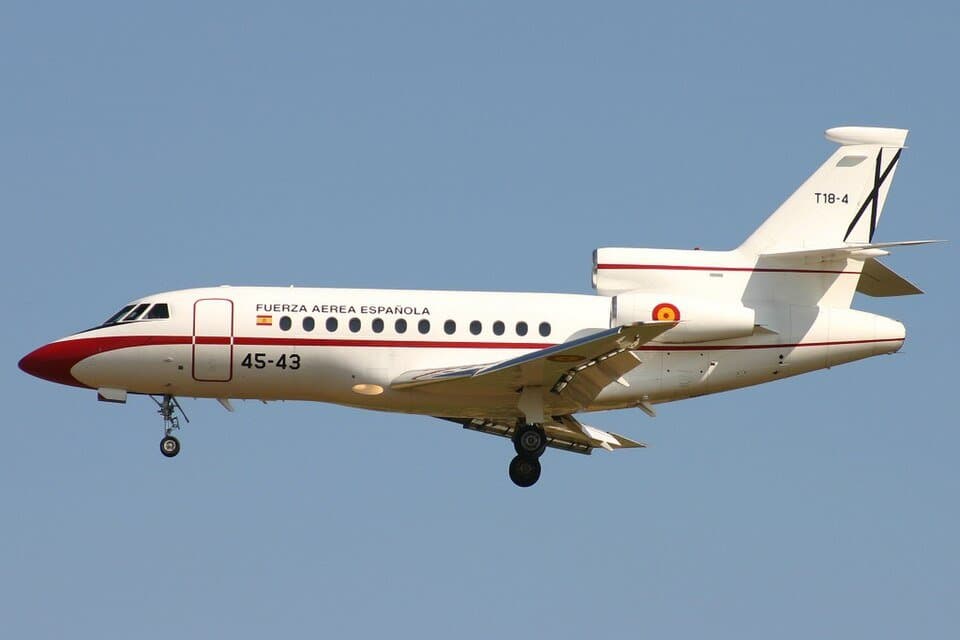


Preparing your view.
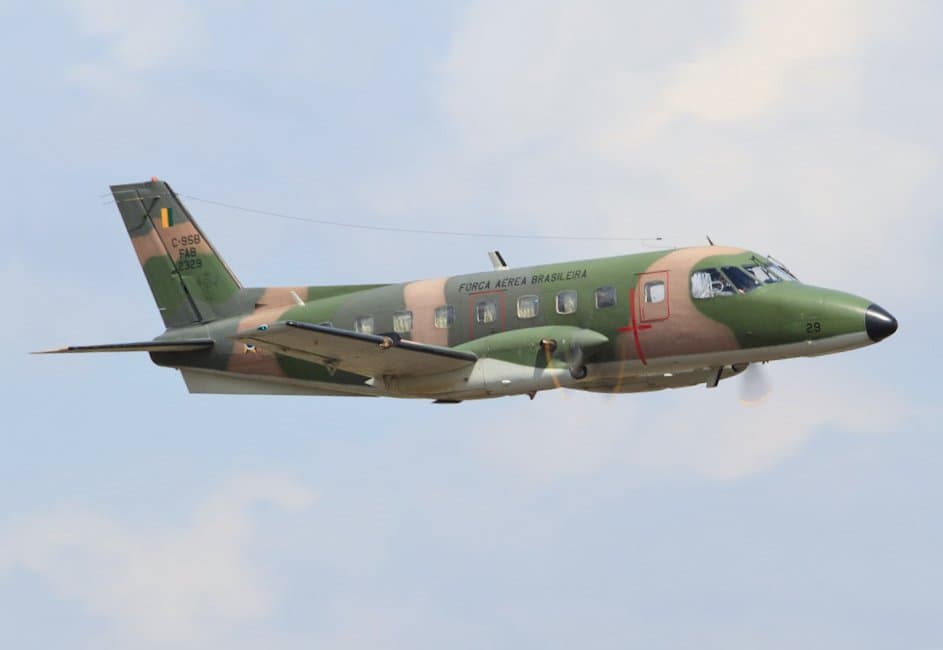

At a glance
Measured figures
EMB 110P1A/41 · Height
Single source4.92 m (16 ft 2 in)[source]
Empty; Falcon 900B · Empty weight
Single sourceMaximum take-off; Falcon 900B · Max takeoff weight
Single source10,255 kg (22,608 lb)[source]
20,640 kg (45,503 lb)[source]
Empty; EMB 110P1A/41 · empty equipped - passengers
Single sourceMaximum take-off; EMB 110P1A/41 · Max takeoff weight
Single sourceCruise; Falcon 900B · Mach 0.85 (at 11,000 m (36,000 ft))
Single sourceMach 0.84–0.87[source]
950 km/h (590 mph, 510 kn) ; Mach 0.85 (at 11,000 m (36,000 ft))[source]
Cruise; EMB 110P1A/41 · maximum at 2,440 m (8,000 ft)
Single source411 km/h (255 mph, 222 kn) maximum at 2,440 m (8,000 ft)[source]
EMB 110P1A/41 · 2 × Pratt & Whitney Canada PT6A-34 turboprop engines (750 shp) each
Single source2 × Pratt & Whitney Canada PT6A-34 turboprop engines, 560 kW (750 shp) each[source]
Falcon 900B · 3 × Honeywell TFE731 -5BR-1C turbofans thrust each
Single source3 × Honeywell TFE731 -5BR-1C turbofans , 21.13 kN (4,750 lbf) thrust each[source]
EMB 110P1A/41 · 1,630 ft/min
Single source8.3 m/s (1,630 ft/min)[source]
Bars compare reported quantities only. A larger figure does not make a system better; configurations and test conditions differ.
Configuration
| Specification | Dassault Falcon 900 | Embraer EMB 110 Bandeirante |
|---|---|---|
| Type | Business jet[source] | Turboprop regional airliner[source] |
| National origin | France[source] | Brazil[source] |
| Manufacturer | Dassault Aviation[source] | Embraer[source] |
| Status | Active service, in production[source] | In limited commercial service, in active military service[source] |
| Primary users | French Air and Space Force Japan Coast Guard Nigerian Air Force Royal Malaysian Air Force[source] | Brazilian Air Force Wiggins Airways Transportes Aereos Guatemaltecos[source] |
| Number built | >500[source] | 503[source] |
| Manufactured | 1984–present[source] | 1968–1990[source] |
| First flight | 21 September 1984 ( 1984-09-21 )[source] | 26 October 1968[source] |
| Developed from | Dassault Falcon 50[source] | — |
| Developed into | Dassault Falcon 2000 Dassault Falcon 7X[source] | — |
| Capacity | 19 passengers[source] | 18 passengers[source] |
| Fuel capacity | 8,690 kg (19,160 lb)[source] | 1,308 kg (2,884 lb) / 1,720 L (450 US gal; 380 imp gal) in four integral wing tanks[source] |
| Aspect ratio | 7.63:1[source] | — |
| Stall speed | 158 km/h (98 mph, 85 kn) (wheels and flaps down)[source] | — |
| Introduction date | — | 16 April 1973[source] |
| Airfoil | — | root: NACA 23016 mod. ; tip: NACA 23012[source] |
| Propellers | — | 3-bladed Hartzell HC-B3TN-3C/T10178H-8R, 2.36 m (7 ft 9 in) diameter fully-feathering reversible-pitch constant-speed propellers[source] |
| Economical cruise speed | — | 341 km/h (212 mph; 184 kn) at 3,050 m (10,000 ft)[source] |
| Take-off run | — | 807 m (2,648 ft) (FAR23.135 / SFAR 41A)[source] |
| Landing run | — | 868 m (2,848 ft) at MLW[source] |