
FORCETALLY
Loading the evidence…
Preparing your view.


Preparing your view.
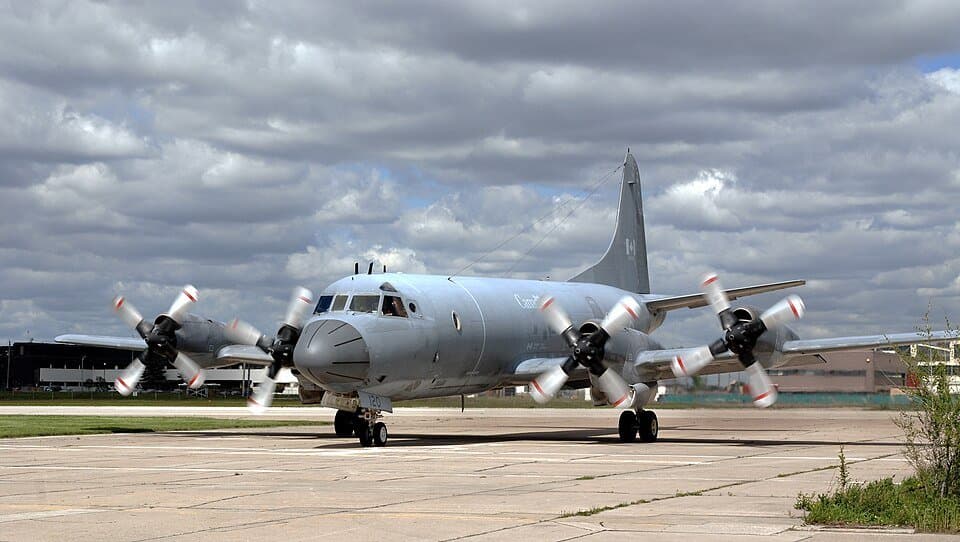
BTrainer aircraft
Maritime patrol aircraft (CP-140) MPA trainer aircraft (CP-140A)
At a glance
Measured figures
CP-140 · 4 × Allison T56-A-14-LFE turboprop engines each
Single source4 × Allison T56-A-14-LFE turboprop engines, 4,909 hp (3,661 kW) each[source]
T-37B · 2 × Continental-Teledyne J69 -T-25 turbojets thrust each
Single source2 × Continental-Teledyne J69 -T-25 turbojets , 1,025 lbf (4.56 kN) thrust each[source]
T-37B · 3,370 ft/min (
Single source3,370 ft/min (17.1 m/s)[source]
CP-140 · on station at 1,000 nmi (1,151 mi; 1,852 km) radius
Single source8 hours 12 minutes on station at 1,000 nmi (1,151 mi; 1,852 km) radius[source]
CP-140 · Hardpoints: 8 in weapons bay; 10 under-wing from capacity with a capacity of
Single sourceCP-140 · total in weapons bay, with provisions to carry combinations of
Single sourceHardpoints: 8 in weapons bay; 10 under-wing from 611 to 2,450 lb (277 to 1,111 kg) capacity with a capacity of 4,800 lb (2,177 kg) total in weapons bay, with provisions to carry combinations of:[source]
Bars compare reported quantities only. A larger figure does not make a system better; configurations and test conditions differ.
Configuration
| Specification | Cessna T-37 Tweet | Lockheed CP-140 Aurora |
|---|---|---|
| Type | Military trainer aircraft[source] | Maritime patrol aircraft (CP-140) MPA trainer aircraft (CP-140A)[source] |
| National origin | United States[source] | — |
| Manufacturer | Cessna[source] | Lockheed Corporation[source] |
| Status | Retired from American service in 2009, In limited service with the Pakistan Air Force[source] | Active (CP-140M only)[source] |
| Primary users | United States Air Force (historical) Pakistan Air Force Turkish Air Force (retired) Colombian Air Force (historical)[source] | — |
| Number built | 1,269[source] | 21 (18 CP-140M + 3 CP-140A)[source] |
| Manufactured | 1955–1975[source] | — |
| Introduction date | 1957[source] | 1980[source] |
| First flight | 12 October 1954[source] | 22 March 1979 (CP-140)[source] |
| Retired | 2009 (USAF)[source] | 2011 (CP-140A only)[source] |
| Variant | Cessna A-37 Dragonfly[source] | — |
| Aspect ratio | 6.2:1[source] | 7.5[source] |
| Airfoil | NACA 2418 at root, NACA 2412 at tip[source] | root: NACA 0014 (modified) ; tip: NACA 0012 (modified)[source] |
| Stall speed | 85 mph (137 km/h, 74 kn)[source] | — |
| Total stores stations | None (T-37A/B), 2 underwing for stores up to 500 lb (227 kg) (T-37C)[source] | — |
| Primary user | — | Royal Canadian Air Force[source] |
| Developed from | — | Lockheed P-3 Orion[source] |
| Fuel capacity | — | 7,661 imp gal (9,200 US gal; 34,828 L) usable fuel in one fuselage tank and four wing integral tanks[source] |
| Hardpoints | — | 8 in weapons bay; 10 under-wing from 611 to 2,450 lb (277 to 1,111 kg) capacity with a capacity of 4,800 lb (2,177 kg) total in weapons bay, with provisions to carry combinations of: Other: signal chargers, smoke markers , illumination flares[source] |
| Propellers | — | 4-bladed Hamilton Standard 54H60, 13 ft 6 in (4.11 m) diameter constant-speed fully-feathering reversible-pitch propellers[source] |
| Maximum transit speed | — | 395 kn (455 mph; 732 km/h) at optimum altitude[source] |
| FAR balanced field length | — | 7,900 ft (2,408 m)[source] |
| Take-off distance to 50 ft (15 m) | — | 6,000 ft (1,829 m)[source] |
| Landing distance from 50 ft (15 m) | — | 3,200 ft (975 m) at 114,000 lb (51,710 kg) landing weight[source] |
| Other | — | signal chargers, smoke markers , illumination flares[source] |
| Rockets | — | air-to-surface rockets can be fitted after a minor retrofit.[source] |
| Bombs | — | Mk 46 Mod V torpedoes, conventional bombs[source] |
| Country of origin | — | United States[source] United States[source] |