
FORCETALLY
Loading the evidence…
Preparing your view.


Preparing your view.
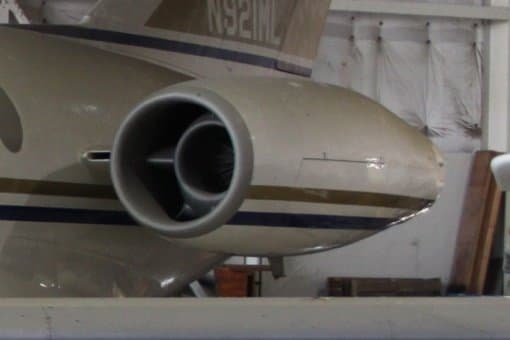
At a glance
Measured figures
337D · Length
Single source29 ft 9 in (9.07 m)[source]
Falcon 20F · Length
Single sourceConfiguration
| Specification | Cessna Skymaster | Dassault Falcon 20 |
|---|---|---|
| Type | Personal use and air taxi aircraft[source] | Business jet[source] |
| National origin | United States[source] | France[source] |
| Manufacturer | Cessna Reims Aviation[source] | Dassault Aviation[source] |
| Number built | 2,993[source] |
17.15 m (56 ft 3 in)[source]
Cruise; 337D · at 10,000 ft (3,000 m) (econ cruise)
Single sourceMaximum; 337D · at sea level
Single source199 mph (320 km/h, 173 kn) at sea level[source]
144 mph (232 km/h, 125 kn) at 10,000 ft (3,000 m) (econ cruise)[source]
Cruise; Falcon 20F · at 12,200 m (40,000 ft) (econ. cruise)
Single sourceMaximum; Falcon 20F · at 7,620 m (25,000 ft) (max cruise)
Single source337D · 2 × Continental IO-360-C air-cooled flat-six piston engine each
Single source2 × Continental IO-360-C air-cooled flat-six piston engine, 210 hp (160 kW) each[source]
Falcon 20F · 2 × General Electric CF700 -2D-2 turbofans thrust each
Single source2 × General Electric CF700 -2D-2 turbofans , 20 kN (4,500 lbf) thrust each[source]
337D · 1,200 ft/min (
Single source1,200 ft/min (6.1 m/s)[source]
Bars compare reported quantities only. A larger figure does not make a system better; configurations and test conditions differ.
512[source] |
| Manufactured | 1963–1982[source] | 1965–1991[source] |
|---|
| Introduction date | 1962[source] | 3 June 1965[source] |
|---|
| First flight | February 28, 1961[source] | 4 May 1963[source] |
|---|
| Variants | Cessna O-2 Skymaster Conroy Stolifter Spectrum SA-550[source] | — |
|---|
| Capacity | 5 passengers[source] | 8–14 passengers[source] |
|---|
| Aspect ratio | 7.18:1[source] | 6.4:1[source] |
|---|
| Airfoil | NACA 2412 at root, NACA 2409 at tip[source] | — |
|---|
| Fuel capacity | 92 US gal (77 imp gal; 350 L) normal, 128 US gal (107 imp gal; 480 L) with auxiliary tanks[source] | 5,200 L (1,100 imp gal; 1,400 US gal)[source] |
|---|
| Propellers | 2-bladed McCauley fully-feathering, constant-speed propeller, 6 ft 4 in (1.93 m) diameter[source] | — |
|---|
| Stall speed | 69 mph (111 km/h, 60 kn) (flaps and undercarriage down)[source] | 152 km/h (94 mph, 82 kn)[source] |
|---|
| Takeoff distance to 50 ft (15m) | 1,545 ft (471 m)[source] | — |
|---|
| Landing distance from 50 ft (15m) | 1,650 ft (500 m)[source] | — |
|---|
| Role | American twin-engine civil utility aircraft[source] | French business jet[source] |
|---|
| Source measurement | During the Rhodesian Bush War , the Reims-Cessna FTB 337G 'Lynx' was the main light attack aircraft used by Rhodesian Security Forces during Fire Force counterinsurgency air assault missions, which began in 1974. The Lynxes were armed with twin Browning .303 machine guns mounted above the wing and 37mm SNEB rockets, locally made Mini "Alpha" Bombs ( cluster bombs ), Mini "Golf" Bombs (450 lb (200 kg) blast and shrapnel bomb) and Frantan (a napalm variant carried in frangible drop tanks) bombs.[source]Cessna Skymaster · Operational history; only the objects and conditions stated in this passage From 1991 until 2001 the Cuban exile group Hermanos al Rescate (Brothers to the Rescue) used Skymasters, among other aircraft, to fly search and rescue missions over the Florida Straits looking for rafters attempting to cross the straits to defect from Cuba, and when they found them, dropped life-saving supplies to them. Rescues were coordinated with the US Coast Guard , which worked closely with the group. They chose Skymasters because their high wing offered better visibility of the waters below, they were reliable and easy to fly for long-duration missions (averaging 7 hours), and they added a margin of safety with twin-engine centerline thrust. In 1996, two of the Brothers to the Rescue Skymasters were shot down by the Cuban Air Force over international waters. Both aircraft were downed by a MiG-29 , while a second jet fighter, a MiG-23 , orbited nearby.[source]Cessna Skymaster · Operational history / Brothers to the Rescue; only the objects and conditions stated in this passage Original variant first flown in 1961 and introduced for the 1963 and 1964 model years. The 336 had a six-seat cabin and was powered by two 195 hp (145 kW) Continental IO-360-A engines. Production aircraft differed from the prototypes in that they had a roomier cabin and a redesigned rear engine cowling to improve engine cooling and reduce cabin noise. Gross weight was 3,900 lb (1,800 kg). A total of 197 built; 2 prototypes and 195 production aircraft (102 in 1963 and 93 in 1964).[source]Cessna Skymaster · Variants; only the objects and conditions stated in this passage The 1965 model year brought major changes to the Skymaster, which led to a new model number, 337, being assigned. The most significant change was the addition of retractable undercarriage similar to that of the Cessna 210 Centurion , which sat four inches lower than the 336 for ease of entry/exit. Other changes included a redesigned nose cowling and new rear engine intake, greater wing angle of incidence , shortened ventral tail fins, increased elevator chord, and an increased gross weight of 4,200 lb (1,900 kg). The 337 was powered by two 210 hp (160 kW) Continental IO-360-C or IO-360-D engines. 239 total built; 1 prototype and 238 production aircraft.[source]Cessna Skymaster · Variants; only the objects and conditions stated in this passage 1967 model year with improved brakes, 38A alternators, a redesigned cabin heating system, a split-bus electrical system, and an increased gross weight of 4,300 lb (2,000 kg). A version powered by turbocharged 210 hp (160 kW) Continental TSIO-360-A engines was also offered as the T337B . 231 built, plus 479 M337B military variants as the O-2A Skymaster.[source]Cessna Skymaster · Variants; only the objects and conditions stated in this passage 1968 model year with a new instrument panel, improved seat belts, and an increased gross weight of 4,400 lb (2,000 kg) (4,500 lb (2,000 kg) for the T337C ). 223 built.[source]Cessna Skymaster · Variants; only the objects and conditions stated in this passage 1970 model year with conical cambered wingtips, a new fuel quantity system, and an increased gross weight of 4,440 lb (2,010 kg) (4,630 lb (2,100 kg) for the T337E ). 123 built, plus 24 in France by Reims Aviation for the European market as the F337E .[source]Cessna Skymaster · Variants; only the objects and conditions stated in this passage Introduced for the 1971 model year with an increased gross weight of 4,630 lb (2,100 kg) (same as the T337F) a refined instrument panel, a padded glareshield, a front engine access panel, and other minor changes. The 1972 model year introduced nose-mounted landing/taxi lights and minor interior changes. The turbocharged T337F was only offered for the 1971 model year. 147 total built; 83 (1971) and 64 (1972). Reims also built a total of 31 as the F337F ; 21 (1971) and 10 (1972).[source]Cessna Skymaster · Variants; only the objects and conditions stated in this passage 337G Super Skymaster[source]Cessna Skymaster · Variants; only the objects and conditions stated in this passage Power was provided by two 210 hp (160 kW) Continental IO-360-G engines.[source]Cessna Skymaster · Variants; only the objects and conditions stated in this passage A turbocharged version of the unpressurized 337G was not offered. 354 total built; 88 (1973), 56 (1974), 65 (1975), 77 (1976), and 68 (1977).[source]Cessna Skymaster · Variants; only the objects and conditions stated in this passage Also known as the T337G , introduced for the 1973 model year as a turbocharged, pressurized version of the 337G. The P337G was powered by two 225 hp (168 kW) TSIO-360-C engines. Like the 337G, the Skymaster II option was also available for the P337G. 292 total built; 1 (1971 prototype), 148 (1973), 45 (1974), 31 (1975), 32 (1976), and 35 (1977). Reims also built a total of 22 as the FT337GP ; 8 (1973), 5 (1974), 2 (1975), 2 (1976), and 5 (1977).[source]Cessna Skymaster · Variants; only the objects and conditions stated in this passage Introduced for the 1978 model year with redesigned control wheels and minor interior refinements. The turbocharged version was also offered after a six year absence as the T337H , which was powered by two 210 hp (160 kW) Continental TSIO-360-H engines. The T337H-SP was introduced for the 1980 model year and was powered by TSIO-360-JB engines. The 1980 model year replaced the engines of the 337H and T337H with the TSIO-360-GB and TSIO-360-HB, respectively. 140 total built; 58 (1978), 47 (1979 337H/T337H), 1 (1979 T337H-SP prototype), 24 (1980 337H/T337H), and 10 (1980 T337H-SP). Reims also built 2 aircraft in 1978 as the F337H .[source]Cessna Skymaster · Variants; only the objects and conditions stated in this passage Introduced for the 1978 model year as a turbocharged, pressurized version of the 337H powered by two 225 hp (168 kW) TSIO-360-C engines, which were replaced by the TSIO-360-C for the 1980 model year. 64 total built; 26 (1978), 24 (1979), and 15 (1980). Reims also built 1 aircraft in 1978 as the FT337HP .[source]Cessna Skymaster · Variants; only the objects and conditions stated in this passage Based on the M337B but with two 317 shp (236 kW) Allison 250-B15 turboprop engines, a longer span wing, and improved high lift devices. Designated O-2T , only a single prototype was built.[source]Cessna Skymaster · Variants; only the objects and conditions stated in this passage Reduced-scale four-seat version of the 337 first proposed in 1965 as the Model 377 with cantilever wings replacing the 336/337 strut-braced configuration. The 377 was later redesignated as the Model 327 in 1967 and was first flown in December of that year. One prototype was built before the project was canceled in 1968 due to lack of commercial interest in the design. The prototype was delivered to NASA to serve as a full-scale model for wind tunnel testing. It was used in a joint Langley Research Center and Cessna project on noise reduction and the use of ducted versus free propellers.[source]Cessna Skymaster · Variants; only the objects and conditions stated in this passage Summit Aviation of Middletown, Delaware re-manufactured existing used 337 airframes into the militarized O2-337 which includes four wing-mounted NATO standard pylons capable of carrying 350 lb (159 kg) each for 7.62 mm and 12.7 mm gun pods, rocket launchers, bombs, markers and flares. The aircraft was marketed for the target identification and marking, reconnaissance, helicopter escort and aerial photography roles. Examples were sold to the Haitian Air Force , Honduras , Nicaragua , Senegal and the Thai Navy . The variant was still in production in 1987.[source]Cessna Skymaster · Variants / Conversions/modifications; only the objects and conditions stated in this passage Força Aérea de Moçambique (3 x FTB-337G) - ex-Portuguese Air Force FTB-337G refurbished and offered by the Government of Portugal to Mozambique in 2011 and 2012.[source]Cessna Skymaster · Military operators; only the objects and conditions stated in this passage Portuguese Air Force (32 × FTB-337G): Purchased in 1973 to replace the force's aging Dornier Do 27 fleet, which had been used intensively in the Portuguese Colonial War . The first 337 deliveries did not arrive until December 1974—after the end of the war. The last Skymaster in service with the Portuguese Air Force was retired on July 25, 2007.[source]Cessna Skymaster · Military operators / Former military operators; only the objects and conditions stated in this passage Capacity: 5 passengers[source]Cessna Skymaster · Specifications (337D); only the objects and conditions stated in this passage Length: 29 ft 9 in (9.07 m)[source]Cessna Skymaster · Specifications (337D); only the objects and conditions stated in this passage Wingspan: 38 ft 09 in (11.81 m)[source]Cessna Skymaster · Specifications (337D); only the objects and conditions stated in this passage Height: 9 ft 4 in (2.84 m)[source]Cessna Skymaster · Specifications (337D); only the objects and conditions stated in this passage Wing area: 201 sq ft (18.7 m 2 )[source]Cessna Skymaster · Specifications (337D); only the objects and conditions stated in this passage Empty weight: 2,655 lb (1,204 kg)[source]Cessna Skymaster · Specifications (337D); only the objects and conditions stated in this passage Max takeoff weight: 4,400 lb (1,996 kg)[source]Cessna Skymaster · Specifications (337D); only the objects and conditions stated in this passage Powerplant: 2 × Continental IO-360-C air-cooled flat-six piston engine, 210 hp (160 kW) each[source]Cessna Skymaster · Specifications (337D); only the objects and conditions stated in this passage Propellers: 2-bladed McCauley fully-feathering, constant-speed propeller, 6 ft 4 in (1.93 m) diameter[source]Cessna Skymaster · Specifications (337D); only the objects and conditions stated in this passage Maximum speed: 199 mph (320 km/h, 173 kn) at sea level[source]Cessna Skymaster · Specifications (337D); only the objects and conditions stated in this passage Cruise speed: 144 mph (232 km/h, 125 kn) at 10,000 ft (3,000 m) (econ cruise)[source]Cessna Skymaster · Specifications (337D); only the objects and conditions stated in this passage Stall speed: 69 mph (111 km/h, 60 kn) (flaps and undercarriage down)[source]Cessna Skymaster · Specifications (337D); only the objects and conditions stated in this passage Range: 965 mi (1,553 km, 839 nmi) (econ cruise, normal fuel)[source]Cessna Skymaster · Specifications (337D); only the objects and conditions stated in this passage Service ceiling: 19,500 ft (5,900 m)[source]Cessna Skymaster · Specifications (337D); only the objects and conditions stated in this passage Rate of climb: 1,200 ft/min (6.1 m/s)[source]Cessna Skymaster · Specifications (337D); only the objects and conditions stated in this passage Takeoff distance to 50 ft (15m): 1,545 ft (471 m)[source]Cessna Skymaster · Specifications (337D); only the objects and conditions stated in this passage Landing distance from 50 ft (15m): 1,650 ft (500 m)[source]Cessna Skymaster · Specifications (337D); only the objects and conditions stated in this passage | During the 1950s and 1960s, the French government, which had taken a significant interest in the re-establishment and growth of its national aviation industries in the aftermath of the Second World War , developed a detailed request for a combined liaison / trainer aircraft, to be equipped with twin-turbofan engines. Among those companies that took interest in the government request was French aircraft manufacturer Dassault Aviation . In December 1961, French aircraft designer and head of Dassault Aviation, Marcel Dassault , gave the go-ahead to proceed with work towards the production of an eight- to 10-seat executive jet /military liaison aircraft, which was initially named as the Dassault-Breguet Mystère 20 . The emerging design was of a low-wing monoplane, which drew upon the aerodynamics of the transonic Dassault Mystère IV fighter-bomber , and was equipped with a pair of rear-mounted 14.68 kN (3,300 lbf) Pratt & Whitney JT12A-8 turbojet engines.[source]Dassault Falcon 20 · Development / Origins; only the objects and conditions stated in this passage Progress between Dassault and Pan Am was rapid, moving from engineering evaluations of the type to the formation of general agreements between the two companies. In response to feedback received from Pan American, the aircraft was re-engined with a pair of General Electric CF700 engines and several dimensions were increased. Accordingly, Pan American formed an agreement with Dassault to distribute the Mystère 20 in the western hemisphere; the firm placed an initial order for 40 aircraft along with options for a further 120. On 10 July 1964, the re-engined aircraft made its first flight. On 1 January 1965, the first production aircraft performed its maiden flight; in June 1965, both French and American type certifications were awarded. On 10 June 1965, French aviator Jacqueline Auriol achieved the women's world speed record using the first Mystère 20 prototype, having flown at an average recorded speed of 859 km/h over a distance of 1000 km.[source]Dassault Falcon 20 · Development / Origins; only the objects and conditions stated in this passage In 1973, FedEx's Falcons, designation FA-20-DC, cost $1.2 million each and were modified with a 55-by-74.5-inch forward cargo door with independent power supply, higher mtow, reinforced floor, plugged windows, and bigger brakes.[source] |
|---|
| Status | — | Out of production, in active service[source] |
|---|
| Primary users | — | Federal Express (formerly) French Navy United States Coast Guard[source] |
|---|
| Developed into | — | Dassault Falcon 10 Dassault Falcon 50[source] |
|---|
| Country of origin | — | France[source]Inventory Origin column; table 1, row 54, cell 4; revision 1377423821; retrieved 2026-10-02 |
|---|
862 km/h (536 mph, 465 kn) at 7,620 m (25,000 ft) (max cruise)[source]
750 km/h (470 mph, 400 kn) at 12,200 m (40,000 ft) (econ. cruise)[source]
An improved model of the aircraft, designated the Falcon 200 , was developed, which featured more advanced jet engines and other major improvements to increase range, capacity, and comfort. The Falcon 200, along with the Falcon 20G and HU-25 models, were powered by a pair of Garrett ATF3 engines. According to the magazine Flying , the Falcon 200 variant was more comparable to the newer Falcon 50 trijet than the original Falcon 20 model.[source]Dassault Falcon 20 · Development / Further development; only the objects and conditions stated in this passage
During 2013, the FAA modified 14 CFR part 91 rules to prohibit the operation of jets weighing 75,000 pounds or less that were not Stage 3 noise compliant after 31 December 2015. The Falcon 20 was listed explicitly in Federal Register 78 FR 39576 . Any examples of the type that had not been modified, either by the installation of Stage 3 noise-compliant engines or have had hush kits installed upon noncompliant engines, were no longer permitted to fly anywhere in the contiguous 48 states after 31 December 2015. However, 14 CFR §91.883 Special flight authorizations for jet airplanes weighing 75,000 pounds or less – lists special flight authorizations that may be granted for operation after 31 December 2015.[source]Dassault Falcon 20 · Development / Further development; only the objects and conditions stated in this passage
Prototype, one built. F-WLKB, initially powered by two 14.68 kN (3,300 lbf) Pratt & Whitney JT12A-8 turbojet engines. Now stored at Musée Air et Espace Aéroport Paris – Le Bourget.[source]Dassault Falcon 20 · Variants; only the objects and conditions stated in this passage
Initial production version, with lengthened fuselage compared to first prototype and with 10–12 seats. Powered by 4,200 lbf (19 kN) CF700-2B engines.[source]Dassault Falcon 20 · Variants; only the objects and conditions stated in this passage
Falcon 20CC (s/n 073)[source]Dassault Falcon 20 · Variants; only the objects and conditions stated in this passage
Falcon 20G[source]Dassault Falcon 20 · Variants; only the objects and conditions stated in this passage
Falcon 20H[source]Dassault Falcon 20 · Variants; only the objects and conditions stated in this passage
Improved variant, powered by two 2360-kg (5,200-lb) Garrett ATF3-6A-4C turbofan engines and with more fuel. First flown on 30 April 1980.[source]Dassault Falcon 20 · Variants; only the objects and conditions stated in this passage
United States Coast Guard version of the Falcon 20G. 41 built. Equipped with two Garrett AiResearch Garrett ATF3-6-2C turbofan engines.[source]Dassault Falcon 20 · Variants; only the objects and conditions stated in this passage
Enlarged, 30-passenger commuter airliner derivative of Falcon 20, powered by two 27.0 kN (6,070 lbf) Lycoming ALF 502 D turbofans. One prototype built, first flying on 11 May 1973. No further production of Falcon 30 or proposed 40-passenger, shorter-range Mystére 40-100 .[source]Dassault Falcon 20 · Variants; only the objects and conditions stated in this passage
Pakistan Air Force – 3 in service, including 2 DA-20s in EW , ECM , ESM roles[source]Dassault Falcon 20 · Operators / Current military operators; only the objects and conditions stated in this passage
Royal Australian Air Force – Three in service from 1967 to 1989. No. 34 Squadron RAAF[source]Dassault Falcon 20 · Operators / Former military operators; only the objects and conditions stated in this passage
Capacity: 8–14 passengers[source]Dassault Falcon 20 · Specifications (Falcon 20F); only the objects and conditions stated in this passage
Length: 17.15 m (56 ft 3 in)[source]Dassault Falcon 20 · Specifications (Falcon 20F); only the objects and conditions stated in this passage
Wingspan: 16.30 m (53 ft 6 in)[source]Dassault Falcon 20 · Specifications (Falcon 20F); only the objects and conditions stated in this passage
Height: 5.32 m (17 ft 5 in)[source]Dassault Falcon 20 · Specifications (Falcon 20F); only the objects and conditions stated in this passage
Wing area: 41.00 m 2 (441.3 sq ft)[source]Dassault Falcon 20 · Specifications (Falcon 20F); only the objects and conditions stated in this passage
Empty weight: 7,530 kg (16,601 lb)[source]Dassault Falcon 20 · Specifications (Falcon 20F); only the objects and conditions stated in this passage
Max takeoff weight: 13,000 kg (28,660 lb)[source]Dassault Falcon 20 · Specifications (Falcon 20F); only the objects and conditions stated in this passage
Powerplant: 2 × General Electric CF700 -2D-2 turbofans , 20 kN (4,500 lbf) thrust each[source]Dassault Falcon 20 · Specifications (Falcon 20F); only the objects and conditions stated in this passage
Maximum speed: 862 km/h (536 mph, 465 kn) at 7,620 m (25,000 ft) (max cruise)[source]Dassault Falcon 20 · Specifications (Falcon 20F); only the objects and conditions stated in this passage
Cruise speed: 750 km/h (470 mph, 400 kn) at 12,200 m (40,000 ft) (econ. cruise)[source]Dassault Falcon 20 · Specifications (Falcon 20F); only the objects and conditions stated in this passage
Stall speed: 152 km/h (94 mph, 82 kn)[source]Dassault Falcon 20 · Specifications (Falcon 20F); only the objects and conditions stated in this passage
Range: 3,350 km (2,080 mi, 1,810 nmi)[source]Dassault Falcon 20 · Specifications (Falcon 20F); only the objects and conditions stated in this passage
Service ceiling: 12,800 m (42,000 ft) (absolute ceiling)[source]Dassault Falcon 20 · Specifications (Falcon 20F); only the objects and conditions stated in this passage