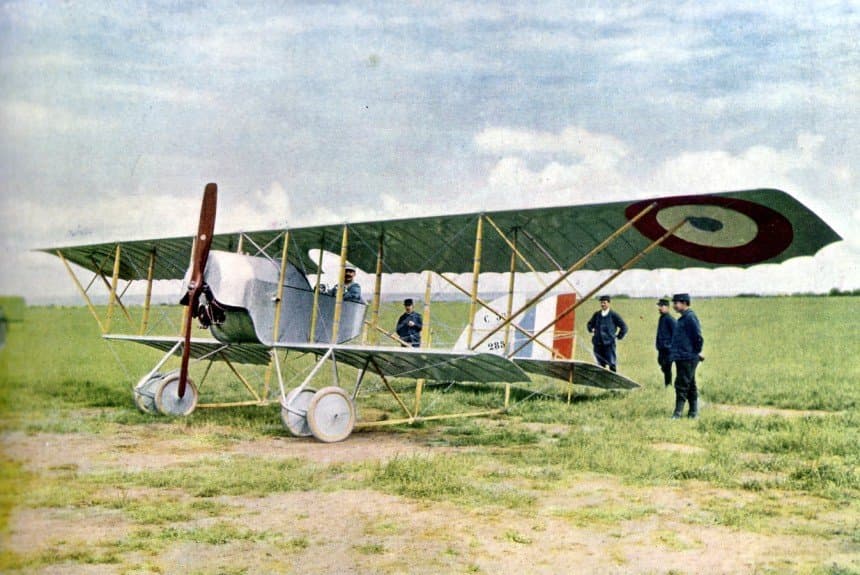
Credit
Jules Gervais-Courtellemont · Public domain · Resized · Public domain · Source ↗ · Modified


Preparing your view.

At a glance
Measured figures
Caudron G.III
Single sourceG.3 · Length
Single sourceConfiguration
| Specification | Caudron G.3 | Lockheed U-2 |
|---|---|---|
| Type | Reconnaissance aircraft[source] | High-altitude reconnaissance aircraft[source] |
| Manufacturer | Caudron[source] | Lockheed Skunk Works[source] |
| Primary users | Aéronautique Militaire US Army Air Service Finnish Air Force Polish Air Force[source] | United States Air Force Central Intelligence Agency (historical) NASA Republic of China Air Force (historical)[source] |
| Introduction date | 1914[source] |
Length
Single source6.4 m (21 ft 0 in)[source]
6,40 m[source]
6,40 m[source]
6,40 m (21,0 ft )[source]
6,40 m[source]Caudron G.III
6,40 m[source]
6,40 m[source]
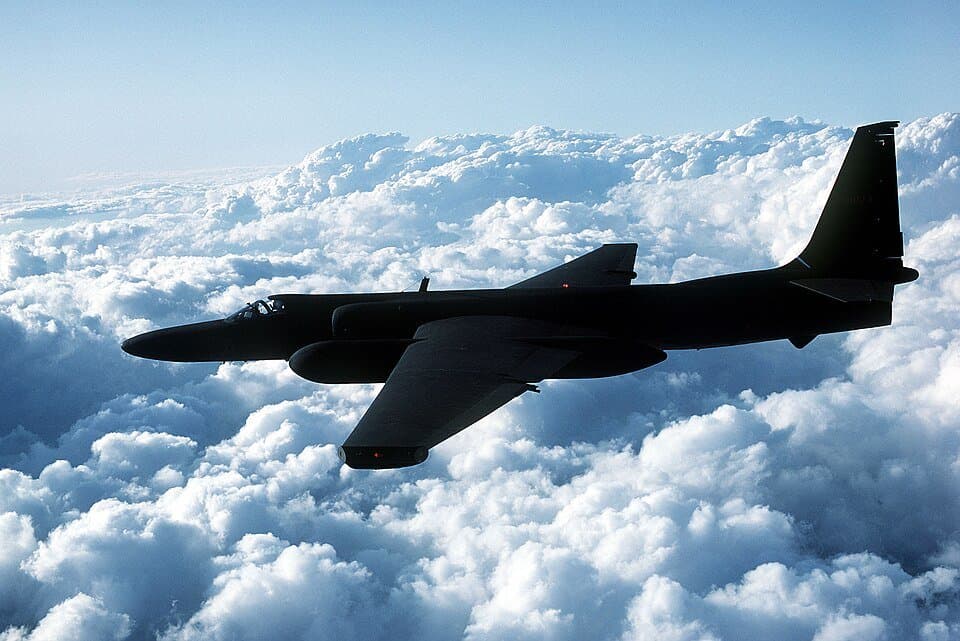
U-2S · Length
Single source63 ft 0 in (19.20 m)[source]
Empty; Empty weight
DisputedEmpty; G.3 · Empty weight
Single sourceMaximum take-off; G.3 · Max takeoff weight
Single source420 kg (926 lb)[source]
710 kg (1,565 lb)[source]
420 kg[source]
447 kg[source]
Empty; U-2S · Empty weight
Single sourceMaximum take-off; U-2S · Max takeoff weight
Single sourceG.3 · 1 × Le Rhône 9C 9-cylinder air-cooled rotary piston engine
Single source1 × Le Rhône 9C 9-cylinder air-cooled rotary piston engine, 60 kW (80 hp)[source]
U-2S · 1 × General Electric F118-101 turbofan engine thrust
Single source1 × General Electric F118-101 turbofan engine, 17,000 lbf (76 kN) thrust[source]
U-2S · 9,000 ft/min (
Single source9,000 ft/min (46 m/s)[source]
Bars compare reported quantities only. A larger figure does not make a system better; configurations and test conditions differ.
1956[source] |
| First flight | Late 1913[source] | 1 August 1955 ( 1955-08-01 )[source] |
|---|
| Developed from | Caudron G.2[source] | — |
|---|
| Propellers | 2-bladed fixed-pitch propeller[source] | — |
|---|
| Guns | One light machine gun (optional)[source] | — |
|---|
| Bombs | hand released bombs (optional)[source] | — |
|---|
| Source measurement | Most G.3s were the A2 model, used by various airforces for artillery spotting on the Western front, in Russia and in the Middle East. The G.3 D2 was a two-seat trainer, equipped with dual controls and the E2 was a basic trainer. The R1 version (rouleur or roller) was used by France and the United States Air Service for taxi training , with the wing trimmed down to prevent its becoming airborne. The last version, the G.3. L2 , was equipped with a more powerful 100 hp (75 kW) Anzani 10 radial engine . In Germany, Gotha built a few copies of the G.3 as the Gotha LD.3 and Gotha LD.4 ( Land Doppeldecker – "Land Biplane").[source]Caudron G.3 · Variants; only the objects and conditions stated in this passage Length: 6.4 m (21 ft 0 in)[source]Caudron G.3 · Specifications (G.3); only the objects and conditions stated in this passage Wingspan: 13.4 m (44 ft 0 in)[source]Caudron G.3 · Specifications (G.3); only the objects and conditions stated in this passage Height: 2.5 m (8 ft 2 in)[source]Caudron G.3 · Specifications (G.3); only the objects and conditions stated in this passage Wing area: 27 m 2 (290 sq ft)[source]Caudron G.3 · Specifications (G.3); only the objects and conditions stated in this passage Empty weight: 420 kg (926 lb)[source]Caudron G.3 · Specifications (G.3); only the objects and conditions stated in this passage Max takeoff weight: 710 kg (1,565 lb)[source]Caudron G.3 · Specifications (G.3); only the objects and conditions stated in this passage Powerplant: 1 × Le Rhône 9C 9-cylinder air-cooled rotary piston engine, 60 kW (80 hp)[source]Caudron G.3 · Specifications (G.3); only the objects and conditions stated in this passage Maximum speed: 106 km/h (66 mph, 57 kn)[source]Caudron G.3 · Specifications (G.3); only the objects and conditions stated in this passage Endurance: 4 hours[source]Caudron G.3 · Specifications (G.3); only the objects and conditions stated in this passage Service ceiling: 4,300 m (14,100 ft)[source]Caudron G.3 · Specifications (G.3); only the objects and conditions stated in this passage | — |
|---|
| Engine | un rotativo Le Rhône 9C[source] Le Rhone C[source] | — |
|---|
| Propulsion | 1 × Le Rhône, 7-cylindrowy rotacyjny[source]Caudron G.III | — |
|---|
| National origin | — | United States[source] |
|---|
| Designer | — | Clarence "Kelly" Johnson[source] |
|---|
| Status | — | In service[source] |
|---|
| Number built | — | 104[source] |
|---|
| Manufactured | — | 1955–1989[source] |
|---|
| Capacity | — | 5,000 lb (2,300 kg) payload[source] |
|---|
| Fuel capacity | — | 2,950 US gal (2,460 imp gal; 11,200 L)[source] |
|---|
| Airfoil | — | root: NACA 63A409 ; tip: NACA 63A406[source] |
|---|
| Stall speed | — | 65 kn (75 mph, 120 km/h)[source] |
|---|
| Time to altitude | — | 60,000 ft (18,000 m) in 12 minutes 30 seconds[source] |
|---|
| Lift-to-drag | — | 25.6[source] |
|---|
| Wing loading | — | 40 lb/sq ft (200 kg/m 2 )[source] |
|---|
| Thrust/weight | — | 0.425[source] |
|---|
| Fuel consumption | — | 910 lb/h (410 kg/h) in cruise[source] |
|---|
Cruise; U-2S · Mach 0.715 (
Single sourceMach 0.715 (412 kn; 470 mph; 760 km/h) at 72,000 ft (22,000 m)[source]